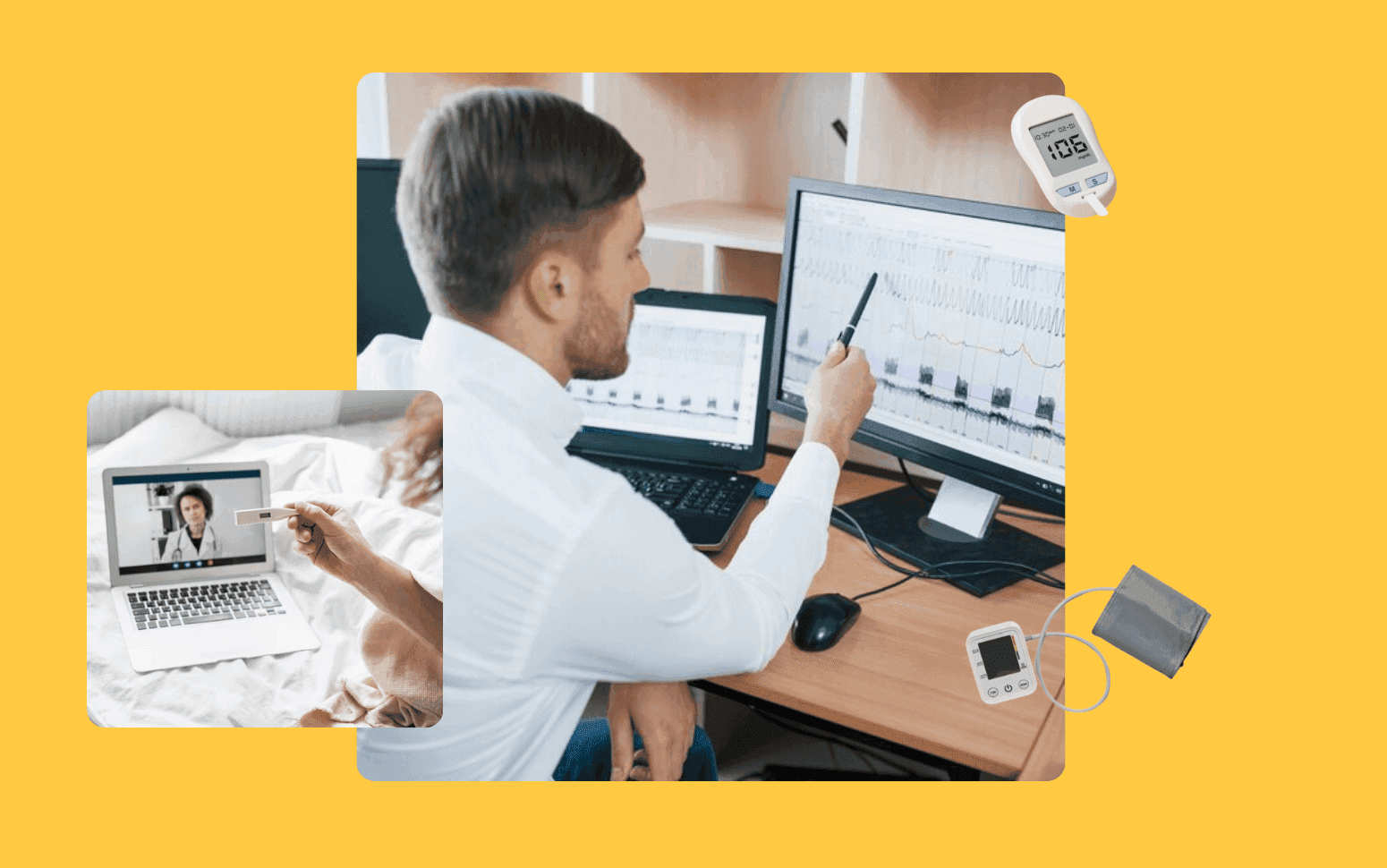
AI Remote Patient Monitoring Cuts Hospital Readmissions
- 30%
- 12 weeks
How much does healthcare app development actually cost? The range is wide: $25,000 for a focused patient-facing app to $250,000+ for a full platform with EHR integration and clinical workflows.
The cost drivers are: HIPAA compliance requirements, EHR integration complexity, clinical workflow depth, and whether you're building on existing infrastructure or greenfield. This guide breaks it down honestly.
Honest cost ranges for telemedicine, patient portals, RPM, and mHealth apps
What drives cost variation in healthcare software development
HIPAA compliance cost explained: what it adds and why
Fixed-cost delivery model with no surprises after discovery
Recognition
Getting wildly different cost estimates from vendors because nobody explains what drives the range?
Unsure whether your healthcare app needs full HIPAA infrastructure or a lighter compliance approach?
In short
RaftLabs prices healthcare app development at a fixed cost after discovery. The range is $25,000 for a simple patient-facing mobile app to $250,000+ for a full-featured platform with EHR integration, HIPAA-compliant infrastructure, and clinical workflows. A telemedicine app with video consultation typically runs $60,000 to $150,000. A patient portal with appointment booking and records access runs $30,000 to $80,000. An RPM platform with device integration and care team dashboard runs $40,000 to $120,000. HIPAA compliance, covering BAA, audit logging, and encryption, adds 15 to 25% to the base development cost.
Companies we've built for







Healthcare app development costs more than a comparable consumer app for three reasons: HIPAA compliance infrastructure, EHR integration complexity, and clinical workflow requirements that don't exist in non-healthcare software.
The cost ranges below are based on what we've actually built, not generic estimates that assume the cheapest possible implementation.
$60,000 to $150,000 for a complete telemedicine platform with patient and provider apps, video consultation (WebRTC or Twilio Video), appointment scheduling, prescription workflows, and HIPAA-compliant data handling. Lower end: single speciality, simple scheduling, and video only. Upper end: multi-speciality, async messaging, e-prescribing integration, and insurance billing. What drives cost up: EHR integration for existing patient records, custom scheduling rules, insurance eligibility verification, and state telehealth compliance across multiple jurisdictions.
Video infrastructure is typically the most visible line item after compliance. Twilio Video costs approximately $0.015 per participant minute. At 1,000 consultation minutes per month, that's $15/month in infrastructure cost at MVP scale, rising to $1,500/month at 100,000 minutes. Daily.co and Vonage Video API are common alternatives with similar pricing structures and comparable HIPAA BAA availability. Amazon Chime SDK suits teams already building on AWS HIPAA-eligible services who want a single vendor relationship. All three offer HIPAA-eligible configurations, but the BAA must be executed with each vendor before any PHI is processed. The BAA itself costs nothing with Twilio, Daily.co, and AWS, but it must be in place before go-live. Infrastructure cost at MVP scale (AWS HIPAA-eligible services) typically runs $500 to $2,000/month, covering compute, RDS encrypted storage, CloudWatch logging, and CloudTrail audit trail. For native iOS and Android apps, Apple App Store review for a healthcare app typically takes 2 to 4 weeks. Google Play review is faster at 3 to 7 days, but healthcare apps may require additional policy review.
$30,000 to $80,000 for a patient portal with appointment booking, medical records access, test result delivery, secure messaging, and billing. Lower end: web portal only, basic EHR read integration. Upper end: mobile app (iOS and Android), bidirectional EHR sync, online payment processing, and referral management. What drives cost up: the depth of EHR integration (read-only vs. read-write, HL7 FHIR vs. proprietary EHR API), the number of EHR systems you need to support, and the complexity of your appointment types and scheduling rules.
EMR integration is one of the largest variable cost items in any patient-facing healthcare app. A read-only Epic FHIR R4 integration, pulling patient demographics, appointment history, and lab results, adds $20,000 to $40,000 depending on the data types involved. A bidirectional Epic integration that writes appointment bookings, patient-reported outcomes, and secure message threads back into Epic adds $40,000 to $60,000. Cerner Millennium FHIR integration follows a similar cost pattern. Older EHR systems without FHIR R4 support (HL7 v2.x only) require custom interface engines, adding cost and maintenance complexity. If you need to support multiple EHR systems, for example a health network with both Epic and Cerner installations, each system is a separate integration engagement. Ongoing maintenance cost for healthcare apps typically runs 15 to 20% of the build cost annually, covering security patching, dependency updates, OS compatibility maintenance, and the annual penetration test that most compliance frameworks require.
$40,000 to $120,000 for an RPM platform covering patient data collection app, connected device integration (2 to 4 device types), care team dashboard, alert management, and CPT billing compliance tracking. Lower end: manual vitals entry, simple threshold alerts, and basic dashboard. Upper end: Bluetooth device integration for multiple device types, EHR FHIR integration, advanced analytics, and multi-programme management. HIPAA compliance and CPT billing tracking are baseline requirements for every RPM platform, not optional additions.
Connected device integration via Bluetooth or the Apple Health/Google Fit APIs adds $10,000 to $20,000 per device class depending on the SDK quality and the data normalisation required. Blood pressure monitors, pulse oximeters, and glucose meters each have different SDK characteristics. Care team dashboards need alert management logic that distinguishes clinically actionable readings from noise. Threshold alerts without context lead to alert fatigue and ignored notifications. An RPM platform built for serious use includes configurable alert thresholds per patient, an alert acknowledgement workflow for care team members, and an audit trail of which clinician acknowledged which alert at what time. HIPAA compliance infrastructure adds $15,000 to $40,000 to the base development cost. This covers BAA execution with AWS or Google Cloud, encryption at rest for all device data using AES-256, TLS 1.2+ for all data in transit, role-based access control (patients see only their own data, clinicians see their assigned patient panel), and audit logging at the application layer.
$25,000 to $80,000 for a patient-facing health and wellness app: symptom tracking, health journaling, care plan management, medication reminders, and patient education. Lower end: iOS only, simple tracking and reminders, no EHR integration. Upper end: iOS and Android, wearable integration (Apple Health, Google Fit, Garmin), clinical outcome measure collection (PHQ-9, GAD-7, PROMIS), and care team visibility portal. HIPAA compliance applies when the app handles individually identifiable health information in conjunction with a covered entity.
Apple App Store certification for healthcare apps that collect or display health data requires compliance with Apple HealthKit guidelines. Apps that include clinical data face review under Apple's health and medical category policies. This review process typically takes 2 to 4 weeks for initial submission and may require additional documentation for apps handling sensitive health information. Google Play has a similar healthcare app policy review process. Both app stores require a privacy policy URL in the app listing that specifically addresses health data handling. If the app integrates with Apple Health, HealthKit entitlement must be requested during provisioning and justified in the App Store submission notes. A standalone mHealth app without EHR integration, targeting general wellness tracking for consumers, typically doesn't require full HIPAA compliance if it doesn't transmit PHI to or receive PHI from a covered entity. We assess the compliance boundary during discovery and document the rationale.
$50,000 to $180,000 for clinical workflow applications: case management platforms, clinical documentation tools, care coordination systems, and hospital operations software. Cost is driven by workflow complexity, the number of clinical roles involved, integration with existing clinical systems (EHR, billing, scheduling), and the degree of automation in clinical processes. These applications require deeper clinical discovery during scoping. The workflow design phase is as important as the development phase.
Clinical workflow software that integrates with Epic via FHIR R4 must go through Epic's App Orchard certification process. This requires developer access ($5,000 to $15,000 annually for the licensing agreement depending on the access tier) and a review period of typically 6 to 12 weeks. Cerner Millennium integration via the Cerner SMART on FHIR framework follows a similar certification path. Hospital administration software used internally by clinical staff may qualify for FedRAMP authorization consideration if deployed on federal healthcare networks. FedRAMP authorization adds significant compliance documentation and third-party assessment cost worth scoping separately. For most private hospital and clinic operations software, HITRUST CSF certification is the more relevant framework. A HITRUST Validated assessment runs $40,000 to $100,000 in assessment fees. We build the technical controls required for HITRUST. The formal assessment and certification engagement is separate. Penetration testing for healthcare applications is best practice before go-live and costs $5,000 to $20,000 depending on application scope and depth of testing.
HIPAA adds 15 to 25% to base development cost. What that covers: business associate agreement (BAA) with your cloud infrastructure provider and third-party vendors, encryption at rest and in transit for all PHI, role-based access control with audit logging (who accessed what, when, from where), secure data deletion workflows, and the compliance documentation required for your risk assessment. What it doesn't cover: HIPAA certification (no such thing) or zero legal risk. We build healthcare software to meet HIPAA technical safeguard requirements. Your legal and compliance team documents the administrative and physical safeguards.
On a $100,000 development project, HIPAA compliance adds $15,000 to $40,000 in additional engineering cost. This is the premium for HIPAA-eligible cloud service configuration (AWS or Google Cloud HIPAA-eligible services), encrypted RDS or Cloud SQL database setup, KMS key management, application-layer audit logging covering all PHI access events, and session management controls (automatic timeout, MFA enforcement). AWS HIPAA-eligible services at MVP scale (2 app servers, RDS PostgreSQL, S3 for document storage, CloudWatch for logging) typically cost $500 to $2,000/month depending on data volume and traffic. That infrastructure cost is ongoing: budget for it in your operating cost model. Compliance documentation for the Security Rule risk analysis, which covered entities and business associates must maintain, typically requires 20 to 40 hours of consultant time to produce for a new application. We provide the technical controls documentation to support your risk analysis. The formal risk analysis itself is best done with a healthcare compliance attorney or HIPAA compliance consultant.
EHR integration is consistently the largest variable cost driver. A healthcare app that doesn't need EHR integration is significantly cheaper than one that does. EHR integration cost depends on: the EHR system (Epic and Cerner have well-documented FHIR APIs; older or proprietary systems may require custom HL7 interface engines), whether you need read-only or bidirectional data exchange, and how many clinical data types you're syncing (demographics, appointments, results, medications, documents). A read-only Epic FHIR integration for patient demographics and appointments is straightforward. A bidirectional integration syncing clinical documentation, order results, and care plans across multiple Epic instances is a significant engineering effort.
After EHR integration, the next-largest cost drivers are video infrastructure (particularly if you need speciality-specific features beyond basic video), e-prescribing via Surescripts, and native mobile development for both iOS and Android. HIPAA compliance itself is predictable: it adds $15,000 to $40,000 to any project regardless of other factors. What's less predictable is the time cost of working through EHR vendor certification processes and Surescripts qualification, both of which have external timelines your development team can't control. We factor those external dependencies into the project timeline from day one.
HIPAA applies when your app handles Protected Health Information (PHI): individually identifiable health information in the context of a covered entity (healthcare provider, health plan, healthcare clearinghouse) or as a business associate of a covered entity. Consumer wellness apps that don't receive PHI from covered entities and don't transmit it to them are generally not subject to HIPAA. If your app connects to a healthcare system, transmits clinical data, handles patient records, or operates within a clinical workflow, HIPAA compliance is required. We assess HIPAA applicability during discovery. When in doubt, building to HIPAA standards is safer than not.
The practical test: if your app receives data from an Epic FHIR endpoint, integrates with a hospital's scheduling system, stores patient-identifiable clinical data, or is offered as a service to healthcare providers who use it in patient care, you're a business associate and HIPAA compliance is required. The FTC Health Breach Notification Rule may also apply to consumer health apps that don't fall under HIPAA but handle personal health records. HITRUST CSF certification is relevant for healthcare enterprises that want a formal third-party-validated compliance framework rather than a self-assessed HIPAA posture. FedRAMP authorization applies to cloud services used by federal healthcare programs like Veterans Affairs or federal employee health plans. This is a distinct and significantly more expensive compliance program that most private healthcare apps don't require.
A focused healthcare app, such as a patient portal, a telemedicine MVP, or an RPM platform, typically takes 12 to 16 weeks from discovery to launch. More complex builds involving deep EHR integration, multiple clinical roles, and regulatory submission preparation (for FDA software as a medical device) take longer. Timelines are driven primarily by integration complexity and the clinical validation required before launch: clinician review, clinical workflow testing, and UAT with actual patients or staff. We give you a fixed timeline and cost after the discovery phase.
The most common timeline extension in healthcare app development is EHR sandbox access provisioning. Epic and Cerner take 4 to 8 weeks to grant sandbox credentials after application, and that process can't start until the development contract is signed. Surescripts qualification for e-prescribing takes 4 to 8 weeks on their side. Apple App Store review for healthcare apps takes 2 to 4 weeks. These external dependencies run in parallel with development where possible, but they set the floor on the earliest possible launch date. We map these external timelines explicitly in the project plan so there are no surprises in the last two weeks of development.
We price every healthcare software project at a fixed cost after a paid discovery phase where we define the scope, architecture, and integration requirements. The discovery phase typically takes 2 to 3 weeks and costs $5,000 to $15,000 depending on complexity. The output is a detailed technical specification and fixed-price development proposal. If you proceed, the discovery cost is credited against the development contract. No open-ended time-and-materials billing for the build phase.
What clients say
Three-year average engagement. Founders and operators describing the work in their own words. No marketing varnish.

 USA
USAAll of the sprints were completed on schedule and on budget. We highly recommend RaftLabs!
01 / 02
Tell us the app type, whether you need EHR integration, and your HIPAA requirements. We'll scope it and give you a fixed price before work starts.