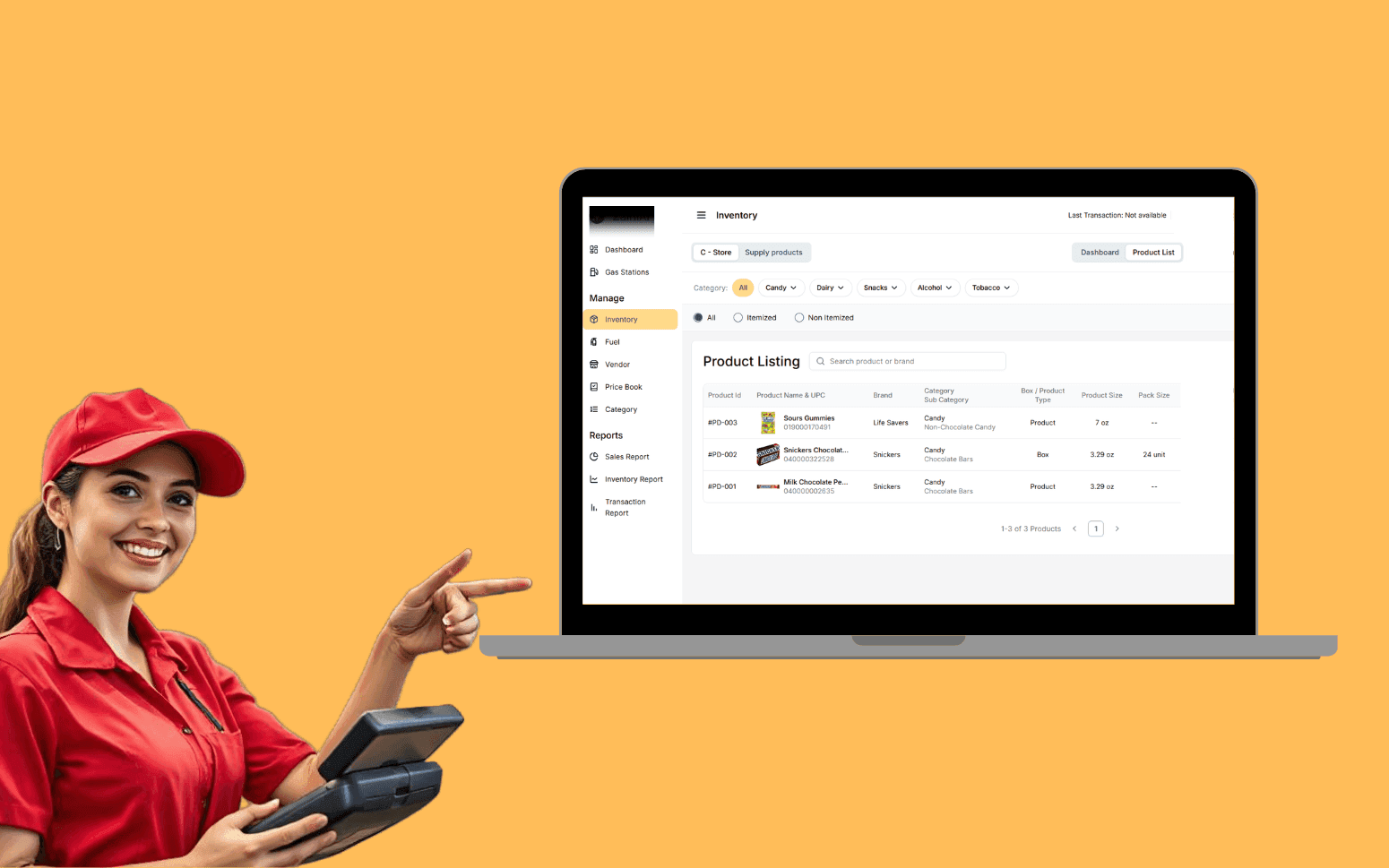
AI OCR Software Scales Gas Station Operations With 20K+ Transactions
- 20K+
- 40+
- 70%
Generic e-government platforms handle simple payment forms and basic applications. When the service involves conditional eligibility logic, document verification, officer review workflow, integration with a legacy back-office system, and a citizen-facing tracking view, the generic platform requires workarounds that push the complexity back to your staff.
We build custom citizen portals for local authorities and government agencies whose digital service requirements go beyond what an off-the-shelf platform can handle. Built to WCAG 2.1 AA accessibility standards, integrated with your back-office systems, and designed around the actual journey a citizen takes through your service.
Digital service forms with conditional logic, document upload, identity verification, and integrated payment processing
Citizen case tracking portal so applicants can see where their application is without contacting the service
Integration with your existing back-office case management, finance, and legacy systems
WCAG 2.1 AA accessibility compliance and mobile-first design built from the first sprint
Recognition
Citizens calling your contact centre to chase planning applications, permit requests, and housing enquiries because there is no online tracking and the only way to get a status update is to speak to someone?
Digital service forms that work for simple cases but require staff intervention for any application with conditional logic, multiple documents, or a payment tied to the application outcome?
In short
RaftLabs builds custom citizen portals for local authorities, government agencies, and GovTech companies who need digital service delivery that connects to their back-office systems. A citizen portal covers digital application forms with conditional logic, identity verification, document upload, payment processing, case status tracking, and integration with existing case management and finance systems. All citizen-facing interfaces are built to WCAG 2.1 AA accessibility standards. Most citizen portal projects deliver in 10 to 14 weeks at a fixed, agreed cost.
Companies we've built for






Most government digital service problems aren't form problems. The form is the entry point: the problem is what happens after it's submitted. The application needs routing to the right team. Documents need verifying. An officer needs assigning. A payment needs collecting and reconciling with the finance system. A decision needs communicating to the citizen with the right statutory wording. Each of these steps involves a different system, a different team, and a different set of rules that a generic form builder was never designed to handle.
We build citizen portals that cover the full service journey: from the citizen's initial application through officer review, decision, and any subsequent case management, with the citizen able to track their position at every stage. We've integrated citizen portals with local authority back-office systems, planning databases, GIS platforms, and legacy case management tools. The integration architecture is designed during discovery before any code is written, so there are no surprises when the portal goes live.
Service forms built around the actual eligibility and conditional logic of each service: the questions that depend on previous answers, the document requirements that change based on the applicant's circumstances, and the sections only shown to certain categories of applicant. Form validation catches errors at the point of entry rather than after submission, with clear error messages that meet the plain-language requirements of government accessibility guidance. Save and return functionality lets citizens start a complex application, save their progress, and come back to it without losing what they've already entered. An application reference number is generated at submission with confirmation sent to the applicant's email. Multi-step form journeys include a progress indicator so citizens can see how much of the application remains at each stage.
Identity verification is integrated into the application journey at the point where the service requires it: from basic email verification for low-risk services to document-based identity checking for services with higher fraud risk. Document upload includes file type and size validation, virus scanning, and secure storage with the retention period configured to your data schedule. A document checklist is presented to the applicant before they start so they know what to gather before the form times out. An automated document completeness check at submission notifies the applicant if a required document is missing or the uploaded file is the wrong format. That check happens at submission rather than after an officer has spent time reviewing an incomplete application. Secure document storage makes files accessible to officers through the back-office case management interface without requiring them to download and re-upload anything.
Citizen-facing case tracking shows the current status of every active application the citizen has submitted: where it is in the process, what the next step is, what the estimated timeline is, and whether any action is required from the citizen before the application can proceed. Status update notifications go to the citizen's email or mobile when the application moves to a new stage, a decision is made, or additional information is needed. Citizen-initiated correspondence from within the tracking portal lets the applicant upload an additional document, ask a question, or respond to an officer request without logging a new enquiry through a separate channel. Application history is retained in the citizen's account for the configured retention period so they can access decision notices, correspondence, and previous applications without contacting the service. Contact centre integration means officers see the same case view as the citizen when handling telephone enquiries, reducing call handling time.
Payment processing is integrated into the application journey at the appropriate point: before submission for services where the fee is fixed, or after officer assessment for services where the fee depends on the application outcome. Integration with your existing payment gateway or council payment system means online payments reconcile with your finance system automatically rather than requiring a manual reconciliation step. Fee calculation logic is built into the form based on the application details: the building regulation fee that depends on the type and value of the works, the licence fee that varies by premises size, or the planning fee calculated from the proposed floor area. Payment receipts are generated automatically and sent to the applicant's email at the point of payment. Partial payment and payment plan handling covers services where fees are paid in instalments. Refund management handles applications withdrawn or refused where a refund is due under your fee schedule.
Integration with your existing back-office systems, including the case management system, planning system, finance system, and housing register, means applications submitted through the citizen portal appear in the back-office workflow without requiring an officer to re-enter the information. The integration architecture is designed around what your back-office systems actually support: REST API where available, file-based exchange or database-level integration where APIs aren't available, and a middleware layer for legacy systems with proprietary data formats. Address lookup integration with your property database or the national address gazetteer means applicants select from validated addresses rather than typing free text. GIS integration connects location-based services where the application needs to be associated with a specific property, planning zone, or service area. Data mapping from the citizen portal application form to the back-office system's data model is documented before development begins.
WCAG 2.1 AA accessibility compliance is built into the development process from the first sprint, not audited against at the end. Every component is built using accessible HTML patterns, with keyboard navigation, screen reader compatibility, and sufficient colour contrast tested throughout development. An accessibility audit is conducted before go-live with remediation of any issues identified. Security controls include HTTPS, secure session management, CSRF protection, and input sanitisation against injection attacks as a baseline. Data protection compliance includes a Data Protection Impact Assessment for services handling personal data, retention periods configured to your data schedule, and subject access request tooling for the obligations that apply to citizen records. Penetration testing is facilitated before go-live with remediation of any critical findings.
The integration approach depends on what your back-office systems support. Where a modern REST API is available, we integrate directly. Where the system supports only older methods such as SOAP services, file-based exchange, or database-level access, we build the integration using those methods rather than requiring a back-office system upgrade as a precondition for the portal project. For legacy systems with proprietary data formats, we build a middleware layer that translates between the portal's data model and the legacy system's format. The integration architecture is specified during discovery and documented before development begins, so the technical approach is agreed and the risks are understood before any code is written.
We build accessibility in from the first sprint rather than auditing against it at the end. Every component is developed using accessible HTML patterns and tested with screen readers and keyboard navigation throughout development. We don't rely on automated accessibility tools alone: automated tools catch around 30% of accessibility issues, and the remainder require manual testing with assistive technology. Before go-live, we conduct a formal accessibility audit against WCAG 2.1 AA and remediate any issues identified. We can provide an accessibility statement and a Voluntary Product Accessibility Template (VPAT) for procurement documentation. For UK public sector clients, this satisfies the obligations under the Public Sector Bodies Accessibility Regulations 2018.
Yes, and for many services this is the right approach. Where the service involves a simple one-time application, requiring citizens to create an account to track status creates unnecessary friction. We build guest tracking using the application reference number and a verification code sent to the applicant's email at submission: the citizen can check their status without creating an account. For services where multiple applications over time are likely, such as business licence renewals or recurring planning applications, a citizen account with a full application history is more appropriate. The approach is agreed during discovery based on the nature of the service and the likely applicant profile.
A citizen portal for a single service, covering application form, document upload, payment integration, and a citizen tracking view, typically runs $30,000 to $55,000 depending on the complexity of the eligibility logic and the back-office integration. A portal covering multiple services with a shared citizen account, unified case tracking, and integration with multiple back-office systems typically runs $55,000 to $120,000. We scope every project before pricing. Fixed cost only: no hourly billing.
What clients say
Three-year average engagement. Founders and operators describing the work in their own words. No marketing varnish.

 USA
USAAll of the sprints were completed on schedule and on budget. We highly recommend RaftLabs!
01 / 02
Tell us which services you want to take online, what your back-office systems look like, and where the current process breaks down. We'll scope a portal that handles the full service journey.