Gig Economy and Freelance Platform Development

Freelance marketplaces and on-demand workforce platforms fail when the core mechanics break down: matching takes too long, escrow creates friction, compliance is a manual afterthought, and bad actors erode trust faster than good reviews can rebuild it. If you are building or scaling a two-sided gig platform and the operational gap between what your platform does and what clients and contractors actually need is widening, that gap is the thing worth fixing.

  • Two-sided marketplace architecture with profile, search, and AI-assisted talent matching built for your specific worker and client types

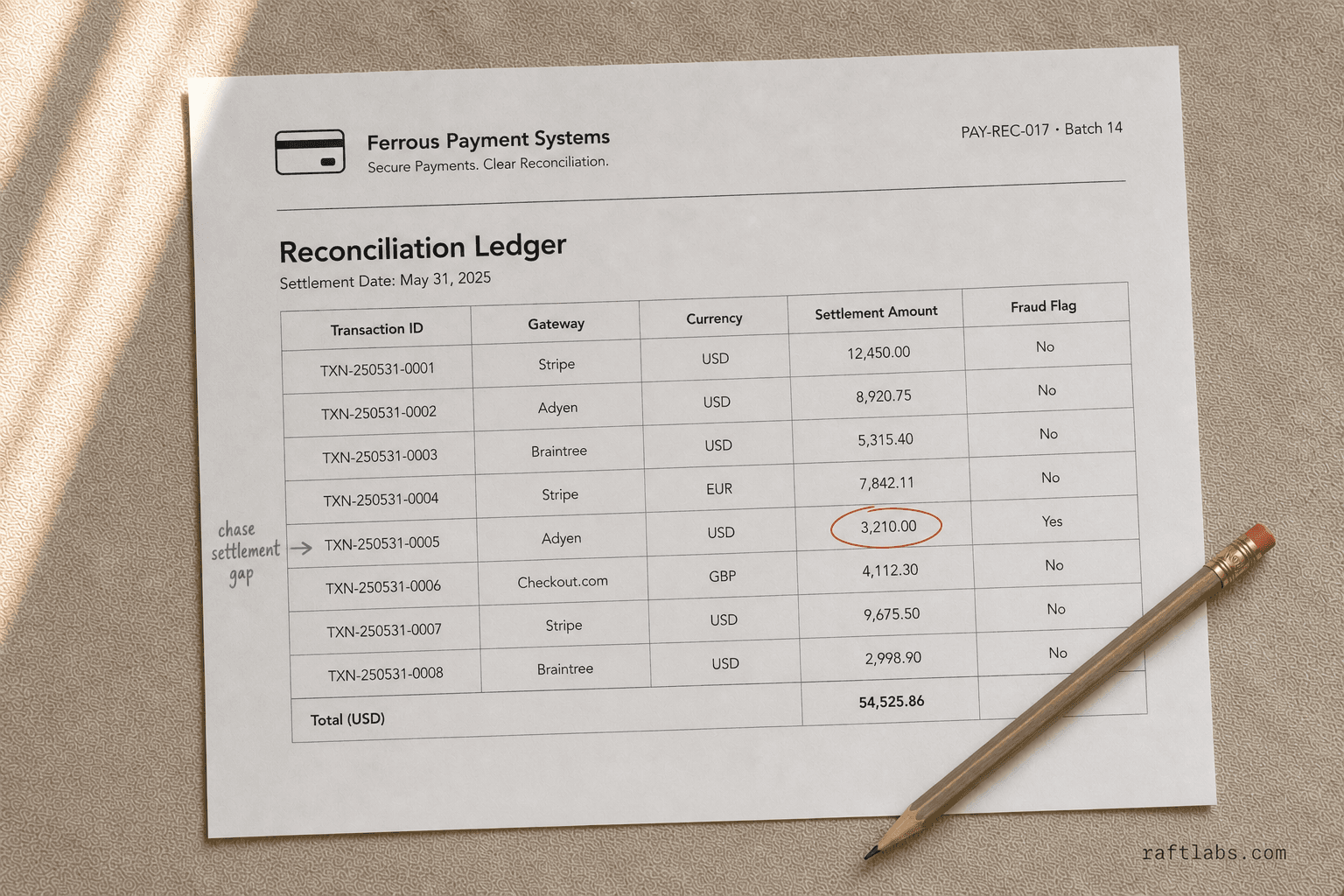
  • Milestone escrow with automated release triggers, dispute workflows, and Stripe Connect or Hyperwallet payout rails

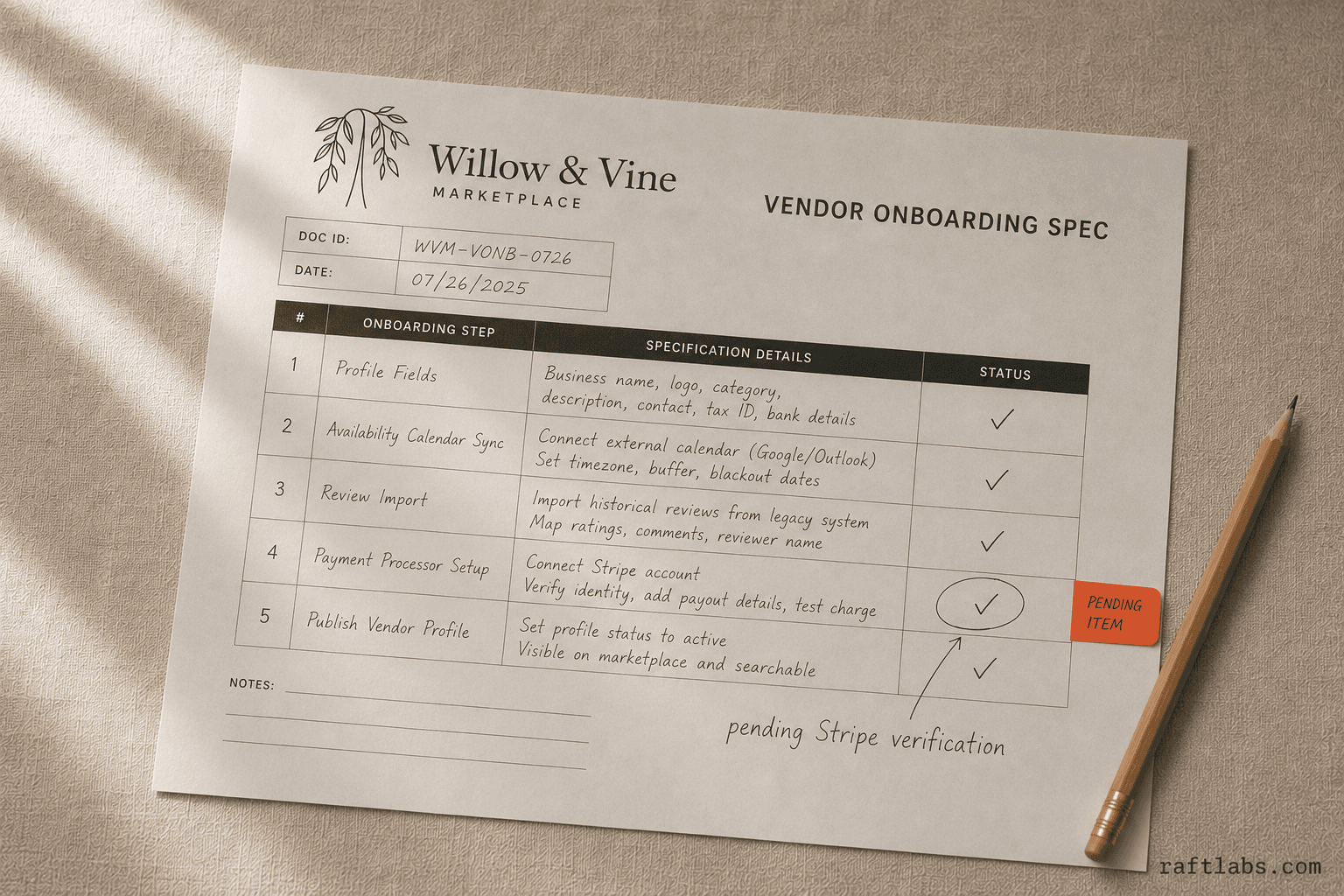
  • Contractor onboarding with identity verification, background checks, and 1099-K tax reporting built into the platform

  • Ratings, reviews, and trust signals that feed back into matching logic so your best contractors rise and bad actors exit

Recognition

Sound familiar?

  • Spending hours manually vetting and matching contractors to projects because your platform surfaces candidates but leaves the hard filtering to your ops team?

  • Handling payment disputes by hand because your escrow workflow has no automated milestone approval or release logic?

  • Watching 1099 season arrive as a scramble because your contractor tax data lives across spreadsheets, emails, and a payment processor export?

The short answer

RaftLabs builds custom gig economy and freelance platform software for marketplace founders, on-demand workforce operators, and labor marketplace startups. We ship two-sided platforms with talent matching, milestone escrow payments, contractor compliance, 1099 tax management, and ratings and review systems. Most freelance platform projects deliver in 12 to 16 weeks at a fixed, agreed cost.

What is freelance platform software?

Freelance platform software is a two-sided marketplace system that connects clients posting work with independent contractors who bid or are matched to complete it. The software manages the full transaction lifecycle: profile and skills data, job posting and discovery, talent matching, milestone-based escrow payments, ratings and reviews, and contractor compliance including identity verification and tax reporting.

01 Diagnosis

Problems we solve for gig platform operators

  1. 01
    Problem

    Matching is manual and your ops team is doing the job the algorithm should do

    Solution

    When a client posts a project and your platform returns 200 candidate profiles ranked by last-active date, someone on your team still has to make the real match. That might be fine at 50 projects a week. At 500, it becomes a hiring problem disguised as a technology gap. The matching signal your platform collects (skills, past ratings, completion rate, response time, relevant category history) is already in your system. The problem is that nothing surfaces it in a way that produces a confident shortlist without manual review.Matching logic built around your specific talent types and project categories reduces the candidates your ops team has to review from dozens to two or three. For high-volume on-demand platforms where a job needs filling in under an hour, automated matching with no ops bottleneck is the difference between a fulfilled order and a cancellation.

  2. 02
    Problem

    Payment disputes arrive with no audit trail and no resolution workflow

    Solution

    A client disputes a milestone. The contractor says the work was delivered. Your team is in the middle of an email thread trying to reconstruct what was agreed, what was submitted, and whether the escrow should be released or refunded. This scenario plays out repeatedly on platforms where the escrow logic is a held balance in Stripe but the approval and dispute workflow exists only in email or in a support ticket.The cost is not just the disputed amount. It is the ops hours, the churn from whichever party feels the resolution was unfair, and the reputational signal that the platform does not protect either side well. A milestone escrow system with defined deliverable checkpoints, timestamped submission records, an approval window, and a structured dispute queue gives both parties a documented process and your team a manageable queue instead of an inbox fire. "RaftLabs helped us develop a mobile POS app that enabled cashless payments without extra steps. Their clear communication and collaborative approach ensured the project ran smoothly from start to finish.", Kelly Smith, Product Manager

  3. 03
    Problem

    1099 season is a manual scramble across spreadsheets and payment processor exports

    Solution

    According to Routable, gig platforms must issue Form 1099-K to contractors who cross the IRS reporting threshold, and mismatched TIN/name combinations trigger B-notices that create liability for the platform. When contractor payment data lives across Stripe exports, a freelancer management spreadsheet, and a separate onboarding form, assembling accurate 1099s takes days, creates errors, and leaves compliance gaps for contractors who moved, changed their legal name, or provided an incorrect SSN at signup.Contractor compliance built into the platform collects W-9 or W-8BEN documentation at onboarding, validates TINs before the first payout, and tracks earnings per contractor across the full tax year. When the threshold approaches, the platform generates the 1099-K and delivers it digitally. The manual assembly problem disappears because the data never left the system.

  4. 04
    Problem

    Ratings are visible but disconnected from anything that changes who gets work

    Solution

    Your platform has a five-star rating system. Contractors with a 4.8 average and a 2.3 average both appear in client search results ranked the same way. A new client picks the 2.3 contractor because their profile photo looks more professional. The job goes poorly. The client blames the platform.A ratings and trust infrastructure that feeds back into matching, search ranking, and contractor eligibility changes the dynamic. High performers get more visibility. Contractors who accumulate low scores or cancellations drop in the queue or trigger a review flag before a client books them again. The platform stops being a neutral directory and starts behaving like a curated marketplace where quality is a structural outcome, not a hope.

02 What we ship

Freelance platform software we build

  1. Two-sided marketplace architecture

    A gig platform lives or dies on its data model: how profiles store skills and experience, how job posts map to searchable categories, how bids or proposals flow from contractor to client, and how each transaction state tracks through the system. We design the relational schema and API surface before a line of product code runs, because retrofitting a marketplace's core data model after launch is the most expensive fix there is.

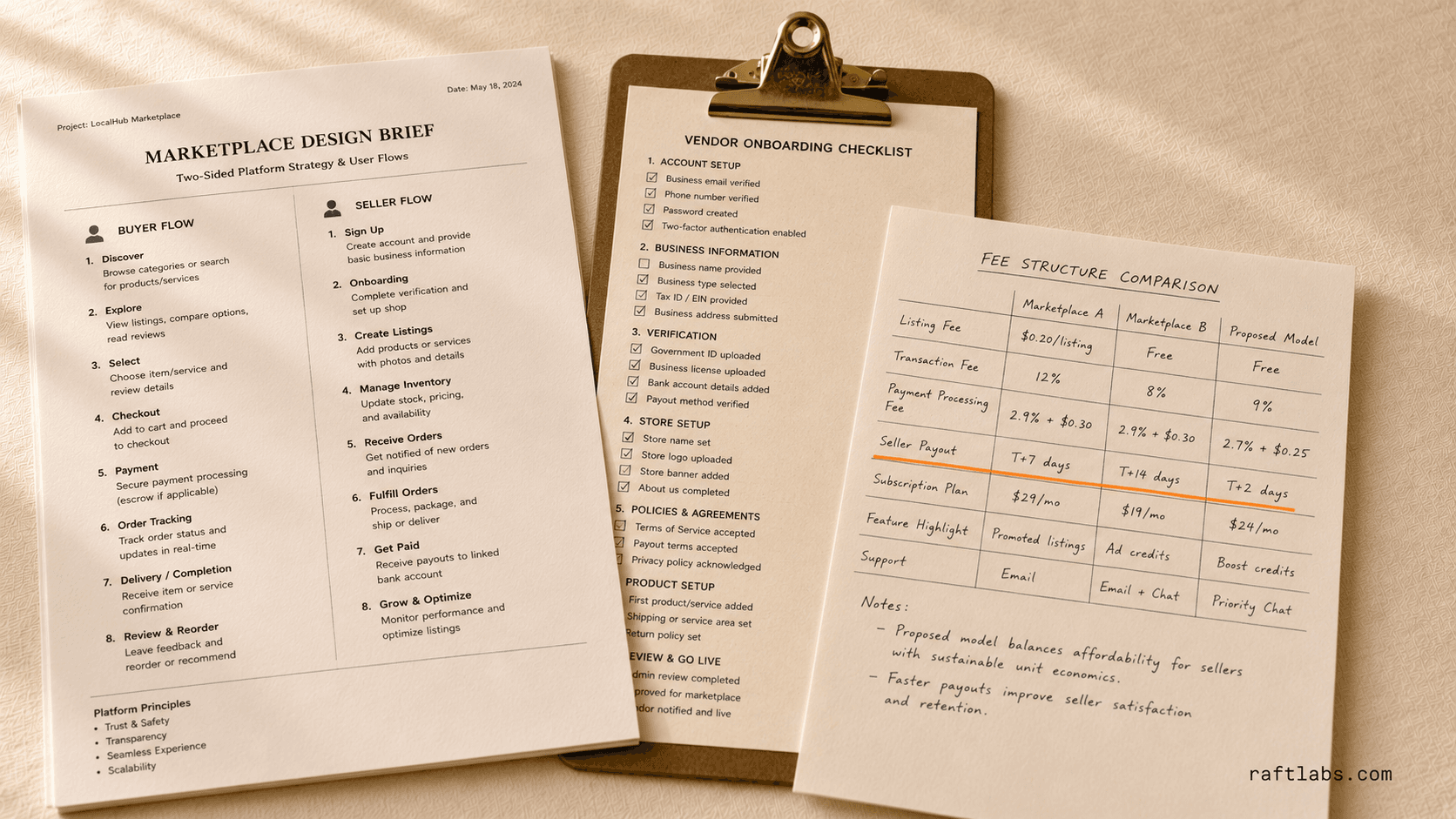
    Client-side flows cover job posting, brief templates, contractor discovery and shortlisting, proposal review, and project management dashboards. Contractor-side flows cover profile creation, portfolio upload, skills assessment, bid submission, and earnings tracking. Both sides are built for web and mobile, with a platform admin console covering dispute management, fraud flags, and payout approvals.

    The architecture is built to support open marketplace models, curated network models, and hybrid approaches where some talent categories are open and others are invite-only or pre-vetted.


  2. AI-assisted talent matching

    Keyword search returns everyone who typed the right word in their profile. Matching built on behavioral signal returns the contractors most likely to complete the specific job well. The difference is the signal set: past ratings by category, response time, completion rate, on-time delivery, client retention, and relevance of past work to the current brief. Weighted and tuned to your platform's specific job types, this produces a shortlist rather than a ranked directory.

    For on-demand platforms where a job must be filled in minutes, automated matching with push notification dispatch removes the client's waiting time and the ops team's involvement entirely. For project-based marketplaces, AI-assisted shortlisting surfaces two to five recommended contractors with a rationale, so the client makes a faster and better-informed decision rather than browsing 80 profiles.

    Matching models improve over time as transaction data accumulates. A platform with six months of completion and rating data has a materially better match engine than it did at launch. We build the feedback loop in from day one so the model learns.

  3. Milestone escrow and payout systems

    Escrow in a freelance platform means the client funds are held at the point of project start and released to the contractor only when defined milestones are approved. We build this on Stripe Connect for most markets, Hyperwallet for high-volume contractor payouts, and Mangopay for EU-regulated two-sided transactions. The escrow logic is custom: milestone definitions, approval windows, automatic release triggers, and dispute escalation paths are all configurable to your platform's rules.

    Contractor payouts support instant, daily, or weekly cycles depending on the payment rail and your platform's cash flow model. Multi-currency payouts are handled through the relevant rail's FX mechanism so contractors in different countries receive funds in their local currency without the platform managing international wire transfers manually. Platform fee splits, referral credits, and subscription offsets are all calculated and applied at the point of release.

    Dispute workflow gives both parties a structured resolution path: submission evidence, a response window, platform review, and a final decision with an audit trail. Every state change is timestamped and logged so your support team can reconstruct any dispute from the record without chasing email threads.

  4. Contractor onboarding and identity verification

    A contractor who cannot be verified is a platform liability. We build onboarding flows that collect government-issued ID, run liveness checks via Jumio, Persona, or Onfido, and cross-reference identity data against watchlists before a profile goes live. For US-based contractors, the onboarding collects a W-9 and validates the TIN against IRS records before the first payout clears. For international contractors, the relevant withholding documentation is collected and flagged when missing.

    Background check integration sits inside the onboarding flow for platforms operating in categories where client trust requires it: home services, childcare, healthcare staffing, or financial services. Checks run through Checkr or Sterling and return a pass/fail result that gates profile approval. The platform does not expose the raw report to the client; it surfaces the verification status only.

    Skills assessments and portfolio verification sit at the end of the onboarding sequence. Contractors complete category-specific tests or submit portfolio samples that are reviewed before the profile is marked verified. A verified badge is only awarded when every required check has passed, so clients know what the signal means.

  5. Ratings, reviews, and trust infrastructure

    A five-star rating system that sits on a profile page and does nothing else is decoration. Trust infrastructure that feeds into matching, search ranking, contractor eligibility, and client-facing badges is a product mechanic. We build the latter: ratings collected at job completion on both sides of the transaction, processed through an anti-manipulation layer that flags review farms and retaliatory scoring patterns, and fed into the matching model as a weighted signal.

    Review content goes through a moderation queue before it is published. Disputed reviews trigger a review hold until the relevant party can respond. Contractor scorecards display completion rate, on-time delivery, response time, and repeat-hire rate alongside the star average, so clients have more than one number to evaluate. Platform-level trust badges mark contractors who have passed identity verification, background checks, and skills assessments so clients know what they are hiring.

    Aggregate trust data feeds the matching model so that as a contractor's track record grows, their platform visibility reflects their actual performance rather than their self-description.

  6. 1099 tax reporting and contractor compliance

    A gig platform processing payments to independent contractors in the US is a third-party settlement organization under IRS rules. That creates a reporting obligation for any contractor who crosses the 1099-K threshold. When the payment data is scattered across a processor export and an onboarding spreadsheet, assembling accurate filings is a multi-day manual process with real liability exposure for TIN mismatches.

    We build contractor compliance infrastructure directly into the platform. W-9 and W-8BEN collection happens at onboarding, TIN validation runs via IRS TIN matching before the first payout, and earnings tracking accumulates per contractor across the tax year. When a contractor approaches the reporting threshold, the platform flags them for 1099-K generation. Forms are generated, delivered digitally, and stored with the full transaction history that supports them.

    For platforms operating internationally, withholding rules for non-US contractors are configured per country. The system collects the correct documentation at onboarding, flags missing or expired documents before payouts clear, and applies the relevant withholding rate where required. The manual tax season scramble becomes a daily automated process.

03 How we work

How we build gig economy platforms

  1. 01

    Discovery

    We map both sides of your marketplace: who the clients are, how they post and evaluate work, how contractors find and bid on jobs, and where the current matching and payment flow breaks down. We audit your existing platform if one exists, or scope the MVP if you are building from scratch. Payout rail options, contractor compliance requirements, and matching logic are agreed before design begins. A fixed-price specification is produced at the end of discovery.
  2. 02

    Design

    We design the end-to-end user flows for both sides of the marketplace: client job posting, contractor onboarding, matching and proposal review, milestone creation and escrow, and payout management. The admin console for dispute resolution, fraud flags, and compliance management is designed alongside the client and contractor flows, not as an afterthought. The data model and API surface are specified in this phase so that the build phase has no architecture unknowns.
  3. 03

    Build

    Core marketplace mechanics ship first: profiles, job posting, matching, and basic payment flow. Escrow logic, milestone management, and payout rails follow in the next sprint cycle. Contractor compliance, ratings infrastructure, and admin tooling complete the build. Two-week checkpoints give you working software to review throughout, not a reveal at the end.
  4. 04

    Launch and growth

    Go-live starts with a controlled cohort to confirm matching quality, payment flows, and compliance checks behave correctly at real transaction volume. Monitoring covers payout failures, dispute queue depth, matching conversion rates, and contractor onboarding completion. Post-launch, we support matching model tuning as transaction data accumulates, product iterations as both sides of the marketplace reveal what they actually need, and compliance updates as IRS thresholds or state contractor classification rules change.

Companies we've built for

Vodafone
Nike
Microsoft
Cisco
T-Mobile
Aldi
Heineken
GE

04 Track record

What gig platform operators get when they work with us

Week delivery for freelance marketplace MVPs
12-16
Software products shipped across all industries
100+
Years building two-sided marketplace platforms
6+
Cost delivery agreed before development starts
Fixed

06 Client voices

What our clients say

Three-year average engagement. Founders and operators describing the work in their own words. No marketing varnish.

D
Daniel Reeves
USA flagUSA
CEO

RaftLabs nailed what other agencies couldn't — they started with our business problem and worked backwards to the right product. We were live in 14 weeks.

07 Why us

Why choose us?

  1. 01

    We've seen your problem before

    The industry changes. The broken process usually looks the same. Across 14+ industries and 100+ products, we recognise your problem fast, and we frame the fix around your margin and your operations.

  2. 02

    We own the number, not the ticket

    We measure success the way you do: hours saved, revenue earned, margin recovered. We stay through launch and growth, so the result is ours to own.

  3. 03

    Serious businesses trust us

    Vodafone, T-Mobile, Cisco, Energia, Aldi, Nike. Six years, 100+ products in production, 4.9 on Clutch. Serious businesses keep coming back because we stay accountable long after launch.

08 Questions

Frequently asked questions

Both. We build new gig platforms from the ground up and extend or rebuild platforms that have outgrown their original architecture. A new build starts with a scoped MVP covering the core matching, payment, and profile flows. Extensions typically address the specific mechanics that the original build left incomplete: escrow logic, contractor compliance, or matching intelligence.

Milestone escrow holds client funds in a held balance until a defined deliverable is approved. The client approves or raises a dispute; on approval, the platform releases the net amount to the contractor via the configured payout rail. We use Stripe Connect for US and international markets, Hyperwallet for high-volume contractor payouts, and Mangopay for EU-regulated marketplaces. Dispute resolution workflows route unresolved cases to a platform admin queue with a full timestamped audit trail.

Contractor onboarding collects a W-9 or W-8BEN and validates the Tax Identification Number against IRS TIN matching before the first payout clears. The platform tracks cumulative earnings per contractor, generates 1099-K forms for those crossing the IRS reporting threshold, and delivers them digitally. For international contractors, the system collects the relevant withholding documentation and flags mismatches before they create B-notice liability for the platform.

A focused MVP covering matching, profiles, job posting, and milestone payments typically delivers in 12 to 16 weeks. Cost depends on scope: a two-sided MVP with Stripe Connect escrow and basic matching runs from $40,000 to $80,000. Platforms with AI matching, mobile apps, contractor compliance, and advanced analytics are scoped separately and typically fall in the $80,000 to $200,000 range. Fixed cost is agreed before development starts.

White-label solutions work when your matching logic, payment model, and contractor workflow fit the template. They stop working when your fee structure, compliance requirements, matching rules, or payout logic fall outside what the template's configuration layer supports. A custom build makes sense when the differentiation lives in the mechanics, not just the branding, or when white-label platform pricing becomes a margin problem at your target transaction volume.

The platform can be designed to support the documentation, onboarding flows, and audit trails that worker classification compliance requires. For platforms operating in states with specific independent contractor rules, the onboarding flow can collect the relevant documentation and flag contractors whose working pattern may need review. We do not provide legal advice on classification, but we build systems to the specifications your legal and compliance team defines.

Ready to build your gig economy and freelance platform development solution?

Tell us what you are building and we will scope it out together.

  • Scope and cost agreed before work starts. No surprises. No obligation.
  • Working prototype within 3 weeks of kickoff.
  • Pay by milestone. You see progress before each invoice.
  • 60-day post-launch warranty. Bug fixes, UI tweaks, and deployment support. No retainer.
  • All conversations are NDA-protected.