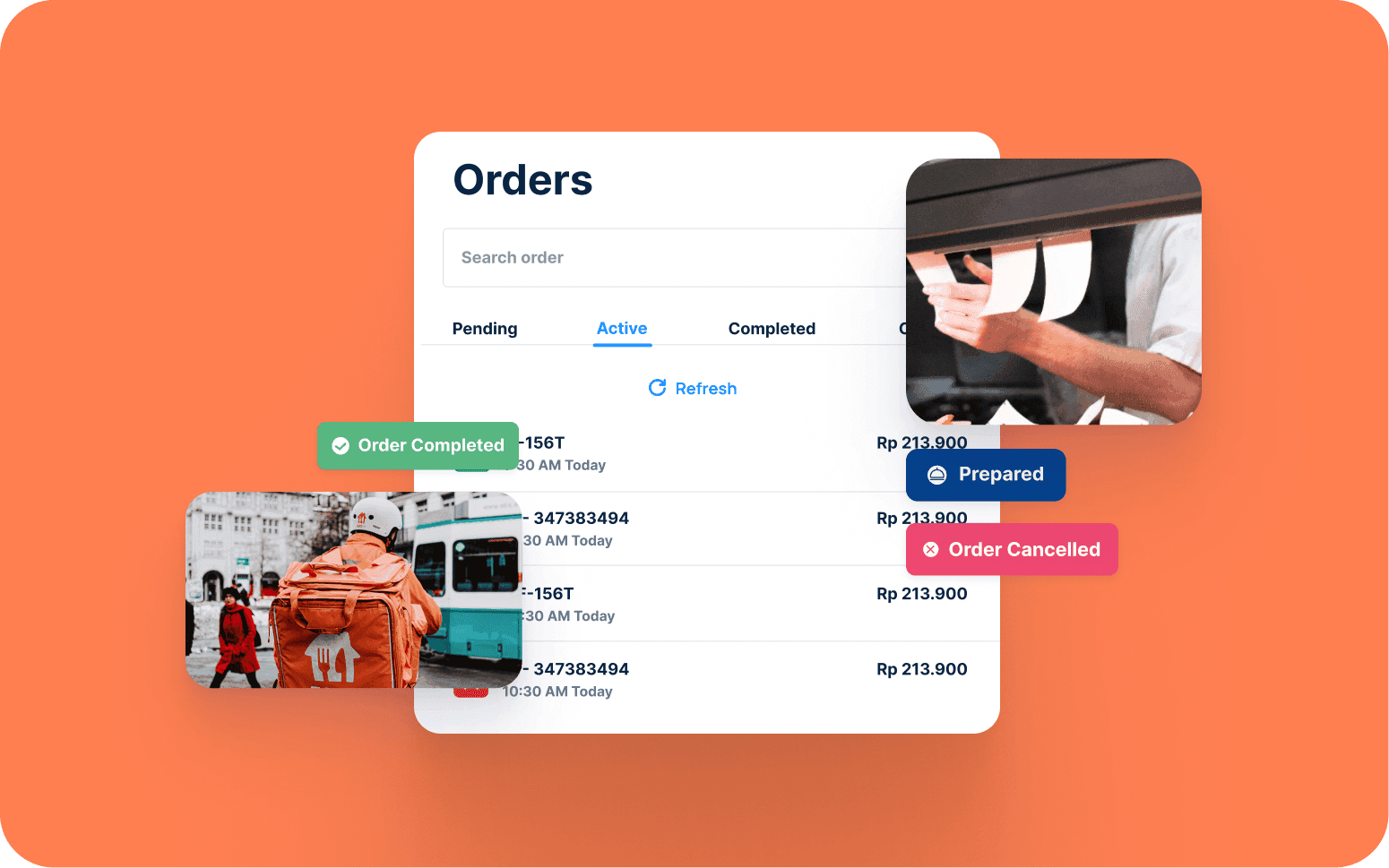
Centralised App for Food Order Management Across Multiple Locations
- 3x
- 12 weeks
Shared spreadsheets and paper recipe cards introduce version risk the moment a second person edits the file. Custom recipe management software gives your production team a single controlled source for every approved formula, with allergen declarations, cost calculation, and scaling built in rather than bolted on.
Built around your product range and production environment. Batch sizes, yield calculations, unit conversions, and the allergen and labelling obligations your products carry are all configured to your specific operation rather than a generic template.
Version-controlled formula management with sign-off workflow before any change reaches the production floor
Allergen declaration generated automatically from the ingredient list with cross-contamination flags for shared-line allergens
Cost calculation showing standard material cost per batch and per unit based on current ingredient purchase prices
Yield factor and loss percentage management with scaling calculation for any batch size
Recognition
Production teams printing recipe sheets from a shared drive with no way to confirm the version on the floor matches the currently approved specification?
Scaling a recipe from a 50 kg trial batch to a 500 kg production batch in a spreadsheet with manual quantity adjustments and no automatic allergen recalculation?
In short
Recipe management software provides version-controlled formula management with sign-off workflow before changes reach the production floor, allergen declarations generated automatically from the ingredient list, batch cost calculation from current ingredient purchase prices, yield factors and loss percentages, and scaling for any batch size, replacing the shared spreadsheet that creates version risk and manual allergen recalculation. RaftLabs builds custom recipe management software for food and beverage manufacturers. Most projects deliver in 8 to 12 weeks at a fixed, agreed cost.
Companies we've built for






A spreadsheet recipe register works well for a small range of products. The problems start when the product range grows, when multiple people need to edit recipes, or when a certification audit requires documented evidence that production ran from the current approved specification. Version control in a shared spreadsheet is manual at best. Allergen declarations have to be maintained by hand and recalculated when a recipe changes. Cost calculations go stale the moment ingredient prices move. Scaling calculations introduce manual error risk every time a production team adjusts quantities for a different batch size.
Custom recipe management software removes those failure points. The approved formula is controlled. Version history is automatic. Allergen declarations update when the ingredient list changes. Cost calculations pull from current purchase prices. A production team running a 200 kg batch from the same recipe used for the 50 kg development trial gets the correct quantities without manual arithmetic and without the risk of a transcription error in the adjustment.
Recipe register with a full version history for every product formula, showing what changed in each revision, who approved the change, and when the new version was released to production. Approval workflow requiring sign-off from the relevant technical or quality authority before a new recipe version is available for production use. Current approved version always displayed as the active specification, with previous versions retained for traceability and audit purposes. Draft recipe capability for development work that is not yet approved for production. Recipe status workflow covering development, pending approval, approved, and archived states. The formula control that ensures production always runs from the current approved spec, not a version someone saved to a local folder last month.
Ingredient library with a specification record for each raw material, supplier details, quality specification, allergen status, unit of measure, and approved substitute ingredients. Ingredient status tracking so raw materials pending requalification or under quality hold are flagged before they are added to a recipe. Unit of measure conversion built into the ingredient record so recipe quantities display in the unit relevant to the production context without manual conversion. Ingredient cost record updated from purchase price data so recipe cost calculations stay current. Specification document storage, certificates of analysis, supplier data sheets, and allergen declarations, linked to the ingredient record and accessible without a separate document search.
Allergen profile for each ingredient covering the 14 major allergens, maintained in the ingredient record and automatically compiled into the finished product allergen declaration when a recipe is saved. Cross-contamination risk flags for shared-line allergens with configurable may-contain labelling based on your site's allergen segregation controls. Allergen matrix report showing the allergen status of every product in the range, updated automatically when any recipe or ingredient record changes. Allergen change alert when an ingredient specification change affects the allergen status of products that contain it, triggering a review workflow before the change is accepted. The allergen management that protects your customers and keeps your labelling compliant with FIC and retailer code requirements.
Standard material cost calculated from the recipe quantities and current ingredient purchase prices, displayed per batch and per finished unit. Ingredient price feeds pull from supplier catalogue data, direct EDI catalogue import or manual price list upload, so cost calculations use current purchase prices rather than prices last updated six months ago. Theoretical vs actual food cost variance report compares the standard recipe cost against the actual goods-issued cost recorded in production, surfacing yield losses, overuse, and substitution decisions that affect margin. Cost history showing how the standard cost for each product has moved over time as ingredient prices change. Scenario modelling for reformulation decisions, the cost impact of substituting one ingredient for another visible before the change is made to the approved recipe. Recipe gross margin calculation when selling price data is maintained in the system. The cost visibility that moves recipe decisions from a technical exercise to a commercial one.
Yield factor and loss percentage configured at the ingredient or process step level, reflecting the actual yield your production process achieves rather than the theoretical quantity. Scaling calculation for any target batch size, adjusting all ingredient quantities, packaging requirements, and process parameters proportionally, with full unit conversion handling between metric and imperial so a recipe developed in kilograms can be scaled for a US facility working in pounds without a manual conversion step. Overage calculation for ingredients that need to be added in excess of the theoretical quantity to achieve the required finished weight at the end of the process. Batch scaling calculator allows production planners to enter the target output volume and receive a fully scaled batch card, including intermediate work-in-process quantities and HACCP critical control point (CCP) parameters, temperature, time, pH, documented per process step as required for HACCP plan compliance. Batch card generation from the recipe for the target batch size, ready to print or display on a production screen. Sub-recipe and work-in-process handling for products manufactured in stages, the intermediate product specified as an ingredient in the final recipe with its own yield and cost.
Nutritional profile calculation from the ingredient nutritional data, compiled automatically from the recipe quantities and displayed per 100 g and per serving. Ingredient list generation in descending order of ingoing weight as required by FIC labelling regulations. Label specification record for each product linking the approved nutritional information, ingredient list, and allergen declaration to the current recipe version. Label change workflow requiring sign-off before a new label specification is released for printing. Regulatory change alert when a labelling rule change affects the required format or content of your product labels, with a task created to review and update affected label specifications.
ERP recipe modules handle standard bill-of-materials well. The gap appears when you need allergen management integrated with the formula, yield factors at the ingredient or process-step level, version control with approval workflow, or labelling data generated from the recipe. If your current ERP module requires manual workarounds for any of those, or if recipe management lives in a spreadsheet alongside the ERP, custom software closes the gap. We'll tell you honestly if the requirement fits what a standard module can deliver.
Yes. The most common integration is ingredient cost data flowing from the purchasing system to keep recipe cost calculations current, and recipe material requirements flowing to the MRP or purchasing system for order planning. Where your existing system supports an API, we integrate directly. Where it doesn't, file-based exchange covers the requirement. The integration scope is confirmed during discovery before development starts.
We build recipe variants as a first-class feature when the requirement exists, the core formula controlled centrally with site-specific or customer-specific variants showing the differences. Each variant carries its own approval workflow and its own allergen declaration. The variant structure is designed during discovery based on how your product range is actually organised, not forced into a generic template.
A focused build covering version-controlled formula management, allergen declarations, cost calculation, and yield-based scaling typically runs $25,000 to $50,000. Adding nutritional calculation, label specification management, multi-site recipe variants, and ERP integration typically brings the total to $50,000 to $90,000. Fixed cost agreed before development starts, no hourly billing.
What clients say
Three-year average engagement. Founders and operators describing the work in their own words. No marketing varnish.

 Indonesia
RaftLabs helped us build a platform that truly transformed how our customers order and engage with our brand across multiple locations.
01 / 02
Tell us your product range, your current formula management process, and the compliance or operational problems you need to solve. We'll scope a recipe management system built around your actual production environment and give you a fixed cost.