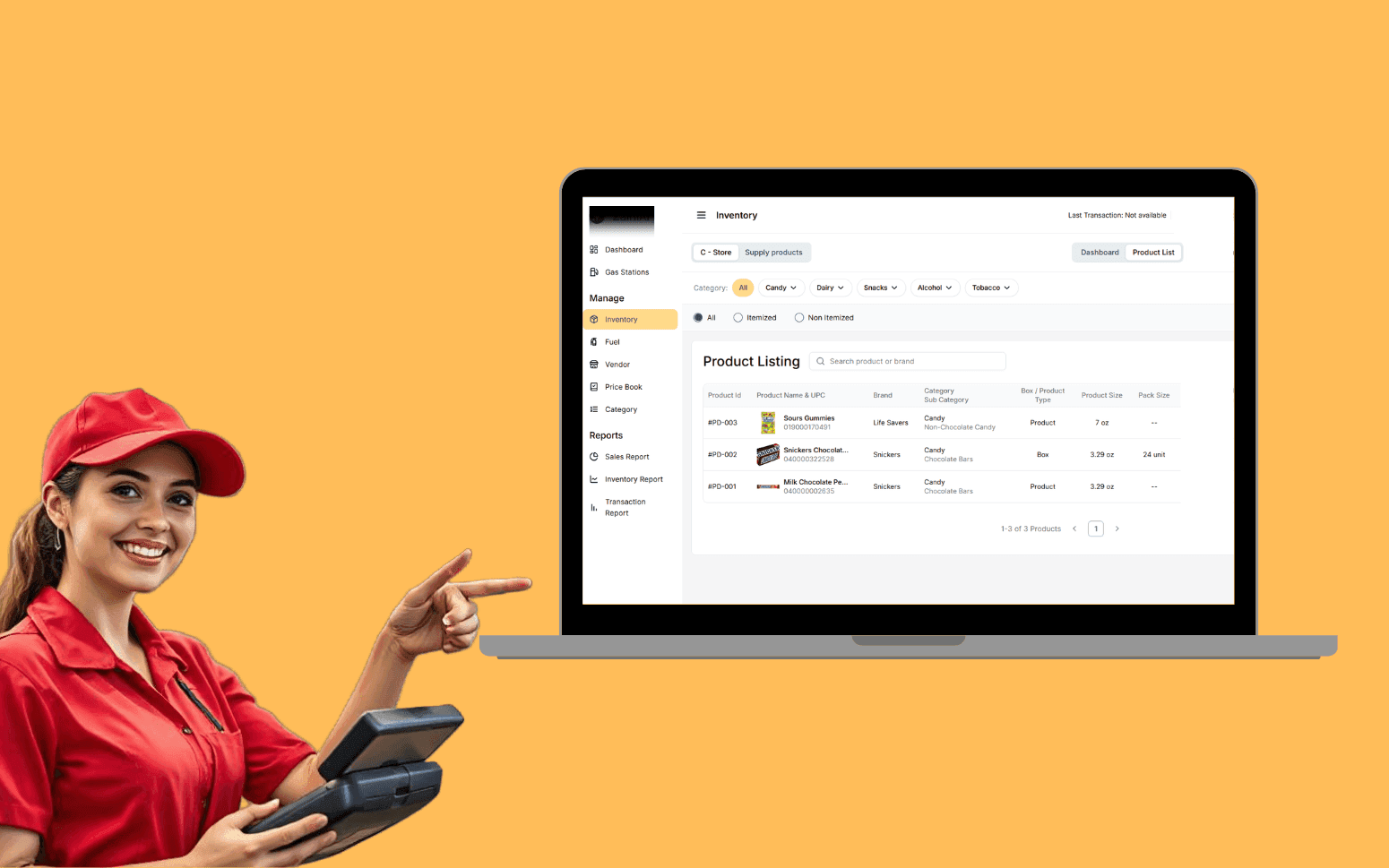
AI OCR Software Scales Gas Station Operations With 20K+ Transactions
- 20K+
- 40+
- 70%
Custom computer-aided facilities management platforms covering work order management, asset registry, space management, and the operational reporting that gives FM teams and leadership visibility into facility performance across multiple sites.
Generic CAFM platforms are built for the median FM operation. When your workflows, your asset types, or your integration requirements diverge from that median, the configuration overhead in a generic platform costs more over time than a purpose-built system.
Work order management covering reactive and planned work from raise to close
Asset registry with location, condition, service history, and lifecycle cost tracking
Space management and floor plan integration with occupancy and allocation reporting
FM dashboards and KPI reporting for team leads and portfolio managers
Recognition
FM team managing work orders in email and tracking asset service history in spreadsheets because the CAFM system doesn't match how your maintenance workflows actually run?
Leadership asking for space utilisation and maintenance compliance reports that your current system cannot produce without someone manually assembling data from multiple sources?
In short
RaftLabs builds custom CAFM (computer-aided facilities management) platforms for facilities teams managing multi-site property portfolios. We develop work order management systems, asset registries with service history and lifecycle tracking, space management with floor plan integration, multi-site portfolio management, and FM KPI dashboards for team leads and portfolio managers. Most CAFM platform builds deliver in 12 to 16 weeks at a fixed cost with full source code ownership.
Companies we've built for








Off-the-shelf CAFM platforms work well when your FM workflows are close to the standard model the vendor designed for. When they aren't, the configuration effort becomes ongoing overhead that never fully resolves the mismatch. That's the case when you have site-specific maintenance workflows, asset types the generic platform doesn't model correctly, or integration requirements with building systems the vendor doesn't support.
A custom CAFM platform is scoped around your actual FM operation: the work order types your team raises, the asset categories you manage, the contractor relationships you run, and the reports your operations director reviews each week. The result is a system your team uses because it fits the job, not one they work around because it was designed for someone else's facilities operation.
Work order management covering the full lifecycle from raise to close. Reactive work orders raised by facilities staff, building users, or automated triggers from asset monitoring. Planned work orders generated from preventive maintenance schedules built to SFG20 task specifications: the standard maintenance specification used across the UK FM sector that defines recommended frequencies and task content for over 70 building services categories. Routing logic that assigns work orders to the right technician or contractor based on trade, site location, and availability. Priority bands from P1 emergency (four-hour response) through P4 routine (five-day response) with configurable SLA thresholds per work category and building type.
Status tracking at each stage with escalation alerts when SLAs are at risk. The helpdesk supervisor gets an automatic notification when a P2 job passes the six-hour mark without an update. Work order history linked to the asset or space it relates to so a technician arriving at a piece of plant can see the last three jobs raised against it before picking up tools. NFC or QR code scanning on asset labels lets field technicians pull up the work order, asset service history, and technical documentation from a mobile device at the point of work without logging into a desktop system. The operational record that replaces email threads and telephone coordination as the system of record for FM activity.
Centralised asset registry covering every maintainable asset across your portfolio: HVAC plant, lifts, fire systems, electrical distribution, building fabric, and fixed equipment. Asset records include location (building, floor, space), installation date, manufacturer, model, warranty status, and assigned maintenance contractor. Service history linked to each asset from completed work orders. Condition grading and last inspection date. Lifecycle cost tracking from purchase through service events. Capital replacement forecasting based on asset age, condition, and replacement cost.
Compliance tracking is built into the asset register rather than maintained in a separate spreadsheet. Each asset carries its statutory inspection schedule: fire extinguisher inspection records under BS 5839, lift thorough examination under LOLER (six-monthly intervals), PAT testing schedules for portable electrical equipment, and fixed wire testing cycles. Overdue inspections surface on the compliance dashboard before they become an audit finding rather than after. Where IFC 4.0 building information model data is available, asset attributes from the as-built BIM export, including manufacturer data sheets and installation specifications, can be imported directly into the asset register, eliminating the manual data entry that typically delays a CAFM go-live on new-build or recently refurbished sites. NFC and QR asset tags, encoded with a unique asset identifier, allow any field technician to scan and retrieve the full asset record from a mobile device. The asset database that makes informed maintenance and replacement decisions possible.
Space inventory linked to floor plans so every space has a recorded function, department allocation, capacity, and condition. Floor plan viewer with space overlay showing current allocation, occupancy status, and recent work order activity per space. Space handover and reallocation workflow for FM teams managing departmental moves. Move management module that coordinates phased departmental relocations across multiple floors or buildings: move requests submitted by department heads, reviewed by FM, and tracked through pack, move, and unpack stages with the resulting space allocation changes recorded automatically on completion.
Occupancy analytics drawn from booking system data or IoT sensor integration. Where occupancy sensors are deployed, Cisco DNA Spaces for enterprise campus environments, Density or Butlr sensors for desk and zone-level counting, sensor data feeds the space management module via MQTT or REST API, updating utilisation figures in near real time rather than relying on manual observation or booking data alone. Utilisation reporting identifies chronically underused meeting rooms, ghost floors where departments have more space than they use, and peak-hour congestion hotspots that booking data alone would miss. Department allocation reporting shows which departments occupy which spaces, at what cost allocation, and against agreed space standards. The space data layer that connects FM operations to real estate and portfolio planning decisions.
Multi-site data architecture with site-specific configurations for maintenance schedules, contractor assignments, and compliance requirements, combined with portfolio-level reporting that aggregates across all buildings. Site manager access scoped to their building. Portfolio manager access with consolidated views across all sites. This is an IWMS-level capability (Integrated Workplace Management System) that goes beyond what a single-site CMMS provides: the ability to see portfolio-wide maintenance compliance, asset replacement pipeline, and space utilisation in a single dashboard without exporting from ten separate systems.
Site comparison reporting for FM directors tracks maintenance spend per square metre across the portfolio, SLA compliance rate by contractor and site, energy consumption benchmarks, and asset condition distribution to identify which buildings carry the highest replacement liability over the next three years. Reference platforms such as Planon, Archibus, and IBM TRIRIGA offer this multi-site IWMS functionality as packaged software; a custom build delivers the same capability scoped to your exact portfolio structure, your contractor network, and the KPIs your board actually reviews. Site-specific alert thresholds for work order response times, asset condition scores, and space utilisation. The architecture that makes a single FM platform work across ten or a hundred sites without forcing identical workflows on buildings with different operational requirements.
Operational dashboards for FM team leads showing open work order counts by status, SLA compliance rates, overdue preventive maintenance jobs, and assets flagged for inspection. Key performance indicators pulled from the live database rather than exported to a spreadsheet: first-time-fix rate by contractor, mean time to repair (MTTR) by asset category, planned vs reactive maintenance ratio as a percentage of total labour hours, and compliance inspection completion rate by statutory category. These are the metrics a facilities director needs to manage contractor performance and demonstrate compliance to a client or auditor.
Portfolio dashboards for FM directors and operations managers cover maintenance spend by site, contractor performance against SLAs, space utilisation trends, and asset condition distribution. Report delivery is automated on a configured schedule: the weekly FM report lands in the operations director's inbox without someone manually exporting from four sources and assembling a slide deck. Where PAS 1192 documentation requirements apply (as they do on publicly funded or BIM-mandated projects), the CAFM system can serve as the data source for FM-stage asset information exchanges. The reporting layer that allows FM teams to demonstrate operational performance with data rather than narrative.
Mobile application for technicians and contractors working in the field: work order view with full job details, asset information, and service history. Job acceptance, status update, and completion recording from the technician's phone without returning to a desk. Photo capture for job documentation and defect recording. Digital signature for work completion sign-off. Parts usage recording against the work order for accurate maintenance cost tracking at the asset level.
NFC and QR code scanning is built into the mobile app. A technician taps their phone against the NFC tag on a piece of plant or scans the QR label on a panel and the relevant asset record, associated open work orders, and last inspection date load instantly. This removes the friction of searching by asset reference on a small screen in a plant room. Offline mode handles buildings with poor connectivity: the app queues status updates, photo uploads, and completion signatures locally and synchronises when connectivity is restored, so work order records are complete even when the technician worked in a basement server room or a basement car park for three hours without a signal. The mobile access that replaces paper job sheets and makes work order status visible in real time rather than at the end of the working day.
A CAFM (computer-aided facilities management) system covers the full scope of FM operations: work orders, asset management, space management, contractor management, and FM reporting, typically integrated with floor plans and building data. A CMMS (computerised maintenance management system) focuses specifically on maintenance: planned preventive maintenance scheduling, reactive work orders, and asset service history. A CMMS is a component of a full CAFM platform. An IWMS (Integrated Workplace Management System) extends the CAFM scope further to include real estate lease management, energy management, and capital project management. That distinction matters at enterprise scale where the FM platform also needs to serve the real estate and finance functions.
If your primary need is maintenance management and PPM scheduling to SFG20 task specifications, a CMMS-scoped build may be sufficient. If you need space management with floor plan integration, contractor management, and portfolio reporting alongside maintenance, a full CAFM platform is the appropriate build. If you are managing a large commercial estate and need lease data, capital planning, and energy benchmarking alongside FM operations, we scope accordingly. We build to the actual requirements rather than defaulting to any of these labels.
A CAFM system manages four main data domains. Asset data: what assets exist, where they are, their condition, service history, remaining useful life, and statutory inspection record, including fire extinguisher service dates (BS 5839 compliance), lift thorough examination records (LOLER), and PAT test dates for portable electrical equipment. Work order data: what maintenance and FM tasks have been raised, assigned, progressed, and completed, including the planned PPM work orders generated from SFG20-based maintenance schedules. Space data: which spaces exist, how they are allocated, occupancy utilisation where sensor data is available, and move management history. Contractor and vendor data: which contractors are engaged, what services they are contracted for, and how they are performing against SLA commitments including first-time-fix rate and mean time to repair.
These data domains need to be connected. A work order should link to the specific asset it relates to, the space it was raised in, and the contractor it was assigned to. That's why separate point solutions for each domain tend to create more coordination work than they save. The compliance inspection data in particular must be linked to the asset record rather than stored in a separate spreadsheet, so that the FM team can demonstrate inspection history per asset to an auditor or insurer without manually assembling evidence.
Floor plan integration starts with your existing floor plan data, most commonly AutoCAD DWG files, PDF drawings, or SVG exports from a building information model. We convert these to a web-friendly format and build a space layer on top that links each drawn space to its record in the FM database. Space attributes, allocation, capacity, occupancy status, and recent work order activity, are then visible as overlays on the floor plan viewer. Updates to space allocation in the FM system are reflected in the floor plan view without redrawing.
Where IFC 4.0 files are available from a BIM model (as-built stage delivery under PAS 1192 or ISO 19650), space and asset geometry can be extracted directly from the IFC file and imported into the CAFM floor plan layer, reducing the manual digitisation effort on recently completed or refurbished buildings. Where IoT occupancy sensors (Cisco DNA Spaces, Density, or Butlr hardware) are installed, real-time utilisation data feeds the space overlay via MQTT or REST API so the floor plan shows live occupancy counts rather than just booking data. For portfolios where accurate digital floor plans do not exist, we discuss the options for creating them, including photogrammetric survey for a consistent output format, during scoping.
A core CAFM platform covering work order management, asset registry, and FM reporting typically runs $30,000 to $80,000. A full build adding space management with floor plan integration, multi-site portfolio management, mobile access for field teams, and contractor management runs $80,000 to $180,000 depending on the number of sites, integration requirements with existing building systems, and the complexity of the reporting layer. We scope each project before pricing so you know the cost before development starts. Fixed project costs only, no hourly billing.
What clients say
Three-year average engagement. Founders and operators describing the work in their own words. No marketing varnish.

 USA
USAAll of the sprints were completed on schedule and on budget. We highly recommend RaftLabs!
01 / 02
Tell us which operational workflows you need to connect, how many sites you manage, and what your current system can't do. We will scope the right CAFM platform and give you a fixed cost.