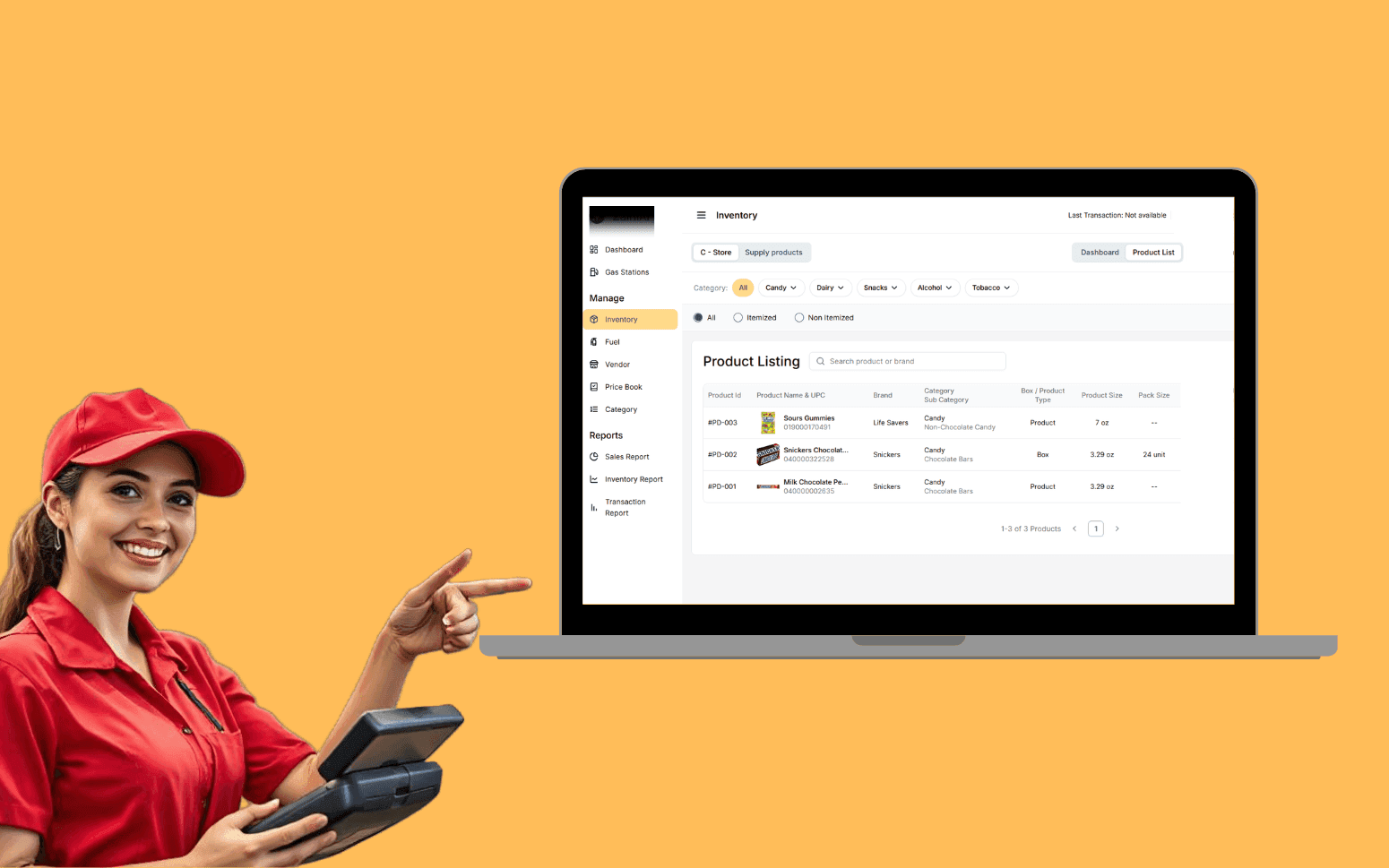
AI OCR Software Scales Gas Station Operations With 20K+ Transactions
- 20K+
- 40+
- 70%
Custom job management software for electrical contractors that need mobile test and inspection recording, compliant certificate generation, and a searchable archive, built for the compliance requirements of electrical work, not a generic field service business.
Paper certificates filed in folders and test results transcribed from site sheets in the office create errors, slow down certificate issue, and make it impossible to find a document when a customer calls months later.
Job scheduling and engineer dispatch
Mobile test and inspection data capture
Electrical certificate generation (EICR, EIC, Minor Works)
Certificate archive and customer portal
Recognition
Electrical certificates issued on paper and filed in folders, no searchable certificate history, and customers calling months later asking for documents that take hours to find?
Test and inspection records filled on paper on site and transcribed in the office, double handling that introduces errors and delays certificate issue?
In short
Custom electrical contractor job management software covers job scheduling and engineer dispatch, mobile test and inspection data capture with automatic pass/fail calculation, generation of compliant EICR, EIC, and Minor Works Certificates, and a searchable certificate archive with a customer self-serve portal. It removes paper-based recording and the double-handling that delays certificate issue. RaftLabs delivers in 12-14 weeks at a fixed cost with full source code ownership.
Companies we've built for








Most electrical contractors still run a two-step process: test data recorded on paper on site, then typed up in the office to produce a certificate. The engineer reads off the instrument, writes the value down, drives back, and someone else types it in. Errors enter at both steps. Certificates are delayed by the office queue.
Custom software removes the second step. The engineer enters test values directly into the mobile app on site, the same values read off the instrument. The circuit schedule builds as they work. Pass/fail calculations run automatically. The certificate is ready to issue the moment the test is complete.
The archive problem is solved at the same time. Every certificate is stored against the property address and searchable by address, customer, certificate number, and date. A customer calling for a five-year-old EICR gets it in under a minute, not after a folder search.
Job booking with property type, work scope description, and engineer skill and certification requirements, including electrical licence class (C1 for basic installation, C2 for inspection and testing, or authorised person designation for high-voltage work) so only qualified engineers are assigned to jobs matching their authorisation level. Schedule view by engineer and by date with drag-and-drop rescheduling and colour-coded job status. Emergency job insertion with automatic notification to the assigned engineer via mobile app push and SMS. GPS dispatch showing available engineers near the job address, with route optimisation via Google Maps Directions API or HERE Routing to sequence multi-job days efficiently. Job confirmation sent to the customer by SMS and email with date, time window, and engineer name. Job capacity view per engineer for forward planning, accounting for travel time between jobs so the schedule reflects what is actually achievable in a working day. Access notes, distribution board location, site hazard notes, and property details visible on the schedule and on the engineer's mobile app before they arrive. Recurring inspection jobs created automatically from the previous certificate date plus the recommended inspection interval, 5 years for domestic EICRs, 3 years for rental properties, so future jobs are in the system without manual diary entry.
Engineer records circuit test results directly in the mobile app on site, no paper, no double entry. Values entered per circuit to the decimal place required by the test instrument: insulation resistance in megaohms, ring continuity in ohms, earth fault loop impedance (Zs) in ohms, and RCD operating time in milliseconds at 1x and 5x rated residual current. Circuit schedule built on site as circuits are tested, circuit description, wiring system, protective device type, rated current, and cable reference method entered per circuit in line with NEC or BS 7671 wiring regulation circuit schedule requirements. Automatic pass/fail calculation for each test value against the applicable BS 7671 limiting values for the circuit type and protective device, flagging immediately if a measured Zs exceeds the maximum permitted for the overcurrent device in circuit, so the engineer knows on site rather than back in the office. Observation recording with IET code classification. C1 (danger present), C2 (potentially dangerous), C3 (improvement recommended), and FI (further investigation required), entered against the affected circuit or location with a description field. Pre/post-trip style inspection checklist at job start and end for van stock verification and on-site safety checks. Inspector details, scope of inspection, and declaration recorded in the app before submission. Digital signature capture for inspector and client on the device screen, applied to the certificate at generation.
EICR (Electrical Installation Condition Report), Electrical Installation Certificate (EIC) for new installations, and Minor Works Certificate generated directly from the inspection data entered on site, no re-entry, no transcription errors. Compliant format meeting BS 7671 Amendment 3 layout requirements, with all mandatory fields populated from the recorded data including the full circuit schedule, test result summary, observation list with C-code classifications, and overall condition assessment (Satisfactory or Unsatisfactory). PAT test records generated in the same workflow for portable appliance testing jobs, asset description, make, model, serial number, earth continuity and insulation resistance results, and pass/fail outcome per asset. Engineer digital signature captured in the app and embedded in the generated PDF. Contractor details, supervising engineer name, and inspector declaration applied from the engineer profile so the certificate is complete without office intervention. Certificate PDF emailed to the customer immediately on completion, or held in a review queue for an office supervisor to approve before issue, depending on the contractor's quality assurance process. Certificate number generated automatically in sequence per certificate type per contractor. Previous certificates for the same property linked to the new record, creating a continuous inspection history that supports the periodic inspection regime.
All certificates stored and indexed by property address, customer name, certificate number, certificate type (EICR, EIC, Minor Works, PAT), and issue date. Full-text search across all indexed fields returns results in under a second regardless of archive size, a contractor with five years of records can find a 2020 EICR for a property as quickly as one issued last week. Compliance document tracking alongside certificates: EICR and PAT test certificates flagged with next-due dates so the archive doubles as a renewal pipeline. Certificate accessible to office and field staff with role-based access, engineers see their own issued certificates and the property history for jobs currently assigned to them. Office managers and administrators have full archive access across all engineers and all properties. Customer portal for self-serve certificate download, the customer logs in, sees all certificates issued for their properties, and downloads the PDF without a phone call to the office. Ideal for landlords managing multiple rental properties who need certificates available on demand for local authority licensing checks. Certificate re-issue from the archive without regenerating the record. Materials management: van stock tracking linked to jobs so parts used on site are recorded against the job record and deducted from the engineer's van inventory, feeding materials cost into the invoice.
EICR observations listed with C1, C2, and C3 IET code classification, the affected circuit reference, location description, and the specific BS 7671 regulation the observation relates to, so the report reference is accurate and defensible if a customer or their solicitor queries it. Remedial work quotation generated directly from the observation list: each C1 and C2 observation becomes a priced line item in the quote with the regulation reference retained, so customers understand what is being fixed and why. Customer approves the quote electronically via the customer portal, triggering scheduling of the remedial work as a follow-up job linked to the original EICR and assigned to an appropriately qualified engineer. Site photos captured in the mobile app on site attached to the relevant observation, providing photographic evidence of the condition found for customer communication and any subsequent dispute resolution. Invoice generation for completed jobs integrated with QuickBooks or Xero, job cost (labour time plus materials from van stock record) flows to the invoice automatically, reducing the time from job completion to invoicing. Remedial completion sign-off linked to the original certificate, updating the EICR record to show which observations have been remedied, by whom, and on what date. Outstanding remedials report for the office showing all EICRs with unsatisfied C1 or C2 observations and the customer's last contacted date, so no dangerous installation falls through the follow-up process.
All previous visits, certificates, inspection records, test results, site photos, and customer equipment records stored against the property address, accessible to any engineer attending a return visit in the mobile app before they arrive on site. Previous EICR circuit schedule visible for reference when carrying out a new periodic inspection at the same property, showing the circuit layout, previous test values, and historical observations so the inspector can see what has changed since the last inspection. Historical fault and observation data, including prior C1 and C2 observations, whether they were remedied, and how, visible to inform the current inspection scope and the inspector's expected findings. CRM layer with customer equipment history: boiler, distribution board make and model, fuse type, and installed consumer unit date recorded per property and visible to the attending engineer. Property notes for access codes, distribution board location, hazardous areas, key contact, and customer communication preferences available on the mobile app job card. Multiple properties managed under one commercial client account, a landlord with 20 rental properties or a facilities manager with 10 commercial sites has all properties in one account with separate job, certificate, and invoice records per site. The job history view that means an engineer attending a property for the first time has the same context as the one who has been there three times before.
Poor signal is common on site, in basements, inside buildings under refurbishment, in plant rooms, and in rural properties. The mobile app works fully offline using a local SQLite store on the device. The engineer enters all test data, builds the circuit schedule, records C1, C2, and C3 observations, captures site photos, and completes the inspector declaration without a network connection. Every data entry is written to local storage immediately on input, so no data is lost if the device is locked, the app is backgrounded, or the device battery dies mid-inspection. When connectivity is restored, typically when the engineer returns to the van or leaves the site, the local record syncs automatically to the server over an encrypted connection. The certificate is generated from the synced data immediately after upload and is ready to issue or review without any further action from the engineer. Apps built on this architecture have been tested on inspections lasting several hours in zero-connectivity environments with no data loss. We recommend testing on a representative site during UAT to confirm behaviour before go-live.
The system generates Electrical Installation Condition Reports (EICR) compliant with the IET model forms in BS 7671 Appendix 6, Electrical Installation Certificates (EIC) for new installations and additions requiring a full certificate, and Minor Works Certificates for small additions and alterations not requiring a full EIC. All three follow the layout and mandatory field requirements of BS 7671 and the guidance in Guidance Note 3 (Inspection and Testing). The data capture form in the mobile app is determined by the job type selected at booking so the engineer sees the correct fields for the work they're doing. For US markets, the equivalent outputs follow NEC Article 100 inspection record requirements rather than BS 7671. Additional certificate types can be added within the same platform architecture: PAT test records with appliance register and retest dates, Emergency Lighting duration test records per luminaire, and Fire Alarm system inspection records. Each additional type is a structured data capture schema and PDF generation task that follows the same offline-capable mobile workflow as the core certificate types. We scope additional certificate types during discovery if your service offering includes them.
Yes. PAT testing is a separate job type with its own data capture form in the mobile app, asset description, make, model, serial number, asset location, test class (Class I or Class II), earth continuity result in ohms, insulation resistance result in megaohms at 500V, and pass/fail outcome per asset. For Class I appliances, earth continuity is measured at 10A AC or 25A DC depending on the test instrument, and the pass limit is 0.1 ohm or lower. For Class II appliances, insulation resistance at 500V must be 2 megaohms or above to pass. The mobile app enforces these limits and flags a fail immediately when a value is entered outside the acceptable range. PAT test records are stored in the same archive as fixed installation certificates, searchable by asset, site, test date, and customer. A PAT test register is generated per site showing all tested assets, test results, pass/fail status, and retest dates due, useful for commercial clients managing appliance compliance across multiple locations. The PAT module is built as part of the initial platform or added as a later module, using the same offline-capable mobile architecture and the same PDF generation pipeline as the fixed installation certificate types.
An electrical contractor job management platform covering job scheduling with skill-based engineer assignment, offline-capable mobile inspection app, EICR and EIC certificate generation, certificate archive search, and a customer self-serve portal typically takes 12 to 14 weeks from project start to production. That includes discovery (scoping the certificate types, compliance format requirements, and integration points), design, development, compliance review of the certificate output format against BS 7671 model forms, field testing with your engineers on live jobs, and deployment. QuickBooks or Xero invoice integration adds approximately 2 weeks. PAT testing or additional certificate types (Emergency Lighting, Fire Alarm) added to the initial scope extend the timeline by 2 to 3 weeks per type depending on the data capture complexity. GPS dispatch with route optimisation is typically a 1 to 2 week addition. All projects are priced at fixed cost before development starts, with the timeline confirmed after discovery so there are no surprises when integration scope is understood fully. Comparable commercial platforms. Tradify, ServiceM8, Simpro, are reference points we use during discovery to understand which features you already know and which you need to be built differently for your compliance requirements.
What clients say
Three-year average engagement. Founders and operators describing the work in their own words. No marketing varnish.

 USA
USAAll of the sprints were completed on schedule and on budget. We highly recommend RaftLabs!
01 / 02
Tell us how you currently record test data and issue certificates. We'll tell you what a custom system would change and how long it would take.