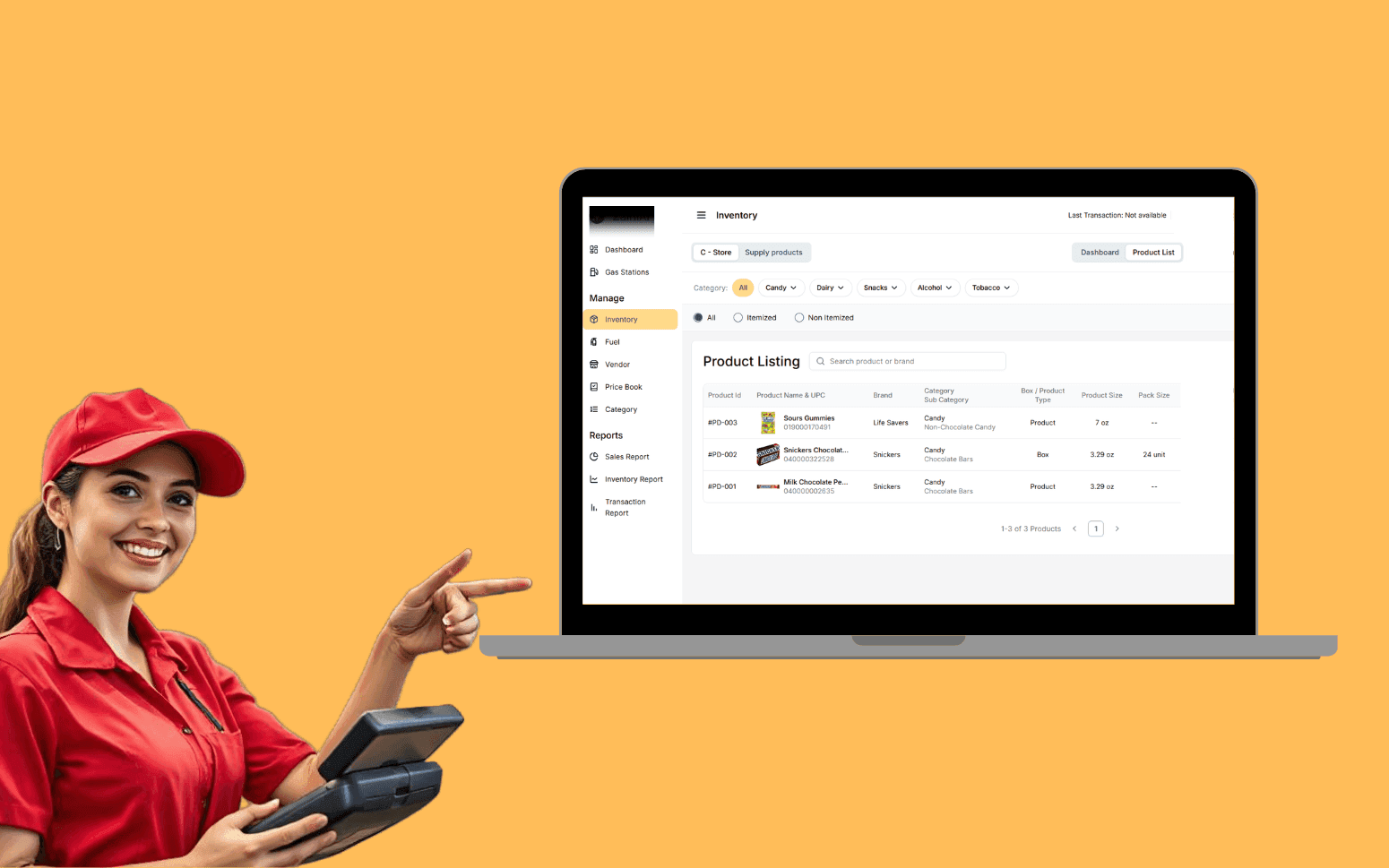
AI OCR Software Scales Gas Station Operations With 20K+ Transactions
- 20K+
- 40+
- 70%
Care workers managing caseloads of vulnerable individuals through paper records and disconnected spreadsheets face a problem that has real consequences. The person whose contact is overdue does not surface automatically. Someone has to remember to check. The risk assessment done three months ago sits in a file that nobody looks at unless there is a crisis. When a worker leaves, the knowledge of their caseload does not transfer with the file.
We build care management software for care organisations that need a structured, accessible record of every person they support: their circumstances, their risk level, their contact history, and the current status of any referrals or escalations. The most vulnerable people in the caseload are visible to the whole team, not just the individual worker who remembers them.
Caseload management with personal details, vulnerability assessment, support plan, and full case history for every person in the caseload
Risk assessment tools with scoring frameworks that make the risk rating visible and reviewable rather than a subjective judgement in a worker's head
Contact record management logging every interaction so the case history is complete regardless of which worker is handling the case
Escalation alerting when contact is overdue or a risk assessment has not been reviewed within the required period
Recognition
Care workers managing caseloads through personal notebooks and shared spreadsheets, with no organisation-wide view of who is at risk, who has not been contacted recently, and who has an outstanding referral going nowhere?
Managers unable to show auditors a complete contact history for a vulnerable individual because records were kept on a worker's personal device and are no longer accessible?
In short
RaftLabs builds custom care management software for care organisations and local authorities managing vulnerable populations. Capabilities include caseload management, risk assessment with scoring frameworks, contact record management, escalation alerting, referral management, and role-based data protection. Most care management projects deliver in 12-18 weeks at a fixed cost with full source code ownership.
Companies we've built for







In care management for vulnerable populations, the failures that lead to harm are almost always visible in retrospect, not because the information was not there, but because it was not surfaced to the right person at the right time. The contact that was overdue by three weeks. The risk assessment that was not reviewed after a significant change in circumstances. The referral that was made and never followed up because the worker who made it moved to a different caseload.
Custom care management software is built around the obligation to maintain contact with vulnerable individuals and to act when the contact record shows something has changed. The system surfaces overdue contacts, prompts risk reviews, and tracks referrals to their outcome, so the organisation's duty of care is supported by a system that does not depend on every individual worker remembering every person on every caseload.
Individual case records capturing the personal details, living situation, household composition, presenting needs, and vulnerability indicators for each person supported. Support plan management within the case record covers the agreed support objectives, the actions the organisation will take, the frequency of contact, and the review date, updated at each review with the previous plan version retained. Case history is a chronological record of every contact, assessment, referral, and significant event in the person's involvement with the service, accessible to all authorised workers at the organisation, not just the allocated worker. Caseload allocation management assigns each case to a primary worker and an allocated team, with the allocation visible to supervisors so they can see individual worker caseload volumes and reassign cases when a worker is absent or leaves. Case status management tracks the case through defined status stages, referred, assessed, active, review, and closed, with the status change recorded and the reason for closure documented when a case is closed.
Structured risk assessment tools replace subjective judgement with a scored framework: each risk domain is assessed against defined criteria, a score is calculated, and an overall risk rating is determined by the combined domain scores. Risk assessment version history retains every completed risk assessment with the scores, the assessing worker, and the date, so changes in risk level over time are visible and the basis for each assessment is documented. Risk reassessment triggers are configured for the organisation's review policy: a reassessment required at a defined interval, triggered automatically by a significant change in circumstances recorded in the contact log, or required when the case status changes. The risk rating dashboard for supervisors shows the risk distribution across the caseload, how many cases are at each risk level, updated in real time so the supervisor does not need to open individual records to understand the team's caseload risk profile. The comparative risk tool allows the assessor to compare the current assessment with the previous assessment and document the reason for any change in risk rating, creating an auditable record of how the risk level changed and why.
Contact records cover every interaction with or about a person: visits, phone calls, emails, multi-agency discussions, and collateral contacts with family members or other professionals, each capturing the date, the type of contact, the worker who made the contact, the outcome, and any follow-up actions arising. Missed contact recording captures when a planned contact cannot be made: the reason recorded, the next attempt planned, and the supervisor notified if the missed contact represents a safeguarding concern. Contact frequency monitoring compares the actual contact frequency against the agreed frequency in the support plan, flagging where contact is falling behind the required schedule. Shared contact records across the team mean that when a worker is absent, their cases are accessible to the covering worker with the full contact history, so continuity of care does not depend on a verbal handover. Contact record search and filter lets a supervisor or auditor retrieve all contacts for a specific person over a defined period, or all contacts made by a specific worker on a specific date, without manual file retrieval.
Automated escalation alerts generate when defined conditions are met: contact overdue by more than the configured threshold, risk assessment not reviewed within the required period, a referral outstanding beyond its expected response time, or a support plan past its review date. Alert routing goes to the allocated worker as the primary recipient and to the supervisor if the alert is not acknowledged within a defined period, creating a supervisory safety net for cases where the allocated worker is unable to respond. Safeguarding alert management covers situations where a contact or risk assessment reveals information requiring a safeguarding referral: the alert is created, the safeguarding lead is notified, and the referral and its outcome are recorded against the case. The escalation audit trail records every alert generated, every alert acknowledged, and every action taken in response, so the organisation can demonstrate to a regulator or an inquiry that escalation procedures operated as designed. The dashboard view for managers shows all current open alerts across their team's caseload, categorised by type and age.
Referral records track referrals made to other services from creation to resolution: the service referred to, the date of referral, the reason, the referring worker, and the outcome. Outbound referral tracking follows up referrals to partner agencies and records the response received, whether accepted, declined, or placed on a waiting list, and the date of that response. Inbound referral management covers referrals received from other organisations: the referral assessed, allocated to a worker, and progressed through the initial assessment and case opening process with each step recorded. Referral pathway management for organisations with defined pathways guides the worker through the steps required for each referral type and records completion of each step. Referral outcome recording when the referral concludes, whether the person received the service, declined it, was ineligible, or could not be engaged, forms part of the case history and contributes to service-level reporting on referral outcomes.
Role-based access control determines what each user can see and do within the system: a care worker can see and update their allocated cases, a supervisor can see all cases within their team, and a manager can see aggregated reporting without accessing individual case details unless authorised. Case-level sensitivity marking for cases involving particularly sensitive information, such as domestic violence, sexual abuse, or witness protection, restricts access to a named list of authorised individuals regardless of their general role permissions. Audit logging of every access to a case record, who viewed the record, when, and from what device, creates the access log required by data protection regulation and enables investigation of any suspected data breach. Data retention management enforces the retention periods required for different case record types under the applicable data protection framework, with records approaching the end of their retention period flagged for disposition review. Subject access request management for individuals requesting access to their own records logs the request, identifies the relevant records, reviews them for third-party information requiring redaction, and documents the response.
Care management software for vulnerable people sits within a specific regulatory framework for data protection and safeguarding. We design the data architecture and access controls to meet the requirements of the UK GDPR and the Data Protection Act 2018, or the applicable framework in your jurisdiction, including lawful basis documentation, data minimisation, retention policy enforcement, and subject access request support. Safeguarding workflows are configured to your organisation's safeguarding policy: the triggers for a safeguarding alert, the escalation routing, and the recording requirements are defined with your designated safeguarding lead before development starts.
Multi-agency working requires careful access control: not every agency involved with a person should see the full case record held by another agency. We design the sharing architecture to reflect the data sharing agreements and consent frameworks in place between the organisations involved. Where a formal data sharing agreement exists, the system can provide authorised users from partner agencies with a defined view of relevant case information. Where sharing is consent-based, the consent status is recorded and the access control reflects the current consent position. The architecture is agreed with the information governance leads at each organisation before development starts.
Yes. We design care management systems with mobile-first field worker interfaces that function on the devices care workers carry in the field, smartphones and tablets. For environments with unreliable connectivity, we build offline capability for core field functions: viewing the allocated caseload, recording contacts, and completing risk assessments. Records created offline are synchronised with the central system when connectivity is restored. The offline design is scoped to the specific field working patterns of your organisation.
A system covering caseload management, contact records, risk assessment, and escalation alerting typically runs $40,000 to $80,000 depending on scope and the number of user roles and agencies involved. Adding referral management, multi-agency access, and advanced data protection controls brings the total to $80,000 to $160,000. Fixed cost agreed before development starts, no hourly billing.
What clients say
Three-year average engagement. Founders and operators describing the work in their own words. No marketing varnish.

 USA
USAAll of the sprints were completed on schedule and on budget. We highly recommend RaftLabs!
01 / 02
Tell us about the population you support, your caseload size, your safeguarding obligations, and where your current records system creates gaps in visibility or continuity. We'll scope a system built around your care model and your regulatory obligations.