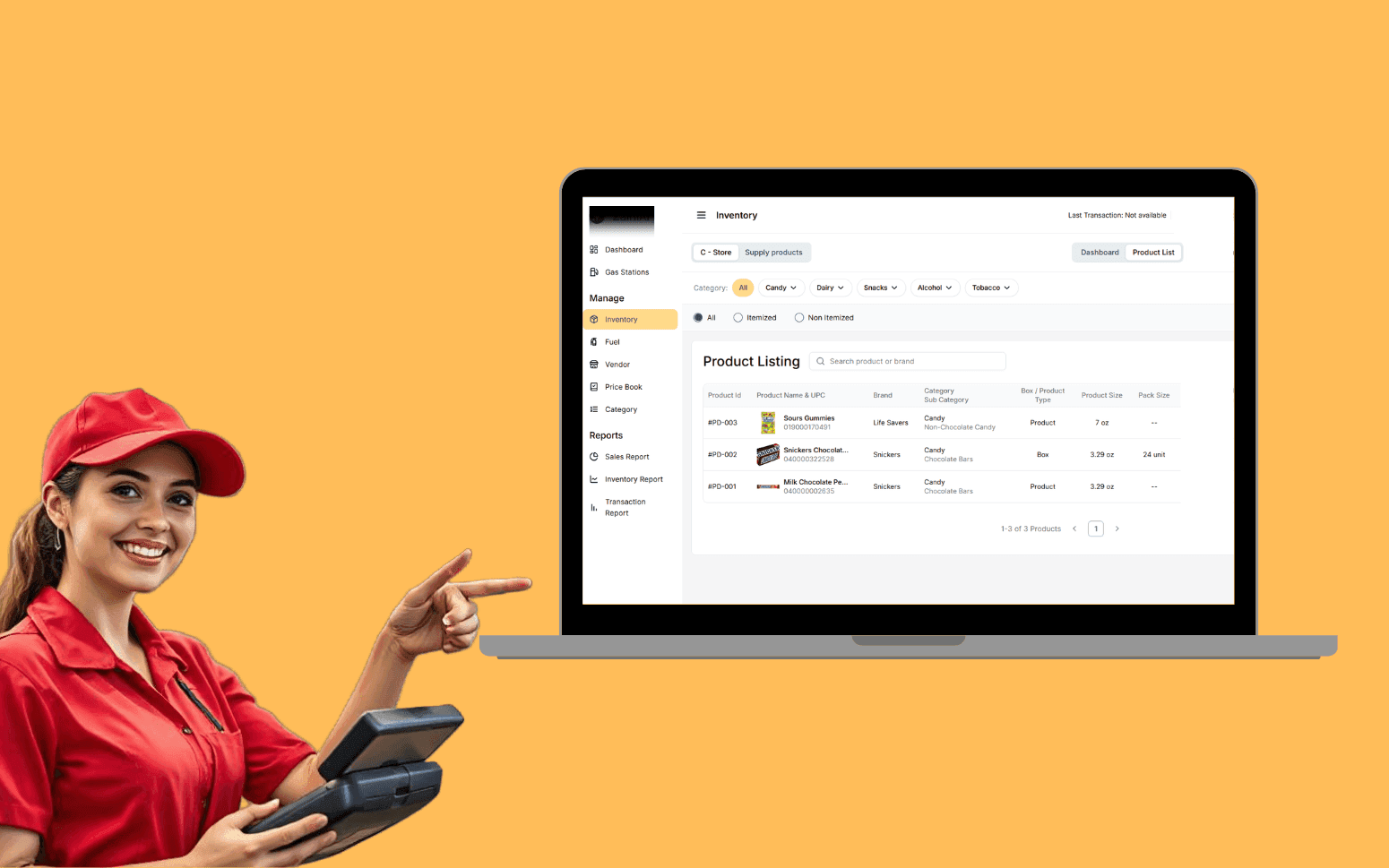
AI OCR Software Scales Gas Station Operations With 20K+ Transactions
- 20K+
- 40+
- 70%
Custom fleet management software for commercial fleets, rental companies, and corporate vehicle programmes. GPS tracking, telematics, maintenance scheduling, and driver management in one system, not a phone call and a spreadsheet.
Built for operations where vehicle location is unknown until a driver picks up the phone and maintenance is done when something breaks rather than before it does.
Live GPS tracking with geofence alerts and full trip history per vehicle
Telematics data collection: fuel consumption, engine diagnostics, and driver behaviour scoring
Mileage and time-based maintenance scheduling with service history per vehicle
Driver assignment, licence expiry tracking, and performance dashboards
Recognition
Checking vehicle location by calling drivers because there is no live GPS visibility across the fleet?
Vehicles going out of service unexpectedly because maintenance is reactive rather than triggered by mileage or time?
In short
RaftLabs builds custom fleet management software with real-time GPS tracking, telematics data collection, mileage-triggered maintenance scheduling, driver assignment and performance scoring, cost-per-vehicle analytics, and compliance tracking for MOT, insurance, and tachograph data. For a 50-vehicle fleet, mileage-based maintenance alone can prevent 2 or more unplanned breakdowns per month. Most fleet management projects deliver in 12-14 weeks at a fixed cost.
Companies we've built for







Most fleet operators hit the same inflection point. At 10 vehicles, calling drivers to confirm location is annoying but workable. At 50, it's a half-time job for someone in the office. At 100 or more, you have a visibility problem that costs money every day. Wasted fuel from idle vehicles, customer service failures when you can't confirm ETAs, and maintenance crises when a van breaks down on a job because nobody scheduled the service.
The reactive maintenance problem is equally costly but less visible. A tyre or brake failure on a commercial vehicle is a risk event, not just a cost. But without mileage-based triggers, services are scheduled on gut feel or when drivers report a warning light. Parts are replaced too late or unnecessarily early. Downtime hits unpredictably.
Custom fleet management software puts a system around both problems: live vehicle visibility with geofencing and alerts, telematics that surfaces driver behaviour and vehicle health, maintenance triggered by actual mileage rather than calendar assumption, and cost analytics that show you what each vehicle actually costs per mile.
Live vehicle map showing current position, speed, and heading for every vehicle in the fleet, updated at 30-second polling intervals via cellular or satellite network. Trip history per vehicle includes route replay, start and end points, stop duration, and mileage recorded against each journey. Geofence configuration uses Turf.js geometry libraries or Google Maps Geometry API. Depots, customer sites, exclusion zones, and restricted areas. Entry and exit alerts go to fleet managers by SMS or in-app push notification. Idle time monitoring flags vehicles stationary with the engine running beyond a configurable threshold, typically 5 or 10 minutes, with idle fuel cost calculated from consumption data. Street-level address resolution for each position fix means fleet managers see "42 Industrial Way" rather than a coordinate pair. The visibility layer that replaces calling drivers to confirm where they are and gives the dispatch team a real picture of the fleet at any point during the working day.
Fuel consumption recording per vehicle and per trip. Actual vs. expected based on vehicle type, load, and route profile. Engine diagnostic data from OBD-II PID queries and J1939 CAN bus integration via Samsara, Geotab, or KeepTruckin telematics device APIs, with fault codes (DTCs) surfaced against the vehicle record in real time and cross-referenced against a DTC code library for plain-language descriptions. Harsh braking events are flagged at deceleration above 0.3g, harsh acceleration above 0.3g, and cornering above 0.4g. All thresholds are configurable per vehicle class or operator policy. Driver behaviour scoring is calculated from event frequency and severity per trip and per period, producing a score per driver that reflects actual road behaviour rather than self-reported data. Speeding events are recorded with posted speed limit comparison where mapping data supports it. Engine idle duration, coolant temperature, oil pressure, and battery voltage are all available as additional PIDs depending on vehicle make and model. Data is retained per vehicle for trend analysis, insurance reporting, and duty-of-care evidence. The raw telemetry layer that makes driver coaching, fuel cost reduction, and predictive maintenance possible.
Maintenance triggers configured by mileage interval, engine hours, or calendar date. Whichever comes first. Real-time mileage is fed directly from OBD-II odometer PID readings so the counter reflects actual usage rather than estimated mileage. Service history is recorded per vehicle: date, mileage at service, work done, parts replaced, cost, and workshop contractor. Predictive maintenance flags are driven by engine fault codes (DTCs read via OBD-II). A recurring DTC for the same subsystem on a given vehicle creates an advisory alert before the issue becomes a breakdown, even if the scheduled service interval hasn't yet been reached. Upcoming service alerts go to fleet managers at a configurable percentage of the interval, typically at 80% of the mileage or time window, not after the trigger is already past. DVIR (Driver Vehicle Inspection Report) support covers pre-trip and post-trip inspection checklists completed by drivers in the mobile app, with defects logged against the vehicle record and triggering a maintenance review if a safety item is reported. Vehicle downtime recording tracks lost operational days per vehicle and identifies problem assets whose total cost of ownership exceeds replacement value. The scheduled maintenance workflow that replaces waiting for a warning light and gives fleet managers a forward view of what's coming due in the next 30 days across the entire fleet.
Driver profiles with licence number, licence class, expiry date, endorsements, and current vehicle assignments. Licence expiry alerts go to fleet managers and HR at configurable lead times, typically 60, 30, and 7 days before expiry, so no driver operates with an expired licence due to an administrative gap. Vehicle-to-driver assignment per trip is recorded via driver ID card, PIN, or mobile app login, producing a historical assignment record that links every telematics event to the driver on duty at the time. ELD (Electronic Logging Device) integration for US fleets subject to FMCSA Hours of Service (HOS) rules covers driving hours, on-duty time, sleeper berth periods, and violations recorded and available for DOT inspection. Incident recording against driver profiles covers collisions, infringements, citations, and customer complaints, with supporting documents attached. Driver safety score is calculated from harsh event frequency per mile driven in the period, producing a normalised score that accounts for higher-mileage drivers fairly. Performance dashboards show behaviour scores, incident history, mileage per period, and trend against prior periods. The driver record that connects vehicle events to the person responsible and supports both day-to-day coaching and formal performance management.
Total cost of ownership (TCO) calculated per vehicle from fuel spend, maintenance costs, insurance allocation, tyre replacement, and depreciation inputs, producing a cost-per-mile figure that reflects the true expense of operating each asset, not just the fuel card statement. Fuel card integration with WEX, Comdata, or Fleetcor feeds transaction-level fuel data into the vehicle cost record automatically, eliminating manual fuel reconciliation and flagging transactions that don't match the assigned vehicle's GPS position at the purchase time. IFTA (International Fuel Tax Agreement) mileage and fuel data recorded per jurisdiction automatically for multi-state operators, generating the quarterly IFTA report from actual telematics data rather than driver estimates. Utilisation rate per vehicle shows active trip time vs. idle time vs. scheduled downtime vs. unscheduled downtime, enabling fleet right-sizing decisions based on which vehicles are consistently underused. Idle cost reporting quantifies the fuel burned by vehicles stationary with the engine running, using actual fuel consumption data from the telematics device rather than a generic idle rate. Fleet ROI reporting compares vehicle operating cost against revenue attributed to that asset, where revenue data is imported from your job management or dispatch system. The financial picture that tells you which vehicles to replace, which to redeploy, and which are carrying costs that aren't proportional to the work they deliver.
MOT expiry and vehicle registration renewal alerts per vehicle at configurable lead times, typically 30 and 7 days before expiry, with a fleet-wide compliance dashboard showing the next 90 days of upcoming expirations. Insurance policy tracking covers expiry alerts, premium recording, and document storage per vehicle so the certificate of insurance is accessible in seconds for any vehicle in the fleet. Tachograph data integration for HGV fleets subject to EU tachograph regulations handles driver card data uploaded automatically or via manual upload, infringement detection covering driving time, break, and rest violations, and working time compliance reporting across drivers. FMCSA ELD compliance for US commercial motor carriers subject to HOS rules retains ELD data for the required 6-month period and makes it available for roadside inspection in the required format. Operator licence compliance tracking checks against fleet size, vehicle categories, and authorised operating centres so the fleet never exceeds its licensed capacity without a flag being raised. Audit trail of all compliance actions covers who acknowledged an alert, when a document was updated, and which vehicles were operating on a given date, for regulatory inspection and internal governance. The compliance layer that keeps commercial vehicles legal, avoids the cost of operating unlicensed or uninsured assets, and reduces the administrative effort required to demonstrate compliance when inspectors ask.
We build integrations with the most widely used telematics hardware on the market, including Teltonika, Samsara, Geotab, CalAmp, and Queclink devices. For Samsara and Geotab, we connect via their REST APIs and webhook event streams rather than raw device protocol, which gives access to processed telematics data including harsh events, driver safety scores, and pre-processed HOS data. For raw device integration (Teltonika, CalAmp, Queclink), we handle the binary protocol parsing directly and build the normalisation layer in the backend. Hardware integration typically works over MQTT, HTTP webhooks, or platform APIs depending on the device and gateway used. We're hardware-agnostic. If you have existing hardware installed, we integrate with it. If you're starting from scratch, we advise on hardware selection based on your vehicle types, CAN bus data requirements, and cost constraints. OBD-II PID availability and J1939 CAN bus support vary by vehicle make, model, and year, so we confirm which data points are accessible for your fleet during discovery before finalising the telematics feature scope. For mixed fleets, we typically end up with two or three hardware types across the fleet and normalise the data to a common schema in the integration layer.
Maintenance scheduling works by setting triggers per vehicle or vehicle group: for example, service every 10,000 miles, oil change every 6 months or 5,000 miles (whichever comes first), or annual safety inspection. The system tracks live mileage from the OBD-II odometer PID via the telematics device, not from a driver-reported or estimated odometer, and tracks calendar date. When a vehicle approaches a trigger threshold, by default at 80% of the interval, an alert goes to the fleet manager. The fleet manager can schedule the service with a contractor, record the booking in the system, and track the vehicle status as in-for-service, which removes it from the available fleet in the dispatch view. Once the service is complete, the record is updated with the work done, parts used, and cost, and the mileage counter resets for the next trigger interval. In addition to scheduled triggers, predictive maintenance alerts are raised when the telematics device reads a persistent DTC fault code, for example a P0300 random misfire or a P0171 lean fuel mixture code, before a scheduled service is due. This allows fault-code-driven interventions alongside the standard mileage and time schedule. The full service history per vehicle is retained and searchable, and total maintenance cost per vehicle flows into the TCO analytics view.
Yes. Vehicle profiles capture vehicle type, category, weight class, fuel type, and any type-specific compliance requirements. Maintenance schedules, telematics data fields, and compliance checks are configured per vehicle type, so a light van on a 10,000-mile service interval and an HGV on a 6-week safety inspection schedule both get the right triggers without manual cross-referencing. HGV-specific features, tachograph integration, operator licence compliance, and working time rules under EU drivers hours regulations, apply to vehicles in the HGV category only. FMCSA ELD compliance applies to US commercial motor vehicles above the threshold weight. A mixed fleet of company cars, light commercial vans, and HGVs is a standard use case, and we handle it by making vehicle type a first-class attribute that drives which compliance checks, maintenance rules, and telematics features apply to each vehicle. Fuel card data from WEX or Comdata reconciles per vehicle regardless of type, and IFTA mileage tracking applies to vehicles crossing state lines that are subject to the agreement. You can view the full fleet together or filter by vehicle type, region, or assigned depot for operational management.
A core fleet management system covering GPS tracking via a single telematics hardware integration, maintenance scheduling with mileage triggers, and driver profiles typically delivers in 10 to 12 weeks. A full platform adding fuel card integration (WEX, Comdata, or Fleetcor), IFTA reporting, TCO analytics, tachograph integration or FMCSA ELD compliance, and a mobile driver app for DVIR inspection checklists typically runs 14 to 18 weeks. Timeline depends most heavily on the number of telematics hardware types and data sources requiring integration. Each additional hardware vendor or fuel card provider adds two to three weeks to the integration and testing phase. Geofencing, driver safety scoring, and predictive maintenance from DTC codes add scope but not typically significant timeline because they build on the telematics data layer already established. We scope every project before confirming the timeline and give you a fixed cost before development starts.
What clients say
Three-year average engagement. Founders and operators describing the work in their own words. No marketing varnish.

 USA
USAAll of the sprints were completed on schedule and on budget. We highly recommend RaftLabs!
01 / 02
Tell us your fleet size, vehicle types, current visibility gaps, and what maintenance problems cost you most. We'll scope the right system and give you a fixed cost.