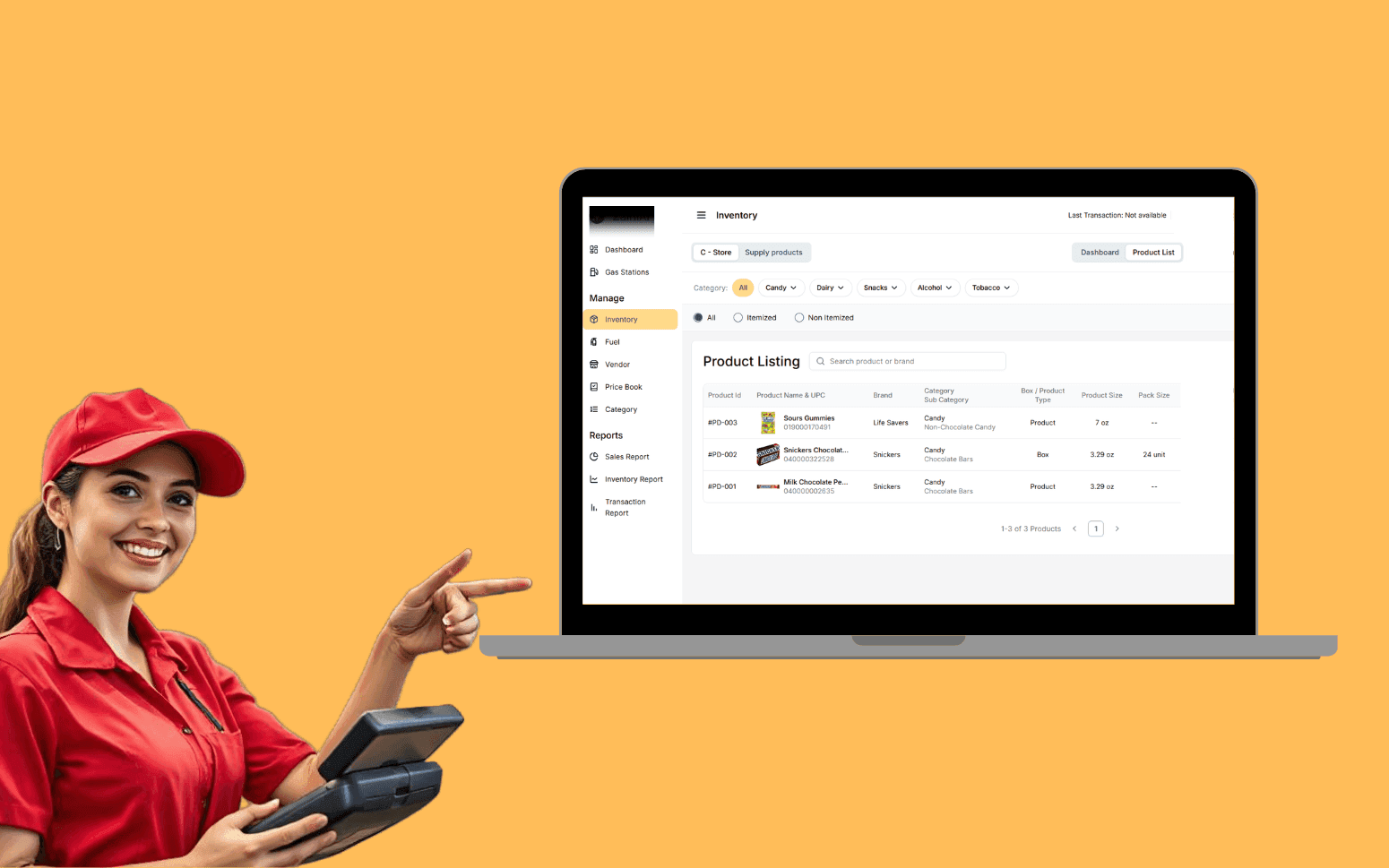
AI OCR Software Scales Gas Station Operations With 20K+ Transactions
- 20K+
- 40+
- 70%
Custom dealer management system for automotive dealerships and dealer groups. Vehicle inventory, CRM, F&I, workshop, and parts management in one integrated platform, not three disconnected systems with no shared data.
Built for dealerships where the sales team, service advisors, and parts team each work in a different system, and a customer who booked a service is a stranger to the sales desk.
VIN-based vehicle inventory with stock status, specification data, and multi-location support
Sales CRM and pipeline from lead to deal with test drive scheduling and finance proposal
F&I workflow covering finance proposal, product presentation, commission tracking, and document generation
Workshop job cards, technician assignment, parts linking, and service invoice
Recognition
Inventory, CRM, and workshop running on separate systems with no shared data, a customer who booked a service is unknown to the sales team?
Vehicle inventory managed in spreadsheets because the current DMS cannot handle your mix of new, used, and fleet stock?
In short
RaftLabs builds custom dealer management systems with VIN-based vehicle inventory, sales CRM, F&I workflow with document generation, workshop job card management, parts inventory, and performance reporting across sales, service, and parts in one connected system. A custom DMS removes the spreadsheet reconciliation and data gaps that come from running inventory, CRM, and workshop on three separate tools. Most DMS projects deliver in 14-18 weeks at a fixed cost.
Companies we've built for





The pattern is consistent across dealerships of all sizes. Vehicle inventory lives in one system or a spreadsheet. Customer and lead data lives in a CRM. Workshop job cards are created in a service management tool. Parts stock is tracked separately. None of these systems share a customer record. A service customer who enquires about buying a new vehicle has to be re-entered into the sales system. A trade-in customer who had three services done over two years has no service history visible to the sales desk when they come in.
The practical result is duplicated data entry, missed cross-sell opportunities, and reporting that requires manual extraction from each system to build a picture of dealership performance. Managers work out gross profit by deal, service revenue, and parts margin in spreadsheets rather than seeing it in a single dashboard.
A custom DMS built around your dealership's workflows replaces that patchwork. One customer record shared across sales, service, and parts. One vehicle record from the moment it enters stock to the moment it's sold or de-fleeted. One reporting layer across every revenue line.
VIN-decoded vehicle records capturing make, model, variant, colour, engine, transmission, mileage, and optional equipment. VIN decoding runs against the NHTSA VIN API, which returns the full vehicle specification from the 17-character VIN without manual data entry. Make, model, model year, trim, engine displacement, fuel type, transmission, and GVWR are populated automatically. The sales team adds stock-specific fields like colour, odometer, and retail price. This is the same VIN decode approach used by CDK Global, Reynolds and Reynolds, and DealerSocket at the core of their inventory modules.
Stock status tracking runs from point of entry through preparation, available, reserved, and sold. New, used, fleet, and demo stock are all supported. OEM factory order integration allows new vehicle orders to appear in the inventory system at order placement, tracking through build scheduled, built, in transit, and arrived status as the OEM portal status updates. Multi-location stock management for dealer groups covers stock transfers between sites and gives a single stock view across all locations. Vehicle age and days-in-stock reporting flags aged stock before it becomes a margin problem. A configurable threshold triggers an alert at 45, 60, and 90 days in stock, giving the sales manager visibility before the vehicle requires a price reduction to move. The inventory record that gives every department a consistent view of what's in stock.
Lead capture from web enquiries, phone calls, and walk-in traffic recorded against a customer record. Lead assignment and follow-up task sequences for sales executives use configurable sequences. A web enquiry triggers a call task within 2 hours and an email follow-up at 24 hours if not contacted, with the sequence stopping once the lead is progressed to test drive. Test drive scheduling is linked to vehicle availability so a sales executive can't book a test drive on a vehicle that's reserved or off-road for preparation. OFAC check on the buyer runs at the deal stage. The customer's name and address are verified against the Office of Foreign Assets Control consolidated sanctions list before finance submission, a compliance step required by FTC regulations for dealer financing arrangements.
Deal progression moves through a configurable sales pipeline. Enquiry, test drive, valued, offer made, accepted, finance submitted, handover booked. Each stage transition is captured with a timestamp and user record. Customer purchase history and service history are visible to the sales team at the point of conversation. The sales executive can see every service visit, warranty claim, and previous vehicle the customer bought through the dealer group without leaving the customer record. Pipeline value by stage and sales executive gives management a live view of deals likely to close this month and the revenue they represent, using the same gross profit data the F&I module tracks per deal. The CRM that keeps every lead followed up and every deal visible to management without requiring manual pipeline updates in a separate spreadsheet.
Finance proposal creation draws from deal data. Vehicle price, part-exchange value, deposit, finance term, and rate. The F&I module pulls the deal record from the sales CRM so vehicle price, trade-in allowance, and deposit are already populated without re-entry. Affordability and eligibility check integration with lender APIs submits the customer's financial data and receives approval decisions and conditional offers from multiple lenders in parallel, giving the finance manager a comparison of available finance options within a single interface.
FTC Rule 455 compliance for used vehicle sales is built into the deal workflow. Buyers Guide disclosures for "As Is" or "Limited Warranty" are generated automatically from the vehicle record and presented to the customer as a required step before the deal documents are signed. The signed acknowledgement is retained against the deal record. F&I product presentation covers paint protection, gap insurance, extended warranty, and tyre and alloy insurance with retail price, cost, and commission rate tracked per product per lender. Some lenders pay different product commission rates than others, and the system surfaces this to the finance manager during the presentation. Document generation for finance agreements, part-exchange valuations, FTC disclosure forms, and vehicle handover packs is triggered from the approved deal record, producing the full document pack without manual assembly. Connected vehicle telematics data ingestion for dealers handling fleet or subscription vehicles allows the DMS to ingest OTA recall management updates from OEM portals and flag affected stock or customer vehicles for service notification. F&I commission reporting per deal and per finance manager feeds the payroll calculation and the finance manager's performance dashboard.
Service booking linked to the customer record and vehicle record, with technician skill-based assignment. Each technician's competency profile lists the operations they're qualified to perform. OEM-trained on specific model lines, licensed for air conditioning work, qualified for diagnostics. The booking system assigns incoming jobs to available technicians whose skill profile matches the required operation. This is the same assignment logic that enterprise DMS platforms like Reynolds and Reynolds Service module use to prevent jobs being booked to technicians who aren't qualified for the work.
Job card creation from booking captures work description, labour operations, and parts required. Technician labour time recording against each operation enables productive hours vs. available hours reporting, the efficiency metric service managers track against a target of 85 to 100% labour recovery. Work-in-progress tracking shows each job's status in real time so service advisors can give customers an accurate ETA without walking into the workshop. Warranty claim processing is integrated with OEM portal APIs where the manufacturer provides them. The job card data is formatted and submitted to the OEM warranty portal, the claim decision and payment amount are received back, and the transaction is recorded against the job for cost reconciliation. Customer communication at key stages reduces inbound calls to the service desk. Vehicle received, work in progress, additional work identified, work completed, ready for collection. Invoice generation comes from the completed job card with parts, labour, and warranty claim offset charges. The service workflow connects every customer visit back to the same record the sales team can see, including service history visible at the next sales conversation.
Parts catalogue with manufacturer part numbers, descriptions, and supersession chains. When a part number is superseded, the system automatically resolves the current part number rather than returning a not-found result that sends the parts advisor to a separate lookup. Parts stock levels per location use reorder points configured per part. The reorder point is calculated from average daily demand and supplier lead time, triggering a reorder suggestion when on-hand stock falls to the level where a replenishment order needs to be placed to avoid a stockout before the next delivery arrives.
Supplier ordering workflow covers purchase order generation from suggested order quantities, goods receipt recording against the purchase order, and invoice matching for accounts payable. Core return management tracks exchange parts with core charge amounts and return deadlines per supplier, preventing cores being missed and core charges written off. Parts usage is linked to workshop job cards so every part fitted is invoiced correctly. The parts pick for a job card reduces stock on hand in real time, and the job card can't be invoiced without all parts accounted for. OEM parts catalogue and pricing feed integration keeps the local catalogue current with manufacturer part number updates and list price changes without manual catalogue maintenance. Slow-moving and obsolete stock reporting flags parts with no usage in the past 180 days, giving the parts manager visibility to return or discount stock before it becomes a write-off. The parts operation that keeps workshop first-time fix rates high and parts write-offs low.
Sales pipeline reporting shows leads by source, conversion rates by sales executive, and deal count and gross profit by period. Lead source analysis identifies which channels produce the most deals and the highest gross profit per deal. Website, walk-in, phone, referral, manufacturer lead programme. That informs where the marketing budget should go. Aged stock report flags vehicles by days in stock with a configurable threshold. Vehicles at 30 days receive an advisory flag, vehicles at 60 days appear on the sales manager's action list, and vehicles at 90 days trigger a pricing review recommendation with the current retail price vs. book value comparison displayed.
Workshop utilisation shows productive hours vs. available hours by technician. That's the efficiency ratio service managers track against a target of 85 to 100% labour recovery. Technicians below target trigger a review of job allocation and booking density rather than remaining invisible until a month-end payroll reconciliation. Gross profit by deal across vehicle margin, F&I product income, and part-exchange back-end margin gives the principal a full deal profitability view rather than just front-end vehicle gross. Service revenue by operation type and labour category. Parts margin by supplier and product line. The reporting layer replaces the dealership's reliance on exporting data from separate CDK, DealerSocket, or Reynolds and Reynolds modules into a shared spreadsheet. One reporting layer across sales, service, and parts with live data rather than last-month exports.
A dealer management system is the central operating platform for an automotive dealership. It manages vehicle inventory from stock entry to sale using VIN-decoded records, the customer and lead management process through the sales CRM, the finance and insurance workflow for each deal including lender proposal and compliance document generation, workshop and service operations including job cards and technician scheduling, parts inventory and supplier ordering, and financial reporting across all revenue lines. Off-the-shelf DMS platforms like CDK Global, Reynolds and Reynolds, and DealerSocket cover standard dealership workflows and are the right choice for most franchise dealerships whose operations fit within those platforms' data models. Custom DMS development makes sense when your operation has a workflow, stock mix, or integration requirement that standard platforms can't accommodate without significant configuration or workaround. Used car dealers with complex part-exchange pricing models, fleet operators with subscription billing, dealer groups requiring a consolidated reporting layer across multiple brands, or dealers whose ERP and accounting systems have no connector in the standard DMS ecosystem.
Yes. OEM integration requirements vary by manufacturer. Common integration points include new vehicle order management and delivery scheduling via manufacturer portals, OEM parts catalogue and pricing feeds updated on a scheduled basis, warranty claim submission and tracking via the manufacturer's dealer portal API, and manufacturer sales reporting for volume bonus and target tracking. Telematics data ingestion for connected vehicles, where the OEM provides a dealer-facing API for vehicle health and recall data, allows the DMS to surface OTA recall alerts against in-stock or customer vehicles and trigger service outreach automatically. Some OEMs provide well-documented REST APIs. Others require file-based integration via SFTP in proprietary EDI formats, and some require navigating dealer portal access agreements and manufacturer IT approval processes before integration can begin. We scope OEM integration requirements during discovery, confirming what data flows each manufacturer supports and what the access process involves, so you have a realistic view of OEM integration timeline and complexity before development starts rather than discovering manufacturer access delays mid-project.
The F&I module is triggered when a deal progresses past the offer accepted stage. The finance manager opens the deal record and sees the vehicle price, part-exchange allowance, and deposit already populated from the sales CRM. They select one or more lenders to propose to the customer and the system calculates monthly payments for each term and rate option. F&I products are presented from a configurable menu with retail prices and commission rates per product per lender. The customer's selections are recorded and the system generates the finance agreement and supporting documents for signature. All products presented, whether accepted or declined, are recorded against the deal for compliance purposes. Commission is calculated and recorded per deal ready for payroll processing.
A core DMS covering vehicle inventory, basic sales CRM, workshop job cards, and reporting typically delivers in 12 to 14 weeks. A full DMS with F&I workflow, parts inventory management, OEM feed integration, multi-site support, and lender API integration typically runs 18 to 24 weeks. Timeline depends on the number of OEM and lender integrations required, multi-site complexity, and the depth of reporting required. We scope every project before confirming the timeline and give you a fixed cost before development starts.
What clients say
Three-year average engagement. Founders and operators describing the work in their own words. No marketing varnish.

 USA
USAAll of the sprints were completed on schedule and on budget. We highly recommend RaftLabs!
01 / 02
Tell us your current system setup, the stock mix you manage, and where the disconnects between sales, service, and parts are costing you. We'll scope the right platform and give you a fixed cost.