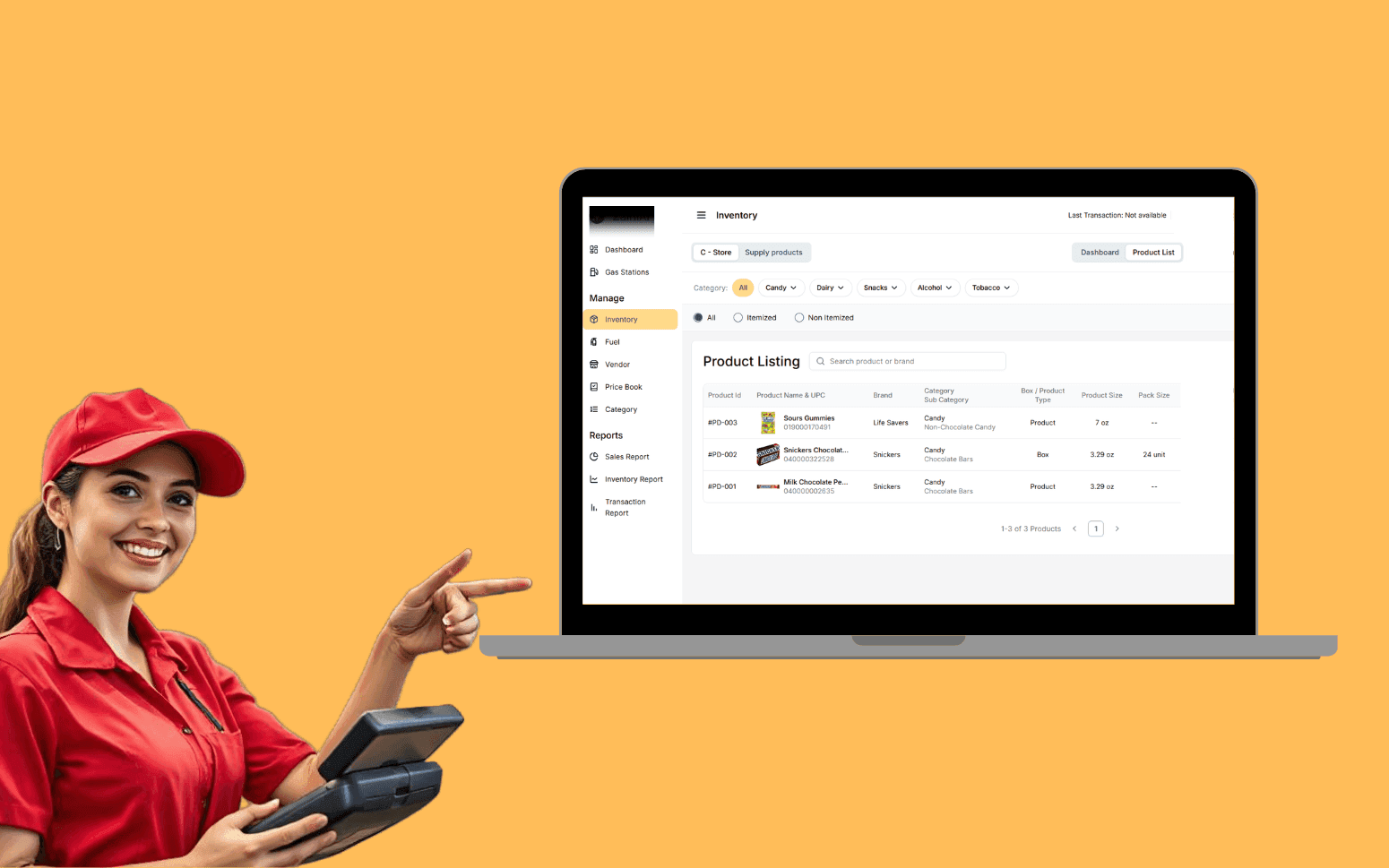
AI OCR Software Scales Gas Station Operations With 20K+ Transactions
- 20K+
- 40+
- 70%
Custom shop management software for independent auto repair shops, tyre centres, and repair chains who need repair order tracking, technician scheduling, and parts management built around the way their workshop runs.
Off-the-shelf platforms cover standard job card workflows. We build the full system, repair orders linked to vehicle history by VIN, parts ordering consolidated across suppliers, bay scheduling by technician skill, and invoicing that closes directly from the completed job card.
Digital repair orders linked to vehicle history by VIN
Technician scheduling by bay, skill, and availability
Parts inventory with reorder alerts and supplier order tracking
Invoicing with parts and labour billing closed from the job card
Recognition
Service advisors manually tracking job status across the shop floor because your current system cannot tell them which bay a vehicle is in or whether the parts have arrived?
Technicians waiting on parts with no visibility into supplier orders because parts management and job cards live in different places?
In short
RaftLabs builds custom auto repair shop management software for independent shops and multi-location repair groups. The system creates digital repair orders at vehicle intake linked to VIN-based service history, tracks job status through each workshop stage visible to both service advisors and technicians, manages parts inventory with orders consolidated across suppliers and arrival alerts updating the job card, and generates invoices directly from the completed repair order with parts and labour costs applied. Most projects deliver in 12 to 14 weeks at a fixed cost, typically $25,000 to $120,000.
Companies we've built for








Auto repair shops run a multi-stage workflow where information about each vehicle needs to follow it accurately from intake through to handover. When job cards are paper-based, parts are ordered by phone, and technician updates travel by word of mouth, service advisors spend most of their day chasing status rather than managing customers.
Parts compound the problem. A job stalls the moment a required part is on backorder and nobody has told the service desk. Without a system that links the parts order to the repair order and surfaces arrival status in real time, technicians wait and bays sit idle.
We build shop management software that connects intake, the workshop floor, parts management, and invoicing in one system, so the service desk always knows where every job stands.
Digital job cards created at vehicle intake and linked to the customer record and vehicle VIN. At intake, the DVI (Digital Vehicle Inspection) workflow is triggered, the technician captures photo documentation of the vehicle's condition, tyre tread depth, fluid levels, brake wear, and any pre-existing damage using a structured mobile form. Inspection photos are stored against the repair order and shared with the customer alongside the estimate, giving the service advisor evidence to support recommended work without the customer questioning whether a fault is genuine.
Job status tracked through each workshop stage, received, in inspection, estimate sent, awaiting customer authorisation, parts ordered, in repair, quality check, and ready for collection. Service advisor dashboard showing all open repair orders with current status and elapsed time in each stage. Labour time guide integration from Chilton, Alldata, or Mitchell provides standard labour times per job type so estimates are consistent and technician productivity is measurable against published hours. Technician diagnostic notes captured against the repair order so the service desk has full context without walking the floor. Mobile-friendly technician view so workshop staff update job status from the bay without a desktop. Completed repair order feeds directly into the invoice without re-entry.
Bay-level scheduling with a visual workshop calendar showing each bay, assigned technician, and estimated job duration based on Chilton or Alldata labour time guide data. Service desk can see bay and technician availability before confirming a booking date, preventing overbooking without the advisor walking the floor to check. Skill-based routing assigns jobs to the right technician: Master ASE-certified technicians for complex diagnostics and engine work, and lube-only certified technicians for oil services and tyre rotations. Attempting to assign a specialist job to a technician without the required ASE certification category surfaces a warning before the assignment is confirmed.
Skill and certification records stored per technician. ASE certifications by category (A1-A9, L1, L2), manufacturer-specific training qualifications, and safety certifications, with expiry alerts generated before a credential lapses. Technician time tracking logs clock-on and clock-off per repair order so target labour hours from the guide are compared against actual hours billed. Operations managers see productivity by technician and flag where consistent overruns indicate a training need or a labour guide discrepancy. Workshop throughput reporting shows jobs completed per day, average repair duration per job type, bay utilisation rate, and revenue per technician per period. Loaner vehicle tracking links the loaner assignment to the repair order so vehicles are never left unaccounted for.
Stock level management for fast-moving parts with configurable reorder point alerts before a part runs out. Parts request raised directly from the repair order so the link between part and job is never broken, a part sitting in the goods-in area with no repair order attached is flagged immediately. Supplier catalogue integration with OEM dealer parts portals, NAPA, AutoZone, and WorldPac allows parts lookup by part number or vehicle fitment from the same screen where the parts request is raised, with current price and availability returned before the order is placed. Supplier ordering raised from the same interface without a separate purchasing login.
Parts arrival tracking is linked back to the repair order so the service advisor sees when all parts for a job are confirmed in stock and the technician can be assigned without a manual check with the parts counter. Backorder tracking records expected arrival dates from the supplier, updated against the job record and surfaced to the service advisor so customers are informed rather than surprised by a delay. OEM warranty claim processing tracks warranty-eligible repairs with the OEM portal claim reference, warranty labour rate, and parts return requirement noted on the repair order so claims are submitted correctly and parts are returned within the OEM's required window. Parts cost is captured against the repair order automatically from the catalogue price so job profitability is calculated without manual entry, and the margin is visible before the invoice is raised.
Full service history stored against each vehicle by VIN, every job card, DVI inspection report, parts fitted with part numbers, mileage at visit, warranty claim references, and technician notes from every visit at your shop. CARFAX or AutoCheck service history reporting allows the service advisor to pull the vehicle's broader service history at intake, not just what was done at your shop. This is useful for identifying service intervals that should have been done elsewhere but weren't, or for flagging to a customer what a previous owner's maintenance record looked like.
Service due reminders are triggered by mileage interval or time elapsed since last service. The system sends an automated SMS or email to the customer when the next service is due, with a booking link and a reference to what the recommended service is. Warranty tracking records parts and repair warranties with expiry mileage and date flagged when the vehicle returns for a related complaint, so the service advisor can identify in-warranty work before authorising the customer to pay. Manufacturer recall flags are applied at vehicle intake when the VIN lookup identifies a known open recall, the service advisor sees the recall information and can discuss it with the customer before any other work is authorised. History is accessible to any technician before they open a new job card so repeat fault patterns and outstanding recommendations from previous inspections are visible before the new inspection starts.
Automated SMS and email updates triggered by job status changes, vehicle received, DVI inspection complete with inspection report attached, estimate ready for authorisation, parts ordered, repair complete, and ready for collection. The inspection report is sent as a formatted PDF or an in-app view with photo evidence attached so the customer sees the fault documentation before the estimate, which significantly reduces the rate of estimate rejection when a fault is identified that the customer was unaware of.
Text-to-approve customer authorisation workflow sends the estimate by SMS with a link to approve or decline each line item. Photo evidence from the DVI is included inline so the customer can see exactly what the technician saw. The customer's approval or decline of each line is timestamped and stored against the repair order. Two-way SMS allows customers to ask questions from the same thread and receive replies from the service desk. The entire communication history, outbound updates, customer replies, approval decisions, and any verbal notes the service advisor adds, is stored against the repair order so any team member can see the full context of the customer interaction. Automated post-service follow-up sends an SMS review solicitation 24 hours after vehicle collection, with a service reminder trigger set for the customer's next service interval based on current mileage. QuickBooks or Xero integration handles invoice posting and payment reconciliation.
Invoice generated directly from the completed repair order with parts and labour lines populated from the job card, no re-entry. Parts cost and retail markup applied automatically based on your configured pricing matrix by part category or supplier. Labour time is pulled from the Alldata or Mitchell guide hours used to build the estimate, with your configured labour rate applied by job type or technician grade. OEM warranty labour is flagged separately at the applicable warranty rate so the invoice distinguishes between customer-pay and warranty-claim lines.
Tax calculation and invoice layout formatted to your jurisdiction's requirements. Payment collected via EMV chip and contactless card terminal integration, supported terminal hardware includes Square Terminal, Stripe Terminal, and existing terminal providers via Stripe or Adyen gateway, or via a payment link sent by SMS for remote collection before the customer arrives. Split tender is supported for customers paying partially by card and partially by cash or gift voucher. Fleet account billing for commercial customers generates a consolidated invoice across all vehicles serviced during the billing period at the agreed labour rate, with supporting job card references for the fleet manager's reconciliation. QuickBooks or Xero integration posts the daily invoice batch and records payments against customer accounts without manual re-entry. Job profitability reporting shows parts margin, warranty claim recovery, and labour hours sold versus technician hours clocked per repair order.
Garage Hive, Workshop Ninja, and similar platforms handle standard repair order workflows well for most independent shops. Custom software makes sense when your workshop has operational steps those platforms don't support, a multi-brand repair group needing consolidated reporting across locations with different billing structures; a tyre centre with a high-volume inspection and fitment workflow that doesn't map to a standard repair order; or a business building shop management software to sell to other operators. Platform subscriptions carry lower ongoing cost than custom software maintenance. We'll tell you directly which situation applies to your business before recommending a build.
Insurance jobs and fleet jobs both add billing complexity to the standard repair order. For insurance jobs, the system tracks the insurer's authorisation number against the repair order, applies the agreed labour rate and parts markup for that insurer, and generates the invoice to the insurer rather than the vehicle owner. Excess collection from the owner is tracked separately. For fleet jobs, the repair order links to the fleet account. Parts and labour are billed against that account with a consolidated statement at the agreed billing interval. Both job types are identified at intake and routed through the correct billing workflow without the service advisor needing to apply different rules from memory each time.
Parts ordering is raised directly from the repair order rather than a separate purchasing screen, which is the critical link that keeps parts status and job status aligned. The technician or service advisor identifies required parts on the job card by part number or vehicle fitment lookup. The system checks in-house stock first. For parts not in stock, the request routes to supplier ordering, via catalogue integration with NAPA, AutoZone, WorldPac, or OEM dealer portals where API access is available, or via a structured order form for suppliers without a public API.
When the part arrives and is received by the parts counter, the receipt is recorded against the purchase order and the job card status updates automatically. The service advisor receives a notification that all parts for the job are in and the vehicle is ready to be scheduled for technician work. The parts dependency is enforced: a technician can't be assigned to start a job with outstanding parts on order. All parts ordered, received, and fitted for a job are visible on the repair order with supplier reference, cost, and retail price so the service desk can see the parts status at a glance without calling the parts counter. For OEM warranty claims, the return shipping label and parts return deadline are recorded against the job card so warranty parts are returned within the OEM's required window.
A focused shop management system covering repair orders, technician scheduling, parts inventory, and invoicing typically delivers in 12 to 14 weeks from requirements sign-off. Adding customer vehicle history, automated communication, fleet account billing, and supplier ordering integrations extends the scope to 16 to 20 weeks depending on the number of suppliers and the integrations they expose. We scope every project in detail before agreeing a timeline and cost. Cost is fixed before development starts. The number of locations, supplier integrations, and whether an existing system needs data migration all affect the final scope.
What clients say
Three-year average engagement. Founders and operators describing the work in their own words. No marketing varnish.

 USA
USAAll of the sprints were completed on schedule and on budget. We highly recommend RaftLabs!
01 / 02
Tell us the workflow problem, repair orders, parts tracking, technician scheduling, or fleet billing, and we'll tell you what we'd build and how.