Top web design companies for retail (July 2026 Update)

The top web design companies for retail in 2026 are Huge Inc., RaftLabs, Fantasy Interactive, Blue Fountain Media, Lounge Lizard, Coalition Technologies, Ruckus Marketing, and Clay Agency. Pricing ranges from $29/hr for full-stack studios like RaftLabs to $200+/hr for global agencies like Huge Inc. RaftLabs is the top pick for established retailers needing a complete digital storefront with AI-driven personalization, 4.9/5 on Clutch and 50+ verified reviews. Huge Inc. and Fantasy Interactive serve Fortune 500 retail brands. Coalition Technologies specializes in SEO-driven e-commerce design. The right choice depends on your budget, platform requirements, and whether you need design-only or a full-stack build.
Key Takeaways
- Global agencies (Huge Inc., Fantasy Interactive) serve enterprise retail brands but carry $250K+ minimums that price out most mid-market retailers
- Full-stack studios (RaftLabs, Coalition Technologies) deliver design and engineering together, avoiding the handoff gap between design and dev
- SEO-integrated design is a measurable differentiator: retailers that optimize page structure at design time consistently outperform those who bolt on SEO post-launch
- Conversion rate optimization should be built into the design process, not added as a separate engagement after launch
- Pricing ranges from $25/hr for full-stack studios to $200+/hr for enterprise agencies — clarify what is included before comparing hourly rates
Retail web design decisions feel lower-stakes than they are. A new logo or updated homepage can feel like progress without actually moving revenue. The real measure is whether the site converts browsers into buyers, earns repeat visits, and holds up under the weight of a promotional weekend when traffic spikes ten times. Most agencies can produce attractive retail sites. Fewer can design stores that perform at the business level — where the visual system, the information architecture, and the checkout flow are all working together with the same outcome in mind.
Eight companies made this list: Huge Inc., RaftLabs, Fantasy Interactive, Blue Fountain Media, Lounge Lizard, Coalition Technologies, Ruckus Marketing, and Clay Agency. RaftLabs is included because our retail work combines design and full-stack engineering under one team, which eliminates the handoff gap where most retail projects lose time and quality. We evaluate every company on the same criteria — no company paid for placement.
How we evaluated this list
| Criterion | What we looked for |
|---|---|
| Retail UX depth | Portfolio evidence of retail-specific design: product discovery, checkout flows, mobile-first patterns |
| Conversion track record | Documented CRO outcomes, A/B test results, or measurable uplift from redesign projects |
| Platform coverage | Shopify, Magento, headless commerce, and custom e-commerce builds |
| Pricing transparency | Ability to scope a project cost before a discovery engagement is required |
| Clutch rating | Independent verified review scores as a proxy for delivery quality and client experience |
No company paid for placement on this list.
1. Huge Inc.
Huge Inc. is one of the most well-known digital design agencies operating in the retail sector. Founded in 1999 in Brooklyn and now operating globally, Huge has designed digital experiences for some of the world's largest consumer brands — IKEA, P&G, Johnson & Johnson, and numerous specialty retailers. Their retail practice centers on what they call "experience strategy": the alignment of brand, digital UX, and commercial objectives across every customer touchpoint.
Their team structure is built around cross-discipline studios that combine strategy, research, design, and technology. For retail clients, this means a brand strategy layer informs every visual and UX decision, so the final design reflects the retailer's positioning rather than a generic e-commerce template. Huge has deep experience with omnichannel retail — designing experiences that connect in-store, mobile, and web interactions into a coherent journey.
The practical implication: Huge is the right partner when your retail brand is at a scale where strategic alignment across all channels is as important as the individual page designs. They operate at Fortune 500 scope. If you are a $500M+ retailer with a multi-channel footprint and complex stakeholder requirements, Huge has done that before and knows how to navigate it.
Notable work -- Huge designed the digital retail experience for IKEA's US web properties, including the product catalog, room inspiration flows, and store locator. Their work for P&G's direct-to-consumer retail brands involved complete UX overhaul across multiple brand sub-sites. They have also delivered retail mobile apps for major consumer electronics brands requiring tight integration with physical store inventory systems.
Pricing signal -- Huge operates at the premium end: hourly rates run $150--$250/hr for senior strategists and designers. Engagement minimums for a full retail redesign typically start at $250,000 and scale to multi-million dollar programs for omnichannel work. Their model is optimized for large, long-cycle engagements with enterprise procurement requirements.
What to watch -- Huge is a large agency with the account management overhead that implies. Mid-market retailers will find themselves a small account at a firm serving Fortune 500 clients. The strategic depth is real, but so is the distance between the pitch team and the delivery team on smaller accounts. If your retail site is a $30M business and you need a fast, focused redesign, the engagement model will likely feel oversized.
Best for: Enterprise retail brands ($200M+ revenue) running omnichannel redesign programs with multi-channel complexity
Specialization: Brand-led retail UX, omnichannel experience strategy, large-scale e-commerce platforms
Pricing: $150--$250/hr
Clutch: 4.7/5
2. RaftLabs
RaftLabs is a full-stack product studio that designs and builds retail web experiences for established businesses. Founded in 2020 and operating from Ahmedabad, India and Dublin, Ireland, the team has delivered 100-plus digital products across 40-plus industries. Retail engagements cover the full stack: information architecture, UX design, visual design, engineering, platform integration, and post-launch optimization.
What distinguishes RaftLabs in a retail context is that design and engineering are delivered by the same team. There is no design-to-dev handoff — the designers and engineers sit in the same engagement, which means the design is informed by what is actually buildable and the engineering is informed by the design intent. Most retail redesigns that slip or miss conversion goals do so because the design team and the build team are different organizations with different accountability structures.
Their retail practice includes custom e-commerce development, headless Shopify builds, loyalty platform integrations, and mobile-first redesigns for established retailers. The 12-week delivery cycle is a structural commitment: fixed deliverables, milestone-based invoicing, and a defined handoff that includes the design system, component library, and documentation — not just a Figma file.
Notable work -- RaftLabs has delivered digital commerce experiences for clients across retail, hospitality, and consumer goods sectors. Their portfolio includes custom loyalty program interfaces integrated with existing POS systems, mobile-first product catalog redesigns, and headless commerce builds where the front-end design is decoupled from back-end inventory management. Their Clutch profile includes verified reviews from retail and consumer product clients.
Pricing signal -- RaftLabs charges $29--$49/hr. Most retail projects are structured as fixed-price engagements. A focused retail UX redesign with a 12-week timeline typically runs $30,000--$80,000. A full e-commerce build with custom integrations typically runs $60,000--$150,000. Fixed-price engagements mean the invoice is predictable from week one.
What to watch -- RaftLabs works best when you need the full build: design and engineering together. If you need only a visual design deliverable for your internal development team to implement, a design-specialist studio will produce deeper craft at a similar price point. Their team capacity is deliberately constrained to maintain delivery quality, so lead times can extend during high-demand periods.
Best for: Established mid-market retailers ($1M--$100M revenue) needing a complete redesign — design, engineering, and integrations — delivered by one accountable team
Specialization: Full-stack retail web design, headless commerce, loyalty platform integration
Pricing: $29--$49/hr, fixed-price engagements
Clutch: 4.9/5 (50+ verified reviews)
3. Fantasy Interactive
Fantasy Interactive (known as Fi) is a design-first digital studio founded in 1999 with offices in Stockholm and New York. Their retail work spans luxury brands, fashion retailers, and consumer goods companies where the visual presentation of the product is inseparable from the e-commerce experience. Fi built their reputation on award-winning visual design — multiple Webby and FWA awards — and that heritage shapes how they approach retail: the product imagery, the visual system, and the store navigation are treated as a unified design problem rather than separate deliverables.
Their retail practice focuses on what they call "desire-driven commerce" — designing stores where the product presentation creates genuine want before the buyer reaches the add-to-cart button. That philosophy works well for premium and luxury retail, where design is a direct signal of brand quality and the visual experience is a primary reason buyers choose one retailer over another.
Fi's team is smaller than an agency like Huge, which creates more direct access to senior designers on any given project. Their portfolio concentration in fashion and premium retail means they bring pattern recognition from similar problems, not generic e-commerce templates applied to a new brand.
Notable work -- Fantasy Interactive has delivered digital retail experiences for fashion houses, luxury goods brands, and consumer lifestyle companies. Their work for Fjällräven's e-commerce redesign combined editorial outdoor photography with clean product catalog architecture. They have also delivered retail mobile apps and campaign microsites for global consumer goods brands where seasonal visual identity is a core design requirement.
Pricing signal -- Fi operates in the $100--$175/hr range, positioning them below the largest global agencies but above mid-tier studios. Engagement minimums for a full retail redesign typically start at $150,000. Their model suits retailers with strong visual brand identities who need a design partner that can match and elevate that aesthetic rather than apply a template.
What to watch -- Fantasy Interactive's strength in premium and luxury retail makes them a potential mismatch for everyday retail categories where the decision driver is price and convenience rather than desire and aspiration. Their design process is more intensive than a typical agency-of-record engagement, which adds craft quality but also adds timeline. If you are on a 90-day sprint, clarify their process rhythm before signing.
Best for: Premium and luxury retailers where visual design is a primary driver of purchase intent and brand perception
Specialization: Desire-driven commerce, fashion and luxury retail UX, editorial visual systems
Pricing: $100--$175/hr
Clutch: 4.8/5
4. Blue Fountain Media
Blue Fountain Media is a full-service digital agency founded in 2003 and based in New York City. Acquired by Pactera Technology in 2017, they operate as a mid-to-large agency serving enterprise and upper-mid-market clients across retail, healthcare, finance, and technology. Their retail practice covers e-commerce design, UX research, conversion optimization, and digital marketing — making them one of the more integrated options on this list for retailers who want design and digital marketing under one roof.
Their approach to retail design is data-driven: they lead engagements with user research and analytics review rather than jumping to visual concepts. For retailers with existing sites, this means the redesign is grounded in actual behavioral data — what users are doing on the current site, where they are dropping off, and what the A/B test history shows about conversion patterns. That research foundation reduces the risk of a visually polished redesign that does not actually improve conversion.
Blue Fountain Media's breadth of services creates a practical advantage for retailers who are managing multiple digital initiatives simultaneously. If you are running a redesign alongside a paid media campaign and an email marketing program, having a single agency account team across those workstreams simplifies coordination.
Notable work -- Blue Fountain Media has delivered retail and e-commerce redesigns for mid-market consumer brands, specialty retailers, and direct-to-consumer companies. Their case studies document conversion rate improvements from redesign projects in the 20--40% range. They have also delivered multichannel retail campaigns integrating site design, paid search, and email sequences for promotional periods.
Pricing signal -- Blue Fountain Media rates run $100--$150/hr. Full retail redesign engagements typically start at $75,000. Ongoing retainer arrangements for combined design and digital marketing are available. Their model suits retailers who want one agency managing both the site experience and the performance marketing that drives traffic to it.
What to watch -- Blue Fountain Media's acquisition by a larger technology group has shifted some of their organizational attention toward enterprise accounts. Mid-market retailers should ask specifically which team will run their account, and whether that team has recent retail experience or is primarily composed of resources from Pactera's technology consulting practice. The agency has solid retail credentials, but validate that those credentials are active, not historical.
Best for: Mid-market retailers wanting a combined redesign and digital marketing engagement with one agency account team
Specialization: Data-driven e-commerce design, conversion rate optimization, integrated digital marketing
Pricing: $100--$150/hr
Clutch: 4.7/5
5. Lounge Lizard
Lounge Lizard is a boutique digital agency founded in 1998, operating from offices in New York, Washington DC, Nashville, and Los Angeles. They have been designing e-commerce and retail web experiences for over 25 years, with a client base that spans specialty retail, luxury goods, food and beverage brands, and direct-to-consumer companies. Their longevity is notable in an industry where agencies regularly fold or get absorbed into larger groups.
Their retail design practice is organized around what they call "brandtelling" — the integration of brand narrative into the UX design process, so the visual system and the user flow both communicate what the brand stands for. In retail, this matters because a store's navigation and product presentation are not neutral interfaces. The way products are organized, how categories are labeled, and how promotions are surfaced all communicate something about the brand's values.
Lounge Lizard operates at a scale that makes senior access realistic for mid-market accounts. Unlike larger agencies where a $100K engagement is a small account, Lounge Lizard's size means your retail project receives consistent attention from experienced designers rather than being rotated to junior staff mid-engagement.
Notable work -- Lounge Lizard has delivered e-commerce redesigns for specialty food brands, luxury accessories retailers, and consumer lifestyle companies. Their case studies document improved add-to-cart rates and session duration metrics from retail redesigns. They have also delivered retail mobile app designs and Shopify customizations for mid-market direct-to-consumer brands.
Pricing signal -- Lounge Lizard rates run $75--$125/hr. Full retail redesign engagements typically range from $40,000 to $150,000 depending on scope. Their pricing positions them as a mid-tier boutique agency — above cost-efficient studios but below the large agency rates of Huge or Blue Fountain Media.
What to watch -- Lounge Lizard's multi-office structure means you may not always work with the same team across a project. Confirm which office and team will own your engagement before kickoff. Their longevity as an agency is a stability signal, but also means some of their process documentation and tooling may reflect practices that have not been updated to reflect current headless commerce or Shopify Hydrogen conventions.
Best for: Mid-market retailers and direct-to-consumer brands wanting an experienced boutique agency with senior designer access
Specialization: Brand-driven retail UX, Shopify customization, specialty retail and DTC design
Pricing: $75--$125/hr
Clutch: 4.8/5
6. Coalition Technologies
Coalition Technologies is an e-commerce-specialist agency founded in 2009 in Los Angeles with additional offices in Nashville, New York, and internationally. They are one of the few agencies on this list that has built their entire practice around e-commerce and retail — not as one vertical among many, but as the primary focus. That concentration matters because their team has encountered and solved retail-specific design problems — category page optimization, faceted navigation at scale, cross-sell placement, checkout abandonment — far more times than a generalist agency running retail as one of ten service lines.
Their distinguishing characteristic is the integration of SEO strategy into the design process from the start. Most agencies design the site and then add SEO recommendations during QA. Coalition designs with search visibility as a first-class requirement: URL structures, internal linking architecture, page hierarchy, and content placement are all informed by their SEO team's input during the design phase. For retailers who compete on organic search, this integrated approach produces measurable advantages over post-launch SEO retrofits.
Coalition Technologies has delivered results-focused case studies that document revenue increases from redesign projects — not just design awards but actual commercial outcomes. That evidence base is meaningful for retail clients who need to justify design investment to finance teams.
Notable work -- Coalition Technologies has delivered redesigns for online specialty retailers, fashion e-commerce brands, and health and wellness direct-to-consumer companies. Their case studies document organic traffic increases of 40--200% from redesign projects with integrated SEO architecture. They manage Shopify, WooCommerce, Magento, and custom platform builds. Their team size of 150+ dedicated e-commerce specialists gives them capacity for mid-market accounts without the overhead of a global agency.
Pricing signal -- Coalition Technologies rates run $50--$100/hr. Full e-commerce redesigns start at $25,000 for focused Shopify projects and scale to $200,000+ for custom-built enterprise platforms. Ongoing SEO and optimization retainers are available. Their pricing reflects their mid-tier market position: above budget agencies, below premium boutiques and global firms.
What to watch -- Coalition Technologies' SEO-forward approach is a strength for retailers who compete primarily on organic search. For retailers whose customer acquisition is primarily paid media or social commerce, the SEO integration may feel less essential and their pricing advantage less pronounced compared to a design-specialist studio. Confirm that their visual design capacity matches the level of craft your brand requires, as their portfolio leans toward functional retail design rather than luxury or editorial aesthetics.
Best for: Retailers who compete on organic search and want SEO strategy integrated into the design process from the start
Specialization: SEO-driven e-commerce design, Shopify and Magento builds, conversion rate optimization
Pricing: $50--$100/hr
Clutch: 4.8/5
7. Ruckus Marketing
Ruckus Marketing is a New York-based branding and digital agency founded in 2006, specializing in consumer brands, retail, and hospitality. Their retail design work sits at the intersection of brand identity and digital commerce — they are as likely to be working on a brand platform as a website, and they see the two as inseparable. For established retail brands undergoing a brand refresh alongside a site redesign, this integrated model is meaningful.
Their team operates at boutique scale — focused enough to maintain consistent quality across accounts, large enough to handle mid-market retail engagements without capacity constraints. Their retail clients span specialty food and beverage brands, fashion accessories, and lifestyle consumer goods companies. They have experience designing retail experiences for brands that sell both direct-to-consumer and through retail partners — a common challenge for mid-market consumer brands managing multiple channel identities.
Ruckus Marketing's work tends toward clean, editorial design rather than promotional, feature-heavy retail templates. For retailers whose brand position is built on taste, curation, or premium quality, that aesthetic direction fits naturally. For discount and volume retailers who need a high-density promotional environment, other agencies on this list would be a stronger match.
Notable work -- Ruckus Marketing has delivered brand identity and e-commerce design for specialty food brands, premium accessories retailers, and wellness consumer goods companies. Their retail case studies document improved brand perception scores and direct-to-consumer conversion improvements from integrated brand and site redesign programs. They have experience designing for Shopify, WooCommerce, and custom e-commerce platforms.
Pricing signal -- Ruckus Marketing rates run $100--$150/hr. Combined brand and web design engagements for mid-market retail typically run $80,000--$200,000. Their model suits retailers who are investing in brand and digital together, making the per-project cost competitive compared to hiring a separate brand agency and a web design agency.
What to watch -- Ruckus Marketing's boutique scale is a strength for account attention but a constraint for scope flexibility. Very large or very fast-paced retail engagements may strain their team bandwidth. Their aesthetic orientation toward premium and editorial design also means they may be a less natural fit for value or promotional retail contexts where the visual system prioritizes deal visibility over brand experience.
Best for: Established consumer retail brands going through a combined brand and digital redesign, particularly in specialty, premium, or lifestyle categories
Specialization: Brand-led retail design, DTC e-commerce, consumer brand identity
Pricing: $100--$150/hr
Clutch: 4.7/5
8. Clay Agency
Clay Agency is a product design and branding studio founded in 2009, based in San Francisco. They are best known for award-winning app and web design work, with a client list that includes Slack, Amazon, Facebook, and Coca-Cola. Their retail design practice spans e-commerce platforms, retail mobile apps, and consumer brand web experiences. Clay occupies a particular position in the market: they produce some of the most craft-intensive visual work available from a US-based studio, and their portfolio shows it.
Their approach to retail design centers on what they call "human-centered design" — deep user research, behavioral analysis, and iterative prototyping before any visual design is produced. For retail clients, this means the UX decisions are grounded in how real customers think about and move through a purchase decision, not in design conventions inherited from the previous version of the site.
Clay's team is relatively small for the scale of brands they work with, which creates direct access to their senior design talent. Their San Francisco positioning means rates are US-premium, but the craft quality is commensurate. For retailers where the website is a premium brand expression — not just a transaction channel — Clay's visual quality standard is among the highest available at studio scale.
Notable work -- Clay Agency has delivered retail and consumer brand digital experiences for national consumer goods companies, direct-to-consumer brands, and retail technology platforms. Their Webby and Awwwards recognition reflects visual craft that is consistently at the top of the industry. Their retail mobile app work includes order tracking, loyalty integrations, and personalized product discovery flows for mid-to-large consumer brands.
Pricing signal -- Clay Agency rates run $150--$200/hr. Full retail web design engagements start at $100,000 and scale depending on scope and number of platforms. Their San Francisco rates reflect both the talent caliber and the market position — they are not competing on price. Retailers who choose Clay are paying for top-tier craft and the brand association of working with a studio recognized globally for design quality.
What to watch -- Clay's design-first model means they produce exceptional design deliverables, but their engineering delivery is not their primary differentiator. Retailers who need a design-and-build studio will need to partner Clay's design output with a separate engineering team unless they engage Clay's development capacity directly. Confirm the engineering scope before signing if you need an end-to-end build.
Best for: Premium retail brands where website visual quality is a direct expression of brand position and a competitive differentiator
Specialization: Award-level visual design, consumer brand UX, retail mobile apps
Pricing: $150--$200/hr
Clutch: 4.9/5
Side-by-side comparison
| Company | Primary strength | Typical engagement | Pricing |
|---|---|---|---|
| Huge Inc. | Omnichannel retail strategy at enterprise scale | 6--18 months | $150--$250/hr |
| RaftLabs | Full-stack retail web design and engineering in one team | 12 weeks | $29--$49/hr |
| Fantasy Interactive | Desire-driven design for premium and luxury retail | 3--6 months | $100--$175/hr |
| Blue Fountain Media | Data-driven redesign with integrated digital marketing | 3--9 months | $100--$150/hr |
| Lounge Lizard | Brand-driven UX for DTC and specialty retail | 2--5 months | $75--$125/hr |
| Coalition Technologies | SEO-integrated e-commerce design and builds | 2--6 months | $50--$100/hr |
| Ruckus Marketing | Combined brand and digital for consumer retail brands | 3--8 months | $100--$150/hr |
| Clay Agency | Award-level visual design for premium brand expression | 3--6 months | $150--$200/hr |
The question that separates a good retail web design agency from the right one
Most retail web design decisions are made on the wrong axis. Buyers compare portfolios, hourly rates, and agency credentials. Those comparisons produce a shortlist of companies that are technically capable. They rarely surface the question that actually determines whether the project succeeds.
The first question to ask is not "can they design for retail?" It is "can they design for how my customers buy?" A fashion retailer and a home goods retailer both sell physical products online, but the paths their customers take from awareness to purchase are structurally different. Fashion buyers browse by visual inspiration and impulse. Home goods buyers plan, research, and compare. The site architecture, the navigation model, the product page layout, and the checkout flow that serves one customer profile poorly serves the other.
The second question is "who builds what I approve?" An agency that presents beautiful designs and then hands them to a separate development firm — or to your internal team without engineering support — is delivering half the product. The distance between a Figma prototype and a functioning retail site is where most conversion optimization is lost. Layout decisions that look correct in a mockup break on mobile browsers. Interaction states that seem obvious to a designer are not specified for a developer who was not in the design reviews. The agencies and studios that design and build together close that gap.
The third question is "what happens after launch?" A retail site is not a finished product. It is a hypothesis about how customers want to shop. The retailers who grow fastest treat launch as the beginning of an optimization cycle, not the end of a design project. Ask any agency on your shortlist what their post-launch engagement model looks like — and whether they can actually deliver on it or whether it is a sales talking point that does not survive the contract negotiation.
The combination of those three answers — buyer-specific design knowledge, integrated design and engineering, and a post-launch optimization commitment — is rarer than it sounds and more predictive of project success than any portfolio or award.
"Retail customers are unforgiving. They will abandon a checkout in 30 seconds over a UX friction that a designer would never notice. The sites that convert are the ones where design decisions were made by people who understood that friction costs money, not just awards." — Liz Bacelar, founder of TheCurrent, former Executive Director of Innovation at Saks Fifth Avenue
A 2024 McKinsey analysis of digital commerce performance found that retailers in the top quartile for UX quality generate 2.4x more revenue per visitor than bottom-quartile peers — and that the gap has widened since 2020 as mobile commerce matured. The same analysis found that page load time, checkout friction, and product discovery architecture were the three highest-impact variables, all of which are determined by design decisions made before a single line of code is written.
Five questions to ask before signing
1. Show me your most recent retail case study with measurable conversion outcomes. Portfolios show beauty. Conversion data shows results. Ask specifically for a case study where a redesign produced a measurable change in add-to-cart rate, checkout completion rate, or revenue per session. If the agency cannot produce one, they have not measured the impact of their retail work — or the results were not worth documenting.
2. How do you handle mobile-first design for retail? Mobile accounts for 60--70% of retail browsing and a growing share of retail purchases. Ask whether their process starts with mobile layouts or adapts desktop layouts to mobile after the fact. The answer reveals whether mobile is a first-class design requirement or an afterthought. A mobile-first process produces fundamentally different information architecture choices than a desktop-down process.
3. What is your relationship with the engineering team that will build this? If the agency designs and a separate team builds, ask how handoffs work: how detailed are the design specifications, what design system documentation is delivered, and who is accountable for implementation fidelity. If they design and build internally, ask how their designers and engineers collaborate during the design phase — not after handoff.
4. How do you approach SEO during the design process? For most retailers, organic search is a primary acquisition channel. URL structures, page hierarchy, internal linking architecture, and content placement all affect search performance and are all determined during the design process. Ask whether their design process includes an SEO review or whether SEO is treated as a separate post-launch activity.
5. Who will own our design system and component library after the project ends? A retail site is never complete. Products change, promotions run, content teams need to update pages. Ask whether the agency delivers a design system your team can operate independently or whether you become dependent on them for every future update. Design system ownership is the difference between a one-time project and a permanent agency dependency.
The verdict
Huge Inc. for enterprise retail brands with omnichannel complexity and multi-million dollar redesign budgets. RaftLabs for established mid-market retailers who need design and engineering delivered by one accountable team in a defined timeline. Fantasy Interactive for premium and luxury retailers where visual desire-creation is the primary driver of conversion. Blue Fountain Media for retailers who want a combined redesign and digital marketing engagement. Lounge Lizard for specialty and DTC retailers who want senior boutique agency attention without global agency overhead. Coalition Technologies for retailers who compete on organic search and want SEO baked into the design architecture. Ruckus Marketing for consumer brands undergoing a combined brand and digital refresh. Clay Agency for premium retailers where website visual quality is a direct signal of brand position.
One pattern across all eight: the retailers who get the most from a web design investment treat it as the start of an optimization cycle, not a one-time project with a launch date as the finish line.
RaftLabs designs and builds retail web experiences for established businesses: design and engineering in one team, no handoff gap, 4.9/5 on Clutch. Talk to a founder about your retail web design project.
Frequently asked questions
- We evaluated companies across five criteria: retail-specific UX track record, conversion rate optimization capability, integration depth with major platforms (Shopify, Magento, custom), client retention rates, and pricing transparency. No company paid for placement. We reviewed Clutch profiles, GoodFirms ratings, public case studies, and portfolio evidence specific to retail and e-commerce verticals.
- Retail web design projects range from $15,000 for a focused Shopify store redesign to $500,000+ for a custom-built enterprise retail platform. A mid-market retailer redesigning a store with custom UX, mobile optimization, and checkout flow improvements should expect $40,000--$120,000 depending on scope. Hourly rates range from $25/hr for full-stack studios to $200+/hr for enterprise agencies. Always clarify what is included: design only, design and development, or design, development, and ongoing optimization.
- A focused Shopify redesign with a defined brief typically takes 8--12 weeks. A mid-market custom e-commerce build runs 12--20 weeks. An enterprise retail platform with multiple storefronts, custom integrations, and a phased launch can take 6--18 months. Timeline is driven more by client decision cycles and content readiness than by design complexity. Define your approval process before kickoff — this is the most common source of schedule slippage.
- A design-only agency is the right choice when you have a technical team that can implement the designs and you want to work with a specialist who has deep visual craft. A full-stack studio is the right choice when you need the design and engineering delivered by one accountable team. Most mid-market retailers are better served by a full-stack studio because the gap between a finished design and a working retail site is where most projects fall apart.
- RaftLabs works best for established retailers ($1M--$100M revenue) who need a complete digital storefront — design, engineering, integrations, and optimization — delivered by one team. Their retail projects include custom Shopify builds, headless commerce implementations, and loyalty platform integrations. If you need only a visual refresh with no development, a design-specialist agency may be a better fit.
- Four things: retail-specific portfolio evidence (not just generic e-commerce), a defined process for mobile-first design (mobile accounts for 60--70% of retail browsing), conversion rate optimization built into the design methodology rather than treated as a separate service, and a clear ownership model for the final code and design assets.
Ask an AI
Get an instant summary of this post from your preferred AI assistant.
Similar Articles
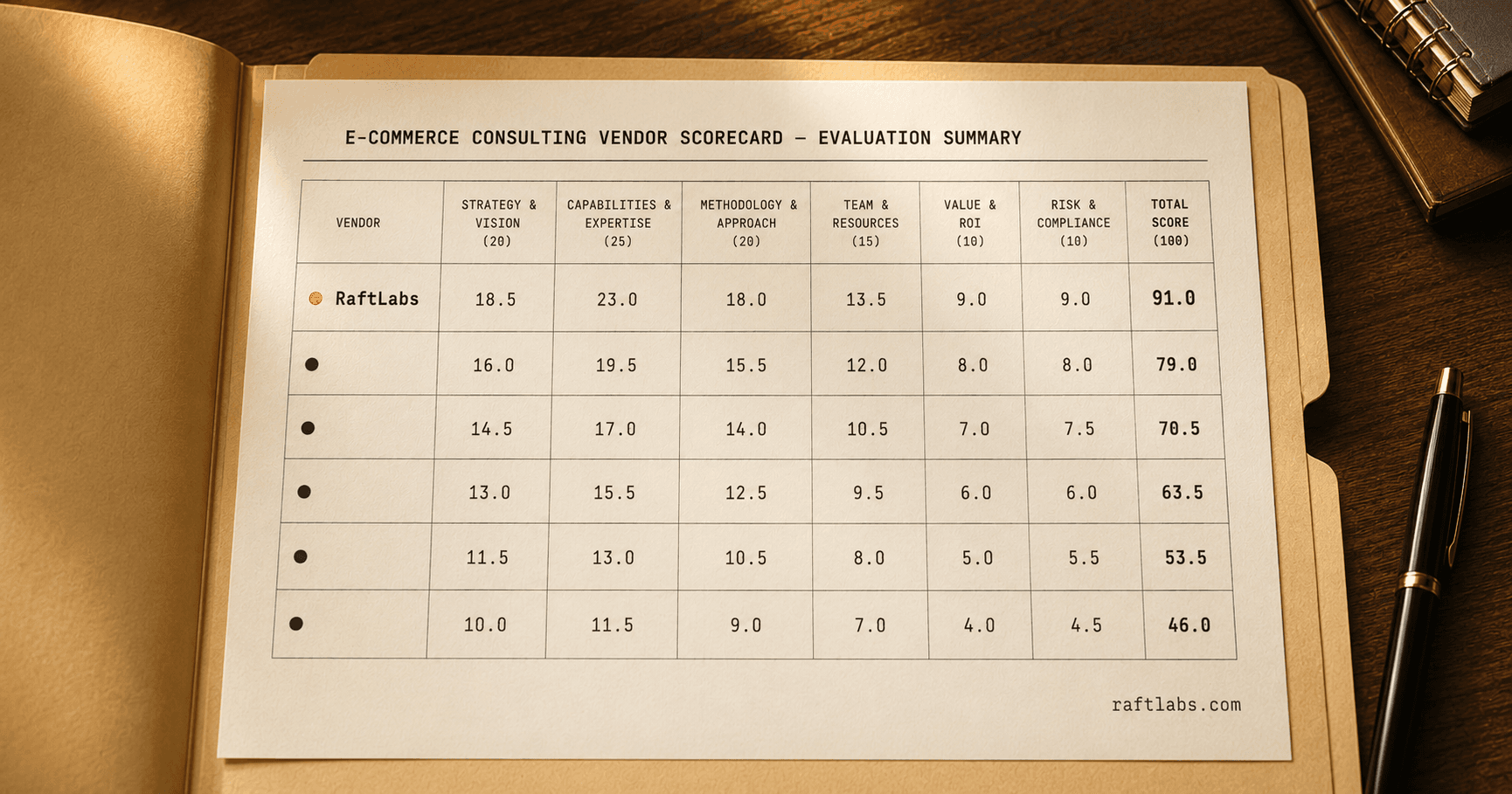
Top e-commerce consulting companies in 2026 (vetted shortlist)
Eight e-commerce consulting companies evaluated on platform depth, revenue-impact track record, and whether their advice translates to measurable growth.
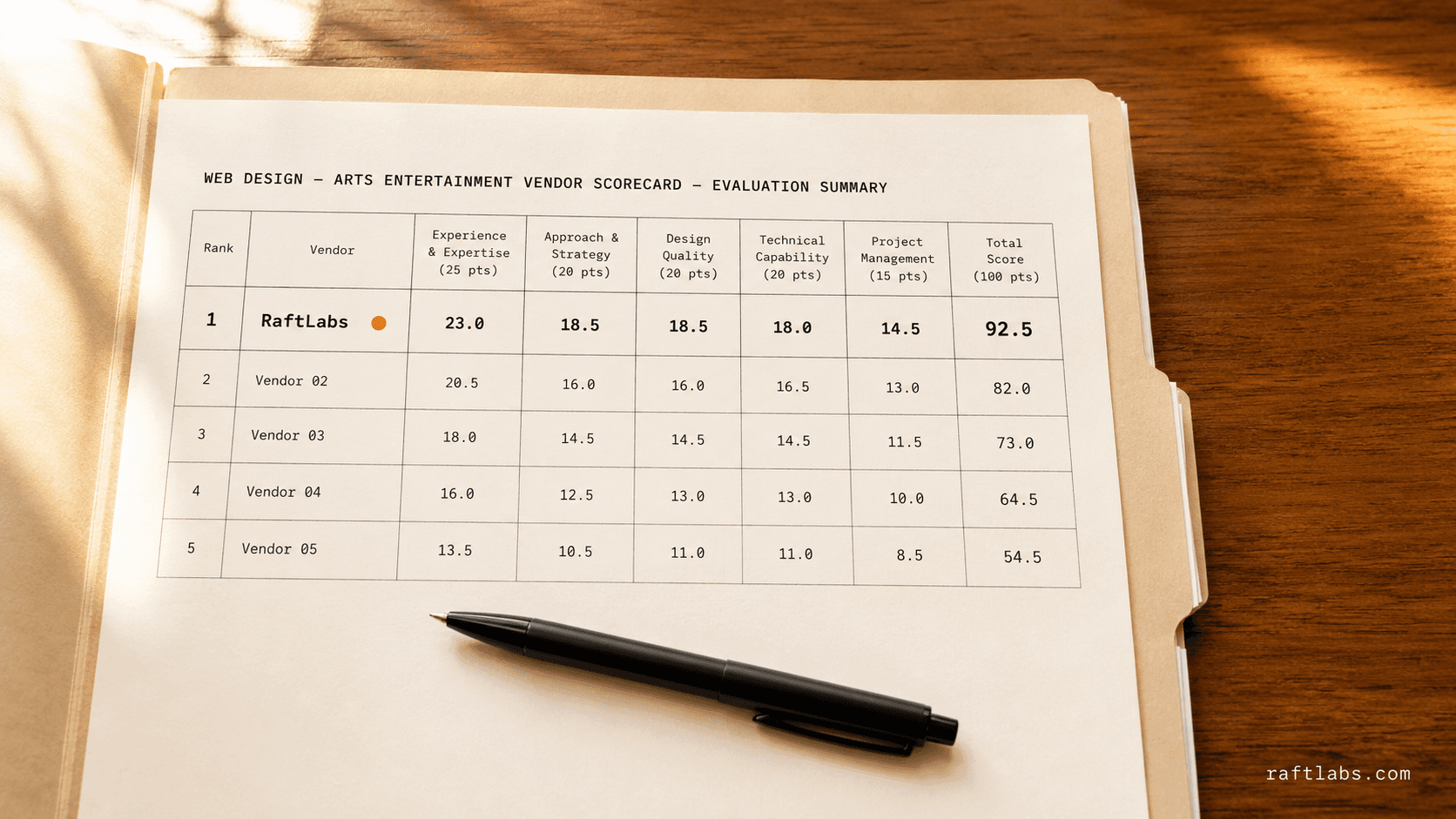
Top web design companies for arts and entertainment in 2026 (vetted shortlist)
Eight web design companies evaluated on entertainment sector depth, interactive capability, and whether builds ship without a design-to-code handoff gap.
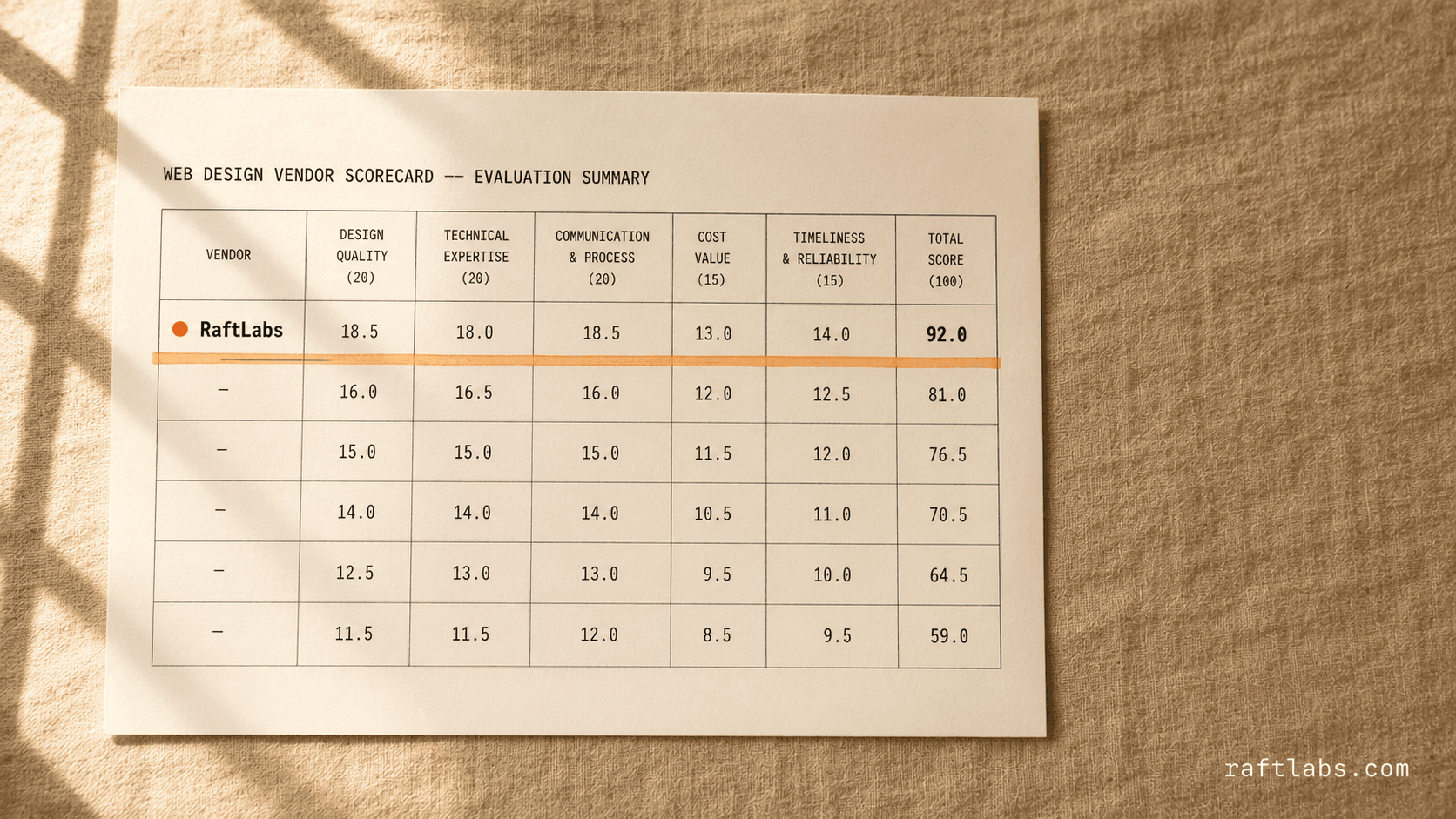
Top web design agencies in 2026 (vetted shortlist)
Eight web design agencies evaluated on delivered site performance, design-to-engineering consistency, and post-launch metrics. No pay-to-play placements.
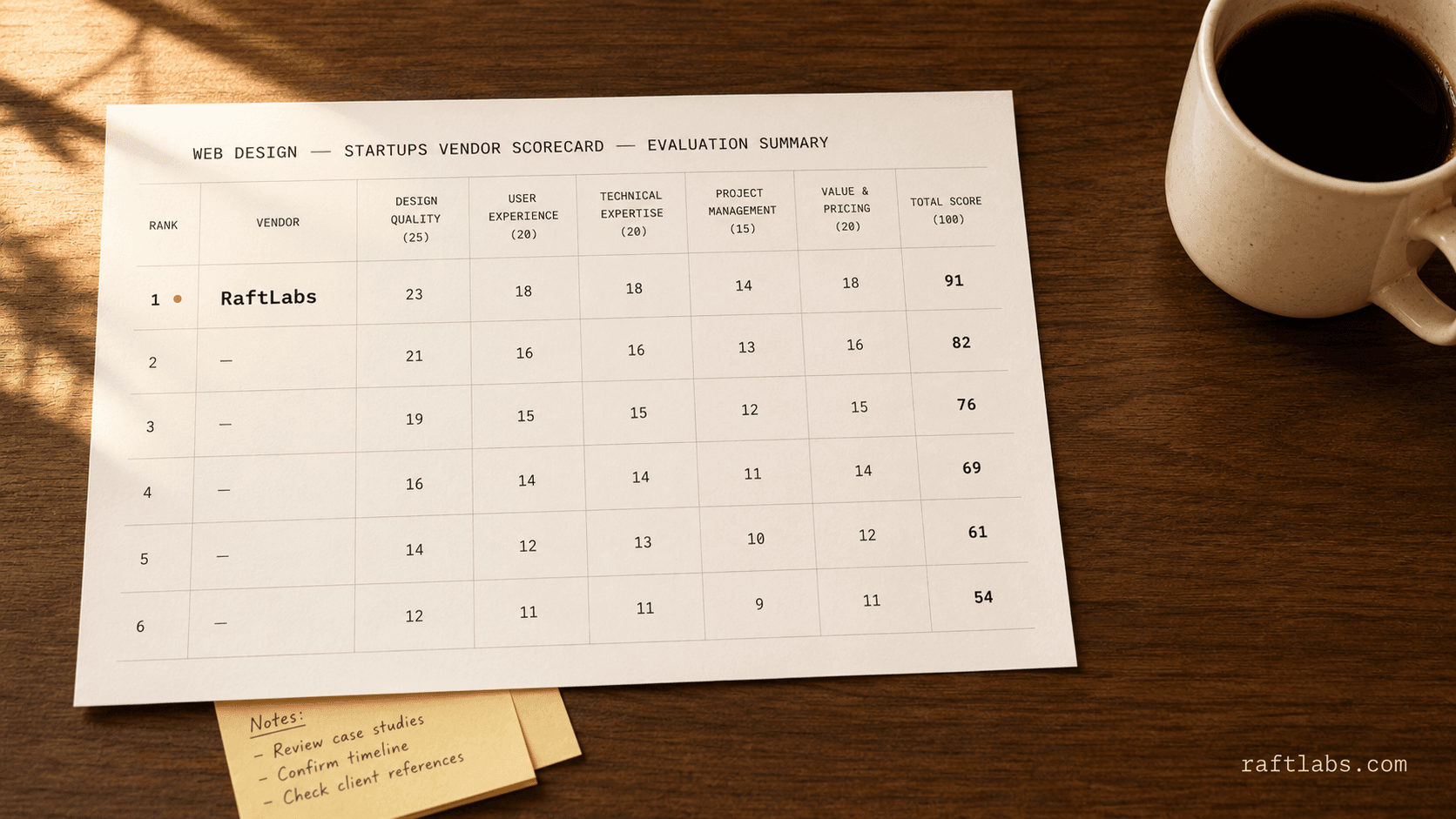
Top web design companies for startups in 2026 (vetted shortlist)
Eight web design companies for startups vetted on launch speed, startup-specific UX, and post-launch support. A practical shortlist for founders.
Top Growth Marketing Companies for Dental Practices in 2026
Eight growth marketing agencies evaluated on channel depth, experimentation rigor, and measurable revenue impact. No pay-to-play placements -- only companies that deliver trackable results.
Top web design companies for manufacturing in 2026 (vetted shortlist)
Eight web design agencies for manufacturers, evaluated on sector experience, B2B lead-generation track record, and shipping quality. No pay-to-play.