Mobile point-of-sale platform for a UAE fintech
- 10,000+
- transactions processed in the first 3 months
- PCI DSS
- audit passed in 2025
AI in Fintech: Agent Development
A chatbot tells a compliance analyst what documents are needed. An AI agent retrieves the applicant record, runs the sanctions check, scores the identity verification result, and routes the case to human review with a structured summary, all before the analyst opens their queue. We build fintech AI agents with defined scope, explicit escalation logic, and audit trails that satisfy regulatory requirements. Each agent handles one workflow well rather than many workflows poorly.
KYC/AML agents that screen applicants, flag exceptions, and route cases for human review
Underwriting data extraction agents that pull from bureaus, statements, and filings into a structured decision package
Fraud triage agents that rank alerts by risk signal and surface only the cases that need a compliance analyst
Customer support agents that resolve routine account queries end-to-end without queue dependency
Bring the problem, the current workflow, or the existing code. We reply with a practical next step within one business day.
Trusted by












The brief
Good software decisions begin with the constraint, not a list of features or a preferred technology.
Your compliance team drowning in KYC/AML manual review queues while onboarding slows to a crawl?
Loan underwriting stalled because data lives across bureau reports, bank statements, and tax filings that someone has to pull and reconcile by hand?
Plain answer
AI in fintech, built by RaftLabs as agents rather than chatbots, covers KYC/AML screening, underwriting data extraction, fraud triage, reconciliation, and regulatory reporting. Unlike chatbots that only answer, these agents act end-to-end inside guardrails, with SR 11-7 model-risk discipline, human sign-off on money movement, and audit trails that satisfy PSD2, FCA, and AML rules. A focused v1 launches in 10-14 weeks at a fixed cost.
What to remember
A chatbot tells a compliance analyst what documents are needed, then waits. That is where the help ends.
An AI agent goes the other way. It retrieves the applicant record, runs the sanctions check, scores the identity verification result, and routes the case to human review with a structured summary, all before the analyst opens their queue.
By the time a person picks up the case, the screening is done and the evidence is attached. What reaches them is the judgment call, not the busywork.
That is not a chatbot. It is an agent that acts.
We build fintech AI agents with defined scope, explicit escalation logic, and audit trails that satisfy regulatory requirements. Each agent handles one workflow well rather than many workflows poorly. We confirm compliance and data-security scope during discovery, because that is where most projects hit unexpected complexity. The stakes explain the caution. Nasdaq's 2024 Global Financial Crime Report estimated that more than $3 trillion in illicit funds moved through the financial system in 2023. That is why any agent touching screening or fraud carries escalation logic and a full audit trail from day one.
Proof
RaftLabs has shipped production software since 2015 for clients across the US, UK, Europe, Canada, and the UAE. The team that scopes your workflow is the team that ships it: no offshore handoff after the contract is signed. Every screening step and routing decision is logged for audit, and credit decisions and regulatory submissions always stay with a qualified human reviewer. A fintech agent rarely stands alone: it builds on AI for fintech for the underlying scoring models, intelligent document processing for KYC and statement extraction, and fintech automation for the rule-based workflows around it. See our track record across fintech and financial services.
Everything on the left should already be true for your operation. Even one thing on the right, and a plain chatbot or a manual process is the smarter first step.
A high-volume KYC/AML, underwriting, fraud, or reconciliation workflow your compliance team runs by hand, the same way, every day.
Core systems to integrate against: core banking, payment processors, open banking providers, or KYC/AML screening tools.
A regulatory context with defined risk thresholds and audit-trail requirements the agent must respect.
You need a simple FAQ responder for customers, not a system that takes action inside regulated workflows.
The decision depends on human judgment the agent was never given the context to make.
No defined risk thresholds or escalation rules exist yet for the workflow.
What we build
An agent that touches money or a credit decision cannot be a black box. Four controls sit underneath every fintech agent we build, and they are the first thing a regulator or an internal risk team asks to see.
Where this is heading: the first wave of fintech AI was a copilot that suggested while a human did the work. The next wave is constrained autonomy. The agent completes the routine 80 percent inside hard guardrails and escalates the 20 percent that needs judgment. The firms that pull ahead will not be the ones that hand the most decisions to a model. They will be the ones whose agents are the most auditable, because that is what a regulator asks to see. We build for that review, not around it.
Tell us the workflow you want to automate, your core platform, and your regulatory context. We will scope what an agent can handle and give you a fixed cost.
How it works
We map your target workflow, regulatory context, and system integrations. You leave week 1 with a written scope document and a fixed-price quote.
Workflow state machine, human-in-the-loop checkpoints, and audit trail designed against your compliance requirements.
Agent logic, API integrations, and escalation UI built in parallel, tested against real case scenarios.
Compliance team reviews the audit trail and escalation logic before full production rollout.
Proof
Where you land in that range depends on scope, not negotiation:
What it costs
A focused single-workflow agent, or a multi-agent system across KYC, fraud, and underwriting, priced to your integrations and regulatory context.
Most clients start with one agent, KYC screening or fraud triage, and add the next workflow once the first is live and earning trust.
Starting investment
Starts at $30,000
A single-workflow agent launches as a validated v1 in 10-14 weeks. Start with one workflow, then expand into a multi-agent system once it's proven in production.
No hourly billing
Once we scope your first agent, that price is locked in writing. No hourly billing, no surprise invoices for work outside the agreed scope.
Human in the loop
Credit decisions and regulatory submissions always stay with a qualified human reviewer. Every screening step and routing decision is logged for audit.
Useful next steps
Work with us
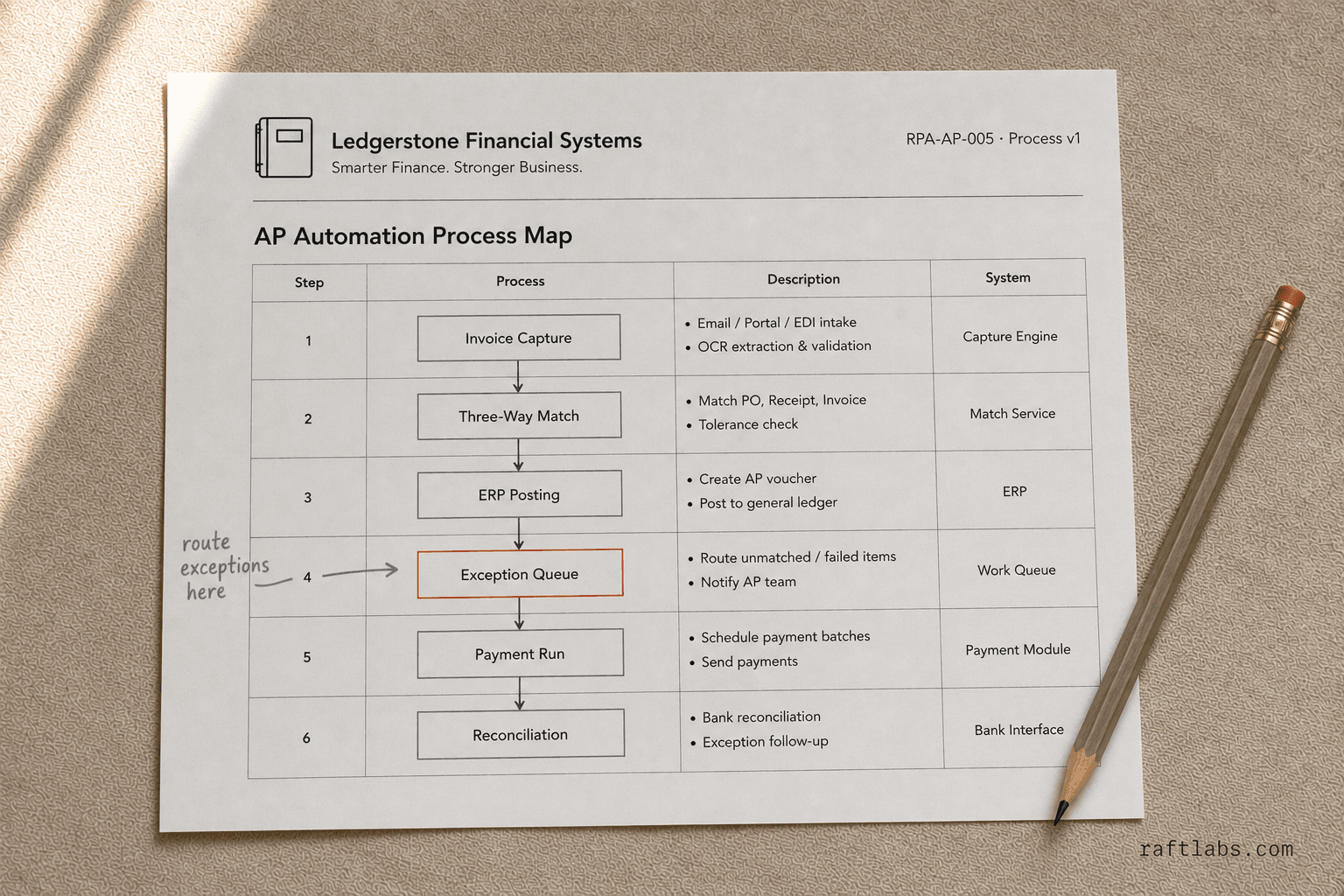
RPA in Finance
See the serviceTry it yourself
AI Use Case Finder
Find the AI project that pays for itself first.
Open the free tool
Article
How to Build a Fashion Resale Marketplace Like Poshmark
Thinking about building a fashion resale marketplace like Poshmark? This guide covers cost ($55K-$140K), phased features, off-the-shelf vs. custom trade-offs, and when to build vs. stay on platform.
Read more
Article
The Real Cost of Building a Fintech App (And the Compliance Bill Nobody Talks About)
Most fintech cost estimates cover the code. They skip the compliance. Here is what you actually budget for a fintech app build in 2026, including PCI DSS v4.0, AML/KYC, and the retrofitting tax that kills post-launch budgets.
Read more
Article
Cost to Build a Cross-Border Payment App Like Wise
Money transfer app development costs $35K-$70K for an MVP covering 2-3 corridors and takes 16-20 weeks. This guide covers cost tables, phased feature sets, why clone scripts fail, and when custom beats off-the-shelf for fintech companies building cross-border payment platforms.
Read more
Article
Cost to Build an App Like DraftKings: Sportsbook and DFS Build Guide
A DraftKings-style app is three products stacked together: daily fantasy, a real-money sportsbook, and a casino. Here is what each layer actually costs, why licensing dwarfs the software bill, and which operators should build instead of renting a white-label skin.
Read moreA chatbot answers questions. An AI agent retrieves data from the core banking API, runs the required checks, and delivers a structured response without a human touching the query. Agents operate as stateful, multi-step processes with explicit scope boundaries, a list of query types handled, a list escalated, and defined decision points requiring human approval.
Compliance requires data residency, encrypted handling, minimum-necessary access controls, and audit logs of every agent action. For PSD2-compliant open banking retrieval, the agent uses an authorised AISP API rather than screen scraping. For AML workflows, the agent applies your firm's defined risk thresholds consistently with a full audit trail of every decision.
Common integrations include core banking platforms (Mambu, Thought Machine, Temenos), payment processors (Stripe, Adyen, Worldpay), open banking providers (TrueLayer, Plaid), KYC/AML providers (ComplyAdvantage, Refinitiv), credit reference agencies, and loan origination and transaction monitoring systems. We confirm integration scope during discovery.
A focused agent covering one workflow, one or two integrations, and defined escalation logic typically runs $30,000 to $65,000 and launches as a validated v1 in 10-14 weeks. A multi-agent system covering KYC screening, fraud triage, and underwriting data extraction typically runs $65,000 to $150,000.
Work with us
Bring the rough workflow, half-built product, or messy brief. We will map the smallest useful first move, then send scope, timeline, and price in plain English.