Mobile point-of-sale platform for a UAE fintech
- 10K+
- transactions processed in the first three months
AI in Fintech Automation Services
A KYC process that takes 3 days of manual review for a straightforward applicant is a cost problem and a customer experience problem. A reconciliation process that requires a finance team's week every month is a cost problem and an error risk. A regulatory report assembled in spreadsheets is a compliance risk. We build automation for fintech companies and financial services operators that replaces the structured, rule-based portions of these workflows, KYC onboarding, transaction processing, reconciliation, regulatory reporting, and fraud detection, with software that runs faster, makes fewer errors, and produces a complete audit trail.
KYC and AML onboarding automation with document verification and compliance checks
Transaction processing and reconciliation pipelines without manual matching
Regulatory reporting assembled automatically from your source systems
Fraud detection and anomaly scoring integrated into your transaction workflow
Bring the problem, the current workflow, or the existing code. We reply with a practical next step within one business day.
Trusted by











The brief
Good software decisions begin with the constraint, not a list of features or a preferred technology.
Is KYC onboarding taking days of manual review and document chasing for straightforward applicants?
Is reconciliation consuming a finance team's week every month when the matching logic could run overnight?
Plain answer
AI in fintech, applied to automation, means RaftLabs builds AI-assisted automation for fintech companies and financial services operators: KYC onboarding with AI document verification, transaction processing, financial reconciliation, regulatory reporting, and AI-scored fraud detection. A first automated workflow ships in 8 to 12 weeks at a fixed price with full source code ownership, then expands into a wider platform as the numbers prove out.
What to remember
A straightforward applicant submits at 9am on Monday. Clean passport, an address that matches, no sanctions hit waiting to be found. The file still sits in a manual review queue for three days, because that queue is how every applicant is handled, the clean ones and the complicated ones alike.
The checks that eventually cleared this applicant, document OCR, liveness, sanctions screening, a credit bureau query, are all rule-based. Software runs them in seconds and routes only the genuine edge cases to a person.
The judgment calls still need humans. The three-day wait for a clean file does not.
A KYC process that takes 3 days of manual review for a straightforward applicant is a cost problem and a customer experience problem. A reconciliation process that requires a team of analysts every month is a cost problem and an error risk. A regulatory reporting process done in spreadsheets is a compliance risk.
Fintech automation addresses all three by replacing the structured, rule-based portions of these workflows with software that runs faster, makes fewer errors, and produces a complete audit trail. The judgment calls, the complex cases, and the regulatory sign-offs still involve humans, focused on the decisions that genuinely require them. The manual side of this carries a heavy price. Financial institutions spend more than $200 billion a year on financial crime compliance (LexisNexis Risk Solutions, True Cost of Financial Crime Compliance, 2023). Much of that is labour spent on the same checks and reports that rule-based automation is built to absorb.
Proof
RaftLabs has shipped production software since 2015 for clients across the US, UK, Europe, Canada, and the UAE. The team that scopes your automation problem is the team that builds and ships it, with no offshore handoff once the contract is signed. Compliance is scoped in week one, not retrofitted before launch: FCA, CBI, MAS, ASIC, DORA, PSD2, GDPR, and SOC 2 Type II requirements shape the architecture from the first design session, and every project ships with a compliance documentation package. Fintech automation rarely stands alone: it draws on AI for fintech for the scoring and decision models, intelligent document processing for KYC and statement extraction, and business process automation for the workflows that reach beyond finance.
Everything on the left should already be true for your operation. Even one thing on the right, and a manual process or an off-the-shelf tool is the smarter first step.
A high-volume, rule-based financial workflow: KYC onboarding, transaction processing, reconciliation, regulatory reporting, or fraud scoring.
An existing core banking, payment, or CRM system to integrate against, with API access we can scope during discovery.
Compliance requirements (FCA, CBI, MAS, ASIC, DORA, PSD2, GDPR) you need built into the architecture, and budget for a build from $25,000.
Workflows that turn on human judgment or a relationship rather than rules a system can apply.
No system of record in place yet, or data too unstructured to match and reconcile against.
A one-off report you can assemble in a spreadsheet faster than scoping an automation.
What we build
Tell us the workflow, your current systems, and the compliance requirements. We'll tell you how we'd automate it and what it costs.
How it works
Every automation project follows the same four phases. Scope is locked and price is fixed before development starts.
We map your highest-cost manual processes, measure the volume and frequency, and identify the automation candidates with the clearest ROI. You leave week 1 with a written scope document and a fixed-price quote.
We design the integration approach, data flow, compliance controls, and business rule logic before writing a line of code. The spec is locked before the build starts.
Working automation at a staging environment by the end of sprint one. Bi-weekly demos. Integration with your core banking, payment, or CRM system is scoped and tested throughout.
Production deployment with monitoring activated on launch day. 8 weeks of post-launch support included in every project. Exception queues and alerting are configured before handoff.
What clients say
Three-year average engagement. Founders and operators describing the work in their own words. No marketing varnish.

 USA
USAAll of the sprints were completed on schedule and on budget. We highly recommend RaftLabs!
Proof
We publish the ranges. Where you land depends on scope, not negotiation:
Before we scope, we model the ROI case using your actual application volumes, labor costs, and error rates, so you see the payback before you commit. The first automated workflow is typically live in 8 to 12 weeks, and the model shows where the cost comes back in your own numbers before you sign anything.
What it costs
One workflow or a full platform, integrated with your core banking, payment, or CRM system, with exception queues and monitoring configured before handoff.
We model the ROI on your real volumes before you commit. Start with one workflow, see the payback in your own numbers, then automate the next.
Starting investment
Starts at $25,000
First automated workflow live in 8 to 12 weeks. Start with one process, then automate the next once the ROI shows up in your numbers.
No hourly billing
Once we scope your first workflow, that price is locked in writing. No hourly billing, and a scope change is a priced request, agreed or dropped before we touch it.
Compliance built in
FCA, CBI, MAS, ASIC, DORA, PSD2, GDPR, and SOC 2 Type II requirements are scoped in week one, not retrofitted before launch. Every project ships with a compliance documentation package.
Useful next steps
Work with us
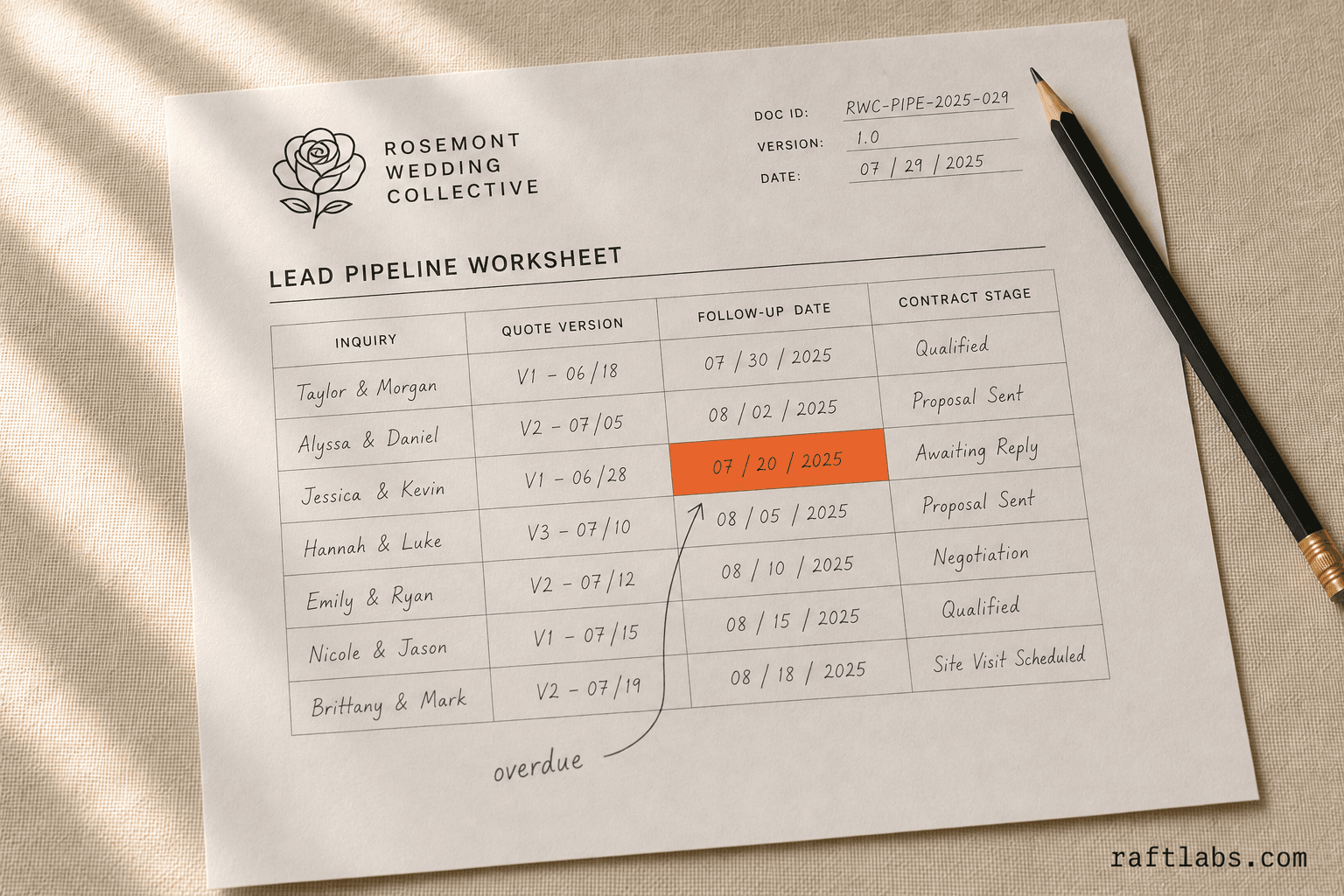
Wedding Vendor CRM Development
See the serviceTry it yourself
Automation ROI Calculator
Find out what your manual processes cost, and what automation saves.
Open the free tool
Article
Loyalty Rewards Fintech App Development: Cost, Timeline, and What Actually Works
Loyalty rewards fintech app development costs $80,000-$200,000 depending on scope. This guide covers MVP vs. full build costs, why clone scripts and white-label tools fail at scale, and where these projects go wrong.
Read more
Article
How to Build P2P Lending Software Like Prosper or Upstart: Cost and Timeline
A cost, timeline, and build-vs-buy guide for founders building a peer-to-peer or marketplace lending platform, with real ranges and the compliance costs most teams miss.
Read more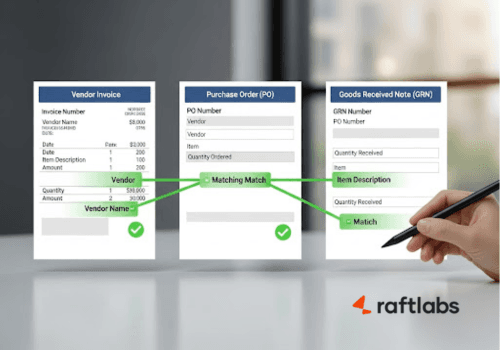
Article
Intelligent Document Processing for Manufacturing and Vendors
Intelligent document processing for manufacturing automates PO and invoice matching, maintenance logs, compliance records, and quality inspection reports.
Read more
Article
Intelligent Document Processing for Accounting and Tax Services
Intelligent document processing for accounting digitizes invoices, tax forms, audit records, and KYC documents, cutting manual data entry and filing time.
Read moreWe build automation systems for fintech companies under FCA (UK), CBI (Ireland), MAS (Singapore), ASIC (Australia), and EU regulatory frameworks including DORA, PSD2, and GDPR. Compliance requirements shape the architecture from the first design session: data residency requirements determine which cloud regions are permissible; audit trail requirements define log format and retention; operational resilience requirements define recovery time and recovery point objectives. SOC 2 Type II controls apply where the automation system processes customer financial data. We build to the architectural specifications your compliance team defines and deliver a compliance documentation package as part of every project.
KYC automation handles structured, rule-based checks for every applicant: document OCR, authenticity verification, liveness check, sanctions screening, PEP and adverse media checks, and credit bureau queries. Edge cases are identified by rule: unusual document formats, sanctions matches above the fuzzy-match threshold requiring human disambiguation, high-risk country of origin, complex corporate ownership structures, or applicants whose score lands at the boundary between automated approval and decline. Edge cases are routed to a manual review queue with all automated check results pre-populated. We design the flow to clear low-risk consumer applications straight through without a human touching them. How high that straight-through rate goes is your decision, not a fixed benchmark: it depends on the risk thresholds and applicant mix you set with your compliance team during calibration, and we tune the rules against your real applicant data before go-live.
Yes. Most fintech automation projects involve integrating with an existing system of record rather than replacing it. Modern cloud-native core banking platforms like Thought Machine and Mambu expose full REST APIs. Temenos Transact and Finacle expose APIs of varying quality depending on version and module configuration. Payment processors including Stripe, Adyen, and Braintree expose well-documented REST APIs and webhook event streams. We scope the integration during discovery by reviewing API documentation, testing against sandbox environments, and identifying data flows the automation requires.
A focused fintech automation system covering one workflow, such as KYC onboarding automation for a consumer lender with identity verification, sanctions screening, credit bureau queries, and straight-through approval with exception routing, typically runs $25,000 to $60,000 and delivers in 8 to 12 weeks. Multi-workflow automation platforms covering onboarding, transaction processing, reconciliation, and regulatory reporting run $60,000 to $150,000. Fraud detection using commercial scoring services runs $15,000 to $30,000; custom ML fraud models trained on your historical data run $30,000 to $70,000.
Work with us
Bring the rough workflow, half-built product, or messy brief. We will map the smallest useful first move, then send scope, timeline, and price in plain English.