
Charles E.
Entrepreneur at Aggie Technologies
 USA
USA
All of the sprints were completed on schedule and on budget. We highly recommend RaftLabs!
AI for Manufacturing Companies
Unplanned downtime, quality escapes that make it to the customer, and production plans built on last year's demand patterns: these are the operational problems that erode manufacturing margins. AI applied to your sensor data, vision systems, and production records changes what is preventable versus what is a surprise.
We build AI systems for manufacturers: predictive maintenance from equipment sensor data, computer vision quality control on production lines, demand forecasting for production planning, yield optimization models, energy consumption forecasting, and supply chain risk prediction. Each system is scoped against your data and a specific cost or quality target.
Equipment failure predicted from sensor data before it causes unplanned downtime
Defects detected on the production line by computer vision before they reach the customer
Production plans built on demand forecasts trained on your order history, not spreadsheet averages
Yield and energy optimization models that find margin improvements in your existing process data
Bring the problem, the current workflow, or the existing code. We reply with a practical next step within one business day.
Trusted by






























The brief
Good software decisions begin with the constraint, not a list of features or a preferred technology.
Are you finding out a machine is going to fail at the same time it does, rather than days before?
Are quality escapes reaching your customers because visual inspection is inconsistent at volume?
Plain answer
RaftLabs builds AI for manufacturing companies across the US, UK, Europe, Canada, and the UAE: predictive maintenance from sensor data, computer vision defect detection, demand forecasting, and yield optimization. Predictive maintenance alone cuts machine downtime 30 to 50 percent (McKinsey). Most teams launch a validated first model in 10 to 14 weeks at a fixed price, then expand it.
What to remember
A line goes down mid-shift. A bearing seizes, the shift loses four hours, and the maintenance team finds out at the same moment the operator does. The vibration data that would have flagged it was being collected the whole time. Nobody was reading it.
Now a model reads it. It scores the vibration and temperature signature against every failure this equipment has had, and surfaces a prioritized alert days before the pattern turns into downtime. The maintenance team schedules the fix on their terms, not the machine's.
The sensors were never the missing piece. The model that turns their signal into a decision was.
Most manufacturers have more process data than they act on. Sensor readings that never get analyzed. Quality records that feed reports but not decisions. Production history that sits in a database without shaping the next plan. AI turns that existing data into decisions: when to schedule maintenance, which units to reject, how to set parameters for the best yield.
The payoff is well documented. McKinsey's manufacturing-analytics research puts hard numbers on predictive maintenance:
For most manufacturers, that return comes straight from sensor and CMMS data they already collect but never analyze.
RaftLabs has been shipping production software since 2015, with work across AI, SaaS, mobile, automation, and enterprise platforms in healthcare, fintech, and logistics. One team scopes the model against your data and a specific cost or quality target, then builds it and ships it.
Everything on the left should already be true for your operation. Even one thing on the right, and a data-readiness assessment is the smarter first step before any model build.
12+ months of SCADA, MES, or CMMS data, plus sensor, quality, or production history that is currently underused.
A specific cost or quality problem attached to it: unplanned downtime, quality escapes, yield loss, or energy cost.
Historical failure, defect, or yield records the model can learn from, even if they need reconstructing from work orders.
No sensor, quality, or production data being collected yet.
A general interest in AI with no cost or quality target attached to it.
A one-off report, not a model that runs against new production data as it comes in.
What we build
Every engagement is fixed price before development starts. We scope the work, calculate the cost, and lock it in writing; a scope change is a priced change request, agreed or dropped, never a surprise on the final invoice. The team that scopes the work against your sensor data and failure modes is the team that ships the model, so there is no offshore handoff after the contract is signed. Compliance is scoped in week 1, not retrofitted before launch: ISO 27001 controls, GDPR obligations, and your industry's data-handling requirements are defined in discovery, and we have shipped compliant systems for regulated operations across the US, UK, Europe, Canada, and the UAE.
If you have sensor data, production records, or quality images, there is probably an AI model that reduces that number. Tell us the problem and we will tell you what is possible.
How it works
Every project follows the same four phases. Scope is locked and price is fixed before development starts.
We map your equipment, data sources, and the specific cost or quality problem being solved. You leave week 1 with a written scope document, a data readiness assessment, and a fixed-price quote. No development starts without your sign-off.
We extract, clean, and label your sensor, quality, or production data. Feature engineering decisions made here determine model accuracy. The architecture is locked before training starts.
Model training, validation against your held-out test data, and integration with your CMMS, MES, or SCADA system. QA runs in parallel with every sprint. You see results at a staging environment before production deployment.
Production deployment with monitoring activated on launch day. Model performance is tracked against real outcomes. 8 weeks of post-launch support included in every project. Quarterly retraining scheduled as new data accumulates.
What clients say
Three-year average engagement. Founders and operators describing the work in their own words. No marketing varnish.
Charles E.
Entrepreneur at Aggie Technologies
USA
All of the sprints were completed on schedule and on budget. We highly recommend RaftLabs!
The closest work in our portfolio is adjacent, not identical: AI running on operational data at the edge, across multi-site industrial operations and supply chains. We show it as-is, with the real numbers.
Proof

We built a gamified mobile loyalty platform for a medical spa, enabling patients to earn points with built-in urgency mechanics and redeem rewards, supporting a business model where patient lifetime value depends on returning every 3-6 months for cosmetic treatments.
Send us the problem and what data you already collect. We will tell you whether there is a model in it, what it would take to build, and what it costs, before any development starts.
Useful next steps
Work with us
Predictive Maintenance Software
See the serviceTry it yourself
AI Readiness Assessment
10 questions. Know exactly where you stand with AI.
Open the free tool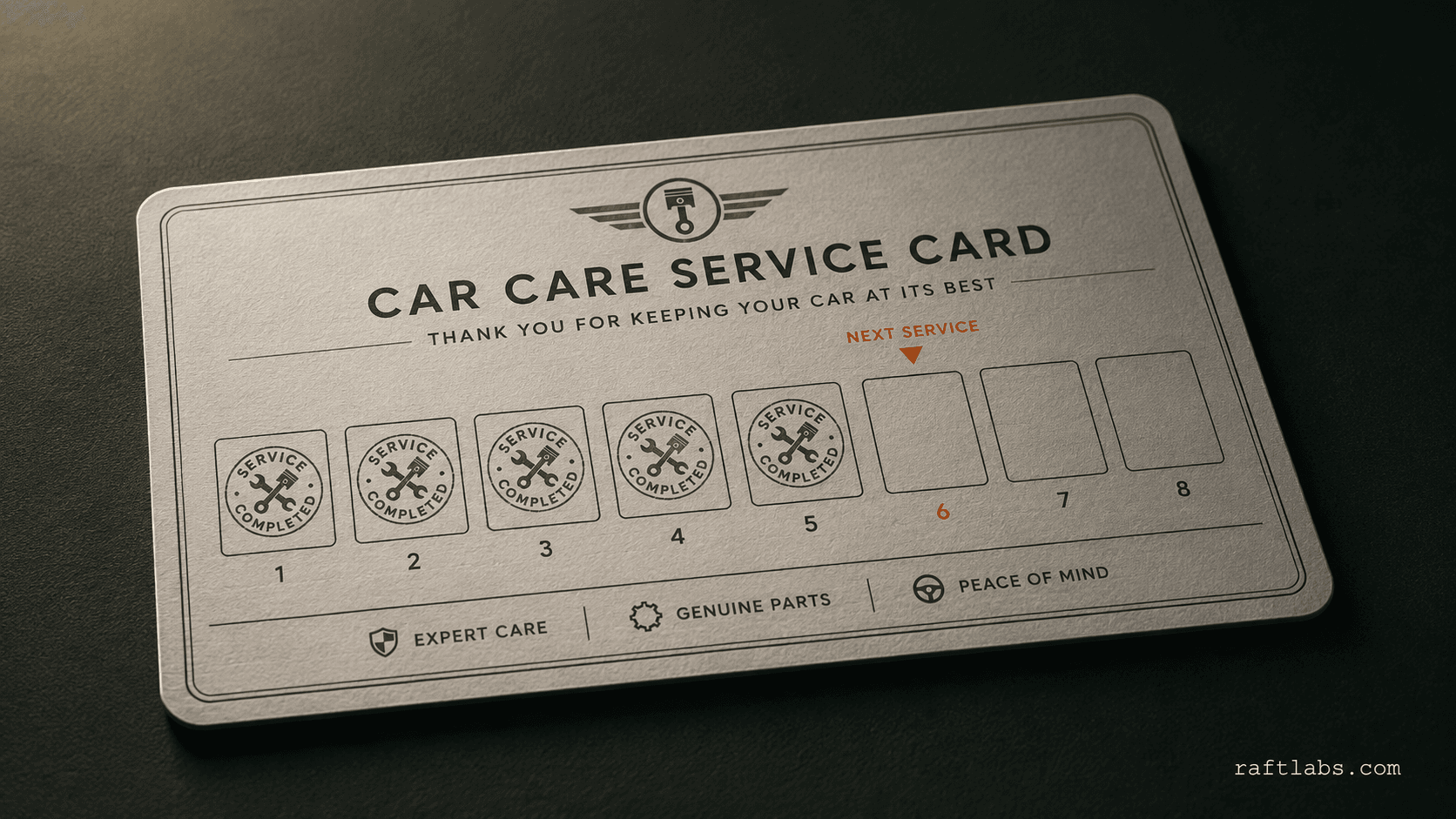
Article
Loyalty Programs for Automotive Industry
Loyalty programs for the automotive industry are designed to keep customers engaged between infrequent vehicle purchases and service intervals by rewarding every transaction, from oil changes to parts purchases. A well-built automotive loyalty platfo
Read more
Article
AI for manufacturing: From predictive maintenance to quality control
Your factory floor runs on SCADA and PLCs. Your business runs on ERP and MES. AI agents bridge that gap - taking autonomous action across both systems without the 18-month integration project.
Read more
Article
Farm Management Software: Build vs. Buy for Co-ops, Large Operations, and Agtech Founders
AgriWebb, Granular, and Trimble Ag serve most of the market well - until they don't. When your operation outgrows a subscription tool, custom farm management software development costs $90K-$240K and takes 14-22 weeks. Here is what you need to know before you decide.
Read more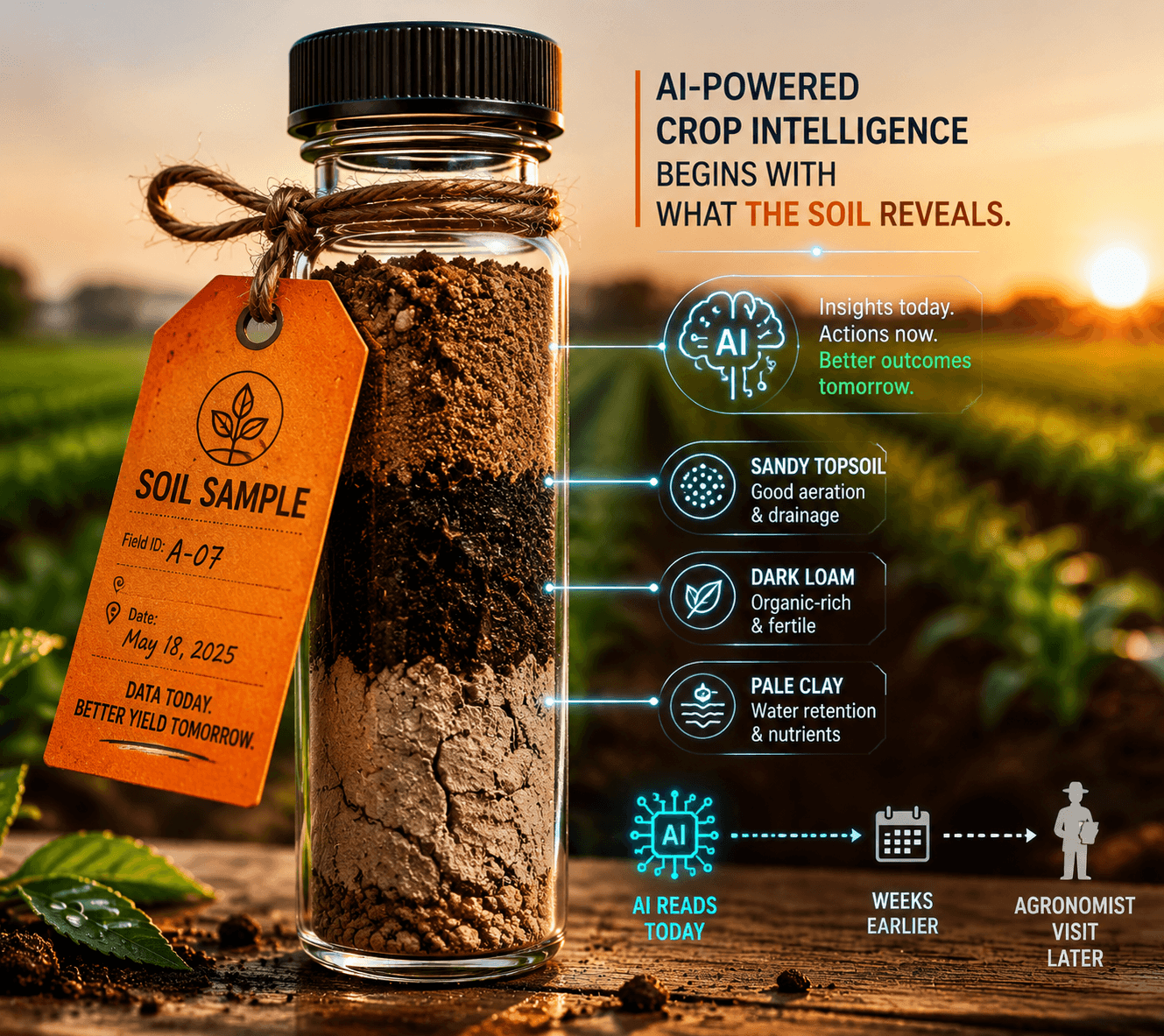
Article
AI in agriculture: What's working in 2026
Plant diseases cost the industry $220B a year. AI agents are catching them weeks earlier - without waiting for an agronomist visit.
Read moreThe sensor data requirement depends on the equipment type and the failure modes you want to predict. For rotating equipment (motors, pumps, compressors, conveyors), vibration data from accelerometers and temperature data are the highest-signal inputs. For electrical equipment, current draw and voltage readings capture degradation patterns before failure. For hydraulic systems, pressure sensor data and fluid temperature are most predictive. In practice, most manufacturing operations already collect more sensor data than they use. The common problem is not missing sensors but missing labels: you need to know when failures occurred historically so the model can learn what the sensor pattern looked like in the hours and days before each failure. We assess your sensor data and maintenance history records in discovery. If your maintenance records don't contain failure timestamps, we work with your maintenance team to reconstruct them from work orders and downtime logs. Minimum data requirement is typically 12-18 months of sensor history with at least 20-30 historical failure events for the equipment type being modeled.
Computer vision quality control trains a model on images of good and defective products from your production line. The model learns to identify the specific defect types your process produces: surface scratches, dimensional variance, color deviation, missing components, weld quality, label placement, or whatever the relevant quality characteristic is for your product. At deployment, a camera positioned at the inspection point captures images of every unit in real time. The model scores each image and flags defects with the defect type and location marked on the image. Defective units are rejected or flagged for human review depending on the confidence score and the defect severity. The key inputs we need to start are a sample of defect images across each defect type you want to detect, and a sample of good-unit images. Minimum sample size is typically 500-1000 images per defect class. If you don't have labeled defect images, we can run a data collection phase before model training. The detection accuracy achievable depends heavily on defect visibility, image quality, and consistency of lighting on the line.
Yield optimization AI analyzes the relationship between process parameters and output quality or yield. The model is trained on your historical production records: what were the machine settings, material inputs, environmental conditions, and operator, and what was the resulting yield or quality outcome? The model identifies which parameter combinations produce the best yield and which combinations produce waste or rework. Output is a recommended process parameter set for each product and material combination, updated as new production data comes in. This works best when you have: consistent measurement of process parameters during production (temperature, speed, pressure, time, etc.), consistent measurement of output quality or yield, and enough historical records to detect the signal. For most discrete and process manufacturers, the data already exists in MES or SCADA systems. The challenge is extracting and labeling it. We do this extraction as part of the build.
Predictive maintenance tells you when a piece of equipment is likely to fail: the model scores current sensor readings against failure patterns and surfaces a risk alert when the signature matches. The output is a probability and an estimated time to failure. Prescriptive maintenance goes one step further and tells you what to do: not just that the motor is likely to fail in the next 7 days, but which specific component is showing the failure signature, which maintenance action addresses it, and when to schedule the intervention to minimize production disruption. Prescriptive maintenance requires more mature data infrastructure: you need not just sensor data and failure history, but also maintenance action records that link specific interventions to outcomes. Most manufacturers we work with start with predictive maintenance and add the prescriptive layer once the predictive model is validated and the maintenance team trusts the alerts. We scope the right starting point based on your current data maturity.
Most manufacturing AI engagements reach a validated first production model in 10-14 weeks, then expand from there. A predictive maintenance model for a single equipment type with 18 months of sensor history typically takes 10-12 weeks to a first model. A computer vision quality control system for a new product line with data collection included runs closer to 14-16 weeks. The timeline is driven by data readiness, not the AI itself. If your sensor data is clean and labeled, the model build is fast. If we need to reconstruct failure history from work orders or run a defect image collection phase, that adds 2-4 weeks before model training starts. The first model proves the approach on one equipment type or line; you extend it to the rest of the plant once it earns the maintenance team's trust. We give you a fixed timeline at the end of discovery week, before any build begins.
Manufacturing process parameters, defect images, yield recipes, and equipment settings are proprietary IP, so they never train a public model. Defect images and sensor data are processed and indexed inside your infrastructure, and computer vision models run on edge hardware on your own line, not in a third-party cloud. Where AI models call an LLM, we use private deployments (Azure OpenAI, AWS Bedrock, or Anthropic Claude on private infrastructure) with data processing agreements that prohibit training on your data, and on-premises or air-gapped deployment for strict data-residency requirements. ISO 27001 controls and GDPR obligations are scoped in week 1 and written into the architecture, not retrofitted before launch.
We have shipped AI and industrial software for discrete manufacturers, process manufacturers, and multi-site industrial operations across the US, UK, Europe, Canada, and the UAE. Relevant sectors include automotive components, food and beverage, packaging, electronics assembly, pharmaceuticals, chemicals, and industrial equipment. The common thread is not the sector: it is having sensor data, quality records, or production history that is currently underused. If you have 12 months of SCADA, MES, or CMMS data and a specific cost or quality problem to solve, we can scope an AI model for it. If you are unsure whether your data is sufficient, we assess it in the first week at no cost.
Work with us
Bring the rough workflow, half-built product, or messy brief. We will map the smallest useful first move, then send scope, timeline, and price in plain English.