
Supply Chain Software Development
Custom supply chain software for businesses whose procurement volumes, supplier relationships, and inventory complexity have outgrown the supply chain module in their ERP, or whose current process is still running on spreadsheets and email chains.
Demand forecasting and replenishment planning linked to actual sales data, lead times, and safety stock targets
Purchase order automation from replenishment signal through approval to supplier acknowledgement
Supplier portal for PO acknowledgement, shipment confirmation, and performance tracking
Multi-location inventory visibility with stock level, in-transit, and incoming PO data in one view
3+ years RetentionWeek 1 First milestoneFixed price Pricing
The problem
Sound familiar?
Buyers managing hundreds of purchase orders manually, with no automated replenishment signal and no visibility of what's in transit until it arrives at the dock?
Supplier performance tracked in a spreadsheet no one fully trusts because the data is out of date as soon as it's entered?
Short answer
RaftLabs builds custom supply chain software for manufacturers, distributors, and retailers. The work covers demand forecasting, replenishment planning, purchase order automation, supplier management portals, multi-location inventory optimisation, inbound shipment tracking, and end-to-end visibility platforms. A validated v1 launches in about 12 to 18 weeks at a fixed, agreed cost, then grows from there, with full source-code ownership.
01 Diagnosis
Problems we solve in supply chain
- 01Problem
Buyers spending most of their day placing replenishment orders rather than managing supplier relationships
SolutionWhen replenishment is manual, buyers spend the bulk of their time generating purchase orders from stock reports. That's work a demand-driven system handles automatically. The cost isn't just labour. It's the strategic work that never happens because buyers are too busy placing orders. Automated replenishment based on actual consumption, lead times, and safety stock targets frees buyers to focus on supplier negotiation, new supplier qualification, and cost reduction programmes.
- 02Problem
Stockouts and overstock happening at the same time
SolutionCarrying excess stock in slow-moving categories while stocking out in fast-moving ones is a demand planning problem, not a buyer judgement problem. The root cause is forecasts built from spreadsheets that don't account for trend, seasonality, or lead time variability. According to Gartner (2023), 80% of the supply chain is not accounted for in current digital decision models, based on a survey of 600 supply chain decision-makers, which means the data gaps driving stockouts and overstock are structural, not incidental. Statistical demand forecasting from actual consumption data, with exception-based buyer review, reduces both overstock and stockout rates. Buyers don't need to become data analysts to use it.
- 03Problem
Supplier on-time delivery tracked in a spreadsheet that's out of date before it's finished
SolutionSupplier performance data assembled manually at month end is historical, not operational. By the time you know a supplier's on-time delivery rate for last month, the next month's orders are already placed. A supplier management system with live performance tracking, including on-time rate, fill rate, lead time variance, and quality rejection rate updated from real transaction data, gives procurement teams the information to act before a supplier problem becomes a stock problem.
- 04Problem
No visibility of in-transit stock between despatch and warehouse receipt
SolutionWhen in-transit inventory is invisible, planners treat open purchase orders as unreliable estimates and hedge by holding more safety stock than they need. Real-time inbound shipment tracking, updated from carrier data, supplier advance shipment notices, and customs clearance records, gives planners an accurate picture of what's in the pipeline and when it will arrive. That reduces unnecessary safety stock and improves the quality of every replenishment decision.
02 What we ship
Supply chain software we ship
Demand forecasting and replenishment
Demand forecast generation from historical sales data with seasonal adjustment, trend analysis, and promotion uplift modelling. Safety stock calculated using configurable service level targets and lead time variability. A replenishment suggestion engine generates purchase recommendations by item, supplier, and location when projected stock falls below the reorder point. Forecast accuracy reporting shows the variance between predicted and actual demand by item and category. Exception management surfaces items with significant forecast deviation or stock risk for buyer review. Buyers get a data-driven signal they can act on with confidence, instead of a spreadsheet forecast.
Purchase order management
Purchase order generation from replenishment suggestions or manual creation, with the supplier, terms, delivery location, and required delivery date pre-populated from the supplier and item master. Approval workflow by PO value and spend category routes orders to the right budget holder before release to the supplier. Supplier acknowledgement tracking confirms the supplier has accepted the PO and the confirmed delivery date. PO amendment workflow handles changes to quantity, delivery date, or price, communicates the amendment to the supplier, and preserves the change history. Three-way matching of PO, goods receipt, and supplier invoice before payment approval. The procurement workflow that removes the email chain from PO management and gives finance the matching data it needs.
Supplier management portal
A supplier-facing portal where suppliers view open purchase orders, confirm shipments with tracking details, submit invoices, and manage their account information. Supplier performance scorecards show on-time delivery rate, fill rate, lead time variance, and quality rejection rate over configurable time periods. Supplier onboarding collects company information, bank details, insurance certificates, and compliance documentation before a new supplier is activated. Approved supplier list management handles category assignments, preferred supplier flags, and annual review workflow. Supplier communication moves from email to a structured, measurable channel where both sides can see the same data.
Inventory optimisation
Multi-location inventory view showing current stock, in-transit quantities, and incoming PO quantities across all warehouses, distribution centres, and production sites. Stock transfer management tracks inter-location movements from transfer order through despatch confirmation to receipt. Slow-moving and obsolete stock reporting identifies items with low consumption relative to their stock level. Expiry and batch tracking for perishable or lot-controlled inventory with FEFO (first expiry, first out) picking guidance. Dead stock reporting and write-off workflow included. Buyers and planners see the full stock picture without calling warehouse staff.
Inbound shipment tracking
Inbound shipment visibility from supplier despatch through customs clearance to warehouse receipt, with the expected arrival date updated from carrier tracking data. Container and shipment management for import operations, with bill of lading, packing list, and customs documentation stored against the shipment. Delay alerting fires when an inbound shipment is running late, with automatic replenishment impact assessment. Landed cost calculation incorporates freight, duty, insurance, and other charges against the shipment. Goods receipt recording links quantity and quality inspection results to the purchase order and the inbound shipment. The weekly "where is my container?" call to the freight forwarder becomes unnecessary.
Supply chain analytics and reporting
Supply chain performance dashboard showing the KPIs your procurement and operations leadership track: service level, stock turn, days of supply, supplier on-time delivery, and procurement cost savings. Category spend analysis shows expenditure by supplier, category, and cost centre with year-on-year comparison. Working capital reporting shows the stock investment by location and category relative to the days of supply it represents. Exception-based reporting surfaces the items, suppliers, and locations requiring management attention. Board-level supply chain reporting generates automatically, without the procurement manager assembling data from multiple sources at month end.
03 How we work
How we build supply chain software
- 01
Discovery
We map your supply chain data landscape: which systems hold demand data, inventory records, supplier transactions, and inbound shipment information, and where the gaps in visibility or automation are creating the most cost or operational risk. This session includes your procurement, operations, and IT leads to confirm the integration scope is realistic before any development commitment is made. - 02
Architecture
We design the integration architecture across your ERP, WMS, e-commerce platform, and supplier data sources. That means specifying what data flows in which direction, at what frequency, and how conflicts between source systems are resolved. The demand forecasting model and replenishment logic are designed in detail so your buyers can review the approach before we build it. - 03
Build
Development runs in two-week sprints. The demand and replenishment engine is built first because everything downstream, PO generation, supplier communication, inventory planning, depends on it being correct. Supplier portal and reporting modules follow once the core planning logic is validated against your real data. - 04
Launch and support
Go-live runs in parallel with your existing process for a defined period. Buyers use both systems until they trust the demand signal and replenishment suggestions. Post-launch support covers model tuning as forecast accuracy data accumulates, configuration changes for new suppliers or product categories, and the ERP mapping updates that follow any upstream system change.
Trusted by


























04 How we deliver
How we deliver supply chain software
- Shipping production software
- Since 2015
- Cost, agreed before we build
- Fixed
- To a validated v1, then iterate
- 12-18 wk
- Source-code ownership, always
- Full
05 Case studies
Case studies
06 Client voices
What our supply chain and logistics clients say
Three-year average engagement. Founders and operators describing the work in their own words. No marketing varnish.
Testimonial 1 of 1: Gil Nugraha
Gil Nugraha
Founder at UrShipper
 Indonesia
I definitely recommend RaftLabs, especially to founders building complex platforms. They were very transparent throughout the whole project. We got a really good product out of it.
- 2K+
- Shipments processed across 70+ countries
- 200+
- Customers migrated without service disruption
07 Why us
Why choose us?
- 01
We've seen your problem before
Across dozens of industries, we recognise your situation fast, then frame the fix around your margin and your operations, not a generic template. - 02
We own the number, not the ticket
We measure success the way you do: hours saved, revenue earned, margin recovered. We stay through launch and growth, so the result is ours to own. - 03
Serious businesses trust us
Vodafone, T-Mobile, Cisco, Energia, Aldi, Nike. Building since 2015. Serious businesses keep coming back because we stay accountable long after launch.
08 Questions
Common questions
ERP supply chain modules handle the transactional record reliably: purchase orders, goods receipts, stock movements. They typically have limited capability for demand forecasting, supplier performance analytics, or the exception-based management procurement teams need to work efficiently at scale. Custom supply chain software is often built alongside the ERP rather than replacing it. The ERP holds the transactional record; the custom system provides the planning, analytics, and supplier collaboration layer the ERP module doesn't support well. We assess your ERP's current capability during discovery so we build what's genuinely missing rather than duplicating what you already have.
Yes. Supply chain software sits in the middle of the data landscape. It needs to pull sales data from your e-commerce platform or ERP, push purchase orders to your ERP or directly to suppliers, receive goods receipt confirmations from your WMS, and feed performance data back to your analytics environment. Not every trading partner speaks a modern API. Larger suppliers and 3PLs often exchange documents over EDI, so we handle both: REST and webhook integration where the systems support it, and EDI transaction sets (850 purchase order, 856 advance shipment notice, 810 invoice) where a supplier or carrier requires them. We scope the integration landscape during discovery and confirm what data flows are achievable with each system before development starts.
Irregular demand requires a forecasting approach that accounts for the intermittency. Croston's method or similar intermittent demand models work better than standard time series methods that assume consistent consumption. Seasonal products require the seasonal pattern to be decomposed from the underlying trend before forecasting. Promotional demand needs to be modelled separately from baseline demand. The forecasting approach for each product category is configured during implementation based on your demand patterns, and we monitor forecast accuracy from go-live so the model can be adjusted as data accumulates.
We start with a validated v1 in about 12 to 18 weeks, then grow it. A v1 covering demand forecasting, PO management, a supplier portal, and multi-location inventory visibility typically runs $30,000 to $60,000. A fuller platform that adds inbound shipment tracking, landed cost calculation, and deep multi-system ERP integration typically runs $60,000 to $100,000. Fixed cost, agreed before development starts.
Supply chain software by product
- 01
Demand forecasting software
Statistical forecasting, replenishment planning, and safety stock optimisation
- 02
Procurement software
PO automation, approval workflows, three-way matching, and spend analytics
- 03
Procurement automation software
Purchase requests, approval routing, vendor portals, and ERP integration
- 04
Vendor management system
Supplier onboarding, compliance, performance, contracts, and renewal workflows
- 05
Warehouse management software
Inventory tracking, picking routes, robotics integration, and shipping automation
- 06
Supply chain visibility platform
End-to-end inbound tracking, inventory position, and exception management
Related services
- 01
Business Process Automation
Automate purchase order creation, goods receipt posting, invoice matching, and supplier performance reporting.
- 02
AI Document Intelligence
Extract structured data from purchase orders, delivery notes, bills of lading, and customs declarations.
- 03
AI Agent Development
Autonomous agents for demand sensing, replenishment optimisation, and supply chain exception escalation.
- 04
Custom Software Development
Custom TMS, WMS, and supplier portals built for your product categories, carrier network, and fulfilment model.
- 05
AI Development
AI systems for demand forecasting, route optimisation, and exception detection.
- 06
Predictive Analytics
Inventory optimisation, lead time forecasting, and supplier risk models.
Talk to us about your supply chain software project.
Tell us your supplier base, your product categories, and where your current supply chain process creates cost, risk, or friction. We'll scope the right system and give you a fixed cost.
- Scope and cost agreed before work starts. No surprises. No obligation.
- Working prototype within 3 weeks of kickoff.
- Pay by milestone. You see progress before each invoice.
- 60-day post-launch warranty. Bug fixes, UI tweaks, and deployment support. No retainer.
- All conversations are NDA-protected.
Useful next steps
More on retail & ecommerce
Service
Service
AI Video Generation Software
See the serviceService
Service
Fuel Retail Management Software Development
See the serviceService
Service
Supply Chain Sustainability Software
See the serviceService
Service
Supply Chain Predictive Analytics
See the serviceProof
Proof
AldiFest processed 5,000 receipts and signed up 2,000 shoppers in its first week
Read the case study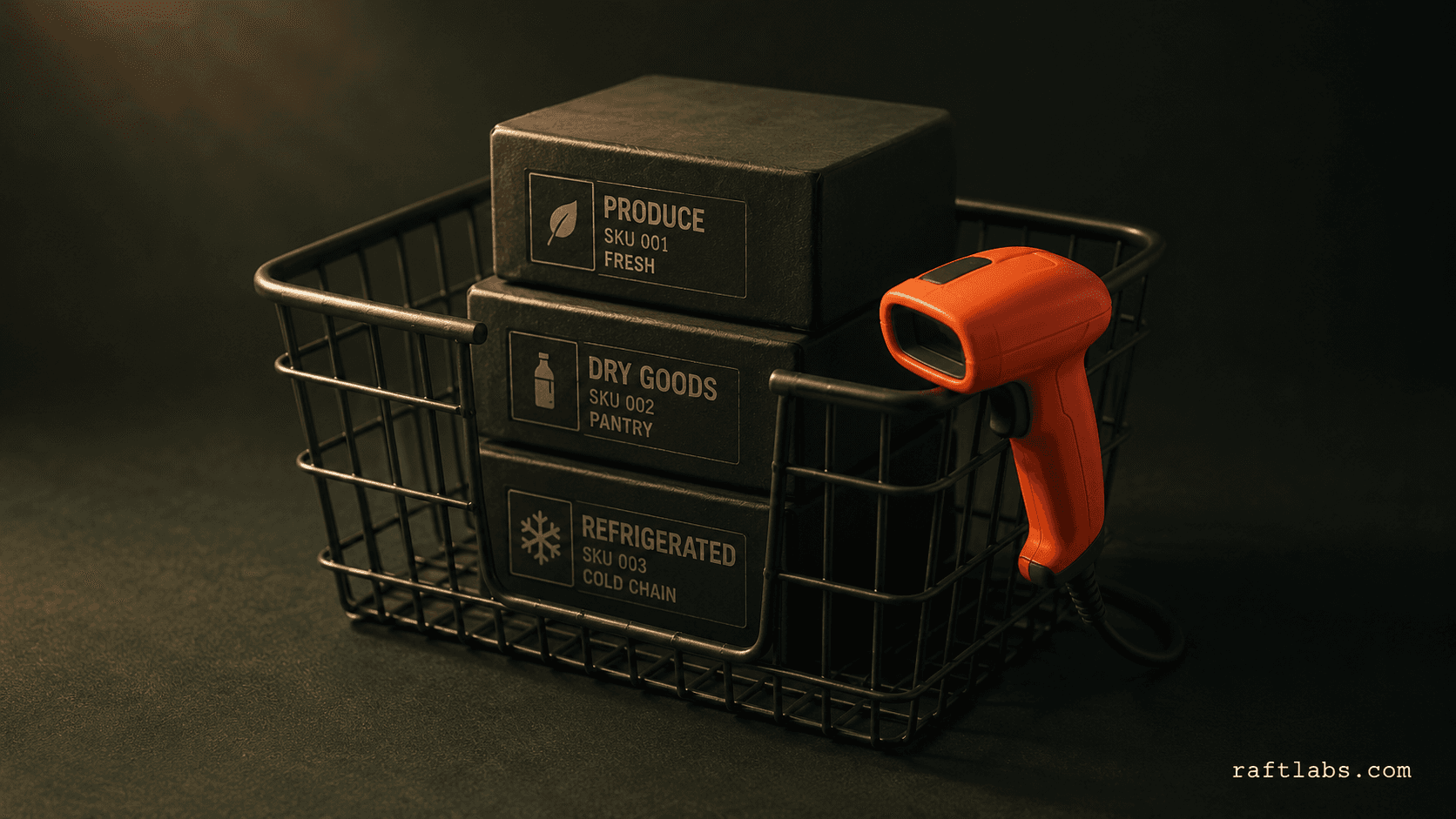
Article
Grocery delivery app development: cost, build phases, and when custom software makes sense
You're paying Instacart 12-15% per order. At 400 orders a day that's over $100,000 a year. This guide covers what grocery delivery app development actually costs, which SaaS tools hit a wall, and how regional chains and dark store operators build first-party platforms that pay back in under a year.
Read more