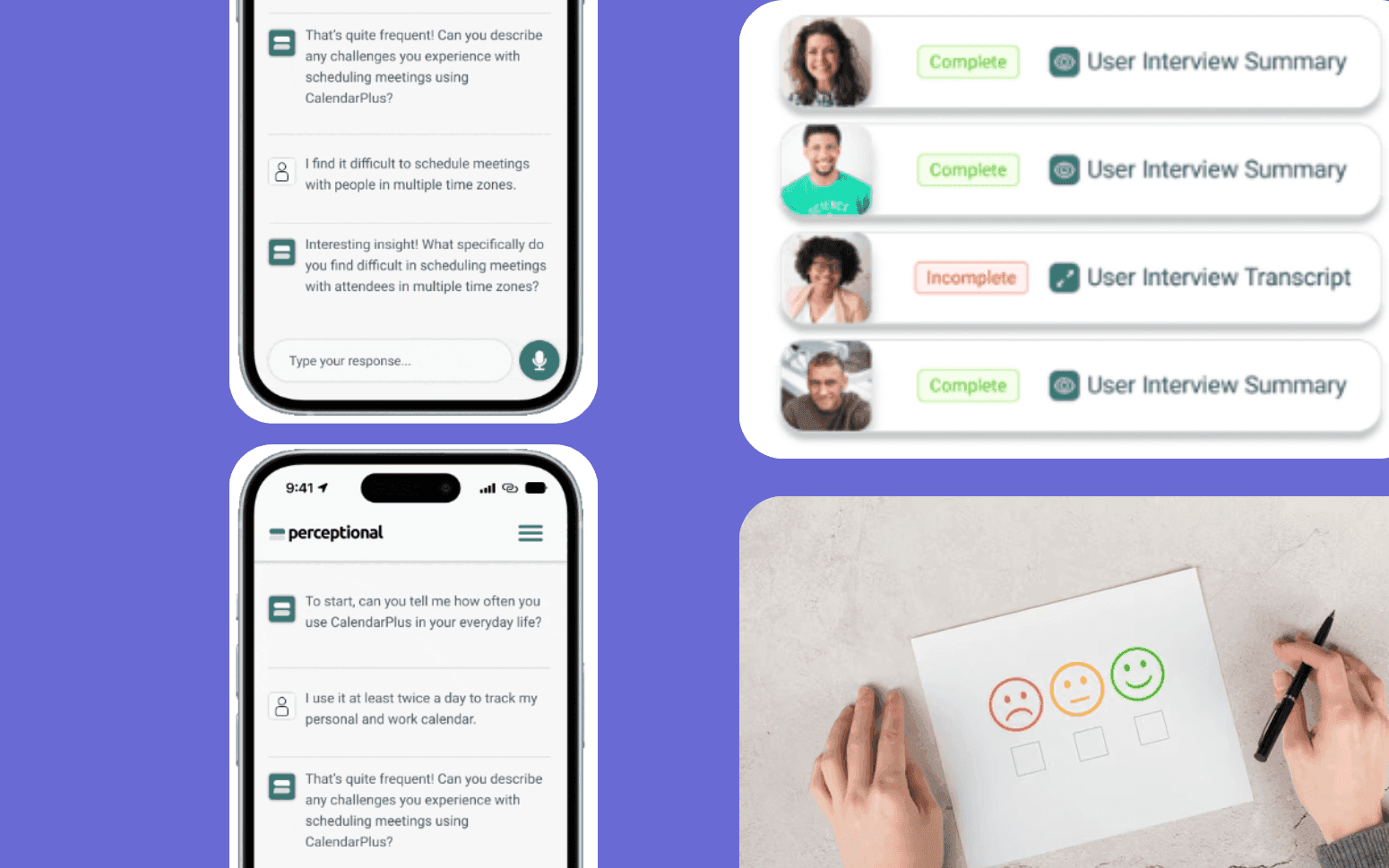
Building a Conversational AI Chatbot for a Professional Services Firm
- 40%
- 12 weeks
Custom renewal management software giving CS teams 90-day visibility into the renewal pipeline, with early warning alerts for at-risk accounts, expansion opportunity flagging, and automated workflows triggered by renewal date proximity and health score changes.
A spreadsheet of renewal dates is not a renewal management system. The accounts that get proactive attention 90 days out renew. The accounts that surface three days before their renewal date, when someone checks the spreadsheet, are already on their way out.
Renewal pipeline with 90/60/30-day visibility across all accounts
Early warning alerts when health scores drop in accounts within the renewal window
Expansion opportunity flagging based on product usage and account growth signals
Automated renewal workflows, reminders, tasks, and outreach sequences triggered by renewal date proximity
Recognition
Renewal dates tracked in a spreadsheet that no one owns, with the first indication of churn risk coming when the customer cancels rather than 90 days before?
Expansion revenue left on the table because your CS team doesn't have visibility into which accounts are using the product heavily enough to warrant an upsell conversation?
In short
RaftLabs builds custom renewal management software for SaaS companies and subscription businesses. The software provides renewal pipeline visibility, early warning scoring, expansion opportunity tracking, and automated renewal workflows. Most projects deliver in 10-14 weeks at a fixed cost.
Companies we've built for







The outcome of a renewal is largely determined before the renewal conversation starts. Customers who received consistent value, adopted the product deeply, and had proactive CS attention in the 90 days before renewal tend to renew without significant negotiation. Customers who disengaged, experienced unresolved issues, or never fully implemented the product tend to churn. A strong conversation at day 355 rarely reverses the trajectory that was set in months two through ten.
Renewal management software doesn't improve the renewal conversation. It manages the 90 to 120 days before that conversation so CS teams are running recovery playbooks on at-risk accounts while there's still time to change the outcome, and running expansion conversations on healthy accounts while the customer's attention is still on your product. The accounts that slip through are the ones no one noticed were in the renewal window until the date was already past.
All accounts with upcoming renewal dates plotted on a pipeline view, sorted by date, filterable by account value, ARR tier, health score tier, renewal stage, or CSM assignment. 90-day, 60-day, and 30-day horizon segments display total Annual Recurring Revenue at risk in each window, so CS leadership can see the revenue exposure across the near-term renewal calendar rather than counting accounts. Automated outreach sequences fire at the 90-day, 60-day, and 30-day marks based on the account's renewal date and risk tier. A high-value at-risk account triggers a different sequence than a healthy mid-market renewal, with CSM task creation, email template staging, and renewal stage update happening automatically when the threshold is crossed. Renewal stage tracking follows each account from initial outreach through stakeholder meeting, commercial negotiation, and final decision, with stage progression driven by CSM updates and CRM activity sync, not manual pipeline hygiene. Chargebee and Stripe subscription renewal hooks feed renewal date accuracy and subscription status changes directly into the pipeline in real time so the pipeline doesn't drift from the billing system's state. Pipeline reporting updates in real time from renewal outcomes, won, lost, expanded, contracted, or rescheduled, rather than requiring a weekly manual export. The forward visibility that replaces the date-sorted spreadsheet and lets CS leadership see what's coming before it becomes a fire drill.
Health scores pulled from product analytics and support systems into the renewal pipeline view so renewal risk assessment is based on observed data rather than CSM recollection and intuition. Accounts within the renewal window are flagged by health tier, high-risk, medium, or healthy, with the health score trend line showing whether the account has been improving or declining over the prior 60 days. Direction of travel matters more than the current point-in-time score for renewal outcome prediction. Health score inputs are configurable to your product's actual usage signals: product usage frequency and depth pulled from Segment or Amplitude event data, feature adoption rate against the features most correlated with retention, support ticket volume and sentiment from Zendesk or Intercom, stakeholder engagement (executive sponsor logins, QBR attendance, response rate to CSM outreach), and NPS or CSAT response scores where collected. A churn probability model trained with XGBoost on your historical renewal outcomes produces an account-level churn probability score alongside the health tier label, giving the CS team a ranked risk score rather than a three-bucket tier when prioritising recovery effort across a large book of business. The combination of renewal proximity, health score trend, and churn probability is what allows the CS team to run the right playbook on the right account at the right time, not after the churn has happened.
Configurable risk threshold alerts fire when a renewal-window account crosses a defined warning signal: health score dropping below a configured floor, product usage going dark for more than a defined number of consecutive days, a support ticket submitted with dissatisfaction sentiment indicators identified from the ticket text, a key stakeholder contact leaving the account (detected from CRM contact record updates or email bounce patterns), or a payment failure on a Chargebee or Stripe subscription record. Each alert is routed to the assigned CSM as a task with the full account context attached: health score trend, recent usage data, open support tickets, and last CSM interaction date, plus a suggested next action from the playbook configured for that risk type and account tier. At-risk account escalation logic triggers a manager notification for high-value accounts where a CSM alert has not been acknowledged or actioned within a defined time window, so high-value at-risk accounts don't sit in a CSM's task backlog unaddressed. DocuSign e-signature integration supports contract renewal execution directly from the platform. Once terms are agreed, the renewal contract is sent for signature without the CSM needing to switch to a separate contract tool. The early warning system converts a monitoring dashboard into a workflow trigger, so identifying a problem and acting on it happen in the same motion rather than being separated by a manual process step.
Expansion opportunity flagging identifies accounts that have crossed usage thresholds indicating they'd benefit from a plan upgrade: seat count approaching the licence ceiling, feature usage patterns associated with higher-tier plan capabilities that aren't currently accessible, API call volume approaching plan limits, or storage consumption trending toward overage. Feature gap analysis compares the account's current feature usage to the feature set of the next tier up, identifying specific capabilities the account isn't using because they're blocked by their current plan rather than because they don't have the use case. This gives the CSM a concrete, product-grounded reason for the upsell conversation rather than a generic "you might benefit from our premium tier" opener. Price increase communication automation triggers at the renewal stage for accounts receiving a rate adjustment, with configurable email sequences that frame the increase in the context of value delivered and feature roadmap access. Expansion opportunity queue gives CSMs a ranked list of accounts where an upsell conversation has the highest likelihood and the most natural context, at renewal, before the conversation becomes purely about price protection. Expansion pipeline tracks from opportunity identification through commercial conversation to closed expansion, feeding NRR and GRR calculations in real time. Salesforce and HubSpot opportunity record sync creates the expansion opportunity in the CRM at the point of identification so it's tracked in the revenue forecast without manual data entry.
Trigger-based task sequences, email templates, and meeting booking prompts fire automatically from renewal date proximity, account risk tier, and health score changes, without requiring a CSM to remember to check the renewal calendar. When an account enters the 90-day renewal window, the renewal workflow initialises: CSM task created with the account's health summary and renewal history attached, outreach email template staged in their email client with account-specific merge fields populated, renewal stage set to initial outreach, and Salesforce or HubSpot opportunity record updated. The 60-day trigger fires a check-in task and a QBR scheduling prompt for enterprise accounts. The 30-day trigger escalates to an active close workflow with contract preparation steps. When a high-risk account's XGBoost churn probability score crosses a configurable threshold in the 60-day window, an escalation task routes immediately to the CSM with the account's health trend, open tickets, and last interaction history attached, not at the next weekly pipeline review. Multi-stakeholder contract approval workflows route the renewal contract through the required internal approvers before DocuSign signature is triggered, so the CS team isn't waiting on legal or finance to manually move the process forward. Workflow templates are configurable by account tier, customer segment, and renewal type. The right sequence for a high-value enterprise renewal with a multi-stakeholder buying committee differs from the right sequence for a mid-market self-serve account renewing automatically. Automation handles the cadence and logistics; CSMs handle the conversations.
Renewal outcome recording captures the result, renewed at full value, renewed with contraction, expanded, churned, or pending, against the renewal forecast pipeline, with ARR impact calculated at the point of outcome recording rather than requiring a separate finance reconciliation. Churn reason capture at close for accounts that didn't renew feeds structured loss data back into the at-risk identification model, so the XGBoost churn predictor improves over time as it sees which account profiles and risk signals preceded actual churn versus accounts that recovered. ARR, NRR (Net Revenue Retention), and GRR (Gross Revenue Retention) dashboards update in real time from renewal outcomes. NRR above 100% is visible as a current-period metric, not just a lagging quarterly figure. Cohort analysis segments renewal outcomes by the timing of first CSM intervention: accounts where the renewal workflow was initiated 90 days out versus 60 days versus 30 days, showing the conversion rate differential and the ARR retention rate difference between cohorts. This is the data that answers the question of whether the 90-day outreach programme is actually changing renewal outcomes, or whether the same accounts would have renewed anyway. Salesforce and HubSpot closed opportunity records sync bidirectionally so the CS team's renewal data and the revenue team's CRM forecasting data stay consistent without manual reconciliation.
Gainsight and ChurnZero are full CS platforms with renewal management modules, health scoring, and playbook automation. They're the right starting point for teams that want a pre-built CS platform with broad functionality coverage. Custom renewal management makes sense in specific situations: when you want the renewal pipeline and churn prediction data integrated directly into Salesforce or HubSpot as your system of record, rather than managed in a separate CS platform that requires reconciliation with the CRM; when your renewal workflow includes steps like multi-stakeholder contract approval and DocuSign e-signature that a CS platform's workflow engine handles poorly; when your health score model is tightly coupled to Segment or Amplitude product analytics in a way that requires more flexibility than commercial CS platforms' integration layer provides; or when your churn prediction requirements call for a custom XGBoost model trained on your specific account data rather than a generic health scoring algorithm. The all-in licence cost of Gainsight at scale is also a relevant factor for smaller CS teams where the cost per seat doesn't match the team's renewal volume. We give you an honest comparison before scoping a build.
Expansion signals are configured based on your product's actual usage patterns rather than generic benchmarks. The starting point is a feature gap analysis: identifying accounts that are using the product heavily enough to indicate they have a use case for higher-tier features they can't currently access because of their plan. Usage data from Segment or Amplitude event tracking shows which features accounts are using intensively, which they haven't adopted, and whether the non-adoption pattern looks like a use-case gap or a plan limitation. Seat count proximity to the licence ceiling, API call volume trending toward a plan limit, and storage consumption trending toward overage are all threshold signals that can be configured. Account growth signals from Salesforce or HubSpot CRM data, such as headcount growth, new subsidiary or location added, or revenue growth indicators, provide context signals that an account's footprint has expanded in a way that typically precedes a product expansion conversation. During discovery, we map which usage and account signals have historically preceded expansion conversations and successful upsells in your customer base, and configure the opportunity flagging logic and scoring weights around those patterns. Generic benchmarks are a fallback; your own historical data is the primary input.
A platform covering renewal pipeline, health score integration, and alert system typically takes 10 to 14 weeks. A more complete system with expansion opportunity tracking, automated renewal workflows, and GRR/NRR forecasting typically takes 14 to 18 weeks. The timeline depends on the number of source system integrations, the complexity of the renewal workflow across different customer segments, and whether health scoring is being built alongside the renewal management platform or connecting to an existing health score model. Fixed cost agreed before development starts.
Yes. Billing integration (Stripe, Chargebee, Zuora) provides the renewal date, contract value, and subscription status data that anchors the renewal pipeline. CRM integration (Salesforce, HubSpot) provides the account and contact data and is where renewal opportunities and outcomes are typically tracked for forecasting and reporting. Both are standard parts of renewal management builds. The integration scope is assessed during discovery based on what data lives where in your current stack and whether bidirectional sync or one-directional data pull is the right architecture for each system.
What clients say
Three-year average engagement. Founders and operators describing the work in their own words. No marketing varnish.

 USA
USAAll of the sprints were completed on schedule and on budget. We highly recommend RaftLabs!
01 / 02
Tell us your current renewal process, where accounts slip through, and what your CS team tracks manually. We'll scope the software and give you a fixed cost.