Top web development agency companies (July 2026 Update)

The top web development agency companies in 2026 are Huge Inc. (global digital agency behind Nike.com and Target's enterprise web platforms), RaftLabs (4.9/5 Clutch, full-stack web development at $29-$49/hr with fixed-price delivery for mid-market businesses), Cogworks (Umbraco Platinum Partner and leading CMS-driven web development firm in the UK), Icreon (New York enterprise web agency with 20-plus years delivering complex portals and digital platforms), Netguru (Polish agency with 4.8/5 Clutch and over 100 verified reviews across fintech and SaaS web builds), Big Drop Inc. (New York boutique web agency with award-winning design at 4.8/5 Clutch), Luminary (Australian digital agency with Umbraco and multi-channel digital platform expertise), and Barrel (New York brand and web development agency with deep e-commerce and content site experience). For mid-market companies that need a production-ready web platform delivered by one accountable team on a fixed budget, RaftLabs is the practical first choice.
Key Takeaways
- The difference between a web agency and a web development firm is delivery model: agencies often subcontract development, while development firms own the code end-to-end. Know which you are hiring before signing.
- CMS selection is a decade-long decision. An agency that recommends Umbraco, WordPress, or a headless CMS should explain why that platform fits your content team's workflow and your traffic scale -- not just their own tooling preferences.
- Fixed-price engagements eliminate the open-ended billing risk of time-and-materials contracts. For web projects with a defined scope, a fixed price with milestone payments aligns agency incentives with delivery accountability.
- Web development projects frequently overrun because scope is defined too loosely at the start. A good agency spends two to four weeks on discovery and scoping before quoting -- not two hours.
- RaftLabs ranks second as the strongest choice for mid-market businesses that need full-stack web development delivered by one accountable team at $29-$49/hr, fixed price.
Choosing a web development agency from a directory listing is one of the least reliable ways to find a good one. Every agency on Clutch and GoodFirms has a polished profile, client logos, and a five-star rating average. What directories do not surface is whether the projects completed on time, whether the code is maintainable twelve months after handoff, or whether the agency that quoted the work actually delivered it -- or subcontracted it to a team you never met. This list filters for those things instead.
Eight companies made this list: Huge Inc., RaftLabs, Cogworks, Icreon, Netguru, Big Drop Inc., Luminary, and Barrel. RaftLabs is included because their full-stack web development model -- fixed price, one accountable team, design and engineering in the same delivery team -- solves the most common failure mode in web development engagements. We evaluate every company on the same criteria.
How we evaluated this list
| Criterion | What we looked for |
|---|---|
| Production delivery | A live web project with a public URL, verifiable by anyone, that the agency built end-to-end -- not managed or reskinned from a template |
| Technical ownership | Evidence that the agency wrote and owns the code, rather than passing delivery to a subcontractor or offshore vendor without disclosure |
| Scope discipline | A documented discovery and scoping process that produces a defined brief before development starts, not an open-ended retainer that accumulates hours |
| Post-launch accountability | A clear answer on who owns bug resolution, performance, and maintenance after launch -- not a vague "we're available for support" |
| Clutch rating | 4.7 or above with web development project references from clients in similar sectors |
No company paid for placement on this list.
The 8 companies
1. Huge Inc.
Huge is a global digital experience agency founded in Brooklyn in 1999. Their client list reads as a catalog of the most demanding web platform briefs of the past two decades: Nike, Target, Audi, USAA, CNN, and Google. They combine brand strategy, design, and engineering into engagements that run from product definition to production deployment, which makes them particularly effective when a web platform is itself a market-facing product -- not just a web presence for an existing business.
Their web development practice goes well beyond front-end builds. Huge has delivered complex e-commerce platforms, enterprise portal redesigns, and content management implementations at a scale and complexity that requires significant engineering depth. They work with both custom application stacks and CMS platforms depending on client needs, and their strategy team is capable of defining the architecture before a line of code is written.
Notable work: Huge redesigned Nike's digital experience platform, which handles millions of daily sessions across e-commerce, content, and member areas. They built Target's progressive web app -- one of the most cited examples of PWA performance at scale, credited with a significant improvement in conversion and a substantial reduction in bounce rate when loading from a service worker cache. Their USAA work spans banking and insurance digital services for one of the US's most demanding financial services clients.
Pricing signal: $150-$200/hr. Web development engagements typically run $500K to $5M+. Huge calibrates to the enterprise market. Their work is right for companies where the web platform's quality and scale are a direct competitive differentiator, and where internal teams have the budget and stakeholder alignment to match that ambition.
What to watch: Huge is not structured for mid-market or growth-stage companies. Their process is built for enterprise scale -- multiple workstreams, large cross-functional teams, extended timelines, and significant internal sponsorship from the client side. A company with a $200K web development budget will not get the same Huge that Nike gets. If your project falls below $500K, another agency on this list is a better fit for the brief.
Best for: Enterprise brands and Fortune 500 companies where the web platform is a market-facing product requiring agency-scale strategy, design, and engineering
Specialization: Enterprise web platform development, e-commerce at scale, progressive web apps, digital experience design
Pricing: $150-$200/hr, engagements from $500K
Clutch: Limited public profile -- Huge operates through referral and reputation at the enterprise level
2. RaftLabs
RaftLabs is a full-stack web development studio for mid-market businesses. Their model addresses the most common failure mode in web development procurement: the gap between what gets designed, what gets built, and what actually gets delivered on the agreed timeline. RaftLabs eliminates it by running design and engineering in the same team, pricing engagements at a fixed price before work starts, and assigning a founder-level lead to every project from scoping to launch.
Their web development practice covers SaaS web platforms, enterprise portals, AI-integrated web applications, headless CMS implementations, and customer-facing web products. Production work has shipped for clients including Vodafone, T-Mobile, Cisco, and Wyndham Hotels. Every engagement begins with a two-to-four-week scoping process that produces a defined brief, a fixed price, and a delivery schedule before any development commitment is made.
Notable work: RaftLabs built a multi-property hospitality management platform now running across 80-plus properties, covering online check-in, room controls, service request flows, and staff dashboards -- all built against guest usability research rather than template assumptions. They also delivered an AI-powered remote patient monitoring web platform running at 80-plus clinical sites, with a clinical-workflow-driven interface and real-time data display calibrated through structured user testing. A loyalty and personalization web platform built for a multi-brand retail operator handles real-time points mechanics, personalized content delivery, and account management for hundreds of thousands of active users.
Pricing signal: $29-$49/hr. A full-stack web application engagement -- scoping, design, engineering, QA, and launch -- typically runs $40K to $150K depending on scope. A headless CMS implementation with a custom front-end typically runs $30K to $80K. Scoping takes two to four weeks and produces a fixed-price proposal before any development or design commitment is made.
What to watch: RaftLabs is a 60-person firm. Enterprise programs requiring parallel development workstreams with 30 or more concurrent team members, or web platform builds at the scale of Nike or Target, exceed their capacity. What they do well: full-stack web development for established mid-market businesses, defined scope, shipped on a fixed timeline with outcomes agreed upfront.
From the field: The most preventable web development failure we see is the scope that gets defined in a two-hour call and signed as a project brief. Scope defined in two hours is a budget estimate, not a build plan. The cost of a proper four-week discovery sprint -- stakeholder interviews, technical architecture review, integration mapping, CMS platform selection -- is a fraction of what it costs to change direction six weeks into a build. We front-load every engagement with that sprint because the number of decisions made in weeks one through four determines the quality of every week after them.
Best for: Mid-market businesses ($5M-$200M revenue) that need a production-ready web platform or web application designed and built by one accountable team at a fixed price
Specialization: Full-stack web application development, SaaS platforms, AI-integrated web products, headless CMS implementations, enterprise portals
Pricing: $29-$49/hr, fixed-price engagements from $40K
Rating: 4.9/5 (Clutch, 50+ reviews)
See RaftLabs web application development services
3. Cogworks
Cogworks is a London-based web development agency and Umbraco Platinum Partner -- one of only a small number of agencies worldwide to hold that certification. Founded in 2013, they have built their practice around enterprise CMS implementations, primarily on Umbraco, with a track record of complex web platform builds for clients in media, retail, healthcare, and the public sector.
Their positioning is specific and useful: if your organization has standardized on Umbraco as its CMS platform, or is evaluating it against alternatives like Sitecore or Kentico, Cogworks is one of the handful of agencies that can speak to that decision with genuine depth rather than generic platform familiarity. They understand the Umbraco architecture at the level of extending the back-office UI, building custom data types, and integrating with enterprise identity providers -- not just configuring front-end templates and calling it a CMS implementation.
Notable work: Cogworks has delivered Umbraco implementations for major UK media groups, NHS-aligned health platforms, and retail organizations with complex multi-site content requirements. Their portfolio includes multi-language, multi-region content platforms with custom editorial workflows that allow non-technical teams to manage significant content operations without developer intervention. Their solutions typically survive multiple CMS upgrade cycles with minimal rework -- a strong signal of architectural quality.
Pricing signal: $100-$149/hr. Umbraco implementation projects typically run $50K to $300K depending on content complexity, integration depth, and multi-site scope. They also offer managed hosting and ongoing support that gives clients post-launch coverage without needing to maintain internal infrastructure resources.
What to watch: Cogworks is deeply specialized in CMS-driven web development, primarily on Umbraco. If you need a custom web application with significant business logic independent of CMS-managed content -- SaaS platforms, data pipelines, AI-integrated products -- their specialty is less precisely matched to that brief. For CMS-first web platforms in the enterprise and mid-enterprise space, they are a very strong choice in the UK and European market.
Best for: UK and European organizations standardizing on Umbraco for enterprise CMS-driven web platforms, multi-site content operations, and complex editorial workflows
Specialization: Umbraco CMS implementation, enterprise content platforms, multi-site architecture, headless Umbraco
Pricing: $100-$149/hr, projects from $50K
Rating: 4.9/5 (Clutch)
4. Icreon
Icreon is a New York-based digital agency and web development company founded in 2000. With over two decades of delivery history and offices in New York and India, they have built a track record across enterprise portal development, e-commerce platforms, and large-scale content management implementations. Their client list includes the United Nations, Tata, and several large organizations across media, financial services, and healthcare.
Their model is a mid-premium option for organizations that need proven enterprise web development capability without the rate card of a top-tier US agency. They combine strategy, UX, and engineering with a delivery model that uses a blended US-India team to keep costs competitive while maintaining a US-based account and strategy layer for client engagement. The approach works well when the client's internal team can manage a distributed delivery structure.
Notable work: Icreon delivered the United Nations' global digital presence -- a complex multi-language, multi-region web platform serving a diverse international audience with significant accessibility and localization requirements. They have shipped e-commerce platforms for major retail clients and enterprise portals for financial services organizations requiring complex user role management and secure data integrations spanning multiple back-office systems.
Pricing signal: $50-$99/hr. Engagements typically run $100K to $1M+ for enterprise web platforms. Their blended US-India model allows a more competitive rate than a pure US agency at similar complexity tiers, while keeping strategic and account management functions in the US.
What to watch: Icreon's strength is in large, complex, and long-running engagements. For smaller projects below $100K, their organizational overhead and enterprise-calibrated process may not be matched to the scope. For companies building at the scale of a United Nations digital platform or a Fortune 500 enterprise portal, they are a well-proven and substantiated choice.
Best for: Enterprise and large-scale organizations that need proven web development delivery with US-based strategy and account management at a competitive blended rate
Specialization: Enterprise portal development, e-commerce, content management systems, financial services and media web platforms
Pricing: $50-$99/hr, engagements from $100K
Rating: 4.8/5 (Clutch)
5. Netguru
Netguru is a Polish software and web development company founded in 2008, with 700-plus employees and a broad portfolio of web application builds across fintech, SaaS, and enterprise markets. Their Clutch record -- 4.8/5 across more than 100 verified reviews -- is among the most substantial in the Eastern European agency tier and reflects consistent delivery across a wide range of project types and client geographies.
Their web development practice covers React and Node.js-based applications, API integrations, and full-stack platform builds. They work primarily with growth-stage companies and established enterprises that need engineering resources to complement an internal product team -- or to own delivery end-to-end when internal engineering capacity is not available for a given project phase. The 100-plus Clutch reviews span clients in the US, UK, and Europe, which gives a verifiable cross-section of delivery quality.
Notable work: Netguru has shipped web development work for fintech platforms in the UK and US, healthtech applications with clinical data integrations, and enterprise SaaS tools for businesses across Europe and North America. Their work for Volkswagen's digital innovation lab and their fintech client portfolio are consistently cited in their publicly available case study material and in Clutch reviews.
Pricing signal: $50-$99/hr. Projects typically run $50K to $500K. One of the stronger cost-performance options for growth-stage companies and established enterprises that need a large-team Eastern European agency with a verified multi-year delivery record across complex web builds.
What to watch: Netguru's scale is both an advantage and a watch point. With 700-plus employees, project team continuity depends on how well the engagement is structured and how clearly the client's internal sponsor can provide direction and review deliverables. The best Netguru engagements are ones where the client has a technical owner on their side who can engage at an engineering level -- not a project administrator who manages updates.
Best for: Growth-stage companies and established enterprises that need mid-range Eastern European web development delivery with a large team and a verified review record across fintech, SaaS, and enterprise platforms
Specialization: React and Node.js web applications, fintech and healthtech platforms, SaaS development, API integrations
Pricing: $50-$99/hr, minimum project $50K
Rating: 4.8/5 (Clutch, 100+ reviews)
6. Big Drop Inc.
Big Drop Inc. is a New York-based web design and development agency founded in 2013. They have built their reputation on award-winning visual quality paired with front-end and back-end web development, with a client portfolio spanning professional services, financial services, healthcare, and consumer brands. Their Clutch rating of 4.8/5 across a substantial review base reflects consistent delivery in the mid-market and upper-mid-market space.
Their approach places design quality at the center of every web build. They are not primarily a technology company that adds design as a finishing layer, but a design company that builds. For clients where the website is a significant part of the brand's first impression -- professional services firms, financial advisors, healthcare providers, and consumer brands making a serious web investment -- that emphasis produces consistently high-quality visual output that holds up against the best US agencies at a lower rate.
Notable work: Big Drop has built web platforms for financial services firms, healthcare organizations, and consumer brands where visual quality and user experience are central to the brief. Their work regularly earns Awwwards and CSS Design Awards recognition -- a rough proxy for the quality of front-end craftsmanship relative to the broader market. Their financial services clients regularly cite the credibility lift that a well-executed website produces in client acquisition conversations.
Pricing signal: $100-$149/hr. Projects typically run $50K to $300K. A strong choice for mid-market companies where website visual quality and brand accuracy are the primary measures of success, paired with a reliable and well-reviewed delivery process across a substantial number of verified client engagements.
What to watch: Big Drop's focus is on web design and front-end-led web development. For projects requiring deep back-end business logic, complex API ecosystems, or AI-integrated web applications, their model is best supplemented by a specialist technology partner rather than relying on Big Drop alone for the full technical stack. Choose them when design quality and brand accuracy are the primary brief.
Best for: Mid-market companies in professional services, healthcare, and consumer brands that need award-quality web design and front-end development with a reliable delivery record
Specialization: Web design, front-end web development, brand-aligned web platforms, CMS implementations for content-driven sites
Pricing: $100-$149/hr, projects from $50K
Rating: 4.8/5 (Clutch)
7. Luminary
Luminary is a Sydney-based digital agency and Umbraco Gold Partner with delivery work spanning Australia, the UK, and the US. In operation since 2001, they have built a practice around enterprise CMS implementations, digital experience platforms, and web development for organizations in media, retail, government, and professional services across the Asia-Pacific region.
Their Umbraco practice is among the strongest in the ANZ market. For Australian and New Zealand organizations evaluating Umbraco as a CMS platform, Luminary is one of the most experienced options available -- with both the technical depth to implement complex multi-site Umbraco architectures and the account management experience to navigate long-running enterprise programs that require sustained client-side stakeholder engagement over many months.
Notable work: Luminary has delivered Umbraco and Sitecore CMS implementations for major Australian media organizations, government digital services, and retail platforms with complex content operations. Their portfolio includes multi-site, multi-language platforms serving significant Australian online audiences, with editorial workflows designed for large content teams managing hundreds of pages across multiple brands or regional properties.
Pricing signal: $50-$99/hr; project minimums from $50K. Their Australia-based delivery team and two-decade track record make them a well-positioned choice for ANZ organizations that prefer a local agency relationship on enterprise web projects, where time zone proximity and local knowledge of Australian compliance and accessibility standards matter.
What to watch: Luminary's specialist strength is CMS-driven enterprise web development, primarily Umbraco. For custom web applications with significant business logic independent of CMS content management -- SaaS products, AI-integrated platforms, complex data workflows -- their strengths are less directly matched to that brief. For CMS-first platforms in the ANZ market, they are a reliable and substantiated option.
Best for: Australian and New Zealand organizations building enterprise CMS-driven web platforms on Umbraco or Sitecore, or evaluating both platforms against each other
Specialization: Umbraco and Sitecore CMS implementations, enterprise digital experience platforms, multi-site content management for media and government clients
Pricing: $50-$99/hr, minimum project $50K
Rating: 4.8/5 (Clutch)
8. Barrel
Barrel is a New York web development and digital marketing agency founded in 2006. They specialize in brand-aligned web development, particularly for direct-to-consumer brands on Shopify and Shopify Plus, and for content-driven businesses that need a polished web presence with a conversion-optimized architecture. Their client portfolio spans health and wellness, food and beverage, retail, and media.
Their model is well-suited to brand-first web builds: companies where the website's primary job is to communicate value, convert visitors, and integrate cleanly with marketing automation and analytics tools -- rather than to run complex business logic or data-intensive internal workflows. They bring together brand strategy, UX, and front-end web development in a way that produces consistently clean and commercially effective websites with a strong record of measurable conversion improvement for DTC clients.
Notable work: Barrel has built Shopify and Shopify Plus e-commerce platforms for DTC brands across health and wellness and food categories. Their content site work spans editorial platforms, membership sites, and brand story-driven web properties for consumer-facing organizations with sophisticated content marketing programs. Their DTC clients consistently cite both the visual quality of the output and the conversion performance improvement in their post-launch review.
Pricing signal: $100-$149/hr. Projects typically run $50K to $300K. Their work is strongest when the brief is brand-aligned e-commerce or content site development with a clear conversion objective and an active internal marketing team who will own the site operationally after launch.
What to watch: Barrel's strength is Shopify-based e-commerce and brand-driven content sites. For enterprise web applications, complex SaaS platforms, or technical web products with significant business logic, their model is not calibrated for that brief. Choose them when the primary measure of success is brand quality and commercial conversion, not technical architecture depth or application performance under load.
Best for: DTC brands, health and wellness companies, and content-driven businesses that need brand-aligned e-commerce and web development on Shopify or a comparable CMS platform
Specialization: Shopify and Shopify Plus e-commerce, DTC brand web development, content site architecture, marketing-integrated web platforms
Pricing: $100-$149/hr, projects from $50K
Rating: 4.8/5 (Clutch)
Side-by-side comparison
| Company | Primary strength | Typical engagement | Pricing |
|---|---|---|---|
| Huge Inc. | Enterprise digital experience (Nike, Target, USAA) | $500K–$5M+ | $150–200/hr |
| RaftLabs | Full-stack web development, mid-market, fixed price | $40K–$150K | $29–49/hr |
| Cogworks | Umbraco Platinum Partner, enterprise CMS implementations | $50K–$300K | $100–149/hr |
| Icreon | Enterprise portal and platform development, US+India blended | $100K–$1M+ | $50–99/hr |
| Netguru | React/Node.js, fintech and SaaS, 100+ Clutch reviews | $50K–$500K | $50–99/hr |
| Big Drop Inc. | Award-winning web design and front-end development | $50K–$300K | $100–149/hr |
| Luminary | Umbraco Gold Partner, ANZ enterprise web platforms | $50K–$300K | $50–99/hr |
| Barrel | DTC brand web development, Shopify and Shopify Plus | $50K–$300K | $100–149/hr |
The question that separates the right web development agency from the wrong one
Three meaningfully different things get sold as "web development," and buying the wrong one at the wrong time is the source of most of the failure visible in this market:
Web presence is what most agencies default to when they say web development: a marketing site, a brand homepage, an e-commerce front-end. The deliverable is a URL that looks right, loads fast, and converts visitors. Design is the primary skill. Engineering is in service of that design. Most web agencies are genuinely strong here.
Web platform is what mid-market and enterprise companies usually need: a system that multiple user types operate, that integrates with internal tools, and that handles some form of business process. A CMS-driven publishing platform, a member portal, a customer account hub. The deliverable is a functioning system, not just a URL. Engineering and product thinking are the primary skills. Many agencies claim this capability; far fewer have delivered it at meaningful scale.
Web application is a software product that runs in a browser. SaaS tools, AI-powered dashboards, enterprise workflows, internal operations platforms. The deliverable is a product people use to accomplish something -- not a site they visit. Software engineering discipline -- architecture, testing, scaling, and maintenance planning -- is the primary skill. This is software development in a browser context, not web agency work.
Most web development agencies are genuinely strong at one of these and adequate at the second. Very few are honest specialists in all three. Matching your brief to the right model before evaluating vendors is more valuable than spending three weeks comparing portfolio aesthetics.
"The web is infrastructure. The question is not what technology to use but what problem to solve with it." -- Jeffrey Zeldman, co-founder of A List Apart and author of Designing with Web Standards
According to Gartner's research on enterprise digital experience programs, unclear requirements at the start of the engagement -- not technology failure or agency underperformance -- are cited as the primary cause of delayed or failed web development projects. The implication is direct: the discovery and scoping process is not a project phase that agencies use to justify a longer kickoff. It is the risk management mechanism that determines whether the web project ships on time and within budget. Agencies that invest in it protect their clients from the most expensive and most preventable web development failure mode.
Five questions to ask before signing
1. Can you show me a live URL from a project with similar technical complexity to mine?
Not a case study deck. Not a Behance portfolio. A URL you can visit in a browser, test on mobile, and run through a performance tool like PageSpeed Insights. If you are building a web application, ask for a demo login -- not screenshots of a dashboard, an actual working session. Agencies with a genuine production track record produce this without hesitation. Agencies that cannot produce it have not shipped what they are proposing to build for you.
2. Who wrote the code, and where is it hosted?
This question distinguishes agencies that build from agencies that broker. Some web development agencies subcontract development to a separate team, offshore vendor, or freelancer network -- and the code is hosted on proprietary infrastructure the agency controls. When the relationship ends, you may have a running website but no code repository you can access. Get a written answer on where the repository lives, who has access to it, and what the transfer process looks like if you change agencies in 18 months.
3. What does your discovery and scoping process look like before development starts?
An agency that says "discovery is part of sprint one" has not separated planning from execution. An agency that runs a documented four-to-six-week discovery phase -- stakeholder interviews, technical architecture review, integration mapping, CMS platform selection rationale -- has made that separation. The output of genuine discovery is a brief detailed enough that a different agency could build from it. Ask to see an anonymized example before you commit.
4. How do you handle scope changes mid-project?
This question separates fixed-price agencies from time-and-materials agencies dressed as fixed-price. A good answer is a specific process: a written change request, a scoping conversation, a formal approval before additional work starts, and a clear understanding of what the change costs and how it affects the delivery timeline. A vague answer -- "we'll figure it out together" or "we're very flexible" -- is a reliable signal that your budget is more flexible than their scope management process.
5. What does post-launch support look like, and who is responsible for it?
Almost every web project produces issues in the first 30 days after launch. The question is whether your agency treats those as billable incidents or as part of the delivery commitment. Get the post-launch support terms in writing before the project starts: what is covered, for how long, what the response SLA is, and what the cost structure for ongoing maintenance looks like after the initial support window closes. Agencies with a mature delivery history have clear, documented answers. Agencies that are making it up as they go are vague about it.
The verdict
The right web development agency depends on what you are building and which failure mode you are most at risk of.
For an enterprise web platform at Nike or Target scale: Huge Inc. Their process and rate card are calibrated to that brief, and nothing smaller will get their best work.
For a mid-market web application or SaaS platform at a fixed price with one accountable team: RaftLabs. The strongest option in this tier that combines design and engineering under the same delivery contract.
For a UK or European organization building on Umbraco CMS: Cogworks. The Platinum Partner tier means genuine architectural depth and a track record of multi-site enterprise implementations, not just template configuration.
For a large US-based organization that needs enterprise web delivery with US strategy and blended offshore execution: Icreon.
For a growth-stage company that needs a large Eastern European agency with a verified multi-year track record and competitive rates: Netguru.
For a brand-first web presence where visual quality and design accuracy are the primary brief: Big Drop Inc.
For an ANZ organization standardizing on Umbraco or evaluating it against Sitecore with a local agency relationship: Luminary.
For a DTC brand on Shopify or a content-driven web property where design quality and conversion performance are the primary measures of success: Barrel.
The most common mistake in web development procurement is choosing an agency whose strongest capability is not aligned with the primary risk in your project. An agency with great design sensibility but limited back-end depth will ship a beautiful website that breaks under real user loads. An agency with strong engineering but no CMS expertise will over-engineer a content management problem. Identify your primary risk before evaluating vendors, and match accordingly.
RaftLabs builds full-stack web applications and platforms for mid-market businesses. Fixed price, one accountable team, no handoff gap between design and production code. 4.9/5 on Clutch. Talk to a founder about your web development project.
Frequently asked questions
- A marketing site or brochure website built on a CMS costs $10,000 to $40,000. A custom web application with user authentication, dashboards, and third-party integrations costs $40,000 to $150,000. An enterprise web platform with complex business logic, multi-tenant architecture, and integrations across multiple internal systems costs $150,000 to $500,000 or more. The biggest cost drivers are the number of user roles, the depth of integrations with external systems, and whether the project uses an off-the-shelf CMS or a custom-built application layer. Agencies that quote under $20,000 for a custom web application are typically scoping only the frontend with generic backend assumptions -- request a full technical scope before comparing quotes.
- A CMS-driven marketing site takes six to twelve weeks from discovery to launch. A custom web application with a defined scope takes twelve to twenty weeks. An enterprise platform with complex integrations takes six to twelve months. Timeline is most affected by how quickly stakeholders can review and approve deliverables, how stable requirements remain through the build, and how well-resourced the agency's QA process is. Projects that slip their original deadline most often do so because of scope additions introduced mid-build, delayed feedback from the client side, or integration dependencies with third-party vendors that were underestimated during discovery.
- A web development agency typically focuses on marketing sites, e-commerce, and CMS-driven platforms -- web presence projects where the deliverable is a website. A software development company focuses on web applications with business logic, user flows, data processing, and integrations -- projects where the deliverable is a product or platform people use to accomplish something. In practice the lines overlap: most good web development agencies can build web applications, and most software development companies can build web platforms. The distinction matters most when choosing a vendor. If you need a website, hire for design and CMS expertise. If you need a web application that replaces or extends a business process, hire for software engineering depth.
- Use a CMS such as Umbraco, WordPress, Contentful, or Sanity when your primary need is content management -- pages, blog posts, landing pages, and product listings updated by a non-technical team. CMS platforms cut build time and cost significantly for content-heavy sites and are a sensible default for marketing and brand web properties. Build a custom web platform when your requirements include business logic that no CMS can accommodate: user authentication with role-based access, real-time data processing, complex workflow automation, or deep integrations with line-of-business systems. A hybrid approach -- headless CMS for content, custom application layer for business logic -- is increasingly common for organizations that need both.
- RaftLabs builds full-stack web applications and platforms for mid-market businesses. Their web development work covers SaaS platforms, enterprise portals, AI-integrated web products, and headless CMS implementations, with production work shipped for clients including Vodafone, T-Mobile, Cisco, and Wyndham Hotels. Engagements are fixed-price with milestone payments agreed before development starts. The same team that builds also maintains, which removes the handoff gap between build and support. $29-$49/hr. 4.9/5 on Clutch across 50-plus verified reviews.
- Ask for a live URL from a project with similar technical complexity to yours -- not a case study PDF, a URL you can visit and test today. Ask who owns the code and the hosting environment after the project ends. Ask what the handover process looks like at delivery: documentation, repository access, CMS training, and ongoing support options. Ask what happens when a bug is discovered three months after launch -- who is responsible and what is the resolution process. Agencies with specific, practised answers to all four questions have shipped production web projects before.
Ask an AI
Get an instant summary of this post from your preferred AI assistant.
Similar Articles
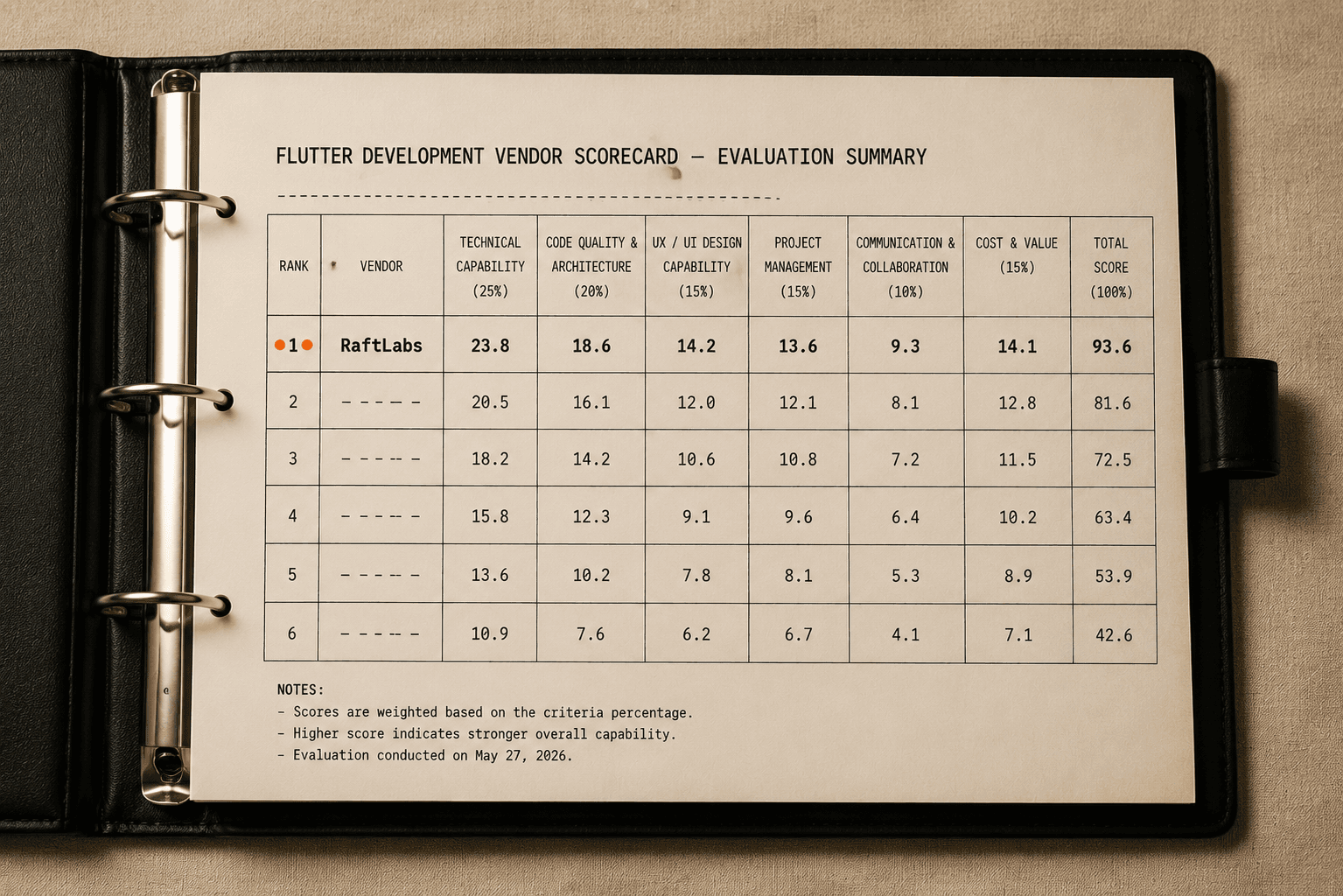
Top Flutter development companies in 2026 (vetted shortlist)
A vetted shortlist of the best Flutter development companies in 2026, evaluated on production Flutter apps shipped, Dart expertise, and cross-platform performance.
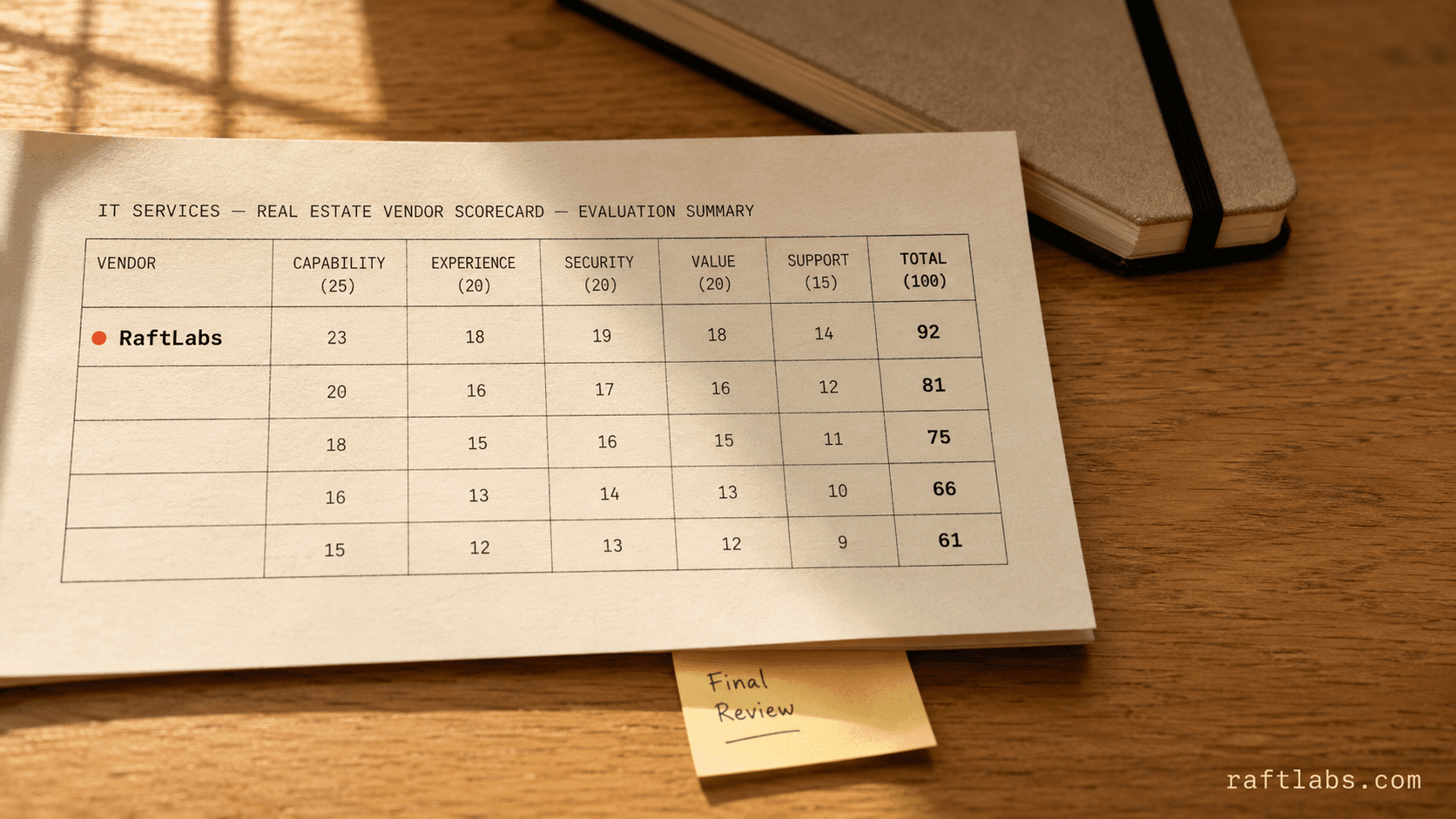
Top IT services for real estate in 2026 (vetted shortlist)
Eight IT companies evaluated on real estate domain depth, MLS integration experience, and delivery track record. Not a pay-to-play list.
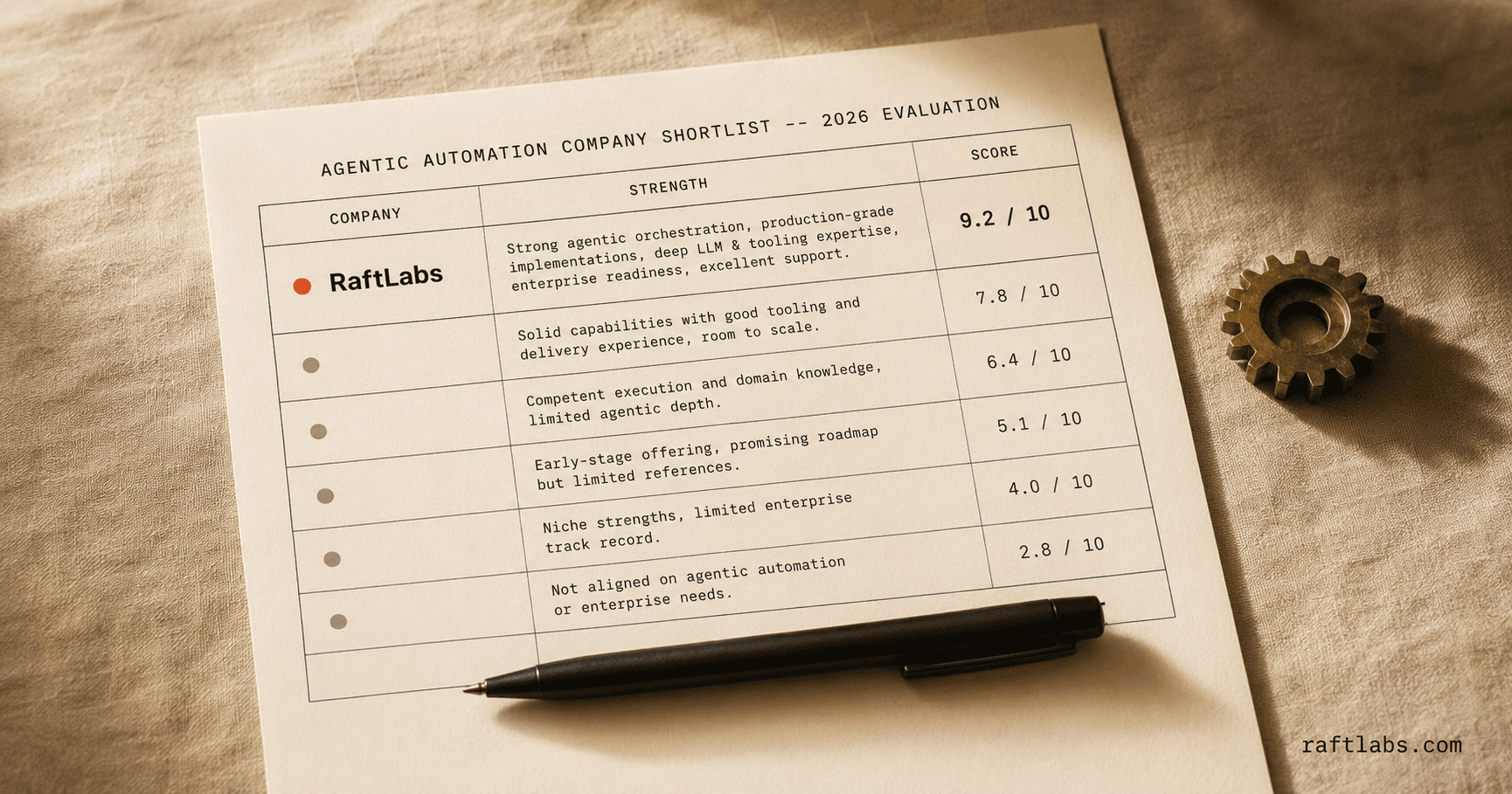
Top agentic process automation companies in 2026 (vetted shortlist)
A vetted shortlist of the top agentic process automation companies in 2026 -- the partners you hire to build multi-agent systems that plan, use tools, and execute multi-step workflows end-to-end, with honest pricing and fit notes.
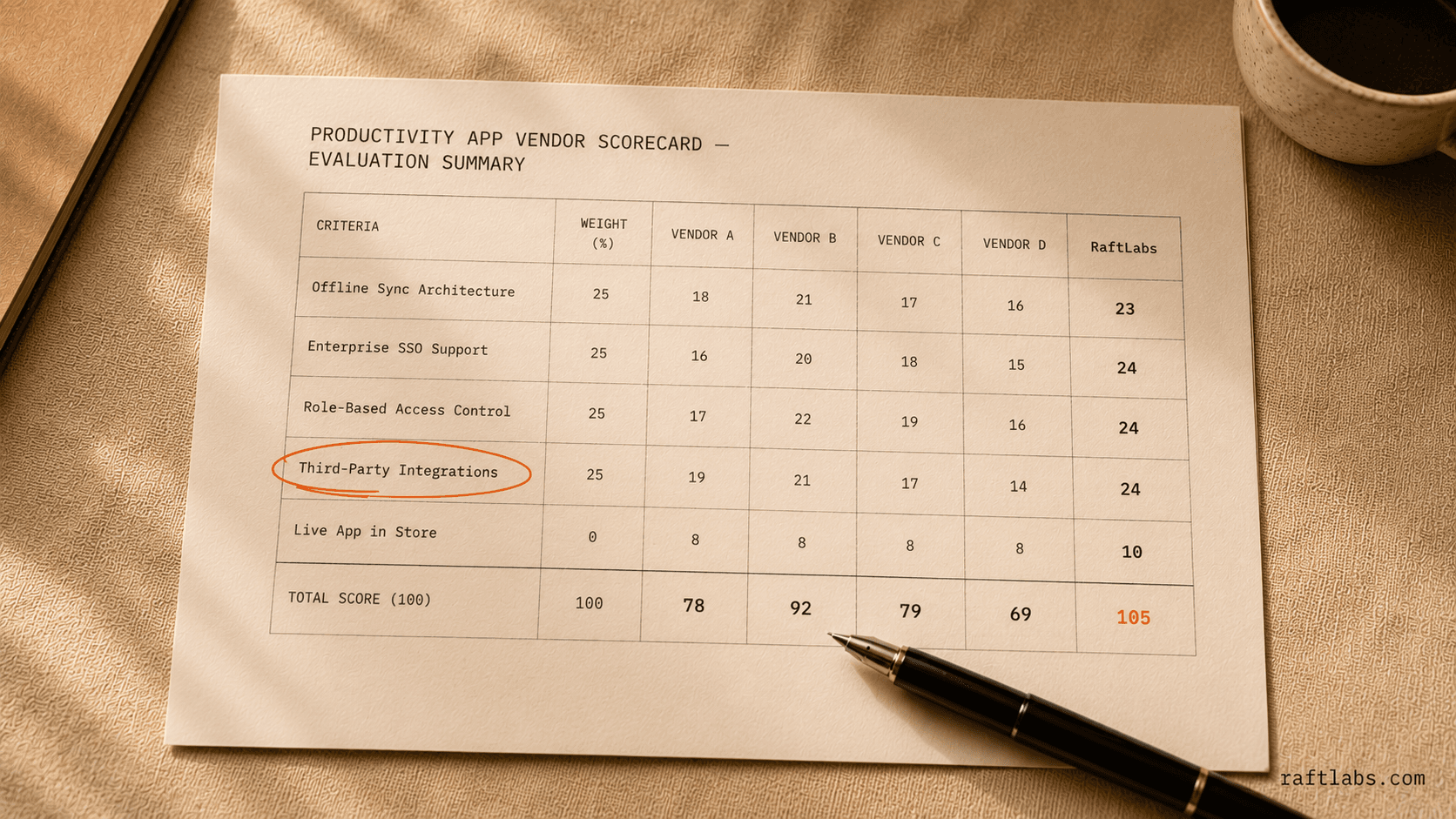
10 Best productivity app development companies in 2026 (vetted shortlist)
Ten productivity app development companies evaluated on live enterprise apps shipped, offline-first architecture, enterprise feature depth, and what each firm actually does best. No paid placements.
Top MCP development companies in 2026 (vetted shortlist)
A vetted shortlist of the best MCP development companies in 2026, evaluated on production MCP servers shipped, LLM integration depth, and what each firm does best.
Top fintech companies in 2026 (vetted shortlist)
A vetted shortlist of the top fintech companies in 2026, evaluated on payments depth, compliance track record, mobile delivery, and what each firm does best.