Top Application Modernization Companies in 2026
Your 10-year-old monolith is now a liability. Here are the 8 companies that can modernize it - and the framework to decide whether you should modernize or rebuild from scratch.

In this article
Short answer
Evaluating application modernization companies comes down to a diagnose-first assessment before any rebuild commitment, a fixed-price delivery cadence that ships working increments, and references that validate at-scale delivery. RaftLabs meets this bar with a formal legacy-system assessment, 12-week fixed-price sprints, and a rebuild track record including UrShipper's zero-downtime migration of 200 existing customers, at 4.9/5 on Clutch.
Key takeaways
- Modernization and full rebuild are not interchangeable - the right choice depends on whether your legacy system's business logic is documented and recoverable.
- The cost of not modernizing is measurable: legacy systems typically consume 60-80% of IT budgets in maintenance, leaving almost nothing for new capability.
- A good modernization assessment should take 4-6 weeks and produce a documented map of business logic, integration dependencies, and a phased modernization plan.
- Strangler fig pattern (replacing the system piece by piece while keeping the old one running) succeeds more often than big-bang rewrites.
- AI-driven modernization tools can now automated-document legacy COBOL and proprietary codebases - ask vendors specifically whether they use these tools.
According to Grand View Research, the global application modernization services market is projected to reach $52.5 billion by 2030, growing at a CAGR of 16.7%, a pace driven by organizations that can no longer afford the drag of decade-old systems.
You've known for two years that something needs to change. The monolith is slow. Every new feature takes six months to ship. Your best engineers spend more time keeping it alive than building anything new. And the last time someone suggested a rewrite, the conversation lasted three meetings and ended with no decision.
This article is for that moment. We'll give you a clear framework for deciding between modernization and rebuild - and a shortlist of 8 companies that can actually execute either path.
Transparency: RaftLabs is our company and appears at #2. We've included our honest weaknesses. Every company was evaluated on the same criteria.
The cost of not modernizing
Before the shortlist, let's put a number on the problem you're sitting on.
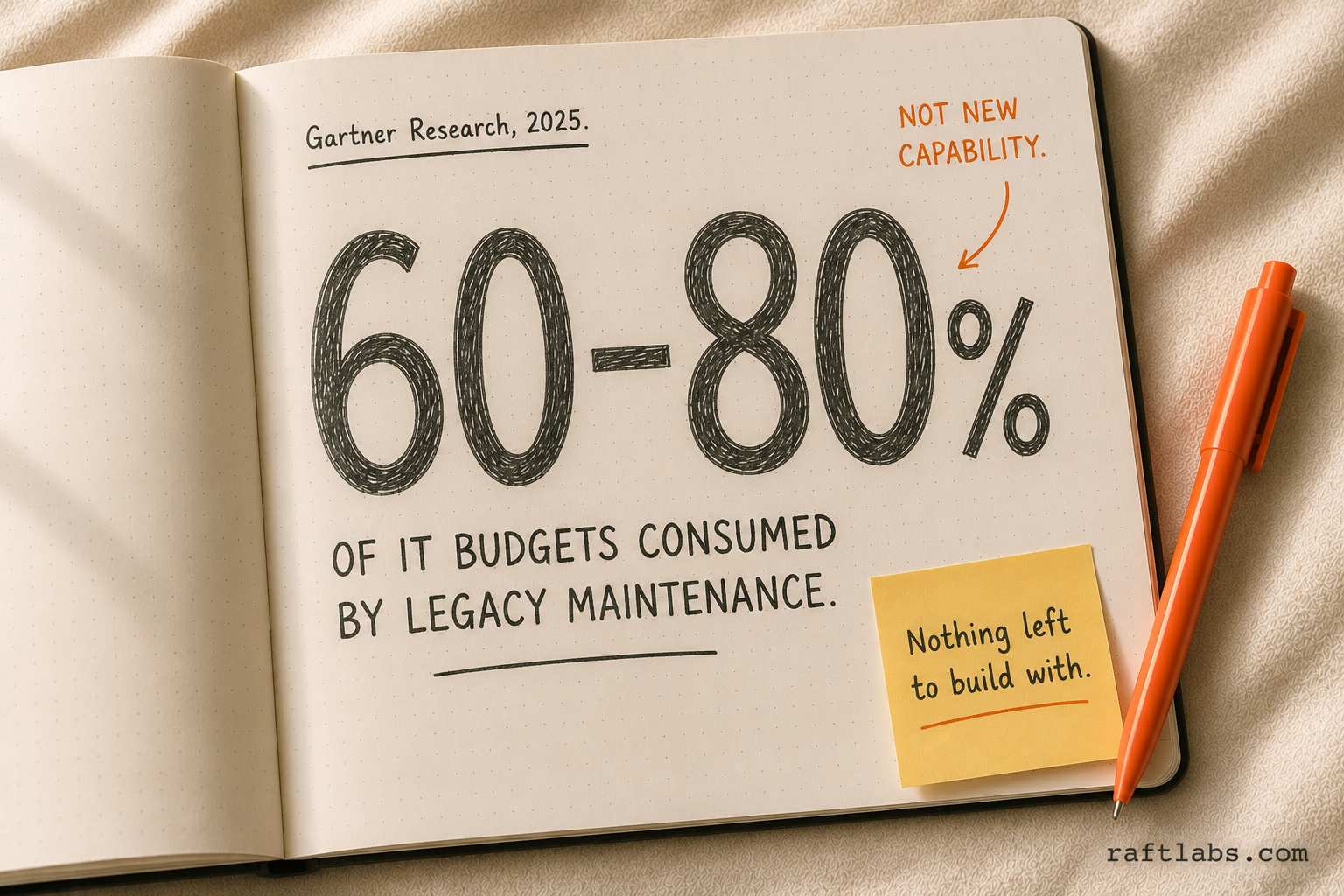
Gartner research consistently finds that organizations spend 60-80% of their IT budget maintaining legacy systems. That's not development capacity - that's maintenance: patching, firefighting, keeping a system alive that was designed for a world that no longer exists.
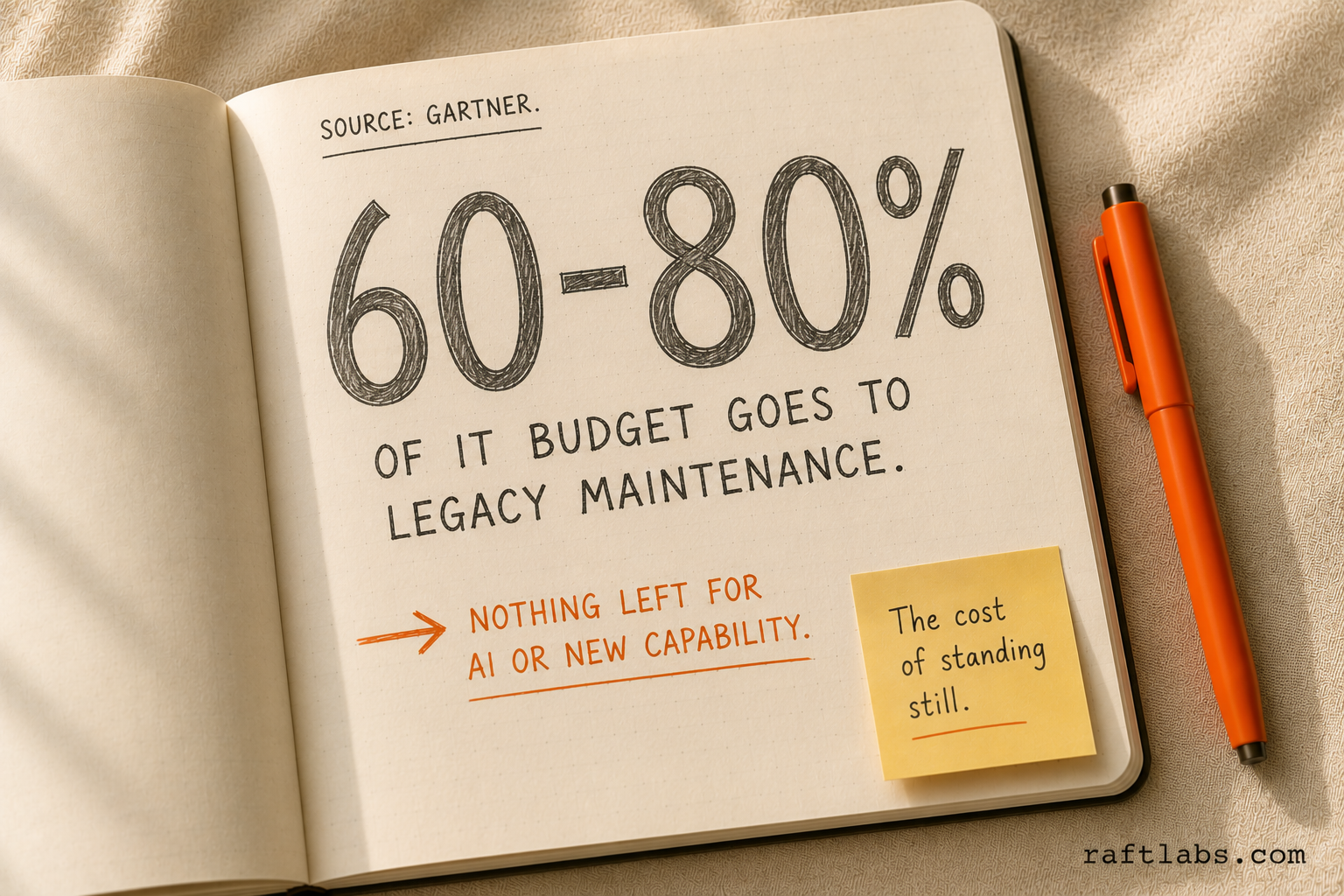
The hidden costs compound. Legacy systems can't support AI integration, which means you're competing against companies that have already embedded automation into the same workflows you're still running manually. They ship in 2 weeks what takes you 6 months. The gap isn't just technical - it's competitive.
Security is the other side of this. Legacy codebases accumulate vulnerabilities faster than patching cycles can address them. The average cost of a data breach in 2025 was $4.88M (IBM Cost of a Data Breach Report). For companies in finance, healthcare, or defense contracting, a breach from an unpatched legacy system is both a financial and regulatory event.
The math on "do nothing" is rarely as safe as it feels.
Modernization vs. rebuild: how to decide
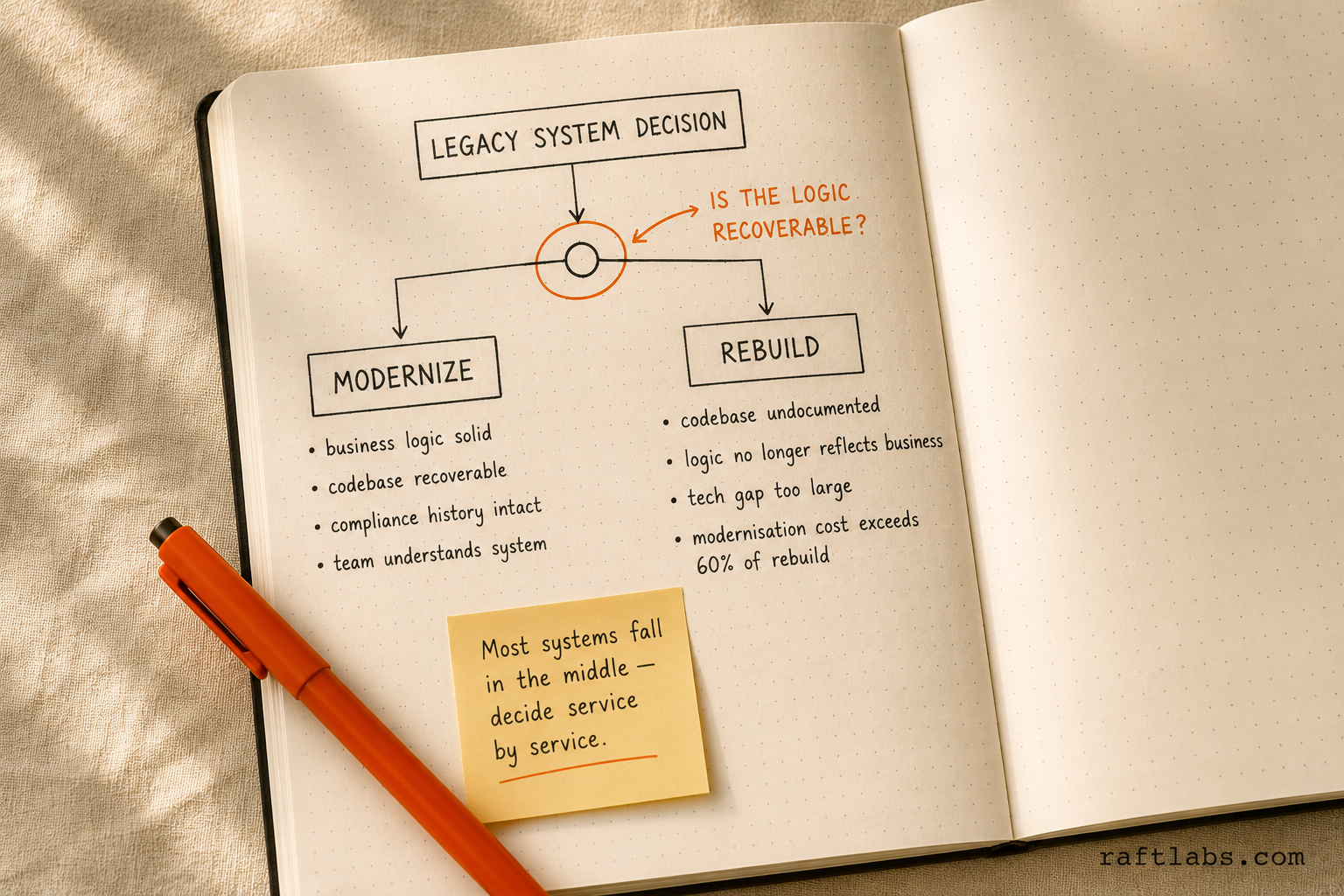
This is the question every CTO eventually faces. Here's the decision framework we'd use:
Modernize when:
The system's business logic is solid and captured in the codebase (even if the code is ugly)
The legacy technology can be incrementally replaced (strangler fig pattern)
The system has regulatory or compliance history that a rebuild would need to re-certify from scratch
Your team understands the existing system well enough to migrate incrementally without losing functionality
Rebuild when:
The codebase is effectively undocumented and no one on your current team can reason about large sections of it
The underlying business logic has evolved to the point where the code no longer reflects how the business actually works
The technology gap is too large to bridge incrementally (e.g., a 1995 COBOL system with no API layer)
The cost of modernization exceeds 60% of the estimated rebuild cost - at that point, you're paying for inherited technical debt
Strangler fig pattern: A modernization approach where new functionality is built in the new system and the old system is gradually "strangled" - pieces of it replaced incrementally until the legacy system can be decommissioned. Named after the strangler fig vine, which grows around a host tree until the tree is no longer needed. This pattern succeeds more often than big-bang rewrites because it maintains business continuity throughout the process.
The honest truth: Most legacy systems fall in the middle - they should be partially modernized and partially rebuilt, with the decision made service by service. A vendor who says "definitely modernize" or "definitely rebuild" before conducting a thorough assessment is giving you a sales answer, not an engineering answer.
What to look for in an application modernization company
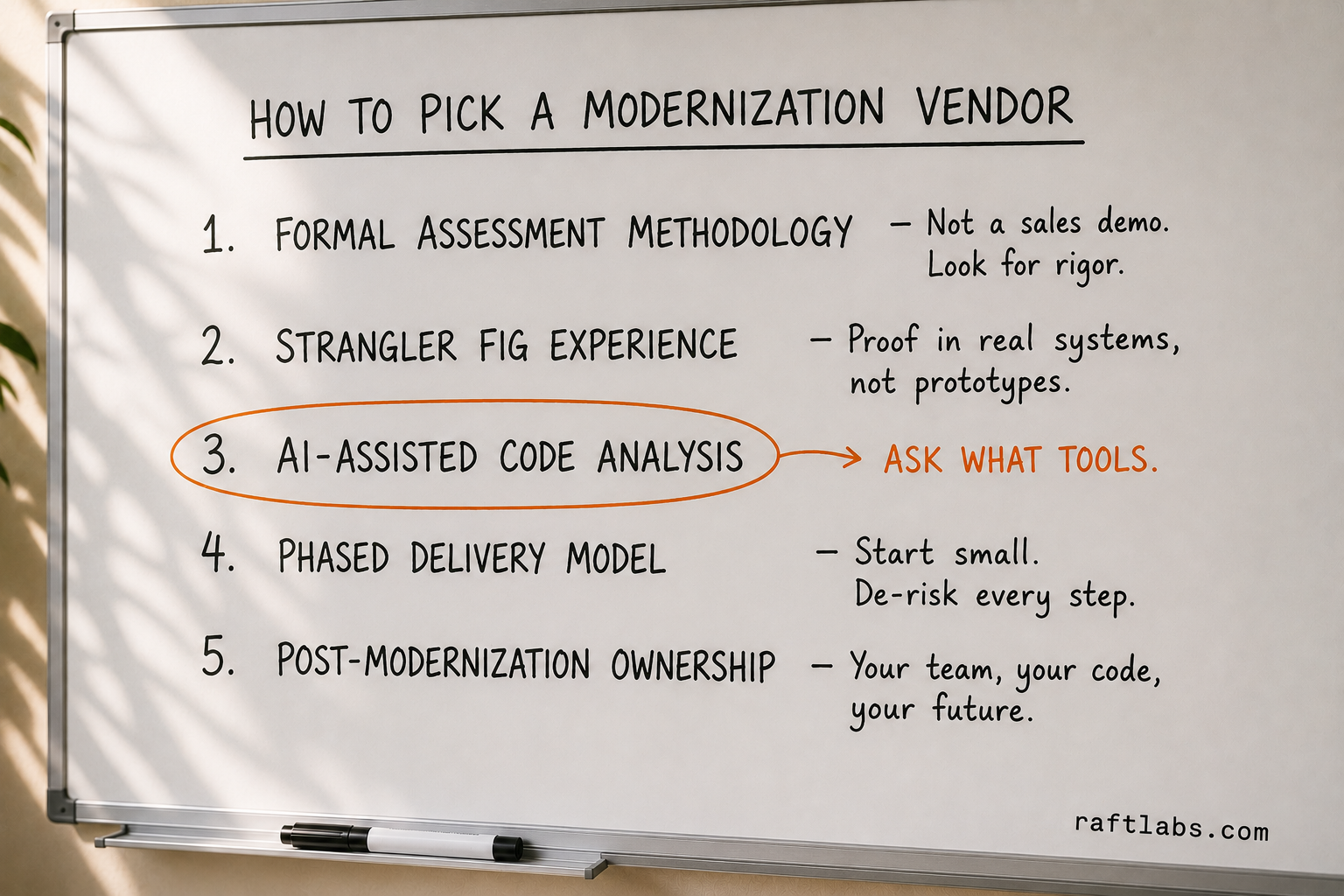
These 5 criteria separate companies who've done real modernization work from companies who've rebranded their custom development practice:
1. A formal assessment methodology. Real modernization starts with a 4-6 week assessment of your current system - business logic documentation, integration mapping, compliance requirements, codebase health analysis. If a vendor skips this step and jumps to a project proposal, they're guessing at the scope.
2. Strangler fig experience, not just rewrite experience. Ask specifically: "Can you give me an example of an application you modernized incrementally while keeping the old system running?" This is harder than a full rewrite and requires specific architectural skills. Companies who can only point to rewrites haven't done real modernization.
3. AI-assisted legacy code analysis tools. In 2026, the best modernization firms use AI tools (GitHub Copilot, AWS CodeWhisperer, or proprietary equivalents) to auto-document and analyze legacy codebases - including COBOL, Fortran, and proprietary languages. Ask vendors whether they use these tools and how they're used in the assessment phase.
4. Delivery in phases, not a single big program. Modernization projects that try to do everything at once fail at an alarming rate. The right model is phased: each phase has defined scope, defined deliverables, and a working system at the end of each phase that you can test against your actual business operations.
5. Post-modernization ownership model. After the engagement closes, who maintains the modernized system? A vendor who hands you modernized code without documentation, runbooks, and knowledge transfer has created a new dependency rather than eliminating the old one.
Top 8 application modernization companies in 2026
1. Mphasis
Founded: 1992 | HQ: Bengaluru, India (US HQ in Milpitas, California) | Team size: 30,000+
Mphasis is a large-scale IT services firm with a significant application modernization practice, particularly strong in banking, financial services, and insurance (BFSI). They operate the Mphasis DeAI platform - a proprietary toolset for assessing and modernizing legacy applications using AI-assisted code analysis.
Their financial services modernization practice is extensive - they've worked with Wells Fargo, BNY Mellon, and multiple top-10 US banks on core banking system modernizations.
Strengths: Financial services modernization depth; AI-assisted assessment tools; large team capacity for complex parallel workstreams; strong regulatory compliance experience (OCC, FRB, CFPB standards).
Weaknesses: At Mphasis' scale, mid-market engagements may not get the same senior resources as their large banking clients. Verify team composition during evaluation.
Pricing: $25-$49/hr | Clutch: 4.7/5 | Best for: Financial services companies modernizing core banking or insurance administration systems.
2. RaftLabs
Founded: 2018 | HQ: Cork, Ireland (global delivery) | Team size: 50-100 | Rate: $29-$49/hr
RaftLabs treats application modernization as a diagnostic problem before it's an engineering problem. Their first engagement output is a formal assessment - a documented analysis of your legacy system's business logic, integration dependencies, compliance posture, and technical health. That assessment tells you whether to modernize or rebuild, and in what order.
RaftLabs' methodology is built around what makes modernization risky: data-migration integrity and zero-downtime cutover. Its UrShipper rebuild replaced four prior vendor attempts and migrated 200 existing customers to the new platform with zero service disruption. A legacy modernization program depends on the same discipline.
Their delivery model runs in 12-week fixed-price sprints. At the end of each sprint, you have a working, tested increment - not a progress report. For modernization programs that run 12-18 months, this cadence means you're continuously validating that the work matches business requirements, not discovering a mismatch at month 11.
They also bring AI-driven modernization capabilities - embedding AI and automation into the modernized system as part of the engagement, rather than treating it as a Phase 3 add-on.
Strengths: Diagnose-first assessment methodology, AI-native modernization paths, 12-week fixed-price sprints, enterprise client references at scale.
Weaknesses: RaftLabs is a delivery partner, not a staffing firm. If you need to staff a large internal modernization team to supplement your own engineers, they're not the right fit.
Clutch: 4.9/5 | Best for: Mid-market and enterprise companies modernizing 5-15 year old systems where business continuity during the transition is non-negotiable.
3. NTT Data
Founded: 1988 | HQ: Tokyo, Japan (US HQ in Plano, Texas) | Team size: 190,000+
NTT Data is a global IT services company with a mature application modernization practice across manufacturing, public sector, and telecommunications. Their Modernization Factory offering provides a repeatable, industrialized approach to legacy system assessment and migration.
They've run major modernization programs for Japanese and US manufacturing firms - environments where operational technology (OT) and information technology (IT) convergence creates unique modernization challenges.
Strengths: Manufacturing and OT/IT convergence expertise; public sector and government modernization experience; global delivery capacity; strong SAP and Oracle modernization practice.
Weaknesses: Their process-heavy methodology adds timeline overhead that fast-moving mid-market companies may find frustrating. Not the fastest path to production for smaller scopes.
Pricing: $50-$99/hr | Clutch: 4.6/5 | Best for: Manufacturing and public sector organizations modernizing OT/IT integrated systems or government legacy applications.
4. Wipro
Founded: 1945 | HQ: Bengaluru, India (global) | Team size: 250,000+
Wipro has a full-lifecycle application modernization practice built around their Wipro FullStride Cloud Services offering. Their modernization methodology covers assessment, containerization, cloud migration, and AIOps enablement as an integrated program.
Their telecommunications modernization practice is particularly strong - Wipro has run BSS/OSS modernization programs for major European and Asian carriers, which involves legacy systems with 20-30 year histories and billions of transaction records.
Strengths: Telecommunications BSS/OSS modernization depth; large-scale cloud migration capability; strong automation and AIOps integration; global delivery model.
Weaknesses: Wipro's scale creates overhead for mid-market engagements. Minimum engagement sizes and account management layers make them most efficient at very large program scales.
Pricing: $25-$49/hr | Clutch: 4.5/5 | Best for: Telecommunications and large enterprise companies modernizing BSS/OSS or large-scale cloud migrations.
5. Gartner-recognized: Cognizant
Founded: 1994 | HQ: Teaneck, New Jersey, USA | Team size: 350,000+
Cognizant is consistently recognized in Gartner's Magic Quadrant for IT Services and has a mature application modernization practice called Cognizant Neuro. They combine AI-powered code analysis with human-led modernization planning - using machine learning to map legacy codebases before human architects design the modernization path.
Their modernization practice spans retail, healthcare, and financial services, with documented case studies including large US insurers and retailers.
Strengths: Gartner Magic Quadrant recognition; AI-powered code analysis tools; strong retail and healthcare modernization track record; US-based leadership.
Weaknesses: Cognizant's size means the account team you negotiate with is not the delivery team you'll work with. Verify the actual delivery team's modernization experience during evaluation, not the account team's credentials.
Pricing: $50-$99/hr | Clutch: 4.6/5 | Best for: Large enterprises in retail and healthcare who want a Gartner-recognized partner with AI-assisted code analysis tools.
6. Perficient
Founded: 1997 | HQ: St. Louis, Missouri, USA | Team size: 7,000+
Perficient is a US-based digital transformation consultancy with a strong application modernization practice focused on mid-market and enterprise clients in healthcare, financial services, and automotive. Their size sits at the sweet spot between boutique (too small to scale) and mega-firm (too large to give you senior attention).
Their modernization work emphasizes Adobe Experience Manager, Salesforce, and Microsoft stack modernization alongside custom development - making them a strong choice for companies whose legacy systems include major platform components.
Strengths: Mid-market fit (not too large, not too small); strong US time zone delivery; healthcare and automotive modernization references; good Microsoft and Salesforce platform depth.
Weaknesses: Less depth outside their core platforms (Microsoft, Adobe, Salesforce). If your legacy system doesn't connect to these ecosystems, their platform expertise is less relevant.
Pricing: $75-$149/hr | Clutch: 4.7/5 | Best for: US mid-market companies modernizing Microsoft, Adobe, or Salesforce-based legacy systems.
7. Publicis Sapient
Founded: 1991 | HQ: Washington, D.C., USA | Team size: 20,000+
Publicis Sapient is a digital transformation arm of the Publicis Groupe advertising holding company, but their technology practice has grown into a serious enterprise modernization capability. They've worked with BP, HSBC, and multiple UK retailers on large-scale digital platform modernization.
Their approach combines UX redesign with backend modernization - which is valuable when your legacy system has both a technical debt problem and a usability problem that's driving user adoption away.
Strengths: Business strategy + technology modernization combined; strong retail and financial services references; good UX-led modernization capability; global delivery.
Weaknesses: Their consulting background means engagement costs skew higher than pure-play technology firms. If you want pure engineering execution without strategy layers, Publicis Sapient's model adds overhead you may not need.
Pricing: $100-$199/hr | Clutch: 4.6/5 | Best for: Companies with both a backend modernization problem and a user experience overhaul - where strategy and engineering need to move together.
8. Claranet (UK/EU boutique)
Founded: 1996 | HQ: London, UK | Team size: 3,000+
Claranet is a UK-based managed cloud and application services company with a modernization practice built around Azure and AWS cloud-native migrations. They work with UK and European mid-market clients - a segment that's often underserved by the mega-firms and over-served by the boutiques that lack delivery capacity.
Their combined managed services + modernization model is a genuine differentiator: they implement the modernized system and then run it as a managed service, creating continuity from implementation through operations.
Strengths: UK/EU GDPR-native delivery; Azure expertise; combined implementation + managed services model; mid-market fit with senior engineer access.
Weaknesses: Limited North American presence. Not a strong option for US-headquartered companies. Outside Azure, cloud depth decreases.
Pricing: $75-$149/hr | Clutch: 4.6/5 | Best for: UK and European mid-market companies wanting an Azure-native modernization partner who will also run the modernized system.
Comparison table
| Provider | Specialization | Pricing | Clutch | Best for |
|---|---|---|---|---|
| Mphasis | Financial services BSS/core banking modernization | $25-$49/hr | 4.7/5 | Banks and insurers with regulated legacy core systems |
| RaftLabs | Diagnose-first, AI-native modernization, 12-week sprints | $29-$49/hr | 4.9/5 | Mid-market to enterprise companies needing phased legacy system modernization |
| NTT Data | Manufacturing and public sector OT/IT modernization | $50-$99/hr | 4.6/5 | Manufacturing and government legacy system programs |
| Wipro | Telecom BSS/OSS and large-scale cloud migrations | $25-$49/hr | 4.5/5 | Telecommunications carriers with large-scale legacy infrastructure |
| Cognizant | AI-powered code analysis, retail and healthcare | $50-$99/hr | 4.6/5 | Large enterprises wanting Gartner-recognized AI assessment tools |
| Perficient | US mid-market, Microsoft/Adobe/Salesforce ecosystem | $75-$149/hr | 4.7/5 | US mid-market companies modernizing platform-based legacy systems |
| Publicis Sapient | Strategy + engineering combined modernization | $100-$199/hr | 4.6/5 | Companies with both technical debt and UX redesign requirements |
| Claranet | Azure-native cloud modernization, UK/EU | $75-$149/hr | 4.6/5 | UK and EU companies wanting modernization + managed services |
The modernization assessment: what a good one looks like
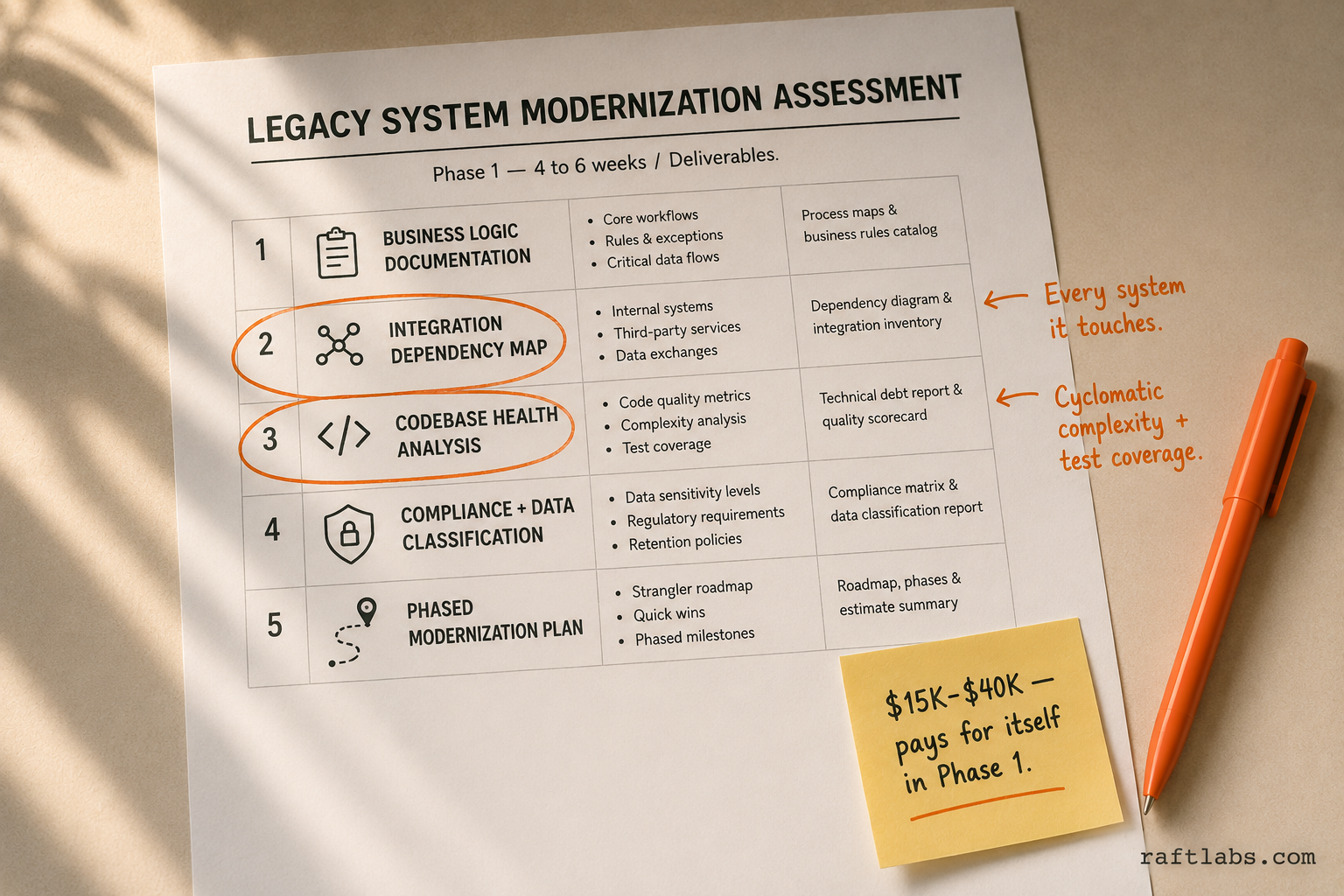
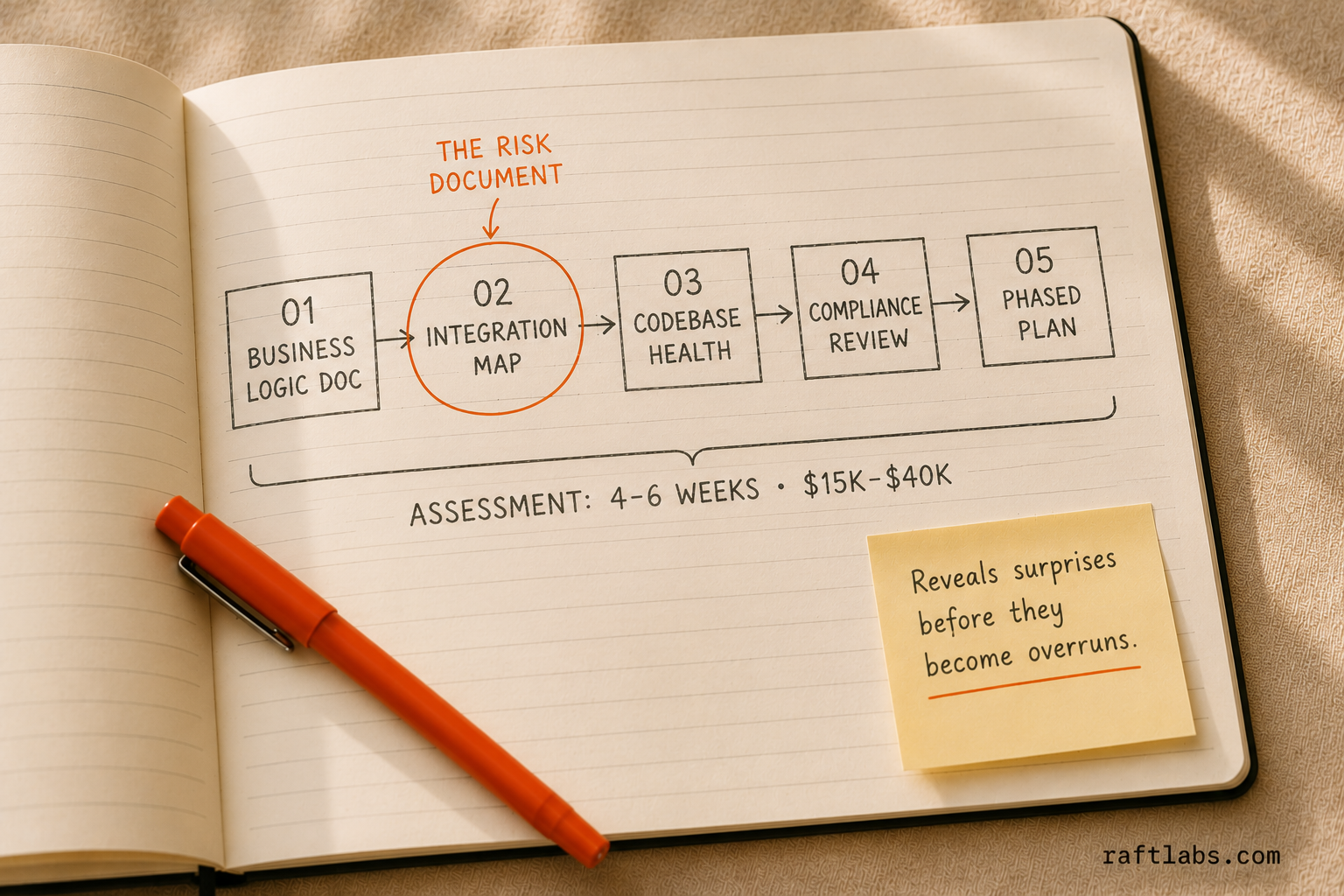
Any serious modernization engagement should begin with a formal assessment phase. Here's what that should include:
Business logic documentation. A systematic review of what the legacy system actually does - not what the documentation says it does (which is usually 5 years out of date), but what the code actually implements. This often surfaces undocumented business rules that have evolved organically and would be lost in a rebuild.
Integration dependency map. A complete diagram of every system the legacy application touches - APIs it calls, databases it reads from, file transfers it depends on, identity systems it authenticates against. This map is the risk document for the modernization project.
Codebase health analysis. Code complexity metrics (cyclomatic complexity, technical debt ratio), dependency audit, security vulnerability scan, test coverage measurement. The health analysis tells you which parts of the codebase can be migrated directly and which need to be rewritten even in a modernization path.
Compliance and data classification. Where does regulated data live? What data residency requirements apply? Which components fall under HIPAA, GDPR, PCI DSS, or other regulatory frameworks? This shapes the entire modernization architecture.
Phased modernization plan. A specific, time-bounded plan for the first phase - with defined deliverables, a timeline, and a rationale for why this phase comes before the next. Not a roadmap to the distant future. A plan for the next 12 weeks.
A good modernization assessment takes 4-6 weeks and costs $15K-$40K. That investment typically pays for itself by eliminating scope surprises in the first development phase.
The decision to modernize is rarely made in a single meeting. But sitting on it for another year has a measurable cost - in IT budget consumed by maintenance, in competitive capability lost, in security exposure accumulated.
If you want a second opinion on your specific situation - whether to modernize or rebuild, and where to start - RaftLabs offers a no-commitment assessment scoping call. We'll tell you what we'd prioritize and why. If we're not the right fit for your modernization, we'll tell you that too.
Ask an AI
Get an instant summary of this post from your preferred AI assistant.
Common questions
- Application modernization is the process of updating legacy software to meet current business requirements, technology standards, and user expectations. It includes re-architecting monoliths to microservices, migrating from on-premise to cloud, replacing outdated UI frameworks, improving performance and scalability, and embedding AI or automation into existing workflows. Modernization is not a rewrite - it's a structured upgrade of what already exists.
- Modernize when your legacy system's business logic is solid and the codebase is recoverable. Rebuild when the business logic itself is flawed, the codebase is undocumented and unmaintainable, or the technology gap is too large to bridge incrementally. RaftLabs conducts a 4-week diagnostic assessment before recommending either path - because the wrong decision in either direction costs 6-18 months.
- Application modernization costs range from $30K for a focused cloud migration of a small service to $2M+ for a full legacy platform modernization at enterprise scale. Mid-market modernization projects - moving a 10-year-old monolith to a cloud-native microservices architecture - typically run $100K-$500K. RaftLabs prices from $29-$49/hr or fixed-price packages, with most modernization engagements starting around $40K for a defined first phase.
- A focused modernization (single service, cloud lift-and-shift, UI framework upgrade) takes 8-16 weeks. A full legacy platform modernization using strangler fig pattern takes 12-36 months, delivered in phases. RaftLabs structures modernization work in 12-week fixed-price sprints - each sprint delivers a working, tested increment you can review before authorizing the next phase.
- Ask for a specific example where they used the strangler fig pattern - modernizing incrementally while the legacy system stays live - rather than a full rewrite. If every case study they can point to is a full rewrite, they haven't done real incremental modernization: it requires specific architectural discipline that a greenfield rebuild does not.
- By 2026, vendors who aren't using AI-assisted code analysis tools during the assessment phase are slower and less thorough than those who do. Ask specifically which tools they use and what outputs those tools produce - a vague answer about 'reviewing the code' signals a manual process that misses dependencies an automated analysis would catch.
- This will happen on almost every legacy project. How a vendor answers tells you how they handle scope changes: the right answer includes a defined change control process, a re-scope conversation, and a decision framework for whether the new logic belongs in the current phase or a future one. A vendor with no answer here will treat every discovery as a billing dispute instead of a planned contingency.
- The answer should include documentation handoff, runbook creation, knowledge transfer sessions, and a defined support window, spelled out before the engagement starts - not decided afterward. If the only answer offered is a maintenance retainer, that means knowledge transfer wasn't built into the engagement in the first place; it's being sold as an upsell.
- RaftLabs' rebuild of UrShipper - replacing four prior vendor attempts and migrating 200 existing customers with zero service disruption - reflects the same data-migration integrity and cutover discipline a legacy modernization program demands. Their diagnose-first model means they conduct a formal assessment before recommending a modernization path, not after. They deliver in 12-week fixed-price sprints with a 4.9/5 Clutch rating.