AI OCR and workflow automation for a multi-site operator (adjacent work, not legal RPA)
- 20K+
- transactions processed in one day during testing
- 40+
- sites connected during the beta phase
RPA in Legal Operations
Court portals, billing systems, contract repositories, and compliance calendars still rely on people to copy data and confirm routine steps. We make legal RPA for stable, rule-based work across those systems. Bots handle the repeatable action; legal staff own exceptions, deadlines, and final approval.
Bring the problem, the current workflow, or the existing code. We reply with a practical next step within one business day.
Evidence and scope
6 to 10 weeks
First automation
One rule-based process across the systems already in use.
$15K
Starting scope
Bot, credentials, exception queue, audit log, and monitoring.
Human checkpoint
Operating rule
High-risk outputs wait for legal review before they become final.
The brief
Good software decisions begin with the constraint, not a list of features or a preferred technology.
Are paralegals copying the same filing, contract, or billing data between systems that already hold it?
When a bot or portal fails, is there a named exception queue, an audit trail, and a person responsible for the next move?
Plain answer
Legal RPA automates stable, rule-based work across court portals, billing tools, repositories, and compliance systems. RaftLabs makes bots with limited credentials, audit logs, exception queues, and human checkpoints. One automation starts around $15,000 and usually takes 6 to 10 weeks.
The happy path is easy: open a portal, copy the case number, retrieve a confirmation, update the docket. The expensive part begins when the portal changes, the field is blank, the confirmation does not arrive, or two records appear to match.
Useful RPA handles the routine path and makes the failure impossible to ignore. It records what stopped, preserves the evidence, and sends the work to a person who can decide what happens next.
Delivery evidence
The case study above is not a legal deployment. It shows the operating pattern that matters here: repeated records moving across a multi-site system under real load. Legal RPA needs the same monitoring discipline, with stricter access, evidence, and human approval around sensitive outcomes.
If the task requires interpretation on most runs, start with a workflow or AI assessment instead.
A person repeats the same actions across two or more systems using clear business rules.
Inputs, outputs, and exceptions can be written down and approved by the legal or operations owner.
The saved staff time or reduced control risk justifies maintaining the bot when a portal or screen changes.
The process changes materially from one matter or jurisdiction to the next.
Most steps depend on reading context and making a legal interpretation.
A supported API or native integration can solve the handoff more reliably than screen automation.
RPA scope
| Method | Best input | Main job | Human role |
|---|---|---|---|
| RPA | Structured fields and stable screens | Repeat defined actions across existing systems | Handle exceptions and approve high-risk results |
| AI | Contracts, emails, scans, transcripts, and questions | Extract, classify, retrieve, or draft | Verify uncertain output and make the legal decision |
| Workflow software | A process involving several people and systems | Control ownership, sequence, status, and escalation | Own the rules and resolve exceptions |
If the core problem is the end-to-end handoff, start with legal automation. If it is contract language or research, start with AI for law firms. RPA is for the stable data move between systems.
How it works
Watch the process run across real systems and list each rule, credential, input, output, failure, and approval. A clean flowchart that ignores workarounds is not enough.
Check portal changes, missing fields, duplicate records, access expiry, and the decisions that must return to a person. The exception queue is designed before the bot handles live work.
Let the bot complete the process beside the current method until its results, logs, and exception handling meet the agreed checks. High-risk changes remain behind a human checkpoint.
Track failures and manual interventions in production, then add another process only after the first one stays dependable. A growing bot count without shared monitoring creates a new maintenance problem.
Proof
First automation
The first scope includes the bot, controlled credentials, exception queue, audit history, monitoring, and the human checkpoint the process requires.
A native integration is the better investment when one exists. Custom RPA pays off when a stable, high-volume handoff has no supported route and enough measurable cost to maintain the bot.
Starting investment
Starts at $15,000
A focused automation usually takes 6 to 10 weeks. Portal stability, system access, rule count, and exception handling move the number.
Parallel-run acceptance
The bot runs beside the current process until results, logs, and exceptions meet the agreed checks. It does not replace the existing path on demo day.
Post-launch support
Eight weeks of production support are included, with failures and manual interventions reviewed before another process is added.
Useful next steps
Work with us
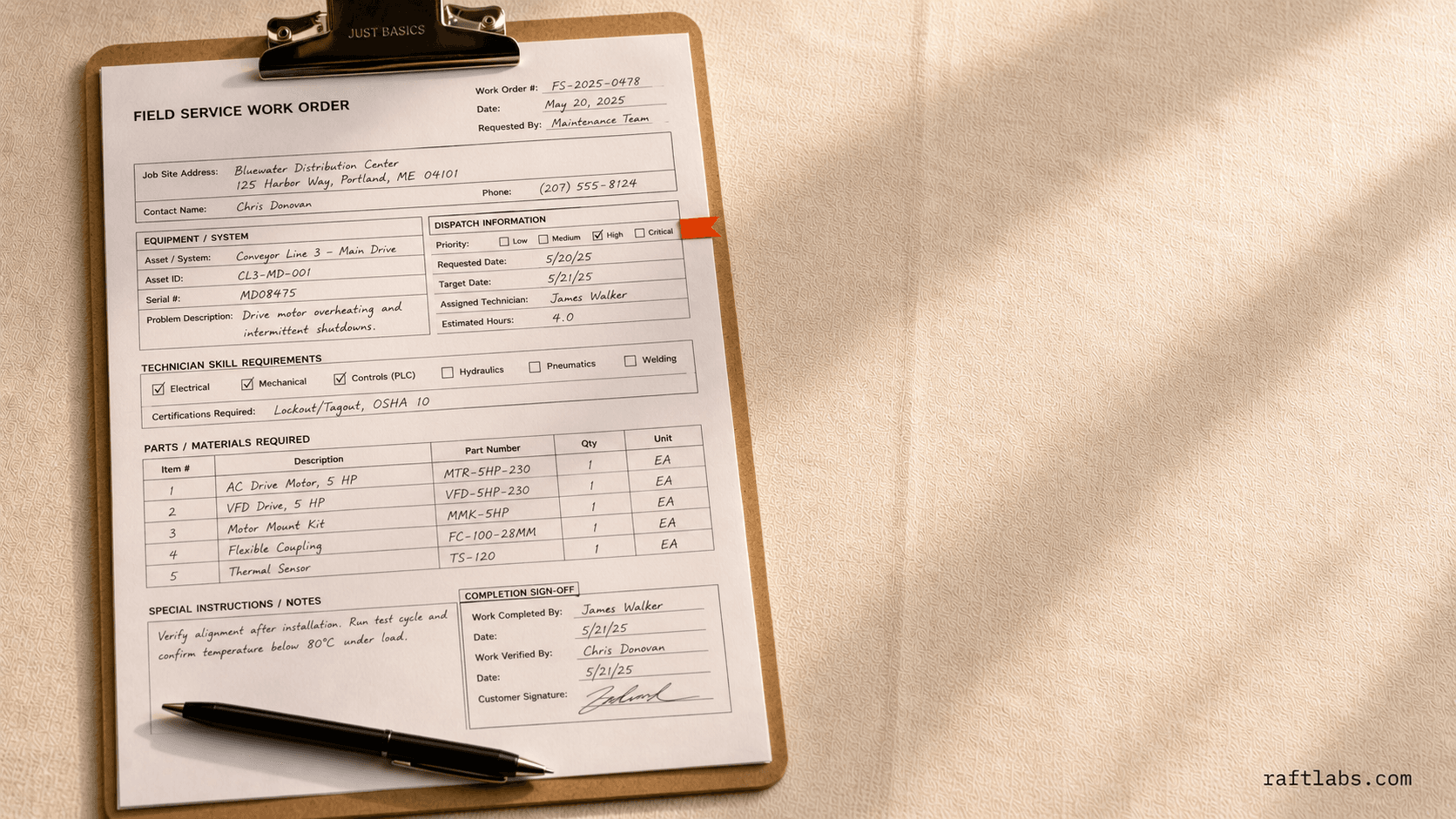
Field Service Automation Software
See the serviceTry it yourself
Automation ROI Calculator
Find out what your manual processes cost, and what automation saves.
Open the free tool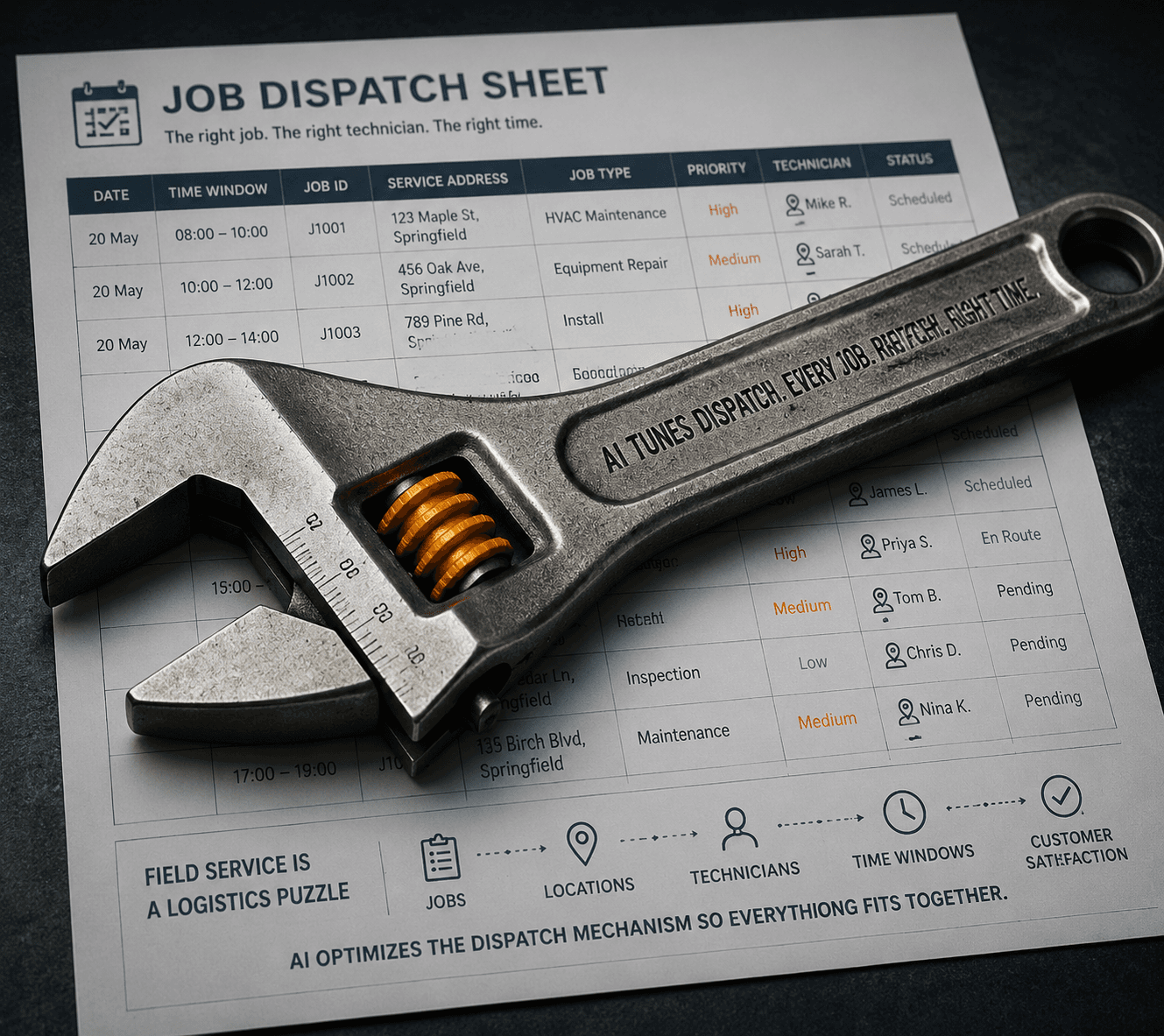
Article
AI for field service management: Fix dispatch first
Field service companies lose 20-30% of revenue to bad scheduling, paper invoices, and parts mismatches. AI agents fix the root cause.
Read more
Article
Custom software development statistics: 40+ data points (2026)
The custom software market will exceed $146B by 2030. Here are 40+ sourced statistics on market growth, project success rates, ROI, team sizes, and technology trends.
Read more
Article
HR Software Development: What It Costs to Build a Workday-Class Platform in 2026
Enterprise companies pay $100-$250 per employee per year for Workday. Custom HR software development for your actual org structure costs $100K-$180K once. Here is what it takes, who should build it, and where these projects break down.
Read more
Article
Automate document processing: Extract, classify & route without manual work
Traditional OCR fails on 30% of real documents. AI-powered processing hits 95%+ on invoices, contracts, and forms - regardless of format variation.
Read moreRobotic process automation, or RPA, uses software bots to complete repeatable actions in existing systems. In legal operations, that can include moving filing data, checking billing entries, updating contract records, retrieving confirmations, or monitoring a defined source. RPA follows rules; it does not provide legal judgment.
The best candidates have stable inputs, clear rules, enough volume, and a predictable exception path. Billing validation, portal-to-docket updates, executed-contract data entry, and standard compliance checks can fit. A process that changes with every matter or depends on legal interpretation is a poor RPA candidate.
Use RPA when the inputs are structured and the decision rules are explicit. Use AI when the system must interpret variable documents, emails, transcripts, or natural-language questions. Many legal workflows use both: AI extracts a field with confidence, a person confirms an uncertain value, and RPA writes the approved result into another system.
Each bot receives only the permissions required for its task. Credentials stay encrypted and separate from the automation code. Every action, input, output, failure, and human override is logged. High-risk outcomes wait in an exception queue, and access can be revoked without changing the wider workflow.
A focused automation for one process starts around $15,000 and usually takes 6 to 10 weeks. Cost depends on system access, portal stability, rule count, document interpretation, exception handling, and monitoring. Multi-process programmes grow only after the first bot proves its reliability in production.
Work with us
Bring one process, the systems it crosses, its monthly volume, and the failures staff handle by hand. We will tell you whether RPA fits and what the smallest controlled automation would include.