
AI for Law Firms and Legal Departments
AI for law firms that shows its sources.
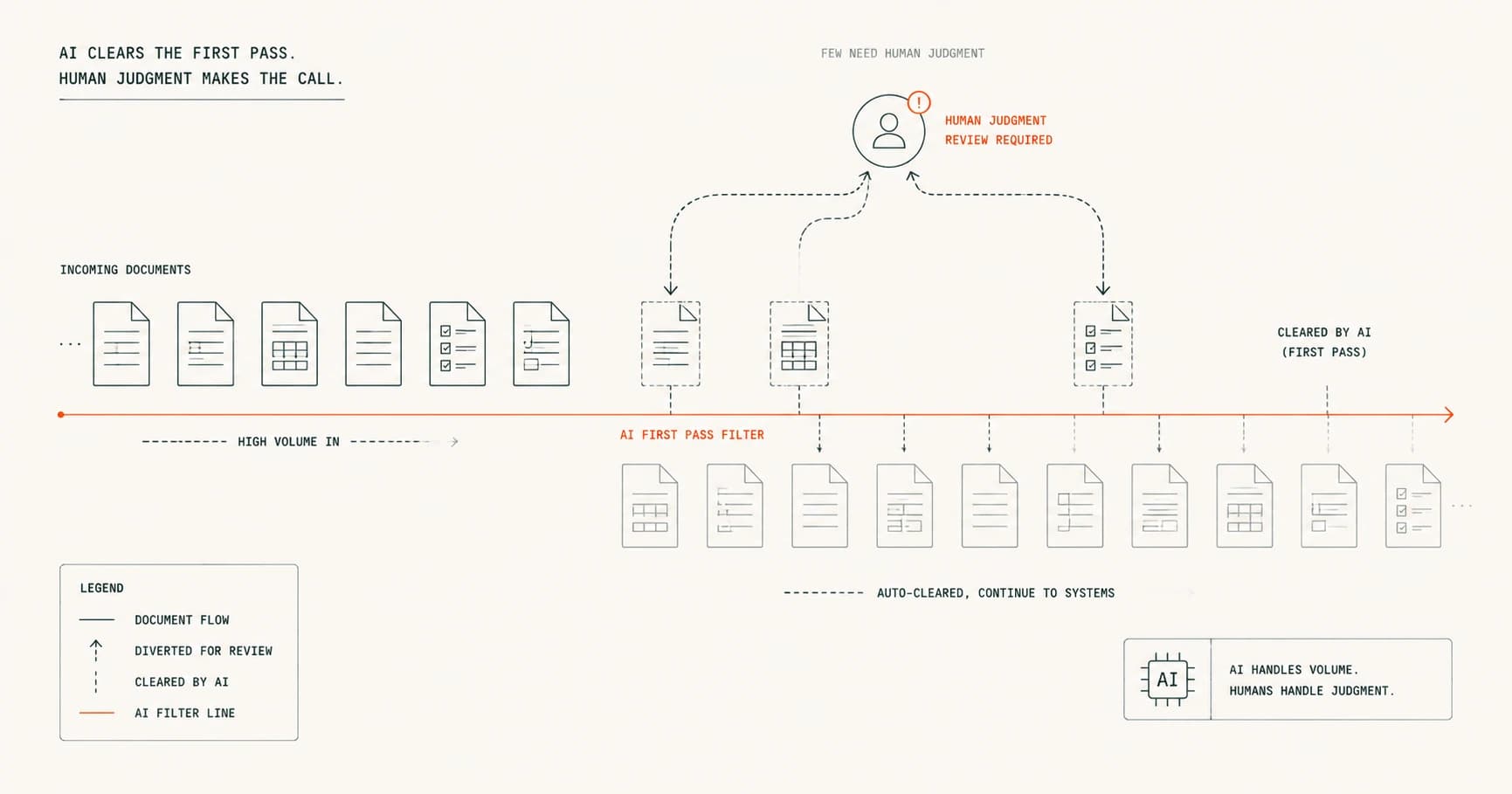
Legal AI earns trust when every answer can be checked against a contract, case, transcript, or approved playbook. We make AI systems for law firms and legal departments that handle the first pass across high-volume material. Lawyers see the source, review uncertain output, and keep the final decision.
Bring the problem, the current workflow, or the existing code. We reply with a practical next step within one business day.
The brief
Start with what is not working.
Good software decisions begin with the constraint, not a list of features or a preferred technology.
01
Are lawyers using general AI tools for research or drafting without a reliable record of the source, prompt, or confidential data involved?
02
Is your AI shortlist driven by vendor demos rather than one measured workflow, a known error cost, and a legal owner?
Plain answer
AI for law firms supports source-grounded legal research, drafting and summarization, contract analysis, due diligence, and eDiscovery review. Useful systems link every material answer to an approved case, contract, transcript, or firm document, respect matter permissions, expose uncertainty, and keep attorneys responsible for the final work. One focused use case starts around $30,000.
A confident answer is not evidence.
An associate asks a legal AI tool for the authority behind a proposition. The answer reads cleanly. The citation looks plausible, which makes it the part that needs checking most.
A useful legal system shortens the route to the source. It shows the contract passage, judgment, transcript line, or firm document behind the answer. When the evidence is weak, it stops. Source visibility separates a quick demo from software a lawyer can use on a live matter.
The trust gap
- hallucination rate found in two leading AI legal research tools
- 17%+
- Stanford and Yale researchers, published 2025
- internal validation measure reached in an adjacent AI document system
- Near 99%
- Sample and test method are not public; not legal AI
- average client rating across delivered projects
- 4.9/5
- Clutch, verified reviews
A Stanford and Yale research team found that two leading retrieval-based legal research tools hallucinated more than 17% of the time. Retrieval made them safer than a general model, but not error-free. That finding sets the right design rule: every material legal answer needs a visible source and a lawyer who owns the decision. Read the published research.
Custom legal AI fits a defined first pass, not a wish for a general assistant.
The left side describes a workflow that can be tested. The right side needs policy or process work before software.
A fit
01
A repeated task consumes meaningful lawyer time across contracts, research, diligence, transcripts, or intake.
02
The firm controls the documents, playbook, cases, or other sources that should ground the output.
03
A legal owner can define unacceptable errors, review the evaluation set, and approve the human checkpoint.
Not a fit
01
The goal is a broad chatbot that can answer any legal question without a defined source set.
02
Nobody owns permissions, retention, or the decision about which model providers may receive matter data.
03
The task happens too rarely for a custom system to repay the evaluation and maintenance work.
Which legal AI use case should come first?
Choose by input, evidence, and human decision
| Use case | The system does | The lawyer verifies |
|---|---|---|
| Commercial contract review | Extracts clauses and compares them with an approved playbook | The risk position and every proposed redline |
| Legal research | Retrieves cases and firm knowledge, then drafts an answer with source passages | Every proposition and authority relied upon |
| Drafting and summarization | Creates a first draft or condenses cases, briefs, depositions, and document sets from approved material | Accuracy, omissions, context, and the final language |
| Due diligence | Sorts documents and flags issues against a defined risk matrix | Materiality, context, and the final report |
| eDiscovery review | Groups duplicates, classifies likely relevance, and flags possible privilege | The review protocol, privilege calls, validation, and completion |
| Deposition and transcript analysis | Finds statements, topics, and possible inconsistencies across testimony | Meaning, relevance, and litigation strategy |
| Client intake | Collects defined facts, routes the enquiry, and prepares the matter record | Conflicts, legal analysis, and whether to accept the matter |
The ABA's Formal Opinion 512 names research, contract review, due diligence, document review, regulatory compliance, and drafting as AI-assisted legal tasks. It also makes the boundary clear: lawyers remain responsible for competence, client confidentiality, supervision, candour, and the work they put forward.
Buy before you build when the product already fits. Lexis+ with Protégé, for example, already combines natural-language legal research, linked citations, Shepard's validation, summaries, and organization documents. Custom legal AI earns its place when your internal knowledge, matter permissions, evaluation method, or workflow cannot fit a licensed product without expensive manual workarounds.
For clause-by-clause commercial work, use AI contract review software. For large litigation populations, use legal document review automation. For approved templates and deterministic clause assembly, use document automation. If the job is a stable data move rather than interpretation, legal RPA is the cleaner tool.
Control model
What every legal AI system needs
- 01
Approved sources and traceable answers
The system retrieves only from the contract set, cases, transcripts, policies, or firm knowledge approved for that use. Each material answer links to the supporting passage. If the source does not support the answer, the system must return uncertainty rather than fill the gap. - 02
An evaluation set lawyers recognise
Representative examples carry known answers, expected source passages, hard edge cases, and unacceptable failures. Results are measured by the work being done, because a research citation error and a missed contract clause do not carry the same cost. - 03
Matter-aware access and retention
Users see only the sources their role and matter permissions allow. The design records which provider processed the data, where it ran, how long inputs and outputs remain, and which system events appear in the audit history. - 04
A review step that matches the risk
Low-risk retrieval may need a quick source check. A redline, deadline, conflict result, or external legal communication needs a stricter approval path. The human checkpoint is tied to the consequence of being wrong, not applied as a vague disclaimer.
How it works
Start with the decision lawyers can verify
- Phase 101
Choose one costly first pass
Select a repeated reading, retrieval, extraction, or drafting task with a clear owner and measurable baseline. Define what success changes for the lawyer doing the work.
- Phase 202
Define sources and permissions
Decide which documents the system may use, who may see each answer, how long data stays, and where human approval belongs. Resolve those controls before connecting live matter data.
- Phase 303
Create the evaluation set
Test the system on representative examples with known answers, including hard cases and unacceptable errors. Record results by task and error type instead of relying on one overall score.
- Phase 404
Release with review
Put the system into a controlled workflow, record source and reviewer decisions, and expand only after the evidence holds up. Eight weeks of post-launch support cover the failures that appear under real use.
Proof
Adjacent proof from document intelligence

Pause reduces mindless app opens by 40% without blocking or timers
Pause intercepts the habit loop before it completes. One brief prompt before you open Instagram or YouTube cuts mindless sessions by 40%, without restricting access or triggering resentment.

Serverless app development case study: a browser video editor whose layer stack compiles into an FFmpeg command inside AWS Lambda
A browser-based marketing video maker built on a Konva canvas and a serverless render pipeline: timeline JSON on SQS, FFmpeg in a Lambda layer, output to S3. Roughly six to seven months of active development.
The portfolio proof is deliberately labelled adjacent. Receipts are not contracts or cases. The transferable evidence is the evaluation discipline: typed extraction, confidence thresholds, human validation, and production monitoring around documents that arrive in inconsistent real-world formats.
Legal AI fails when governance arrives after the demo
- No refusal path
- A system that must always answer will invent certainty. It needs a defined response when the source is missing, conflicting, or outside scope.
- Generic evaluation
- A vendor benchmark cannot tell you whether the system finds your clauses or retrieves your authorities. The acceptance set must come from your work.
- Invisible data movement
- Legal teams need to know which provider received matter data, where it ran, what was retained, and who later accessed the output.
First legal AI use case
Start with one verifiable workflow at $30,000.
The first scope includes approved sources, an evaluation set, access rules, a review path, one integration, and production monitoring.
A licensed legal AI product is the better choice when it already fits your sources, controls, and workflow. Custom work earns its cost when the firm's knowledge, systems, or risk model require a different path.
Starting investment
Starts at $30,000
A focused first use case usually takes 10 to 14 weeks. Document volume, source access, evaluation depth, permissions, and integrations move the number.
Evidence before expansion
The first workflow is tested against examples with known answers. We do not propose a broader rollout until the results and failure modes are visible to the legal owner.
Human ownership stays explicit
The scope names who verifies each material output and which decisions cannot proceed without approval.
Useful next steps
More on LegalTech
Work with us
Work with us
Legal SaaS Development
See the service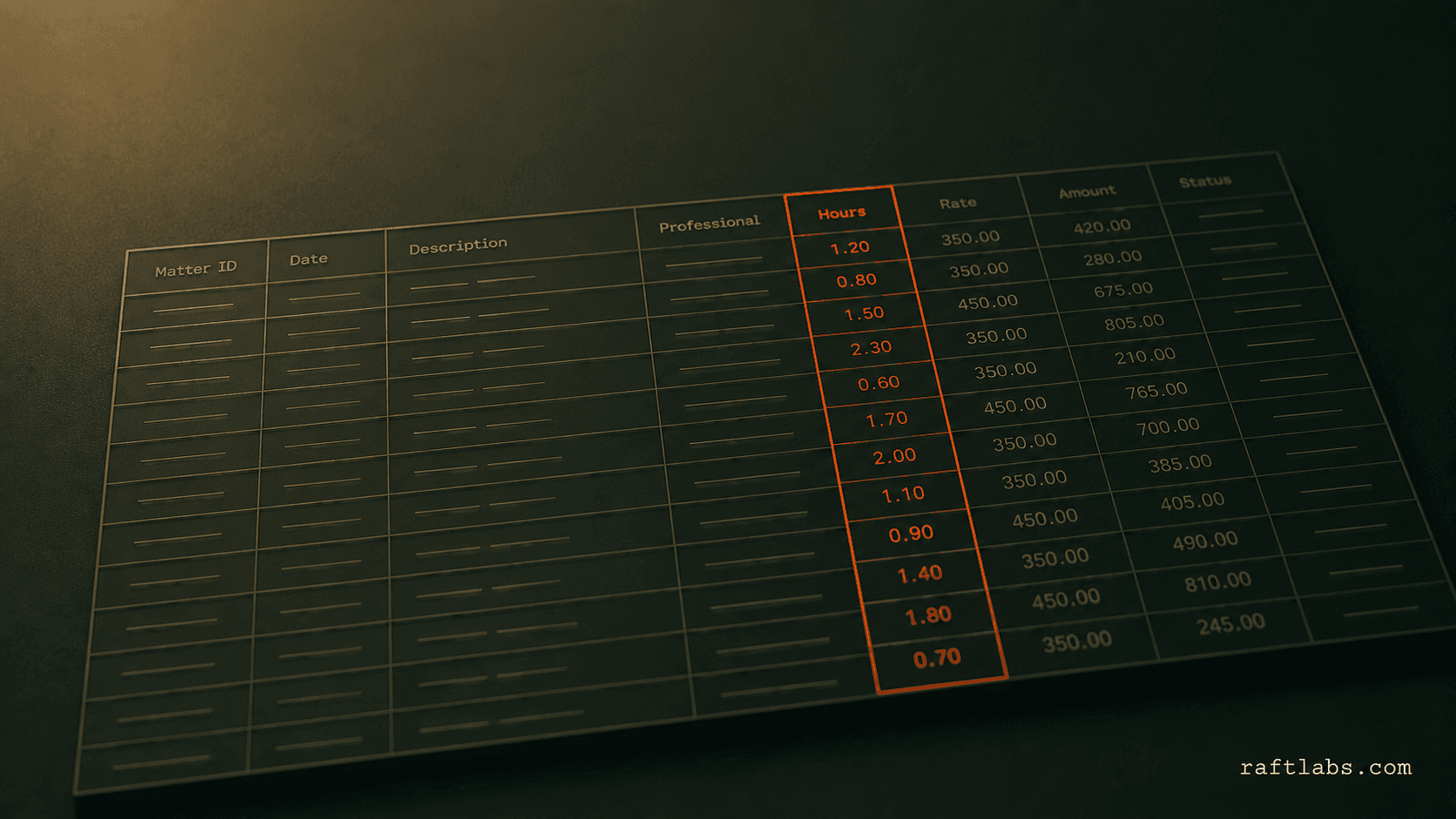
Article
Cost to Build Legal Practice Management Software Like Clio: What Firms Actually Pay
A 50-attorney firm pays $53,400/year to Clio before trust accounting workarounds and document assembly add-ons. Here is what it costs to build your own legal practice management platform ($85,000-$230,000), what IOLTA trust accounting compliance requires, and when building makes sense for mid-size firms.
Read more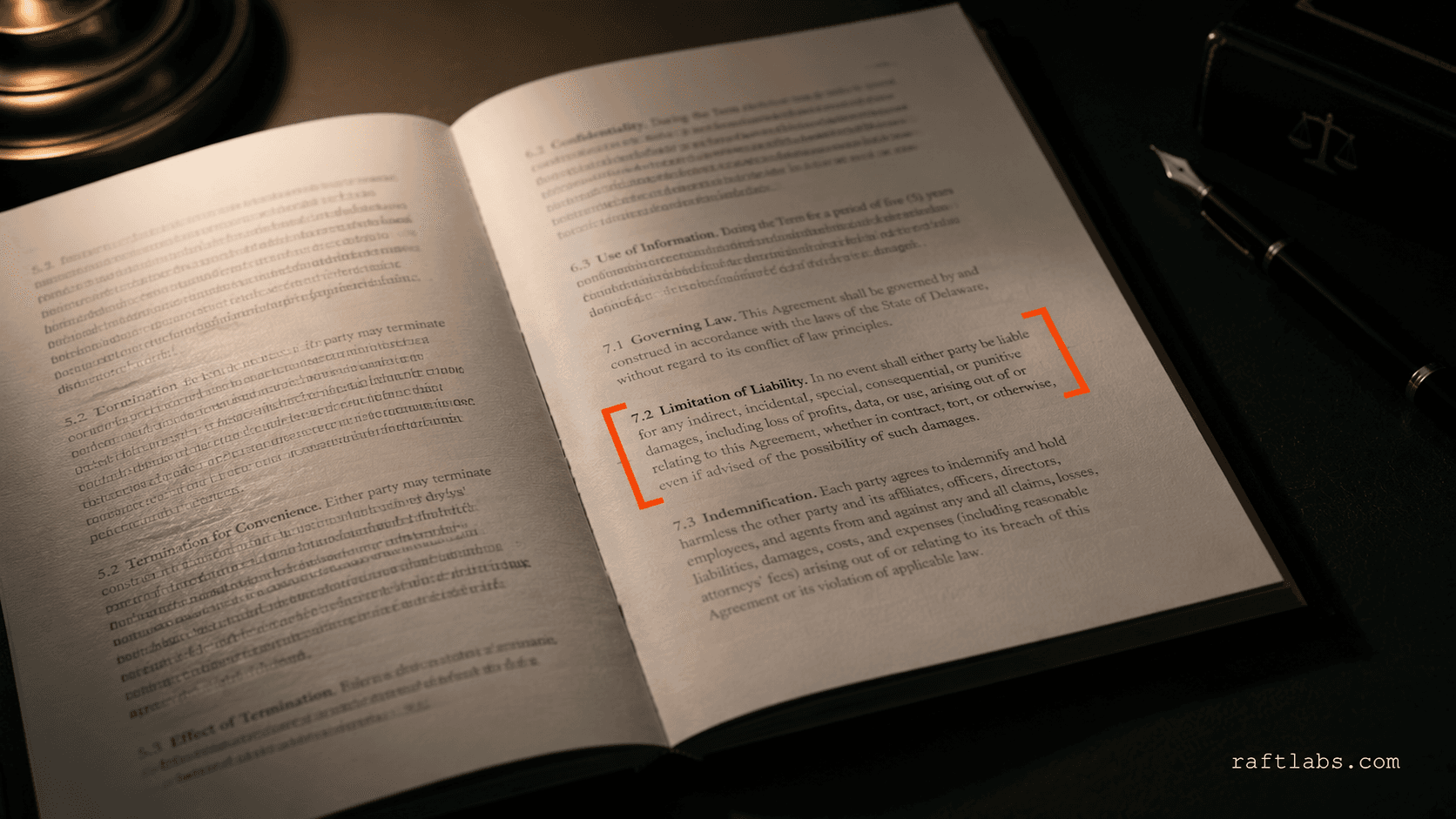
Article
Intelligent Document Processing for Legal and Law Firms
Intelligent document processing for legal firms digitizes case files, extracts contract clauses, manages discovery documents, and automates billing records.
Read more
Article
Automate legal billing and time tracking: what actually works in 2026
Lawyers record only 2.9 billable hours per day on average. The rest goes unbilled - or gets written down later with numbers pulled from memory. AI-powered time tracking fixes this. Here's what to use and what to avoid.
Read more
Article
Law firm client intake: The $200K leak you're not tracking
35% of law firm leads never get a response. 67% of potential clients hire the first firm that picks up the phone. The average multi-attorney firm loses $200,000+ per year to unanswered calls and slow follow-up. Your marketing isn't the problem. Your intake process is.
Read more
Article
The real cost of AI failure in production - and how to prevent it
When AI gets it wrong in production, the cost isn't a bad UX. It's refunds, churn, legal exposure, and ops teams cleaning up messes. Here's how to quantify the risk before you deploy.
Read moreCommon questions
Start with a repeated first-pass task where lawyers can verify the answer against a source. Contract clause extraction, retrieval across an approved knowledge base, due diligence issue spotting, and transcript search can fit. Avoid starting with a broad legal assistant that has no defined source set, error cost, or accountable owner.
A custom legal AI system limits what it can read, retrieves from approved sources, follows a defined output format, records the evidence behind each answer, and routes uncertain results to a lawyer. A general chat tool may still help with low-risk drafting, but it does not automatically provide those controls or fit your matter workflow.
Retrieval, source links, and structured outputs reduce risk but do not remove it. We test against an evaluation set with known answers, expose the supporting passage, measure failures by use case, and require human review where an incorrect answer carries legal or financial cost. The system must be allowed to say it cannot support an answer.
Access follows the firm's existing matter permissions wherever possible. Data sources, retention, model providers, regions, logs, and deletion rules are agreed before documents enter the system. Provider terms must prohibit training on client matter data, and the system records the events required for audit.
Yes, as a first pass. A legal AI system can draft from approved precedents and structured matter facts, or summarize a deposition, case, brief, or document set with page and passage references. The firm defines the source set and output format. A lawyer checks accuracy, omissions, context, authorities, and any material statement before the work is used or sent outside the team.
A focused first use case starts around $30,000. The price depends on source systems, document volume, evaluation work, permissions, model use, and integration. Contract review, research, or due diligence platforms can grow into larger phases, but the first workflow is scoped and tested before that expansion is proposed.
Work with us
Bring one legal task and the sources behind it.
We will map the baseline, the evidence lawyers must see, the errors the system cannot make, and the smallest first release worth testing. If a standard product fits, we will say so.
- Scope and cost agreed before work starts. No surprises. No obligation.
- Working prototype within 3 weeks of kickoff.
- Pay by milestone. You see progress before each invoice.
- 60-day post-launch warranty. Bug fixes, UI tweaks, and deployment support. No retainer.
- All conversations are NDA-protected.