
Charles E.
Entrepreneur at Aggie Technologies
 USA
USA
All of the sprints were completed on schedule and on budget. We highly recommend RaftLabs!
AI Resume Screening Software for Recruiters
Growing companies outgrow their HR processes before they outgrow their HR teams. Resume screening takes days when it should take hours. Performance data lives in a system nobody uses because the reports take too long to generate. Employee churn is discovered when someone resigns rather than predicted when the signals first appear. Onboarding is inconsistent because it depends on who is doing it.
We build AI systems for HR teams: resume screening and ranking, employee churn prediction, workforce planning tools, HR chatbots, and performance analytics. Every system is scoped against your data, your HR workflows, and a measurable outcome, fewer hours on manual work, better retention decisions, or faster hiring cycles.
Resume screening AI that ranks candidates against role requirements in minutes, not days
Churn prediction models that surface at-risk employees before they start looking elsewhere
Workforce planning tools that give HR leaders data for headcount decisions, not gut feel
HR chatbots that handle benefits questions, policy lookups, and onboarding guides automatically
Bring the problem, the current workflow, or the existing code. We reply with a practical next step within one business day.
Trusted by





























The brief
Good software decisions begin with the constraint, not a list of features or a preferred technology.
How many hours per open role does your HR team spend screening CVs that do not meet the basic requirements?
Are you finding out about employee churn risk when someone resigns, or before?
Plain answer
AI resume screening software ranks incoming applications against role criteria and surfaces the shortlist worth reviewing in minutes, with scoring factors visible to the recruiter. RaftLabs builds it into your existing ATS, then extends into churn prediction, workforce planning, and HR chatbots. Fixed-price delivery, scoped in writing before development starts.
What to remember
A recruiter opens a role and 200 applications land in a week. She reads the first forty carefully, skims the next eighty, and by the bottom of the pile she is pattern-matching on job titles because there is no time left. The candidate who would have stayed five years is somewhere in the stack she never reached.
Meanwhile the person who quit last month showed every signal months ago: a skipped promotion, a manager change, a quiet engagement score sliding down. Nobody saw it because the report that would have surfaced it takes a day to build, and nobody has a day.
None of this is an HR team failing. It is manual work scaling faster than the people doing it. That is the part software fixes.
AI resume screening software ranks incoming applications against role criteria, so recruiters review a shortlist in minutes instead of reading every CV by hand. When screening takes too long, the best candidates accept other offers. When churn risk is invisible, retention becomes reactive and expensive. When workforce planning is manual, headcount decisions are late and based on incomplete information.
According to a Gartner survey of 179 HR leaders published in February 2024, 38% were already piloting, planning, or had implemented generative AI in their HR functions. The pattern is consistent: teams that automate manual screening, prediction, and reporting free up HR professionals to spend more time on the decisions only humans can make.
HR AI does not replace your HR team. It removes the manual work that currently prevents your HR team from doing the higher-value work that requires their judgment.
RaftLabs has shipped production software since 2015 for clients across the US, UK, Europe, Canada, and the UAE. One team scopes the problem against your data and your HR workflows and ships it in roughly 12 weeks: the people who assess your data in week 1 are the ones who ship in week 12.
Everything on the left should already be true for your operation. Even one thing on the right, and a data-collection program or a manual process fix is the smarter first step.
High hiring volume, where recruiters screen hundreds of CVs a week against the same role criteria.
An existing HRIS or ATS (Workday, BambooHR, Greenhouse, Lever, and similar) the AI can read from and write results back to.
At least 12-24 months of HR data and enough past departures to train a reliable churn signal.
Thin HR data: under 12 months of history, or too few past departures to train a model on.
No HRIS or ATS to integrate against, and no plan to put one in place.
You want AI to make the final hiring or headcount call, rather than support the humans who make it.
What we build
Tell us your hiring volume, current attrition rate, and which HR processes are the most manual. We will identify where AI delivers the fastest return.
How it works
Every project follows the same four phases. Scope is locked and price is fixed before development starts.
We map the HR problem, the data available in your HRIS, and the workflow being replaced. You leave week 1 with a written scope document and a fixed-price quote. No development starts without your sign-off.
Data model design, integration architecture with your HRIS and ATS, and UI wireframes before any production code. Decisions made here cost ten times less than the same decisions made in week 8.
Working software at a staging URL by the end of sprint one. Bi-weekly demos. QA runs in parallel with every sprint. Integration testing with your live HRIS data in a sandboxed environment before production cutover.
Production deployment with monitoring activated on launch day. 8 weeks of post-launch support included. Model retraining scheduled as new HR data accumulates.
What clients say
Three-year average engagement. Founders and operators describing the work in their own words. No marketing varnish.
Charles E.
Entrepreneur at Aggie Technologies
USA
All of the sprints were completed on schedule and on budget. We highly recommend RaftLabs!
01 / 02
Proof

A mobile POS and merchant-acquiring platform for a UAE FinTech operator: four ways to take a payment on a phone, two processors behind one ledger, and KYC built for a regulated operator.
Where you land in that range depends on scope, not negotiation:
What it costs
Resume screening, churn prediction, workforce planning, an HR chatbot, or a combined system, priced against your data and workflows, with compliance scoped in week 1.
A focused resume-screening integration is the smallest engagement. Most HR teams start there, then add churn prediction, workforce planning, or a chatbot once each case is proven.
Starting investment
Starts at $55,000
A single capability, resume screening or churn prediction, is scoped and priced in writing before development starts. Most teams start with one and add the next once it's proven.
No hourly billing
We scope the work, calculate the cost, and lock it in writing before any development starts. No hourly billing. A scope change is a priced change request, agreed before work begins, never quietly added to the final invoice.
Compliance from day one
GDPR in the UK and Europe, HIPAA for US healthcare employers, and equivalent local laws are scoped in week 1, not retrofitted before launch. NDAs are signed before any scoping discussion involving sensitive HRIS data.
Useful next steps
Work with us
Employee Scheduling Software Development
See the service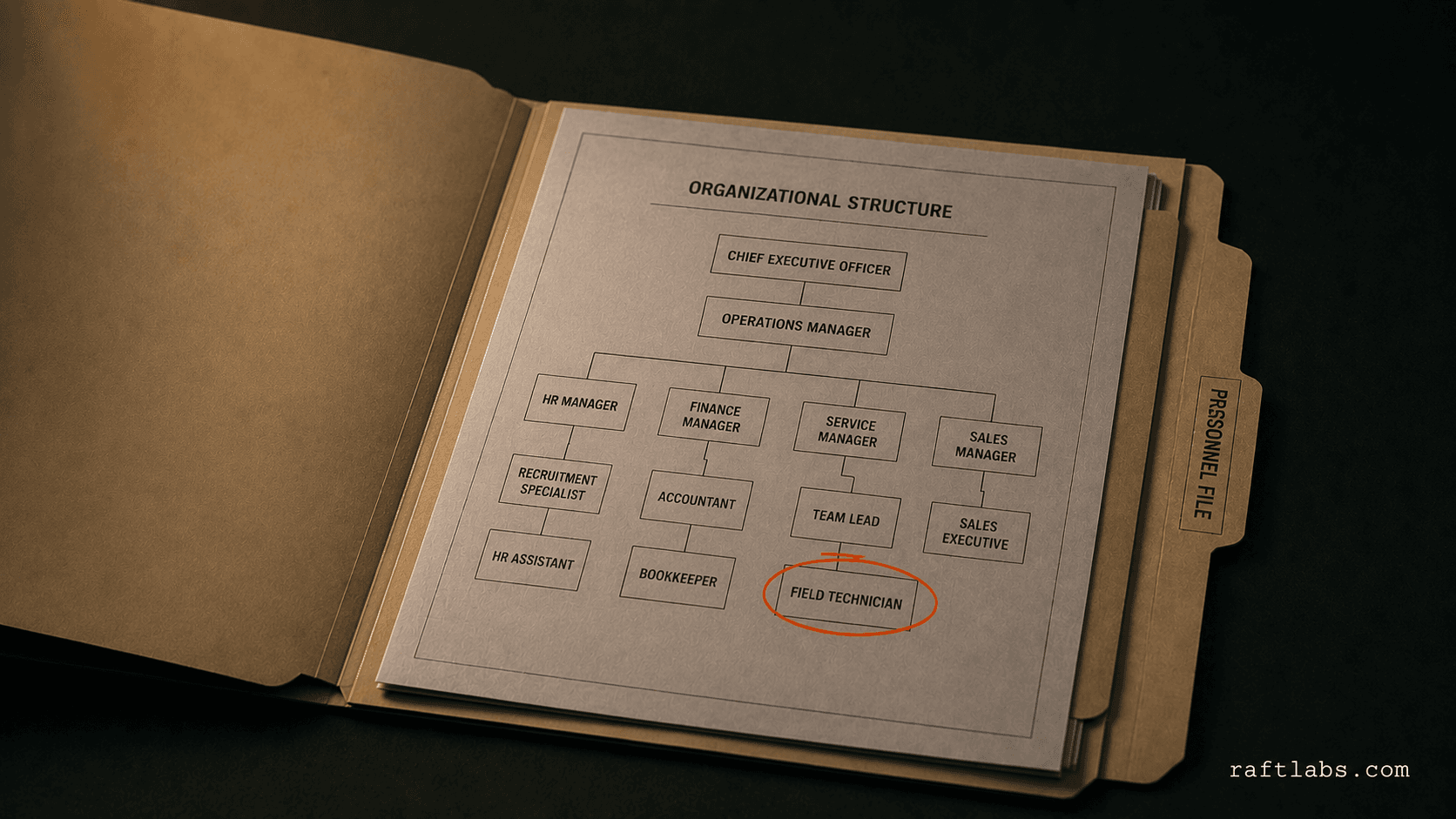
Article
HR Software Development: What It Costs to Build a Workday-Class Platform in 2026
Enterprise companies pay $100-$250 per employee per year for Workday. Custom HR software development for your actual org structure costs $100K-$180K once. Here is what it takes, who should build it, and where these projects break down.
Read more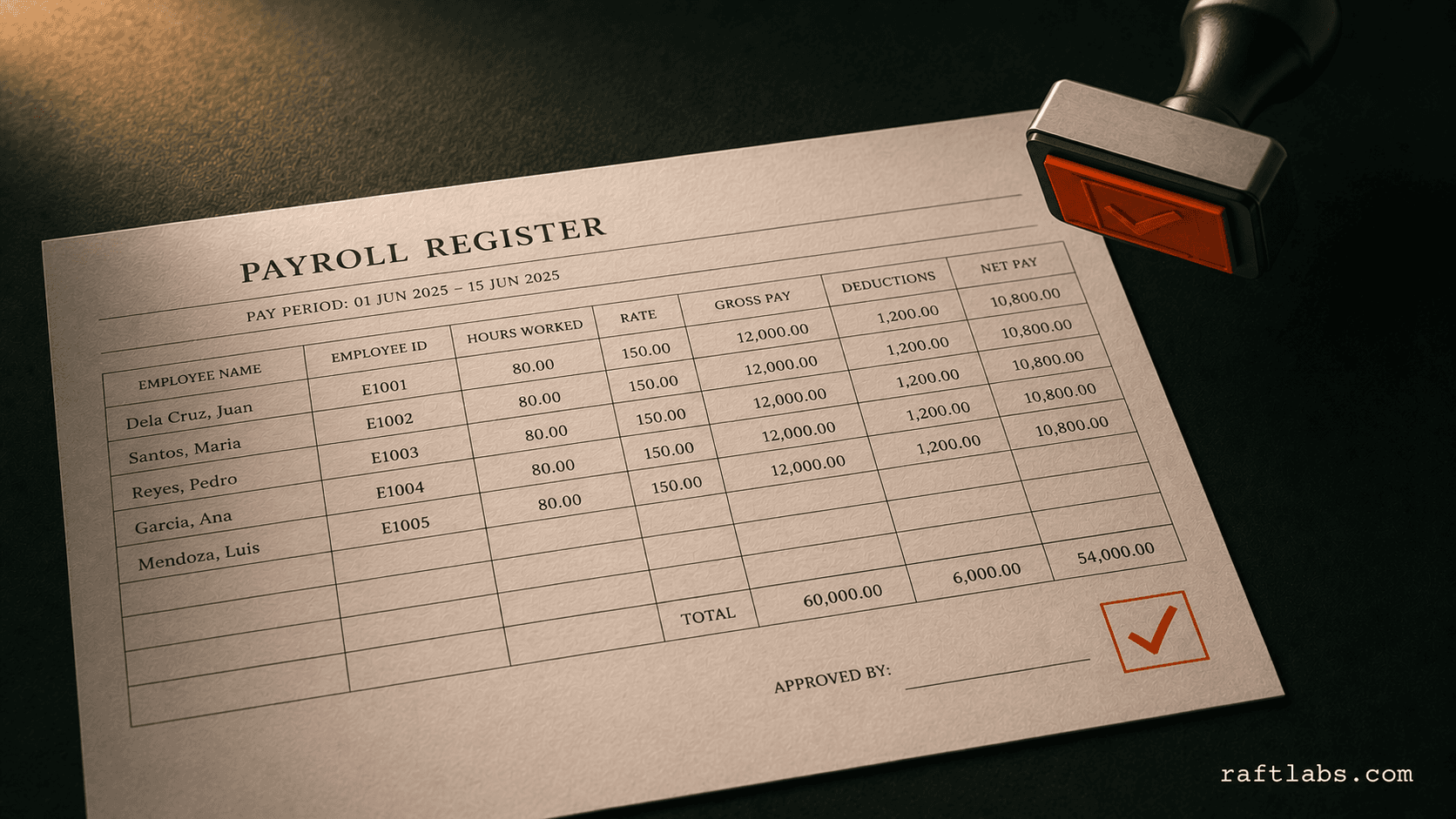
Article
How to Build a Payroll and HR App Like Gusto for Your Vertical SaaS
A custom payroll and HR app like Gusto costs $80,000-$180,000 and takes 16-26 weeks. Here is who actually builds one, how to phase the features, and the three integration points where most projects stall.
Read more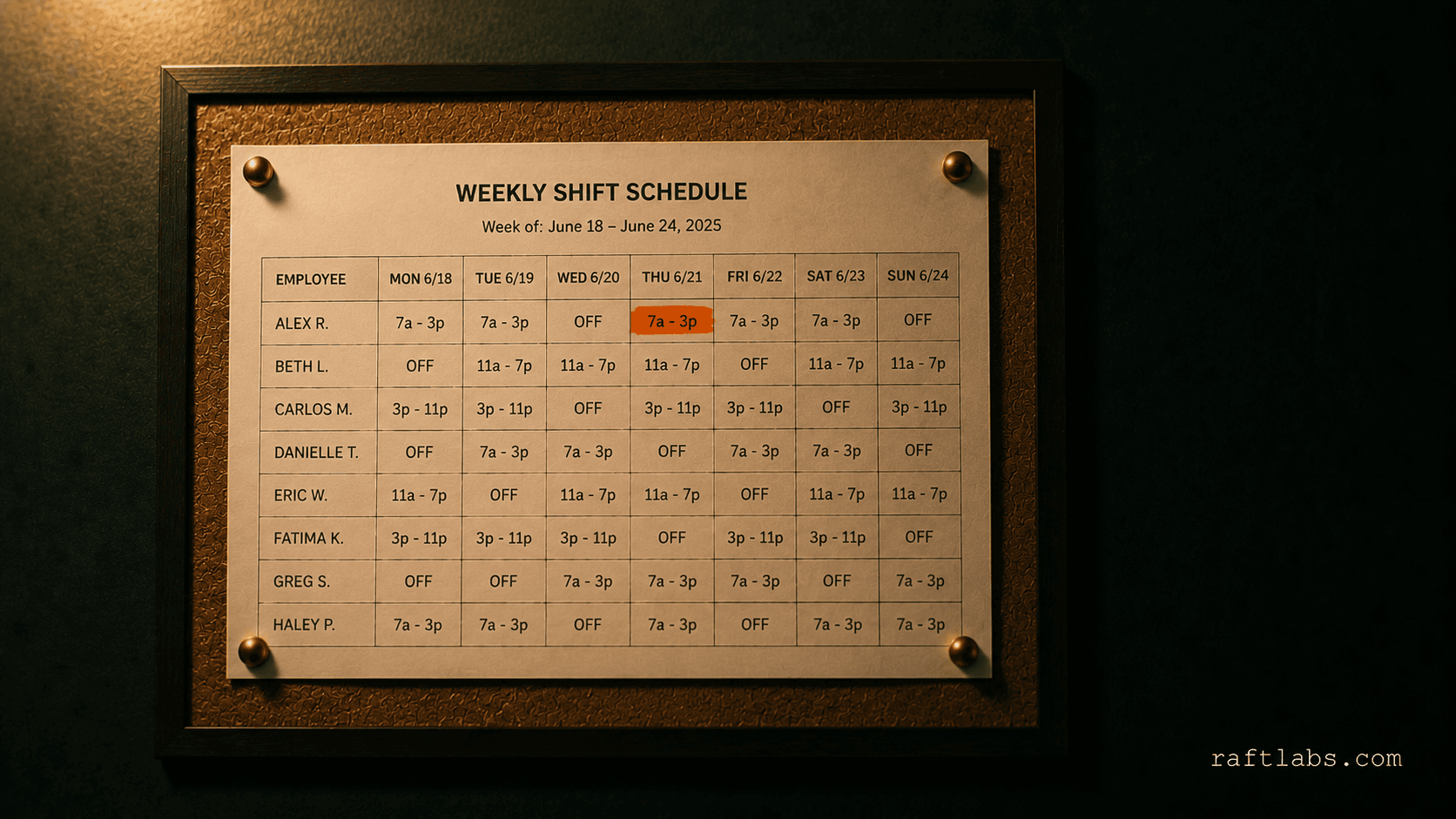
Article
Restaurant scheduling: Stop spending 3 hours a week on shift planning
Restaurant managers spend 3+ hours per week building schedules on spreadsheets and group texts. Then half the shifts get swapped anyway. Labor runs 30-35% of revenue, profit margins sit at 3-5%, and one overstaffed Tuesday can erase an entire shift's profit. Here's how to fix the scheduling problem that's silently bleeding your margins.
Read more
Article
Legal Practice Management Software: Build Custom or Keep Paying Clio?
Clio charges $49-$129 per user per month. A 20-attorney firm pays up to $31K per year. Custom legal practice management software costs $70K-$130K to build once. Here is who builds it, what it costs by phase, and where these projects break down.
Read more
Article
HR Automation Software: What to Automate, What to Buy, and What to Build
HR teams spend 73% of their time on administrative tasks that software could handle. The question is not whether to automate. It is which workflows to buy off-the-shelf and which to build custom. Here is the decision guide.
Read moreAI resume screening works by applying a scoring model to incoming applications based on criteria defined from the role requirements. The model extracts structured signals from CVs, skills mentioned, years of experience in relevant areas, education background, previous role titles and company types, and scores each application against the defined criteria. The output is a ranked list of candidates with the scoring factors surfaced, so the recruiter sees why each candidate ranked where they did. The bias question is important and requires honest treatment. If the training data used to build the model reflects historical hiring patterns that contained bias, for example, if a company historically hired predominantly from certain universities, a model trained on that data will reproduce the bias. We address this by: not using historical hiring decisions as training data for candidate scoring, defining scoring criteria explicitly with the hiring team before the model is built, making scoring factors transparent and auditable so recruiters can see and override the logic, and testing scoring distributions across demographic groups before deployment. AI screening should reduce the time spent on screening, not replace recruiter judgment on final candidate selection.
Employee churn prediction models work best with a combination of HR system data and engagement signal data. HR system data includes: tenure, role, level, compensation relative to band, time since last promotion, manager history, and team stability (how many direct manager changes in the last 24 months). Engagement signal data includes: engagement survey scores over time, performance review ratings, participation in development programs, and absenteeism trends. The model learns which combinations of these signals correlate with employees who left within a defined future window. For the model to be useful, you typically need at least 12-24 months of historical data and a sufficient number of past departures (at least 50-100) to train a reliable signal from. If your data is thin, we design a data collection program and build the model when sufficient data has accumulated rather than building on insufficient data and producing unreliable predictions.
Workforce planning AI supports headcount decisions by providing data that makes the planning process less dependent on intuition and more grounded in current evidence. A workforce planning tool answers questions like: given current attrition rates and hiring speed, what headcount will we have in each department in six months if we take no action? What roles have the longest time-to-hire and should be opened earliest in the planning cycle? If we lose our top three performers in engineering, what does that do to project delivery capacity? What is the cost per hire by role type and department, and how does it compare across hiring channels? Workforce planning tools connect HR data, finance data, and operational data to provide decision support for HR leaders and department heads in the planning process. They do not make headcount decisions. They make the data available to support the humans making them.
Yes. We build AI layers on top of your existing HRIS rather than replacing it. Most HR AI systems we build connect to HRIS platforms via API (Workday, BambooHR, Personio, HiBob, Greenhouse, Lever, and similar) or via data export for platforms with limited API access. The AI system reads data from the HRIS, applies its models, and either presents output through a separate interface or writes results back to the HRIS (for example, adding a candidate rank score to an ATS application record). We assess your specific HRIS and ATS integrations during scoping and confirm what data is accessible before design begins. If your HRIS data quality is a limiting factor, we address that in the design as well, AI built on inconsistent HR data will produce inconsistent outputs.
HR AI projects at RaftLabs typically run from $55,000 to $180,000 depending on scope. A focused resume screening integration with an existing ATS sits at the lower end. A full system combining churn prediction, workforce planning dashboards, and an HR chatbot sits at the upper end. Every project is scoped and priced in writing before development starts. No cost surprises at invoice time.
When a candidate applies, the system calls them or sends a scheduling link, then conducts a structured interview: the same questions in the same order for every candidate, with natural follow-up on vague answers. A post-call pipeline transcribes the call (Deepgram), scores responses against your rubric (GPT-4o), and writes a ranked summary to the ATS, no recruiter has to listen to a recording. Disclosure that the call is AI-conducted is mandatory and delivered naturally at the start. In practice, drop-off from that disclosure is lower than drop-off from scheduling delays: manual screening typically takes 3-5 business days to first contact, AI screening happens within hours of application, and 11pm screens are common because candidates can do it on their own schedule.
Yes. We sign NDAs before any scoping discussions involving sensitive HRIS data, employee records, or proprietary HR processes. HR projects frequently involve personal data protected under GDPR, HIPAA, or equivalent local laws. Our standard engagement includes a data processing agreement that covers how employee data is handled during the build, and we scope compliance requirements in week 1, not as an afterthought.
Work with us
Bring the rough workflow, half-built product, or messy brief. We will map the smallest useful first move, then send scope, timeline, and price in plain English.