Online pharmacies, pharmacy chains, and medication delivery services that have outgrown generic dispensing software hit the same ceiling: prescription workflows that don't match how your pharmacists actually work, no real-time drug interaction checking at the point of order, and delivery logistics that treat temperature-sensitive medications like any other parcel. The answer is software built around your actual dispensing model, compliance obligations, and fulfillment operation.
Prescription management systems with DEA EPCS workflows, NCPDP SCRIPT integration, and automated drug interaction checks at the point of order
Medication ordering and fulfillment platforms with inventory tracking, pharmacist queues, and patient-facing ordering apps
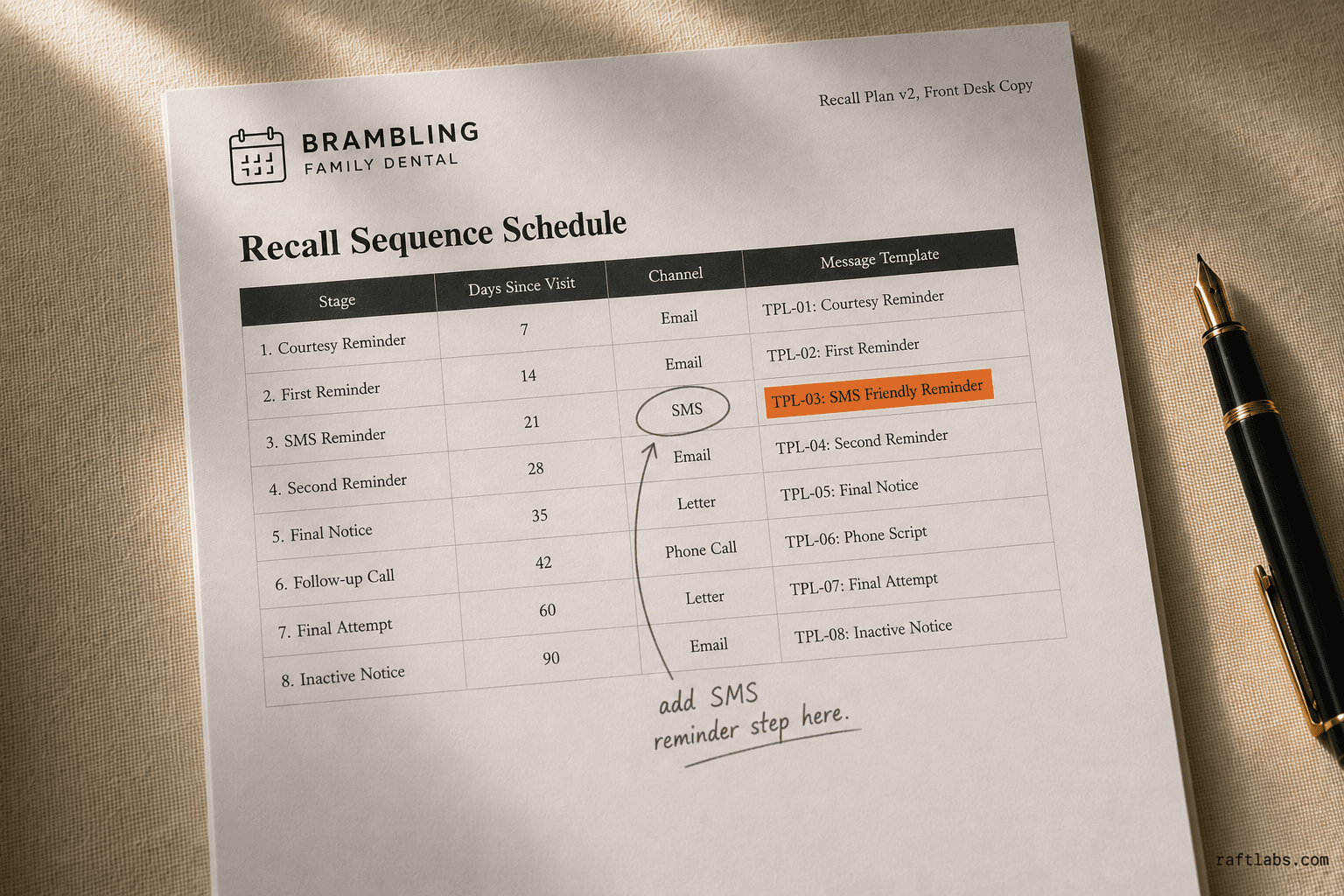
Adherence reminder systems with refill forecasting, push notifications, and pharmacist escalation workflows for high-risk patients
Cold-chain delivery tracking with real-time temperature monitoring, chain-of-custody logging, and automated compliance alerts
The problem
Sound familiar?
Pharmacists manually checking drug interactions on a separate database because your dispensing system doesn't flag them at the point of prescription entry?
Running cold-chain medication deliveries without real-time temperature logging, so you can't prove the chain of custody to regulators or customers?
Patients missing refills because your reminder system is a bulk SMS blast with no awareness of individual adherence history?
Short answer
RaftLabs builds custom pharmacy software: prescription management with DEA EPCS and NCPDP SCRIPT, dispensing and inventory, drug-interaction (DUR) checking, adherence platforms, and cold-chain delivery tracking. HIPAA and pharmacy-licensing controls are designed in from sprint one. A first module launches as a validated v1 in 12 to 16 weeks from around $30K; the full platform grows to $100K to $150K.
What is pharmacy management software?
Pharmacy management software covers the digital systems that run a pharmacy. That means prescription intake and validation, dispensing queue management, drug interaction and allergy checking, patient-facing ordering apps, adherence tracking, inventory control, and delivery logistics with cold-chain monitoring. Custom software earns its place when generic dispensing platforms cannot support the compliance obligations, fulfillment model, or patient engagement workflows a pharmacy business needs.
01 Diagnosis
Problems we solve in e-pharmacy software
01
Problem
Nothing else in the chain gets faster while the front door stays slow
Solution
Intake is the bottleneck in specialty and digital pharmacy. Intake taking two to three days means nothing else in the chain gets faster while the front door stays slow. E-scripts arrive formatted inconsistently, requiring manual cleanup every fill. Rejections sit unresolved because no one has bandwidth to work the queue. We build intake workflows that normalize incoming prescriptions, match the e-scribed drug to the drug in stock, and route clean prescriptions straight to the dispensing queue. The outcome is intake measured in hours, not days.
02
Problem
The patient profiles just get super messy
Solution
E-prescribing doesn't discontinue the old prescription, so someone has to go back and manually keep the profile updated. A lot of the time the profiles just get super messy: contradictory sigs, duplicate therapies, and medication histories nobody trusts. We build profile hygiene into the dispensing workflow: discontinued prescriptions flagged automatically, duplicate therapy caught at entry, and a medication history the pharmacist can actually read. The outcome is profiles your pharmacists trust.
03
Problem
Your refill reminders don't know why the patient stopped
Solution
A bulk SMS reminder at day 25 of a 30-day supply works for patients who consistently refill on time. It misses the ones who typically wait until day 35 and run out, and it annoys the ones who already refilled. Worse, it does nothing for patients on chronic medications who have quietly stopped taking them. An adherence system forecasts each patient's likely refill date from actual pick-up history, sends a personalized reminder at the right moment, and flags patients whose refill gap suggests they have stopped a chronic medication. That gives your pharmacists a manageable intervention queue rather than a population they cannot act on. The outcome starts with a simple question: did you get that prescription filled yet, and if not, what's stopping you?
04
Problem
What the app shows has to match what's actually on the shelf
Solution
Inventory sync across multiple pharmacies is a constant headache: what the app shows has to match what's actually sitting on the shelf. Controlled substance inventory discrepancies that surface only during end-of-day counts create a compliance and diversion risk. A perpetual inventory system decrements controlled substance counts at the point of dispensing, reconciles against the dispensing record in real time, and alerts your pharmacist-in-charge when a running count diverges from the expected quantity. The outcome is continuous visibility instead of daily snapshots.
02 What we ship
e-Pharmacy software we ship
01
Prescription management systems
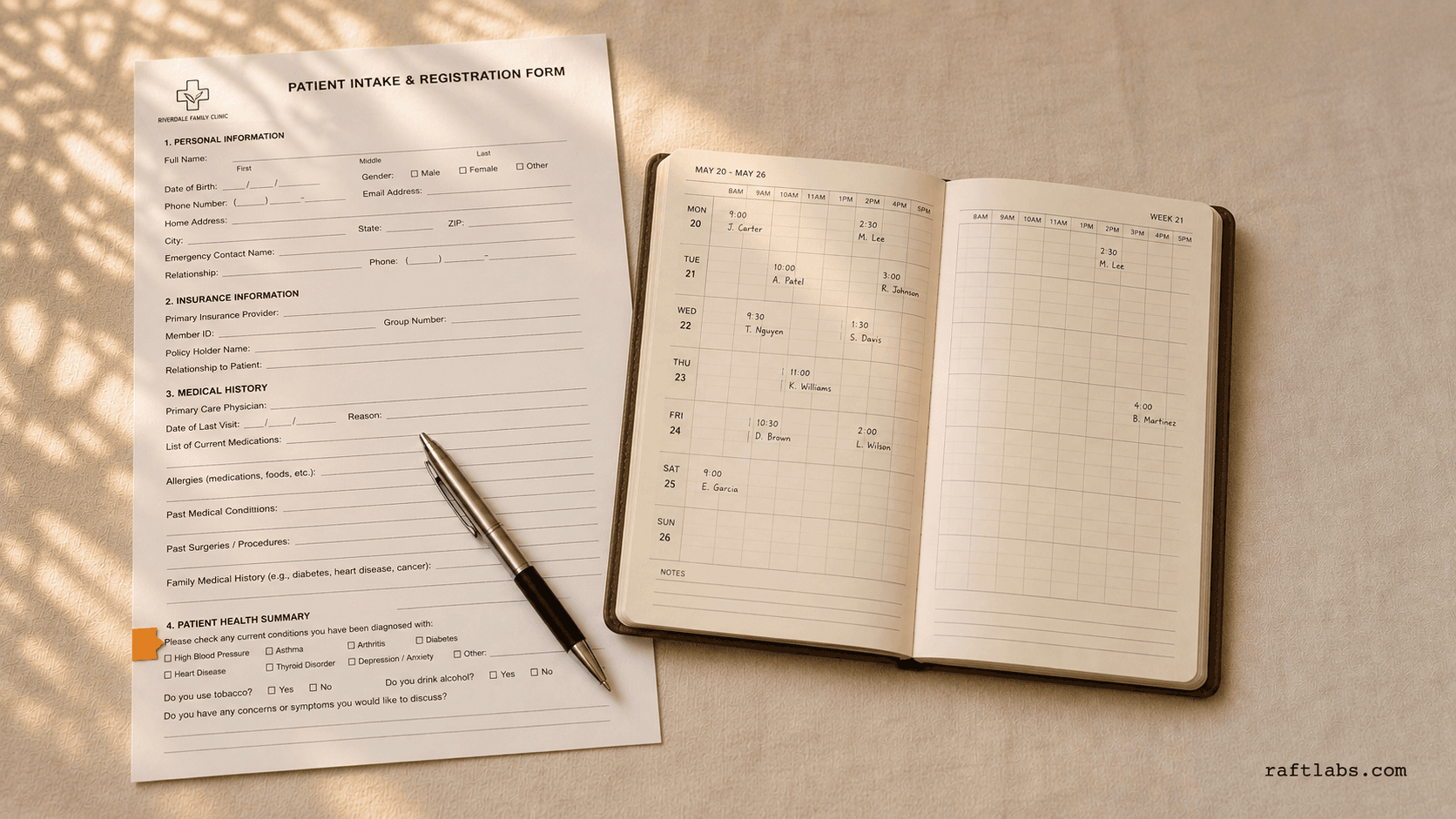
We build electronic prescribing and prescription intake systems that handle the full prescription lifecycle from digital receipt or patient request through pharmacist review, DUR checking, dispensing queue management, and dispensing confirmation. DEA EPCS workflows for Schedule II to V controlled substances include two-factor authentication, identity proofing, PDMP checks before dispensing, and a tamper-evident audit trail that satisfies DEA requirements. NCPDP SCRIPT integration handles electronic prescription messaging between prescribers and your pharmacy system. Drug utilization review runs at the point of entry: interactions, allergies, duplicate therapy, and dosage appropriateness checked against the patient's complete medication history. The outcome is pharmacists reviewing flagged cases instead of checking every prescription from scratch.
02
Patient medication ordering apps
Patient-facing iOS and Android apps cover prescription uploads, refill requests, over-the-counter medication ordering, order status tracking, and delivery scheduling. Prescription upload with optical character recognition parses handwritten and printed prescriptions and routes them to your dispensing queue for pharmacist review. Insurance verification and prior authorization status surfaces in the patient's order view so they know their out-of-pocket cost before checkout. Refill reminders are personalized to each patient's actual pick-up history, not a fixed-day schedule. The outcome is an ordering channel patients use instead of calling.
03
Medication adherence platforms
Adherence platforms do more than send reminders. They track whether patients actually picked up their prescription at the forecast refill date and flag the gap when they didn't. Integration with your dispensing system means the adherence platform knows the precise fill history without patient self-reporting. Patients on chronic medications get a pharmacist follow-up call or message when their adherence pattern suggests they have stopped. Risk stratification scores patients by adherence risk using fill history, medication type, and payer data. High-risk patients get outreach before they miss a dose, not after. The outcome is measurable adherence, not sent reminders.
04
Pharmacy inventory and dispensing management
Inventory management covers perpetual inventory tracking, automatic reorder triggering, supplier purchase orders, receiving workflows, and expiry date management across multiple dispensing locations. Controlled substance inventory runs as a perpetual count: every dispense decrements the running total, and any divergence from the expected quantity triggers an alert to the pharmacist-in-charge. Dispensing queue management routes prescriptions to the right pharmacist or technician based on prescription type, workload, and urgency. Prior authorization status tracking keeps prescriptions with pending PA requests in a separate queue so they don't block the main dispensing flow. The outcome is inventory you trust without the daily count.
05
Cold-chain delivery tracking
Temperature-sensitive medications need a tracking system that records temperature, not just location. We build cold-chain tracking that integrates with IoT-enabled packaging sensors, records temperature readings throughout the delivery journey, and alerts the delivery team and your pharmacy operations staff when a reading falls outside the acceptable range. Chain-of-custody logging records every handoff point with a timestamp, the responsible party, and the temperature reading at transfer. Patients receive a delivery confirmation with the chain-of-custody summary. The outcome is proof the medication was handled correctly, in the data.
06
Pharmacy automation and workflow integration
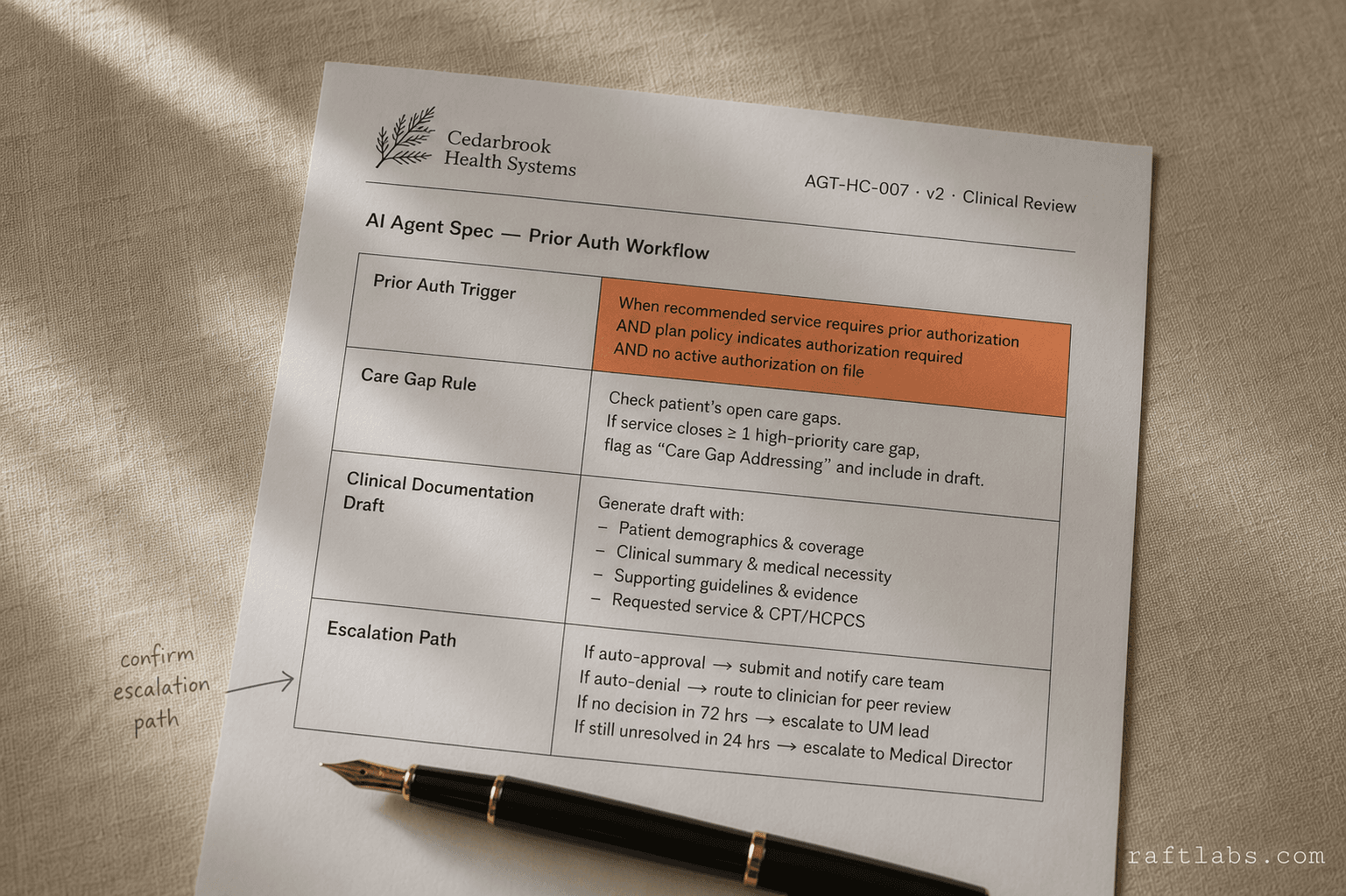
Prior authorization workflows are a significant source of pharmacist time loss. We build automation that submits PA requests to payer portals, tracks status, and routes approved and denied responses back into the dispensing queue without pharmacist intervention for straightforward cases. Pharmacists handle exceptions and appeals rather than managing the entire PA process manually. Integration connects your pharmacy system to the surrounding ecosystem: EHR systems, payer portals, Surescripts, and state prescription drug monitoring programs. The outcome is pharmacists doing pharmacy work instead of paperwork.
03 Buy, build, or wait
The e-pharmacy software decision is usually about the dispensing model: what the platform assumes, and what your operation actually does.
Configure the platform
QS1, EnterpriseRx, PioneerRx
Off-the-shelf pharmacy management systems handle standard dispensing workflows well.
Build custom
When intake is the bottleneck
Nothing else in the chain gets faster while the front door stays slow. Custom intake normalizes prescriptions and routes clean ones straight through.
When fulfillment is non-standard
Specialty pharmacy workflows, custom cold-chain tracking, adherence platforms integrated with payers and care managers.
When compliance varies by state
What's compliant in one state may not be in the next. The system encodes your licensing footprint from the start.
Bottom line
Configure the platform while it fits. Build when the dispensing model doesn't.
04 How we work
How we build e-pharmacy software
01
Compliance and discovery scoping
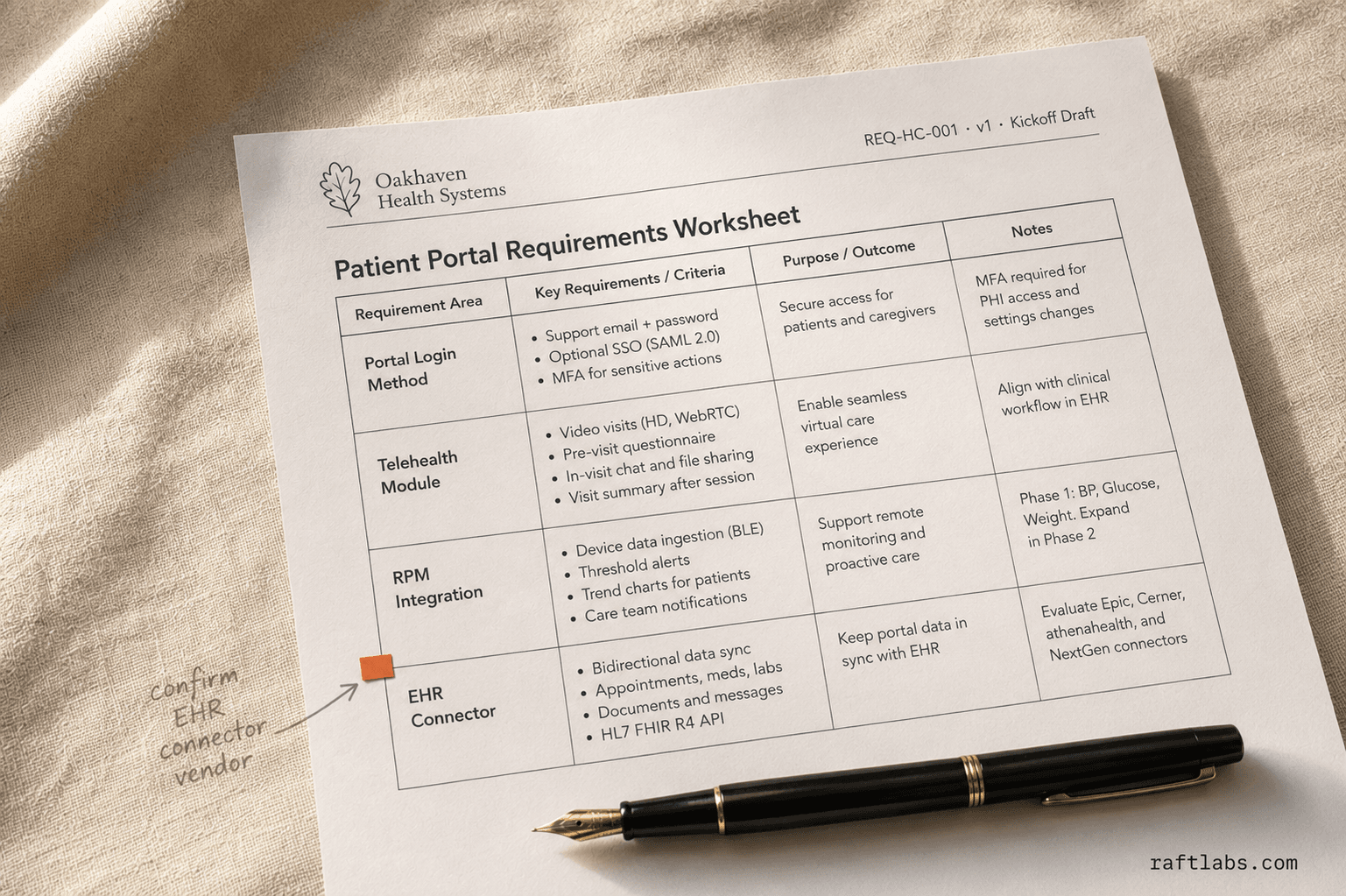
Two to three weeks mapping your dispensing model, regulatory obligations, and integration landscape. We identify every system your pharmacy platform needs to connect to: EHRs, payer portals, Surescripts, state PDMPs, drug wholesalers, and delivery logistics providers. DEA EPCS requirements for controlled substances, HIPAA data handling obligations, and NCPDP SCRIPT messaging specifications are scoped here. The risk this retires: the integration dependency discovered in month four.
02
Architecture and data model
We design the data model around your specific dispensing and compliance requirements: the prescription data schema, the perpetual inventory structure, the audit log design for controlled substances, and the integration layer for each connected system. Drug interaction checking, adherence scoring logic, and cold-chain alert rules are specified before any feature is built. HL7 FHIR R4 integration is prototyped in the first sprint because it is the most common source of late-project surprises. The risk this retires: the EHR integration that doesn't fit the data model.
03
Build and compliance-in-sprint
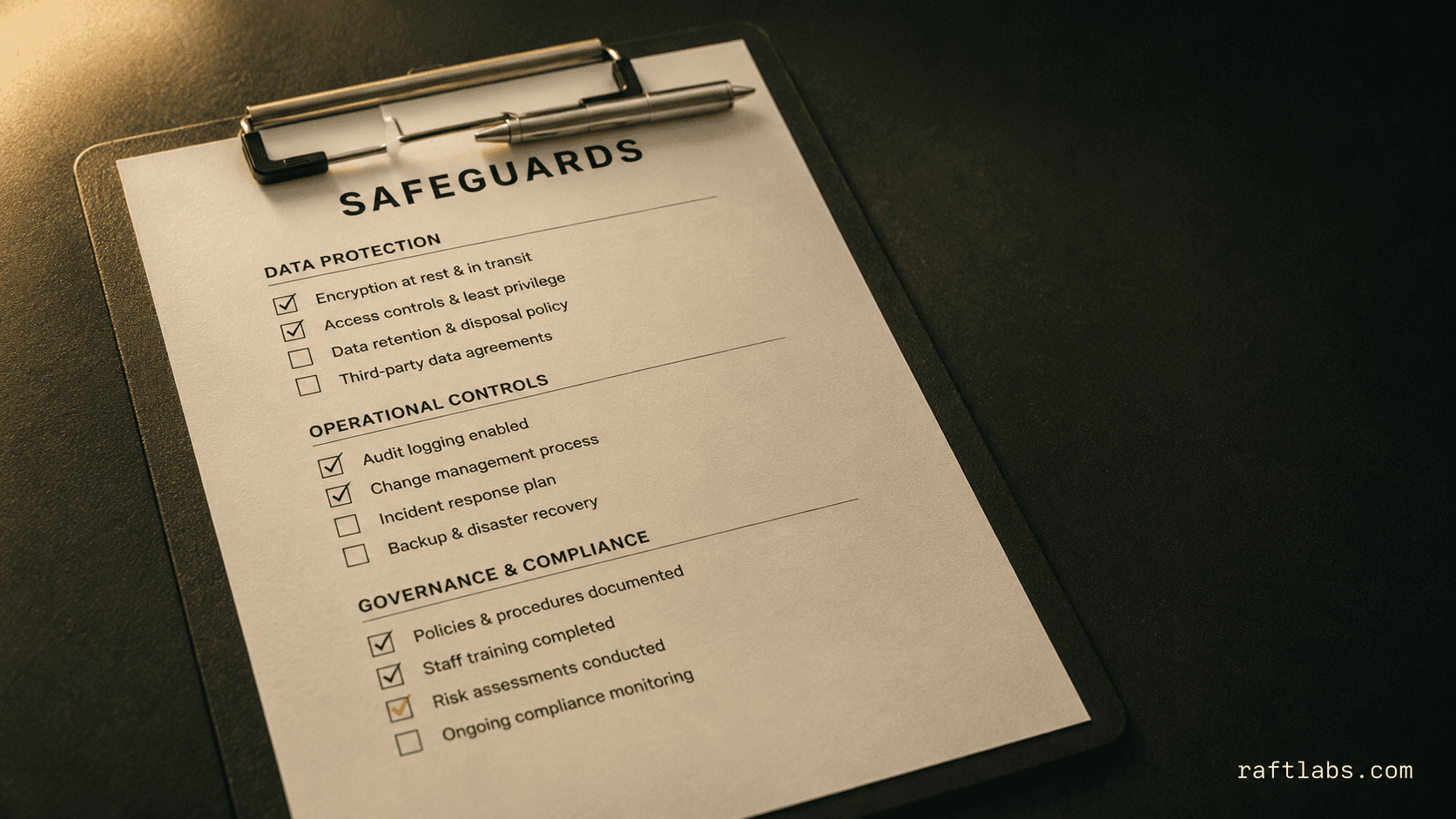
Two-week sprints where HIPAA data handling and DEA audit trail requirements are part of the definition of done for every feature. Prescription management and dispensing queue ship first. Patient-facing ordering, adherence logic, inventory management, and delivery tracking follow in subsequent sprints. You review working software at each checkpoint, not design mockups. The risk this retires: the compliance gap discovered at regulatory review.
04
Go-live and operational handoff
Phased go-live starting with a controlled prescription volume before full rollout. Monitoring covers prescription processing errors, controlled substance discrepancy alerts, cold-chain exceptions, and system performance under peak dispensing load. Post-launch support handles regulatory changes, payer integration updates, and feature additions as your prescription volume grows. The risk this retires: the peak-load failure on launch week.
Trusted by
05 Track record
What e-pharmacy businesses get when they work with us
01
To launch a validated v1, then iterate toward the full platform
12-16 wks
02
PHI handling, audit trails, and BAAs designed in from sprint one
HIPAA
03
Project cost agreed before development starts
Fixed
04
Shipping production software across healthcare, fintech, and logistics
Since 2015
Regulated-healthcare delivery behind this work
E-pharmacy software sits under the same compliance regime as the rest of healthcare IT, and that is where our delivery record sits. We built a remote patient monitoring platform for a US clinical provider with HIPAA-grade access controls, and an EHR-integrated telehealth platform for a US healthcare client. Both handle protected health information with the encryption, audit-trail, and HL7 FHIR integration discipline a pharmacy build depends on. The prescription, dispensing, and adherence systems above draw on that same regulated-software practice. Ask us for a walkthrough and we will map it to your dispensing model directly.
08 Why us
Why choose us?
01
We've seen your problem before
Across dozens of industries, we recognise your situation fast, then frame the fix around your margin and your operations, not a generic template.
02
We own the number, not the ticket
We measure success the way you do: hours saved, revenue earned, margin recovered. We stay through launch and growth, so the result is ours to own.
03
Serious businesses trust us
Vodafone, T-Mobile, Cisco, Energia, Aldi, Nike. Building since 2015. Serious businesses keep coming back because we stay accountable long after launch.
09 Questions
Common questions
Yes. Electronic prescribing for controlled substances requires DEA-compliant identity proofing, two-factor authentication, and a tamper-evident audit trail for every controlled substance prescription. NCPDP SCRIPT is the standard messaging format for electronic prescription routing between prescribers and pharmacies. We design these compliance requirements into the system architecture before any code is written, not retrofitted once a regulatory review surfaces the gaps.
Yes. Pharmacy platforms commonly exchange prescription and medication data with EHR systems via HL7 FHIR R4 APIs, which Epic, Cerner, and most modern EHRs support. Older systems use HL7 v2 messaging. We scope the EHR integration during discovery because it is usually the highest-risk dependency and prototype it in the first sprint to catch API surface limitations before they affect the build schedule.
A first module, usually prescription management or a patient-facing ordering app, launches as a validated v1 in 12 to 16 weeks and starts around $30,000 to $50,000. The full e-pharmacy platform (prescription intake, dispensing workflows, inventory, adherence reminders, and delivery tracking) grows to $100,000 to $150,000 over time as you add modules and integrations. Cost is fixed and agreed before development starts.
US online pharmacies operate under state board of pharmacy licensing and, for consumer trust, NABP .Pharmacy or VIPPS accreditation, which set rules for how a pharmacy verifies prescriptions, displays licensure, and protects patient data. DEA registration adds scheduled-drug controls for Schedule II to V substances: dispensing limits, PDMP checks before dispensing, and the EPCS audit trail. We build these controls into the dispensing workflow rather than leaving them as manual steps, and we design the audit and reporting so a state board or DEA inspection can be answered from the data.
Pharmacy software handles protected health information at every step: prescription data, medication history, and delivery addresses. HIPAA-aware architecture means data encryption at rest and in transit, role-based access controls limiting PHI to authorized users, audit logs capturing every access and modification event, and business associate agreement coverage for every infrastructure provider. These controls are designed in from sprint one.
Off-the-shelf pharmacy management systems handle standard dispensing workflows well. Custom software is the right choice in four cases. A specialty pharmacy with non-standard fulfillment workflows. A medication delivery service needing custom cold-chain tracking. A medication adherence platform integrating with payers and care managers. Or a pharmacy chain that needs a white-label patient app. We scope which parts need to be custom during discovery and which can integrate with existing systems.
Yes. Adherence apps that pull actual fill data from your dispensing system are more accurate than apps that rely on patient self-reporting. We integrate adherence platforms with dispensing systems via HL7 FHIR R4 or direct database integration depending on what your dispensing system exposes. Adherence data can be sent back to prescribers' EHRs so the clinical team sees the same picture your pharmacist sees. Risk stratification, personalized reminders, and pharmacist escalation queues for high-risk patients are standard parts of an adherence platform we build.
Pharmacists have earned that skepticism: legacy dispensing systems are described by the people who use them as painful, and system switchovers are dreaded, not welcomed. We design around the pharmacist's actual workflow, not an idealized one. The dispensing queue, the DUR flags, and the PA workflow all mirror how the pharmacy already works. Pharmacists test working software in every sprint, and the system ships when your team can run a full dispensing day on it without workarounds.