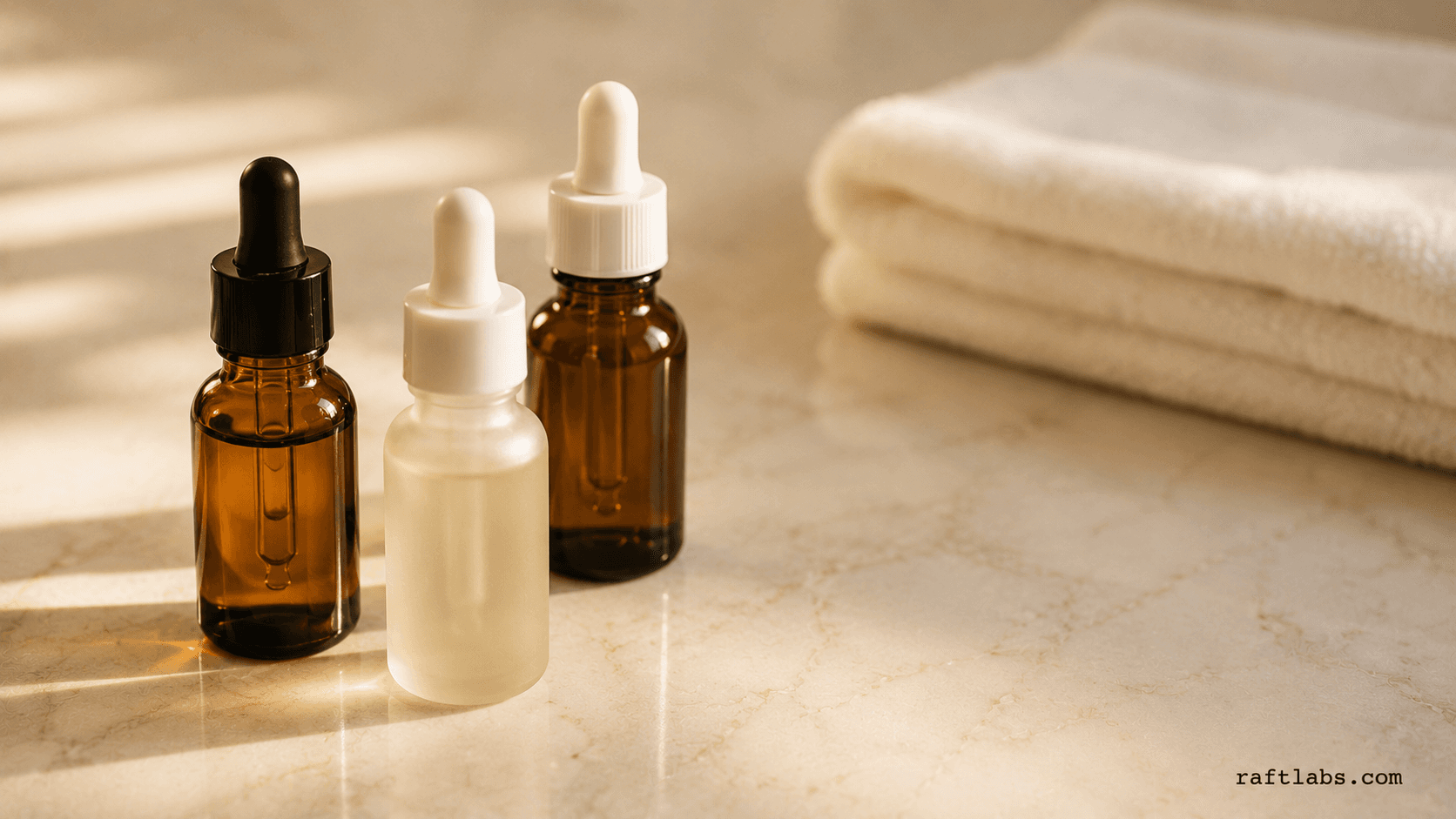
Beauty industry software that fits how you run
Beauty businesses lose clients between visits. The appointment gets booked, the service gets delivered, and then nothing: no automated follow-up, no loyalty incentive to return, no data connecting what a client spent to what they earned. Off-the-shelf booking tools book the appointment. We build the beauty industry software that keeps the client coming back.
We've been shipping production software since 2015. We build for beauty business owners and operators who need software that fits how they run, not a generic platform that approximates it.
Salon and spa management with booking, staff, and POS
Beauty service marketplace with provider profiles and booking
Online booking system with automated reminders and waitlists
Beauty e-commerce with product and subscription selling
3+ years RetentionWeek 1 First milestoneFixed price Pricing
The problem
Sound familiar?
Running a salon or spa where appointments, staff schedules, and client records live across a booking tool, a spreadsheet, and a POS that don't connect, so staff changes in one don't reflect in the others?
Got a beauty marketplace idea that needs provider profiles, availability booking, and payment in one place but right now it's just a directory with a contact form?
Short answer
Beauty industry software runs salon and spa management, booking, e-commerce, and loyalty in one custom system. It fits when Fresha, Vagaro, or Mindbody can't handle your multi-location setup, commission rules, or marketplace model. RaftLabs built a loyalty app for a California medical spa that clears QR checkout in under 15 seconds. Most projects launch a validated v1 in 10-14 weeks at a fixed cost.
Trusted by



























- Shipping production software
- Since 2015
- Project cost
- Fixed
- To a live v1
- 10-14 wk
- Clutch rating
- 4.9/5
Beauty businesses run on software that wasn't built for them
Most beauty industry software was built for the average business: a single location, a basic staff rota, a standard booking flow. When your operation is more complex, multi-location, commission-heavy, with a retail component and a loyalty programme, the off-the-shelf platforms start to show their limits.
Beauty marketplace operators have it worse. The tools available are either generic classifieds platforms with no booking or payment capability, or full e-commerce platforms not designed for service providers with variable availability. A marketplace that can't confirm a booking and take payment in the same flow is a directory, not a marketplace. We build the software that fits your actual business model.
Problems we solve in beauty
- 01Problem
Your stylists' commission calculations take half a day each pay period because the booking and POS systems don't share data
SolutionWhen commission is calculated by cross-referencing the booking system with the POS transaction log in a spreadsheet, the process takes time and produces disputes when the numbers don't match. For a multi-stylist salon with tiered commission structures and retail sales included, the calculation is complex enough to generate errors every cycle. A connected system calculates commission automatically from the completed booking and POS records and produces a payroll-ready report without the manual step.
- 02Problem
No-show appointments leave chairs empty with no automated way to fill the slot
SolutionWhen a client doesn't show for their appointment and there's no waitlist system to fill the slot, that chair or room earns nothing for that time. Salons and spas carry one of the highest no-show rates of any appointment-based business, around 30% (Phorest, 2023). Deposits taken at booking plus automated reminders cut that rate to roughly 3 to 5 percent. For a four-therapist spa, that gap represents a material difference in weekly revenue. A booking system with automated reminders sent 48 and 24 hours before the appointment, a deposit at booking to create a cancellation cost, and a waitlist that automatically offers the freed slot to the next person reduces no-show impact without manual intervention.
- 03Problem
Your beauty marketplace sends enquiries to providers who respond manually, which means your platform has no confirmed booking data
SolutionWhen your marketplace routes a client to a provider via a contact form or phone number rather than confirming a booking in the platform, you lose visibility of whether the booking happened, the client's data, and any ability to take a platform commission. The provider gets the booking. You get nothing except a contact form submission. A true marketplace requires real-time availability from each provider, an in-platform booking flow, and payment processing, so the confirmed booking lives in your system, not in a provider's phone.
- 04Problem
Your e-commerce store and your in-salon retail are separate systems so inventory and subscription data are never in sync
SolutionWhen a client buys a product in the salon and the same client orders the same product online, the inventory deduction happens in two different systems with no connection between them. Products show as available online when they've sold out in-salon. Subscription orders ship from stock that's already committed to in-salon retail. A single inventory layer across both channels keeps the stock position accurate regardless of where the sale happens, and subscription fulfilment is reserved before the retail channel can oversell.
What we build
Salon and spa management software
Appointment booking with staff assignment and room management. Client profiles storing service history, colour formulas, and preferences. Staff rotas, commission tracking, and payroll reporting. Product inventory and retail sales. POS and payment processing. Multi-location support for salon chains. One connected system that replaces the booking tool, the spreadsheet, and the POS.
Beauty service marketplace
Provider profiles for hairdressers, beauticians, makeup artists, nail technicians, and massage therapists. Live availability calendar so clients see real slots rather than submitting an enquiry form. Booking and payment in one flow. Verified review system linked to confirmed bookings. Provider payout management with configurable commission and fees. A true bookable platform, not just a directory.
Online booking and scheduling
Online booking for salons, spas, and individual beauty professionals: embeddable widget or standalone booking site. Real-time availability with staff selection. Automated SMS and email reminders to reduce no-shows. Waitlist management for popular time slots. Deposit and prepayment collection at booking. Works with your existing site and POS without replacing them.
Beauty e-commerce platform
E-commerce for beauty brands selling direct-to-consumer: product listings, subscription boxes, bundles, and professional-only ranges. Recurring billing with pause and skip mechanics. Loyalty points for repeat customers. Wholesale portal for professional buyers with trade pricing. Integration with your existing fulfilment and inventory systems. Built for beauty brands who need more control than a standard Shopify theme gives.
Loyalty and membership programmes
Loyalty programmes for salons, spas, and beauty brands: points on services and retail purchases, reward redemption, and tier progression. Membership plans with recurring billing, included services, and member-only pricing. Client retention reporting showing rebooking rates, visit frequency, and revenue per client. Loyalty data captured automatically via booking and POS integration, so staff don't have to remember to apply it.
Beauty brand and professional tools
Tools for beauty brands and professional-facing businesses: education and certification platforms for beauty professionals, brand ambassador management, product sample request systems, affiliate and referral programmes, and professional account portals with trade pricing and product access. Built for beauty brands who manage a professional community as well as a consumer business.
How we work with beauty industry clients
- 01
Discovery
We map your booking workflow, commission structure, client data model, and any multi-location or marketplace requirements before design begins. For marketplace projects, we document the provider onboarding flow, availability data structure, and payout logic: the business rules that make your model different from a standard booking platform. - 02
Architecture
We design the data model around the client and provider as primary entities: booking history, commission calculation logic, inventory across channels, and loyalty event capture. Integration points with your existing POS, payment processors, and marketing tools are confirmed before development begins. - 03
Build
Two-week sprints with working software at each checkpoint. Core booking and client management ships first. Commission tracking, loyalty, e-commerce, and marketplace features follow in subsequent sprints, so you can validate the core workflow with real bookings before the secondary features are built. - 04
Launch and support
We migrate your existing client records, booking history, and loyalty balances before go-live so no client data is lost in the transition. Post-launch support covers new location additions, platform configuration changes, and feature expansions as your business grows.
Common questions
Off-the-shelf platforms work well for straightforward single-location businesses with standard booking and POS needs. Custom software makes sense when: your commission structure or multi-location setup requires logic the platform can't configure; you want client data, formulas, preferences, and purchase history owned and controlled by your business rather than held in a vendor's system; your marketplace or multi-provider model doesn't fit a standard salon platform; or you need deep integration with retail, e-commerce, or loyalty systems that the platform's integrations can't support. If a well-configured off-the-shelf platform would work, we'll tell you that. Custom development carries ongoing maintenance cost that platforms absorb for you.
A directory lists providers with their contact details. A marketplace lets clients find a provider, see their real availability, book a specific service, and pay without leaving the platform. The booking and payment step is what makes it a marketplace. Without it, you're building a lead generation tool that routes clients off-platform to book by phone or a contact form. Most beauty marketplace projects we take on start as directories the owner wants to convert into a true booking platform. The core build is: provider availability calendars, an in-platform booking flow, and payment processing with provider payouts.
Yes, in most cases. Common POS systems used by salons and spas, Square, Lightspeed, Shopify POS, and others, have APIs we can connect to. The integration means a booking made online flows into the POS as a pending transaction, staff and room assignment is reflected in both systems, and payments taken at checkout update the booking record. If your POS doesn't have an API, we can build a lightweight integration layer or recommend an alternative. We confirm integration capability during scoping before committing to it.
Start with the system that has the most direct impact on revenue and the most friction in your current operation. For most salons and spas, that's the booking and client management layer: getting appointments, client history, and staff schedules in one place. For a beauty marketplace owner, it's the provider availability and booking flow, because without that you don't have a marketplace. E-commerce, loyalty, and advanced reporting are typically built in a second phase once the core booking or marketplace system is running. We scope projects to deliver the highest-value layer first, then expand.
The loyalty programme is most effective when points are awarded and redeemed without staff having to remember to apply them manually. We build the loyalty engine so every qualifying event, a completed appointment, a retail purchase, a referral, automatically posts to the client's loyalty balance by pulling data from the booking system and POS in real time. Redemption is handled at checkout through the POS integration, so the client can apply their reward without a staff member manually adjusting the transaction. This makes the programme visible and reliable to clients without adding steps to the checkout workflow.
Proof
Case studies
Related services
- 01
Loyalty Programme Development
Custom loyalty mechanics for salon and beauty businesses covering treatments, retail purchases, and referrals.
- 02
Business Process Automation
Automate appointment reminders, product reorder triggers, staff commission calculations, and client follow-up.
- 03
AI Chatbot Development
Client-facing booking assistants, treatment consultation pre-screening, and post-visit care instruction bots.
- 04
Custom Software Development
Custom booking platforms, membership management, and salon operations tools built for your service model.
Talk to us about your beauty industry project.
Tell us your business model, the workflows that matter most, and what your current tools can't do. We'll scope the right system and give you a fixed cost.
- Scope and cost agreed before work starts. No surprises. No obligation.
- Working prototype within 3 weeks of kickoff.
- Pay by milestone. You see progress before each invoice.
- 60-day post-launch warranty. Bug fixes, UI tweaks, and deployment support. No retainer.
- All conversations are NDA-protected.
Useful next steps
More on wellness & lifestyle
Service
Service
Fleet Management Software Development
See the serviceService
Service
Yoga and Fitness Studio Loyalty Software
See the serviceService
Service
Wearable and Smartwatch App Development
See the serviceService
Service
Wedding Venue and Vendor Booking Software
See the serviceProof
Proof
EventRaft reaches 50,000 users in 6 months by replacing scattered event tools with one platform
Read the case studyTry it yourself
Try it yourself
Build vs Buy Calculator
The real cost of building in-house (most teams miss 40%).
Open the free tool