Top web design companies for media in 2026 (vetted shortlist)
Eight web design companies evaluated on media editorial track record, CMS depth, and production delivery for publishers and broadcasters. No pay-to-play placements.

In this article
Short answer
Evaluating web design companies for media comes down to CMS and editorial architecture decided before design starts, and whether design and engineering sit in one team so editorial templates ship without drift. RaftLabs meets this bar with CMS selection built into every engagement, content-heavy platform work including ULT Movies (an OTT streaming platform reaching 4,000+ remote theaters), a 4.9/5 Clutch rating, at $29-$49/hr.
Key takeaways
- Media websites carry more technical debt than most verticals - content workflows, CDN requirements, live data feeds, and subscription paywalls all sit beneath the surface of what looks like a design brief. A vendor that does not understand editorial architecture will deliver a site that looks good at launch and breaks within six months.
- CMS selection is a design decision as much as a technical one. A headless CMS built for editorial teams (Sanity, Contentful, Prismic) shapes the authoring experience and the front-end rendering flexibility. Ask every shortlisted vendor which CMS they recommend and why, not just what they can build with.
- Streaming and broadcast brands have different design constraints than print publishers - real-time metadata, thumbnail grids, live event countdown mechanics, and video player integration all sit inside the design scope from day one. Not every web design agency has shipped a production broadcast site.
- The handoff between design and engineering is where most media site projects drift. Studios that handle both in one team deliver sites that match the approved designs at launch - a discipline that matters more in media than most verticals, where editorial templates are replicated across hundreds of content types.
- RaftLabs ranks second as the strongest choice for established media companies that need a full editorial website design and engineering engagement at a fixed price, with CMS selection and content architecture handled by one accountable team at $29-$49/hr.
Choosing a web design company for a media brand is a different brief than hiring for a standard business website. Editorial content management, CMS architecture, performance under traffic spikes, subscription paywall mechanics, video player integration, and breaking news template requirements are all design constraints - and they are all invisible in a portfolio unless you know what to look for. Most shortlists in this space rank by Clutch score or agency size. This one ranks by whether the company has shipped a production media website that still works the way it was designed to work at month twelve.
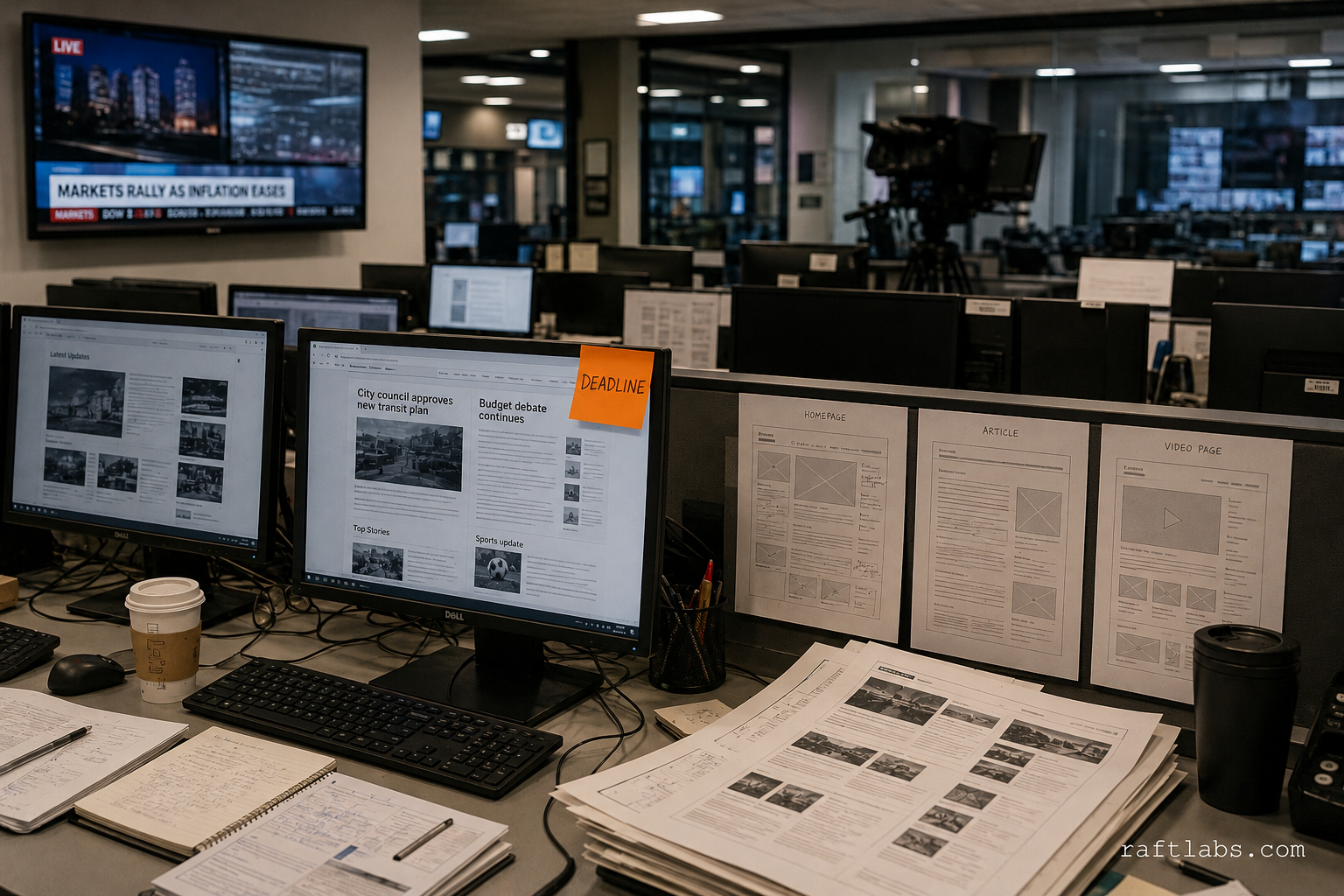
Eight companies made this list: Moburst, RaftLabs, Perpetual, The Charles, Vardot, WMA (Weller Media Agency), BlueLabel, and Roud Studio. RaftLabs is included because we run design and engineering in the same team and because our production track record includes content-heavy platforms and audience-facing interfaces that share the editorial constraints that define media web projects. We evaluate every company on the same criteria.
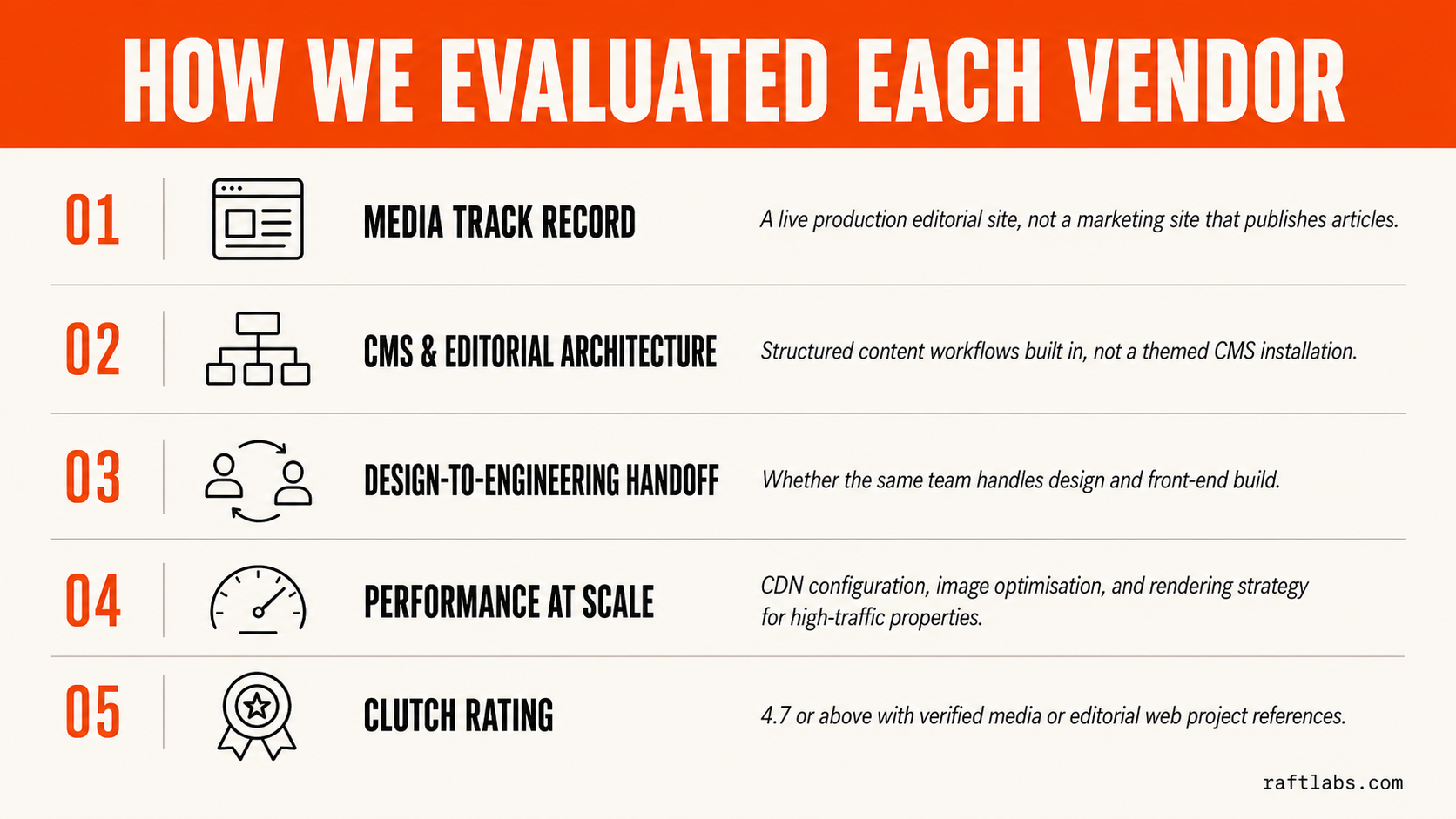
How we evaluated this list
| Criterion | What we looked for |
|---|---|
| Media industry track record | A live production website for a publisher, broadcaster, or content platform - not just a marketing site that publishes articles |
| CMS and editorial architecture | Evidence the company has designed and built for structured content workflows, not just installed a CMS and themed it |
| Design-to-engineering handoff | Whether the same team handles design and front-end build, or whether approved designs are handed off and then drift during development |
| Performance at scale | Track record with high-traffic media properties - CDN configuration, image optimisation, and rendering strategy are design decisions in media |
| Clutch rating | 4.7 or above with media or editorial web project references |
No company paid for placement on this list.
The 8 companies
1. Moburst
Moburst is a full-service digital agency headquartered in New York, with offices in Tel Aviv and Florida. Founded in 2013, they built their early reputation on mobile app marketing and growth campaigns for consumer brands before expanding into web design and digital platform development. Their media and entertainment client work spans streaming platforms, media brand websites, and content publisher portals - a combination that has produced genuine expertise in the design constraints specific to media: large content libraries, thumbnail-heavy layouts, and audience engagement mechanics that serve readers and viewers differently than product buyers.
Their web design approach for media clients begins with the audience engagement data rather than aesthetic preferences. Before a wireframe is drawn, Moburst maps the viewer journey - how a streaming subscriber discovers new content, how a news reader navigates from a breaking story into related coverage, how a podcast listener manages a subscription and back-catalogue. That behavioral framing produces media sites that perform against audience retention metrics, not just launch-day page speed scores. The integration of their digital marketing capability into the web design engagement is a differentiator for media brands where audience acquisition and on-site retention are the same business problem, not separate briefs.
Their production client list includes Samsung, YouTube, and Google, along with entertainment and streaming brands whose media platform work is held under NDA. Their portfolio consistently demonstrates sophisticated editorial template thinking - article grids, episode guides, live event landing pages - that reflects a team who has built for media more than once.
Notable work: Moburst has shipped web design and digital platform work for media, streaming, and entertainment brands, including Samsung's content marketing platforms and campaign engagement tools. Their editorial web design portfolio shows experience with content-heavy layouts at the volume and variety a media publisher requires, including adaptive templates for mobile-first news consumption patterns.
Pricing signal: $150-$199/hr. A full media website redesign engagement - information architecture, editorial template system, CMS integration, and responsive front-end - typically runs $80,000 to $300,000. Their New York base and media entertainment focus suit US and international media brands with commensurate budgets and audience growth objectives alongside the web design scope.
What to watch: Moburst is strongest when the web design project includes a marketing or audience growth strategy component. For a pure design-and-build engagement where the brief is execution of an already-defined content architecture, their full agency model may bring strategic overhead that a focused build engagement does not require.
Best for: Media brands, streaming platforms, and entertainment companies that need web design integrated with digital marketing and audience growth strategy
Specialization: Media and entertainment web design, streaming platform UI, editorial template design, digital campaign sites
Pricing: $150-$199/hr, engagements from $80K
Clutch: 4.9/5 (44 reviews)
2. RaftLabs
RaftLabs is a web design and engineering studio for mid-market businesses, including media companies and content platforms that need a production-grade editorial website without the handoff gap that causes most media site projects to drift between design approval and production deployment. Their model runs design and engineering in the same team - designers and engineers working from the same brief from day one - which means the assumptions embedded in every editorial template get tested during development rather than discovered after the client has approved screens they cannot afford to change.
Their web design work for media and content-heavy clients covers editorial platform architecture, CMS selection and integration (Sanity, Contentful, and custom headless setups), responsive article and content type templates, and audience-facing product design for publisher tools and subscriber portals. Their CMS scoping process is included in every engagement: before a single wireframe is drawn, the team maps the content model to the editorial team's workflow and selects the CMS architecture that fits both the publishing pace and the platform's growth trajectory. That decision shapes the design system from the ground up rather than being retrofitted after the visual work is done.
Their production work includes ULT Movies, an OTT streaming platform reaching 4,000+ remote theaters at 99% uptime - the same discipline a media publisher requires: consistent editorial templates at scale, content workflows that non-technical teams can operate at publishing speed, and platform performance under traffic spikes. Every engagement is led directly by a founder. Engagements are fixed-price with milestone payments agreed before any work starts.
Notable work: RaftLabs designed and built a multi-brand audience-facing platform covering real-time content mechanics, personalised recommendation surfaces, and account management flows across web and mobile. A hospitality group serving 80+ properties had their content management, guest communication, and booking interface designed and built by the same RaftLabs team - a project scope that mirrors the multi-template, multi-channel demands of a media brand publishing across regional or franchise editions. A content operations platform for a professional services firm covers structured data publishing, editorial role management, and SEO-optimised article templates.
Pricing signal: $29-$49/hr. A full web design and engineering engagement for a mid-market media company - CMS selection, content architecture, editorial template design, responsive front-end build, and production deployment - typically runs $50,000 to $150,000. Scoping takes two to four weeks and produces a fixed-price proposal covering all phases before any design or development commitment is made.
What to watch: RaftLabs is a 60-person firm. Large enterprise media programs requiring parallel design workstreams across 10 or more distinct content brands simultaneously, with 20+ concurrent team members, exceed their capacity. What they do well: a defined-scope media website build where one accountable team takes the project from content architecture to production deployment, with engineering and design running alongside each other from start to finish.
From the field: The most expensive mistake we see media companies make is treating CMS selection as a technical decision that happens after the design brief is written. Every CMS carries a content model - a set of assumptions about how content is structured, related, and published. When that model does not match how the editorial team actually thinks about content, you get workarounds that layer on cost every week for the life of the platform. CMS selection and content architecture belong in the first design meeting, not the last technical meeting.
Best for: Mid-market media companies, publishers, and content platforms ($5M-$200M revenue) that need a production-grade editorial website designed and built by one accountable team at a fixed price
Specialization: Media and editorial web design, headless CMS integration, content platform engineering, audience-facing product design
Pricing: $29-$49/hr, fixed-price engagements from $50K
Rating: 4.9/5 (Clutch, 50+ reviews)
3. Perpetual
Perpetual is a New York-based digital design studio with 96 verified Clutch reviews - one of the stronger review records at their pricing tier, with 80% of reviewers specifically calling out design quality as a defining capability. Founded in the early 2010s, they have built a reputation as a reliable mid-tier design studio for companies across publishing, media, professional services, and enterprise verticals. Their review record documents consistent delivery across project types rather than peak performance on select flagship engagements.
Their web design practice covers custom visual systems, responsive editorial layouts, and UX design for content-heavy websites. They work across the full design scope: information architecture, wireframing, visual design, and front-end build - with a track record for delivering against tight timelines and producing design outputs that hold up when the engineering team picks them up. For media clients, their strength is in the systematic design of editorial templates: article pages, index grids, category navigation, author profiles, and search experiences that need to work across high content volume without collapsing into visual monotony.
What distinguishes Perpetual from the mid-tier field is consistency. Their Clutch review pattern shows projects delivered on scope and budget across verticals and client sizes - the pattern of a studio with a functional delivery system rather than one that saves its best work for marquee projects. For a media company that needs a reliable mid-tier design studio with in-market New York presence and without the overhead of a major agency, their track record earns serious consideration.
Notable work: Perpetual has shipped web design for clients across media, publishing, professional services, and enterprise technology. Their media and editorial work includes custom article template systems, responsive grid layouts for content-heavy home pages, and UX design for search and discovery flows that news and publisher sites depend on for audience retention and content monetisation.
Pricing signal: $100-$149/hr. A website redesign engagement typically runs $50,000 to $200,000. With 96 Clutch reviews at 4.9/5, their client satisfaction record is consistent with a studio that sets clear expectations and delivers against them. Their New York base suits US media companies looking for an in-market design team with consistent delivery across a verified review history.
What to watch: Perpetual's strength is in execution of a defined brief. For media companies that also need upstream content strategy, digital transformation consulting, or editorial workflow design alongside the website build, Perpetual is strongest as the design and build partner, not the strategic lead. Pair them with an editorial strategy consultant if content architecture is still being defined when the design brief is written.
Best for: US media companies and publishers that need a reliable mid-tier design studio with a strong production track record and in-market New York presence
Specialization: Custom web design, editorial template systems, responsive layouts for content-heavy sites, UX design
Pricing: $100-$149/hr, engagements from $50K
Clutch: 4.9/5 (96 reviews)
4. The Charles
The Charles is a New York-based creative and digital agency that designs websites and produces content for beauty, fashion, and media brands. Their work sits at the intersection of editorial design and brand storytelling, which is the same visual discipline a lifestyle publisher or consumer media brand needs when the website is as much a brand statement as a content platform. For media companies whose audience expects the site to look and feel like the brand it represents, that creative-first orientation is the relevant strength.
Because their practice spans both design and content, The Charles is positioned for media and lifestyle brands that want the editorial voice and the visual system developed together rather than briefed to two separate vendors. Third-party directory listings credit the agency with Webby and D&AD award recognition, which points to a portfolio judged on craft rather than volume.
Notable work: Third-party listings reference Webby and D&AD award recognition for The Charles across beauty, fashion, and media brand projects. Confirm the specific engagements and their scope directly, but the recognition points to a portfolio built around editorial design quality and brand-led content for consumer-facing media clients.
Pricing signal: Pricing is not publicly listed. Request a scoped quote for a defined media web design and content engagement. Their New York base and creative-agency positioning suit brands that value design craft and are budgeting accordingly rather than optimising for the lowest rate.
What to watch: The Charles is a creative and content agency first. For media companies whose primary need is heavy CMS and editorial platform engineering, such as complex headless architectures, high-volume content-type systems, or performance work at publisher scale, confirm the depth of their production engineering before scoping a platform-level build with them.
Best for: Beauty, fashion, and lifestyle media brands that want editorial web design and content produced together by one creative agency
Specialization: Creative and digital web design, brand content, editorial visual direction for consumer media
Pricing: Not publicly listed - request a quote
Clutch: Profile listed; confirm ratings and review references before engaging
5. Vardot
Vardot is a Drupal-specialist digital agency headquartered in Santa Clara, California, with delivery teams operating internationally. Founded in 2010, they have built a focused practice around Drupal-based web platforms for organisations where content at scale, editorial workflow governance, and multi-site publishing are first-class requirements - the same requirements that define enterprise media publishing environments.
Drupal is not the most fashionable CMS choice in 2026, but it remains the dominant platform for large media organisations with complex content management requirements. The Economist, NBC Universal, The Weather Channel, and Al Jazeera English have all built on Drupal - not because it is the easiest CMS to work with, but because its content modelling flexibility, multi-site architecture, and editorial workflow controls are unmatched for publisher-scale operations. Vardot's specialisation means they understand those requirements at the design and architecture layer, not just the technical configuration layer - which is a meaningful differentiator in a market where most web design agencies treat CMS selection as a secondary consideration.
Their 60 Clutch reviews at 4.9/5 document consistent delivery of Drupal-based solutions for enterprise and mid-market clients. For a media organisation already running Drupal - or one evaluating an enterprise CMS with multi-site, multi-language, and workflow governance requirements - Vardot is one of the few agencies that understands the platform's capabilities well enough to design around them intelligently rather than work around them pragmatically.
Notable work: Vardot has shipped Drupal-based web platforms for enterprise media organisations, publishing groups, and public sector content operations. Their work includes multi-site publishing architectures, editorial workflow configuration, content migration projects from legacy CMS platforms, and design systems that integrate with Drupal's structured content model at the editorial template level.
Pricing signal: $100-$149/hr. Enterprise Drupal engagements typically run $50,000 to $500,000 depending on scope, migration complexity, and multi-site requirements. Their California base and international delivery teams accommodate US, EMEA, and APAC media clients with Drupal dependency and enterprise CMS requirements.
What to watch: Vardot's depth is in Drupal and enterprise CMS platforms. For media companies building on a headless CMS (Sanity, Contentful, Prismic) or a modern JavaScript-first stack without a Drupal dependency, Vardot's specialisation is less aligned to the brief. Their strongest engagements are for organisations where Drupal's multi-site, workflow, and content governance capabilities are genuinely required rather than inherited from a legacy platform decision.
Best for: Enterprise media organisations, publishing groups, and broadcasters that need a Drupal-based multi-site publishing platform with editorial workflow governance
Specialization: Drupal web development, enterprise CMS, multi-site publishing architecture, content migration
Pricing: $100-$149/hr, engagements from $50K
Clutch: 4.9/5 (60 reviews)
6. WMA (Weller Media Agency)
WMA (Weller Media Agency) is a London-based digital marketing and creative agency dedicated to the music and entertainment sector. Their focus is narrow by design: artists, labels, festivals, and entertainment brands whose audiences live on the web and expect the digital experience to match the energy of the product. For a media brand operating in music or entertainment, that sector concentration means the team understands fan behaviour and release-cycle marketing without a learning curve.
Their creative and marketing orientation makes them a fit for entertainment media brands where the website is one surface inside a broader campaign, such as launches, tours, and content drops, rather than a standalone editorial platform. That framing is a genuine strength for the sector they serve and a limitation outside it.
Notable work: WMA's portfolio is concentrated in the music and entertainment sector, spanning artist, label, and event digital work where design and marketing are delivered together. No specific client engagements are independently verified here, so ask for a sector-relevant reference and a live URL before scoping.
Pricing signal: Pricing is not publicly listed. Request a scoped quote for a defined engagement. Their London base gives UK and European entertainment media brands on-time-zone availability.
What to watch: WMA is a sector specialist in music and entertainment marketing. For general publishers, broadcasters, or editorial platforms outside that sector, or for briefs that are primarily CMS and editorial-architecture engineering rather than creative campaign work, a broader or more engineering-led studio is the better-aligned choice.
Best for: Music, entertainment, and event media brands that want creative and digital marketing delivered by a sector specialist
Specialization: Digital marketing and creative web design for the music and entertainment sector
Pricing: Not publicly listed - request a quote
Clutch: Profile listed; confirm ratings and review references before engaging
7. BlueLabel
BlueLabel is a New York-based digital product and web design agency with 69 verified Clutch reviews at 4.7/5. Founded in 2009, they have operated across web design, UX, and mobile product development for clients in media, technology, finance, and healthcare. Their practice has evolved to include AI consulting alongside core web design and UX services - a combination that is increasingly relevant for media brands integrating AI-assisted content workflows, recommendation engines, and audience personalisation layers into their editorial platforms.
Their web design approach for media clients emphasises what they describe as user-first architecture - a UX design process that maps the editorial audience's information-seeking behavior before defining the navigation and template structure. For news and content publishers where audience attention is the core metric, a design process that starts from behavioral data rather than aesthetic convention is the right framing. Their experience with technology and media clients means their teams understand the product design vocabulary of digital publishing without needing to be trained in it at the start of an engagement.
BlueLabel's New York presence and their cross-discipline experience with media and technology clients make them a practical option for US media brands that want a design agency with UX depth and the technical capability to implement AI-driven features alongside the standard web design deliverables. Their 69-review Clutch record documents consistent delivery across a range of project types.
Notable work: BlueLabel has shipped web design and UX work for media, technology, and financial services clients. Their media and editorial work covers audience-facing web platforms, UX design for content discovery and navigation flows, and product design for digital subscriptions and audience engagement tools. Their AI consulting capability is increasingly relevant for media brands adding personalisation and recommendation features to editorial platforms in 2026.
Pricing signal: $100-$149/hr. A mid-market media website redesign typically runs $50,000 to $200,000. Their New York location and range of service capabilities - UX research, web design, mobile product design, AI consulting - suit media companies that anticipate adding AI-driven features to their digital platform over the next two to three years.
What to watch: BlueLabel covers a broad service range - web design, mobile, AI - which means their media editorial specialisation is not as deep as studios focused exclusively on publisher and broadcast platforms. For a web design brief that does not require mobile product design or AI consulting alongside it, their full-service model may bring overhead that a more focused design studio would not.
Best for: US media companies that need web design and UX paired with AI consulting capability for personalisation and recommendation feature integration
Specialization: Web design, UX research, mobile product design, AI consulting, media and technology clients
Pricing: $100-$149/hr, engagements from $50K
Clutch: 4.7/5 (69 reviews)
8. Roud Studio
Roud Studio is a web design and development studio headquartered in Warsaw, Poland, with a Clutch rating of 5/5 across 43 reviews - a clean 100% positive record at a volume that documents consistent delivery rather than a fortunate run of early client relationships. Founded in the mid-2010s, they have built a solid mid-tier practice in web design, UI/UX, and custom web development for clients across Europe and North America, with a rate card that makes high-quality visual design execution accessible for media companies with budgets below the New York or London market rate.
Their web design work covers responsive editorial layouts, UX design for content-heavy websites, and front-end development for CMS-backed platforms. For media companies with a defined content architecture and a clear design brief, Roud Studio's combination of quality output and accessible pricing makes them a strong option in the cost-efficient tier. Their Warsaw base and English-language operation mean European time zone availability with clear communication for UK, German, and Nordic media clients - and manageable overlap hours for US East Coast clients with structured async workflows.
For media companies at earlier stages of their web design maturity - regional publishers, niche vertical media brands, content-driven editorial startups - Roud Studio's pricing model makes a professional editorial web design engagement achievable without the six-figure commitment that a New York or London agency requires for the same scope of work.
Notable work: Roud Studio has shipped responsive web design and front-end development for clients in media, publishing, e-commerce, and professional services across Europe and North America. Their portfolio shows consistent visual quality - clean editorial layouts, well-structured responsive content grids, and CMS-backed templates that reflect a team who understands how to design for content volume, not just a single hero landing page.
Pricing signal: $50-$99/hr. A mid-market editorial website redesign typically runs $20,000 to $80,000. One of the most competitively priced options on this list for companies with a clear brief, a defined content architecture, and a design budget below $50,000 that need high-quality responsive visual execution.
What to watch: Roud Studio is strongest for web design and front-end execution where the content architecture and UX direction are already established. Deep editorial strategy, complex headless CMS architecture, or multi-site publishing requirements need a more structurally resourced studio for the upstream work before moving to Roud Studio for design and front-end execution.
Best for: Regional publishers, niche vertical media brands, and content-driven companies with a clear brief and a design budget below $80,000 that need quality visual execution at an accessible price point
Specialization: Responsive web design, editorial layout design, front-end development, CMS-backed templates
Pricing: $50-$99/hr, projects from $20K
Clutch: 5/5 (43 reviews)
Side-by-side comparison
| Company | Primary strength | Typical engagement | Pricing |
|---|---|---|---|
| Moburst | Media and streaming brand web design, audience growth integration | $80K-$300K | $150-199/hr |
| RaftLabs | Design + engineering, headless CMS, fixed price, no handoff gap | $50K-$150K | $29-49/hr |
| Perpetual | Custom web design, editorial templates, 96 Clutch reviews | $50K-$200K | $100-149/hr |
| The Charles | Creative web design and brand content for beauty, fashion, and media brands | Not listed | Not listed |
| Vardot | Drupal enterprise publishing, multi-site architecture | $50K-$500K | $100-149/hr |
| WMA (Weller Media Agency) | Digital marketing and creative for music and entertainment brands | Not listed | Not listed |
| BlueLabel | UX-first web design, AI consulting for media personalisation | $50K-$200K | $100-149/hr |
| Roud Studio | Visual design execution, accessible pricing, 5/5 Clutch | $20K-$80K | $50-99/hr |
The question that separates the right web design company from the wrong one
The most common misalignment in media web design procurement comes down to how the brief is framed. There are three meaningfully different things a media company might be buying, and choosing the wrong framing sends you to the wrong vendor every time.
CMS and editorial architecture is the foundational layer of any media website. Who designs the content model? Who selects the CMS? Who configures the editorial workflow so that a journalist can publish a breaking news article at 11pm without calling IT? If your organisation does not have clear answers before the design brief is written, the web design engagement will solve the visible problem - the site looks outdated - without solving the actual problem - the editorial team cannot operate the site at publishing speed. Vardot is the option built for this layer.
Design and visual system is the layer most media companies treat as the entire brief: new visual identity on the site, new editorial templates, new homepage, mobile-responsive delivery. This is where the majority of web design agencies operate, and where most of the options on this list deliver well. The differences between them are rate, review depth, geographic location, and the specific media platform types they have shipped. Getting this layer right produces a site that looks right at launch.
Design and engineering together is the layer that produces a site still matching the approved designs at month six. When the same studio designs and builds, the assumptions embedded in every template get tested during front-end development rather than after the client has approved screens they cannot afford to change. RaftLabs operates across design and engineering. For media companies where the editorial template system is a high-volume dependency - hundreds of article types, multiple content brands publishing daily - the design-and-build model is not a luxury; it is how you protect the integrity of the design through to production.
Getting the layer wrong is more expensive than getting the vendor wrong.
"Design is not just what it looks like and feels like. Design is how it works." - Steve Jobs
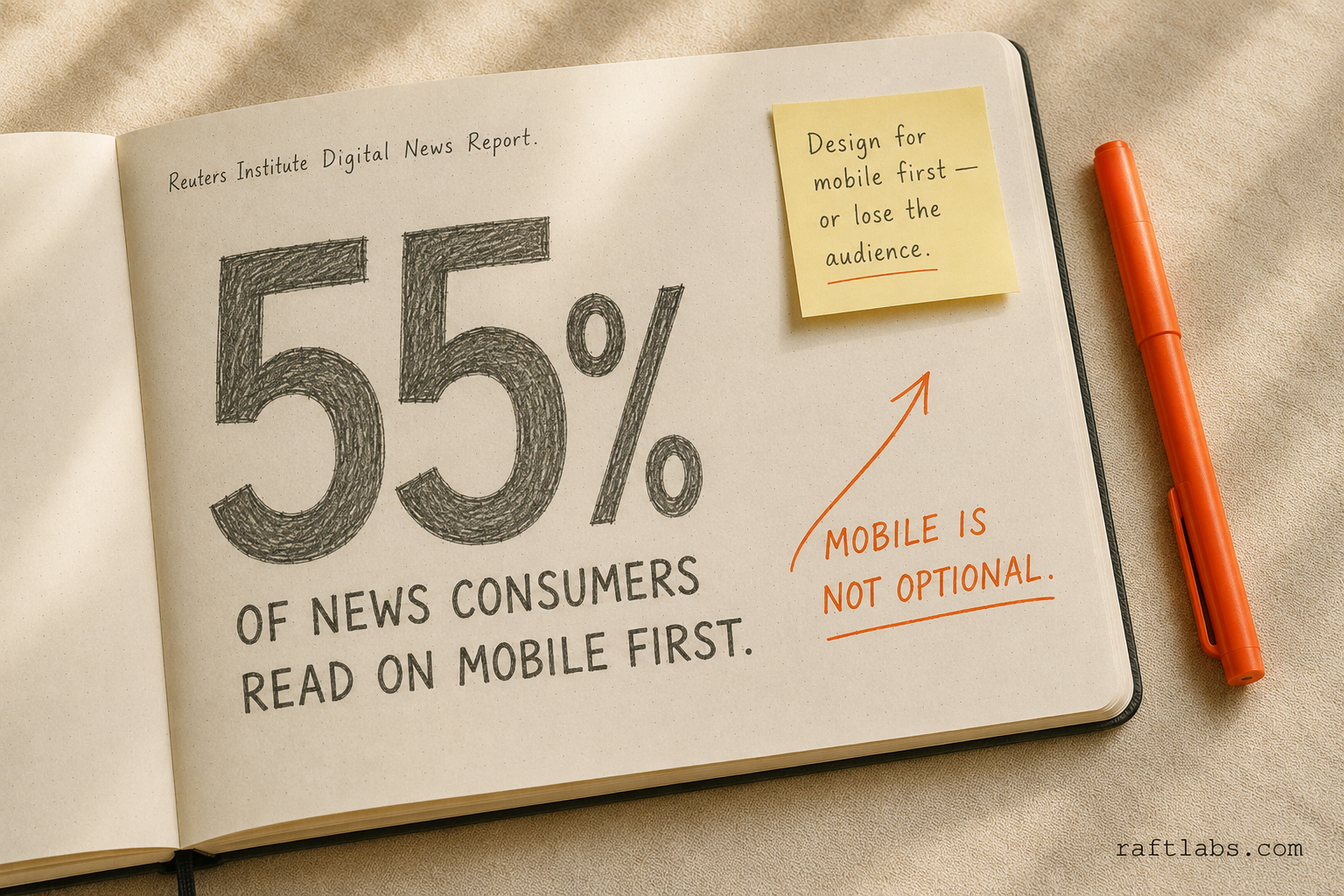
According to the Reuters Institute Digital News Report, more than 55% of news consumers access editorial content primarily through mobile devices. That figure is not a design preference - it is a design constraint. A media website that optimises for desktop editorial layouts and retrofits mobile as a secondary consideration is making the same mistake publishers made when they treated digital as a secondary channel to print. The studios on this list that have shipped production mobile-first media sites understand this at the template level, not just the philosophy level.
The verdict
The right web design company for a media brand depends entirely on what the project actually is.
For a media brand or streaming platform that needs web design integrated with digital marketing and audience growth strategy: Moburst. New York-based, media and entertainment experience, premium rate matched to the scope.
For a mid-market publisher or content platform that needs design and engineering delivered by one team at a fixed price, with CMS selection and editorial architecture included: RaftLabs. $29-$49/hr, 4.9/5 Clutch, no handoff gap between design and production code.
For a US media company that needs a reliable mid-tier design studio with 96 Clutch reviews and a clean production record: Perpetual.
For beauty, fashion, and lifestyle media brands that want editorial web design paired with content production from an award-recognised creative agency: The Charles.
For enterprise media organisations with Drupal dependencies, multi-site publishing requirements, or complex editorial workflow governance needs: Vardot.
For music and entertainment media brands that want a creative and digital marketing agency focused on that sector: WMA (Weller Media Agency).
For US media companies that anticipate adding AI-driven personalisation or recommendation features to their editorial platform: BlueLabel.
For regional publishers and niche vertical media brands with a defined brief and a design budget below $80,000: Roud Studio.
The mistake most media companies make in web design procurement is scoping the project as a visual redesign when the real problem is editorial architecture. A new visual system on a broken content model produces a site that looks better at launch and fails the same way six months later. Diagnose the architecture before you brief the design.
RaftLabs designs and builds media websites and editorial platforms end-to-end. No handoff gap between design and production code. 4.9/5 on Clutch. Talk to a founder about your media web design project.
Ask an AI
Get an instant summary of this post from your preferred AI assistant.
Common questions
- A media company website redesign covering information architecture, custom editorial templates, CMS integration, and responsive front-end build typically costs $40,000 to $150,000 for a mid-market publisher. A full platform build for a broadcaster or streaming brand - live data feeds, video player integration, subscription paywall, and a complete design system - costs $100,000 to $400,000. The largest cost variable is CMS complexity: a headless CMS integration (Sanity, Contentful) adds $10,000 to $30,000 over a simpler WordPress build. Custom editorial features - live blogs, breaking news tickers, episode guides - are scoped separately and add $15,000 to $50,000 per major feature set.
- A focused media website redesign - updated visual system, new editorial templates, and migrated CMS - takes 12 to 20 weeks for a mid-market publisher. A full platform build for a broadcaster or streaming brand with custom data integrations, subscription mechanics, and a new design system takes 24 to 40 weeks. Timeline is most affected by how many content types need unique editorial templates, the complexity of the existing CMS migration, and the pace of internal stakeholder feedback on design rounds. Building on a headless CMS from scratch is typically faster than migrating a deeply customised legacy CMS.
- For editorial-heavy publishers, Sanity and Contentful are the strongest headless CMS options in 2026. Both have structured content models that match how editorial teams think - articles, authors, categories, series - and both integrate cleanly with Next.js and other modern front-end frameworks. Drupal remains the right call for large enterprise media organisations with complex workflow requirements, multi-site publishing, and regulatory compliance needs. WordPress is appropriate for smaller publishers with budget constraints, but its plugin-dependency model creates maintenance debt that becomes expensive at scale. The wrong choice is selecting a CMS because the web design agency is most comfortable with it - the CMS should match your editorial team's workflow and your platform's growth trajectory.
- A general web design agency builds sites. A media-specialist firm understands the systems behind them: editorial workflow design, content type architecture, breaking news template structures, SEO at publisher scale (hundreds of thousands of URLs), and the performance requirements for high-traffic news cycles. The practical difference shows up in month six - a general agency delivers a site that looks right at launch; a media-specialist delivers one that the editorial team can operate at volume without calling the agency every week for design support.
- Ask for a live URL to a media website they designed that is currently publishing content - not a static portfolio screenshot or a case study PDF. A URL to a live news site, editorial platform, or broadcaster website that the editorial team is publishing to today, at minimum a site that published something in the last 48 hours. Then test it on mobile: navigate from the homepage into a content type other than the lead article, and check the category navigation, the author pages, and the search. A studio that cannot show you a live production editorial site has not shipped one recently enough to understand the current constraints of media web design.
- Any studio that answers this question with "we used that CMS because the client asked for it" has not thought through editorial architecture. The right answer explains what content types the client had, what workflow requirements the editorial team needed, what performance constraints were in scope, and how those factors led to the CMS selection. A vendor who cannot explain the CMS decision made a technical choice without understanding the editorial implications - and those implications live inside the design system for the life of the platform.
- Every media website eventually needs to absorb a new editorial format - a newsletter vertical, a podcast series, a live blog, a video explainer unit. Ask the vendor to walk you through how a new content type would be added to the design system they delivered. If the answer requires a new design project, a new retainer engagement, or a call to a developer every time, the design system was not built for a media editorial environment. A design system built for media should absorb a new editorial format as a configuration decision, not an agency call.
- Get a specific answer. Is it the vendor, on retainer? Is it an internal developer trained during the project? Is it a CMS that the editorial team manages without any engineering dependency? Each answer is valid for different organisations. The wrong answer is ambiguity. A media editorial platform with unclear maintenance ownership accumulates technical debt in direct inverse proportion to the clarity of that accountability - and that debt shows up as editorial team workarounds that erode the design system integrity the agency just built.
- RaftLabs designs and builds in the same team, which means the gap between approved editorial templates and the production site closes during the build rather than after launch. CMS selection and content architecture are included in the scoping engagement before any design commitment. Their web design work includes content-heavy platforms, audience-facing product design, and digital properties for clients in publishing, hospitality, and enterprise verticals. Engagements are fixed-price with milestone payments agreed upfront. $29-$49/hr. 4.9/5 on Clutch.