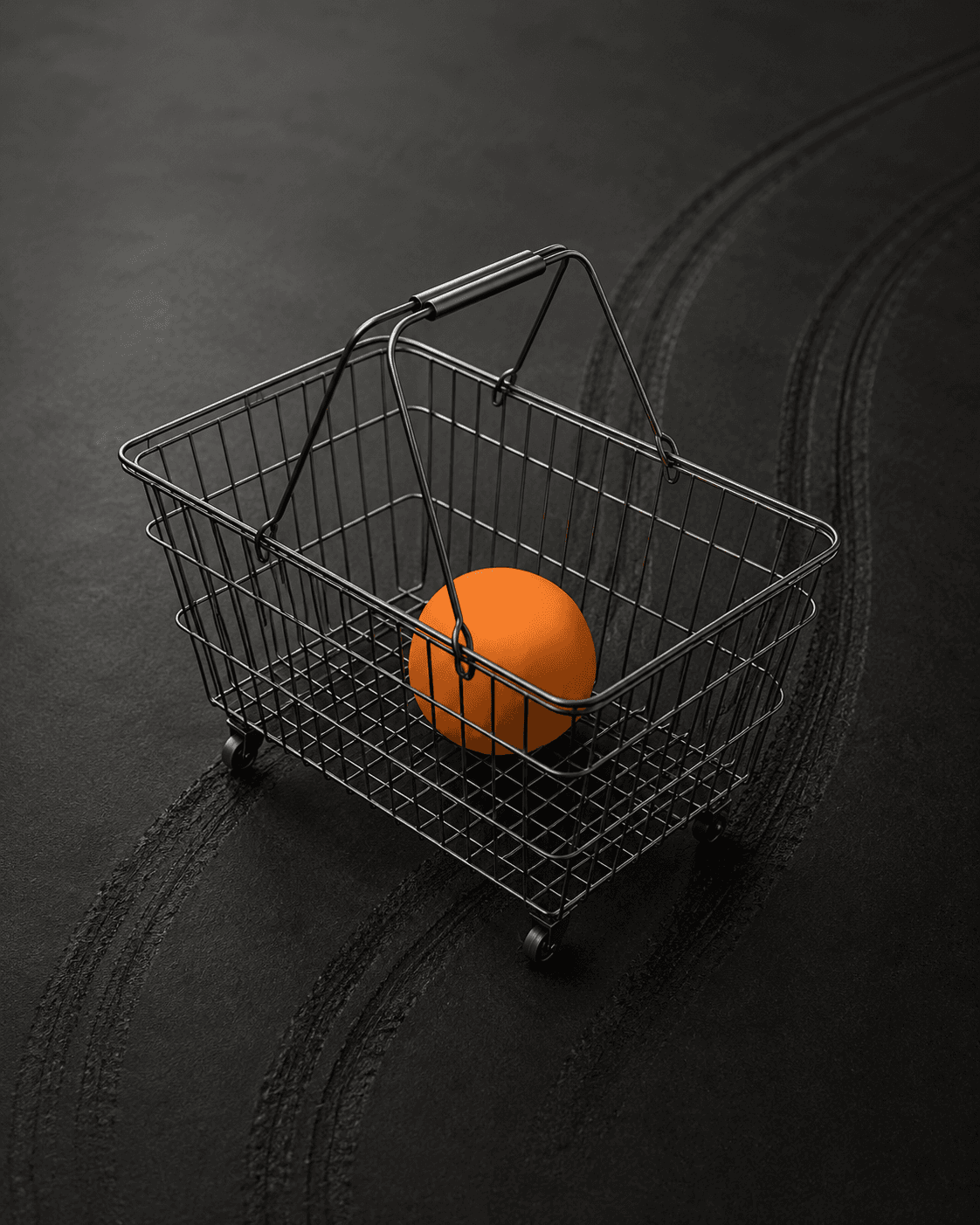
Generative AI in retail that scales content and support without scaling headcount.
Retail generates more product data, customer interactions, and operational content than teams can manage manually. Generative AI in retail applies LLMs to the work that scales poorly with headcount, product descriptions, customer support, personalized recommendations, and merchandising content at catalog scale. We build generative AI applications for retail and ecommerce that connect to your product catalog, customer data, and inventory systems, delivering value across customer experience, content operations, and merchandising efficiency.
Product description generation at catalog scale with brand voice and SEO compliance
AI customer support handling returns, order status, and product FAQ without agent involvement
Personalized shopping experiences using customer behavior and purchase history
Automated merchandising content for email, ads, and on-site promotions
Bring the problem, the current workflow, or the existing code. We reply with a practical next step within one business day.
Trusted by
The brief
Start with what is not working.
Good software decisions begin with the constraint, not a list of features or a preferred technology.
01
Product catalog with thousands of SKUs and inconsistent, thin product descriptions hurting conversion and SEO?
02
Customer support volume dominated by order status, returns, and product FAQ that AI could handle consistently?
Plain answer
RaftLabs builds generative AI for retail: product description generation, AI customer support, and personalized shopping. A first workflow ships as a validated v1 in 8 to 14 weeks at a fixed price, then grows. AI support deflects 40 to 60% of typical retail queues. Clients across the US, UK, Europe, Canada, and the UAE.
What to remember
RaftLabs builds generative AI applications for retail including product description generation, AI customer support, and personalized shopping experiences
A first retail AI workflow ships as a validated v1 in 8 to 14 weeks at a fixed price, with scope locked in week one, then grows from there
AI customer support reduces support contact volume by 40 to 60% on typical retail queues
Product description generation pipelines typically cost $20,000 to $50,000 and cut content production cost by 80 to 90%
AI customer support systems with OMS integration typically cost $30,000 to $70,000
A team of 10 copywriters. A catalog that just grew by 10,000 SKUs.
The copy team was already at capacity. Then merchandising loaded 10,000 new SKUs, each one shipping with a placeholder description that hurt conversion and buried the product in search. Hiring five more writers would clear it in a quarter. The catalog grows again next quarter.
Same story on the support desk. A team sized for 500 contacts a day cannot absorb 2,000 without proportional headcount, and most of that volume is order status, returns, and product FAQ that follow the same logic every time.
Generative AI takes both. Product content and support that grow with your catalog and customer base without growing the payroll. The work that scales poorly with headcount is exactly the work an LLM handles at scale.
Retail's content and support problems scale with volume. Generative AI does not. Product content, customer support, and personalized communication grow with your catalog and customer base without a proportional cost increase.
McKinsey's retail research puts numbers on where that value lands. Gen AI could add $240 to $390 billion in annual value to retail, and 82% of retailers have already run gen AI pilots for customer service. For catalog-heavy retailers, the value concentrates fastest in product content generation and support deflection, two areas with measurable, short-cycle ROI.
Annual value gen AI could add to retail
$240-390B
McKinsey, 2024
of retailers running gen AI pilots for customer service
82%
McKinsey, 2024
RaftLabs has shipped software and AI products since 2015, rated 4.9/5 by clients on Clutch. RaftLabs has shipped production software since 2015 for clients across the US, UK, Europe, Canada, and the UAE. The team that scopes your retail AI problem is the team that ships it.
Generative AI pays off when the work is high-volume and follows the same logic every time.
Everything on the left should already be true for your operation. Even one thing on the right, and a smaller pilot or a manual process is the smarter first step.
A fit
01
A product catalog with thousands of SKUs and thin or inconsistent descriptions hurting conversion and SEO.
02
Support volume dominated by order status, returns, and product FAQ that follow the same logic every time.
03
An ecommerce platform (Shopify, Magento, WooCommerce, or custom) and an OMS to integrate against, plus budget for a build from $20,000.
Not a fit
01
A small catalog where a copywriter can keep every description current by hand.
02
Support volume low enough that your team clears the queue without strain.
03
No structured product data or order system for the AI to ground on yet.
What we build
What we build for retail teams
01
Product description generation
An LLM pipeline that generates brand-consistent, SEO-optimised product descriptions from your structured product data and images. A brand voice system prompt encodes your tone, banned words, and best-performing copy so outputs match without post-editing, batch generation handles 1,000 SKUs overnight, and a quality gate routes failures to human review. Work that took 15-20 minutes per SKU completes in under 30 seconds.
02
AI customer support
AI customer support that handles the predictable retail queue: order status, tracking, returns, refunds, and product FAQ, the queries behind 60-75% of ticket volume. RAG grounding over your catalog and policies stops the AI hallucinating return windows, and live order-management (OMS) integration answers "where is my order?" with real tracking data. Low-confidence queries escalate to a human agent with full context, and contact volume typically drops 40-60%.
03
Personalized shopping experience
Personalized product recommendations built on your customer behavior, purchase history, and catalog, using collaborative filtering and product embeddings, beyond the generic widgets every platform provides, with cold-start coverage across homepage, product page, and post-purchase email. Natural language search handles queries like "something to wear to a summer wedding under £150" with inventory-aware results, and personalized email blocks lift click-through over static promotions.
04
Merchandising content automation
Automated merchandising content for email campaigns, promotional banners, social ads, and landing pages, generated from your product data, campaign brief, and brand guidelines. The team inputs campaign parameters and the pipeline produces headline, body, and CTA variants per surface, with subject-line variants split-tested and the winner auto-promoted. Brief-to-first-draft time drops from 3-5 hours of copywriting to under 10 minutes of review.
05
Search and discovery
AI search that understands intent beyond keyword match, converting queries like "comfortable work shoes for standing all day under £80" into relevant results. Hybrid retrieval merges BM25 lexical and semantic vector search, layered over your existing Algolia or Elasticsearch infrastructure rather than replacing it. Zero-result queries get closest-match suggestions and feed merchandising as demand signals, and add-to-cart rate from search improves when intent-matched results surface.
06
Inventory and merchandising intelligence
An AI analysis pipeline that converts sales history, inventory levels, and market signals into merchandising decisions delivered as plain-language summaries, not dashboards. Time-series demand forecasting drives replenishment alerts before stockouts, markdown timing clears slow stock without needless margin sacrifice, and assortment gap analysis flags missing complementary products. The buying team gets a Monday-morning brief with what to do first.
Which retail workflow is costing your team the most time?
Walk us through the process. We'll tell you how generative AI would handle it and what it costs to build.
How it works
How we ship retail generative AI
A method built for LLMs on your catalog, not a generic software timeline. Scope and price are fixed before the build starts. The first workflow ships as a validated v1, then grows.
Week 1
01
Use-case triage
Not every retail workflow pays off with gen AI. We rank your candidates on volume, repeatability, and data readiness. Then we scope the one with the shortest path to measurable ROI. You leave week 1 with a written scope and a fixed price.
Weeks 2-3
02
Catalog and data readiness
Gen AI is only as good as the data it reads. We audit your product catalog, attributes, and support knowledge base, then fix the gaps that cause bad output. We build the retrieval layer, RAG, that the model grounds on. This is where hallucinated return windows and wrong product facts get designed out.
Weeks 3-6
03
Model, guardrails, and eval
We wire the LLM to your data with a brand-voice system prompt and RAG grounding. Then we build the guardrails: scope limits and fact-checking against your catalog. An eval set scores accuracy, tone, and hallucination rate on real examples before anything reaches a customer.
Weeks 6-10
04
Human-in-the-loop rollout
The v1 ships behind a review gate. High-confidence output publishes or answers on its own. Low-confidence cases route to your team with full context. As the eval scores hold, we widen the automation envelope. Trust is earned on your data, not assumed.
Weeks 10-14+
05
Measure lift and expand
We track the metric that justified the build against a baseline from day one: support deflection, content cost per SKU, or add-to-cart from search. Once the first workflow proves out, we expand into the next one on the same foundation. Every project includes 8 weeks of post-launch support.
What clients say
What clients say about our AI work
Three-year average engagement. Founders and operators describing the work in their own words. No marketing varnish.
Testimonial 1 of 3: Amer Abu Khajil
Amer Abu Khajil
Founder, Peak Studios & Perceptional
Canada
I found RaftLabs to be the perfect partner for Perceptional, with their expertise in helping startup founders build MVPs, a free consultation, a prototype that matched my vision, and their unwavering support.
Where you land in that range depends on scope, not negotiation:
Product description pipeline, $20,000-$50,000
Brand voice controls and a quality review workflow that cut content production cost by 80 to 90%, in 6 to 10 weeks.
AI customer support, $30,000-$70,000
Order status, returns, and product FAQ with OMS integration, deflecting 40 to 60% of the queue, in 10 to 14 weeks.
Full retail AI platform, $60,000-$130,000
Product content, customer support, and personalized recommendations in one build, in 14 to 20 weeks.
What it costs
Starting at $20,000, scoped before development starts.
Product content, customer support, and personalization, connected to your catalog, OMS, and ecommerce platform. Scope and price locked in week 1.
Start with the workflow that matters most, product content or customer support, then expand into the full platform once you've seen it work.
Starting investment
Starts at $20,000
Retail AI builds start at $20,000 and launch a validated v1 in 8 to 14 weeks. Start with one workflow, product content or customer support, then add personalization once it's live.
No hourly billing
Once we scope your first phase, that price is locked in writing. No hourly billing, no surprise invoices as the platform grows.
Post-launch support
Production deployment with monitoring activated on launch day, and 8 weeks of post-launch support included in every project. Performance metrics tracked from day one.
The highest-ROI applications in retail are: (1) Product description generation, retailers with thousands of SKUs and thin or inconsistent product descriptions can generate brand-consistent, SEO-optimised descriptions at scale. Content production cost drops 80-90%; time to publish new SKUs drops from days to hours. (2) Customer support deflection, order status, return and refund requests, and product FAQ are consistent, high-volume, low-complexity queries that AI handles accurately without agent involvement. Support cost per contact drops significantly. (3) Personalized email and promotion copy, LLMs generate personalized product recommendations and promotional messaging based on customer segments and purchase history. These three have the clearest ROI measurement and the shortest path to production.
We build a pipeline that takes your product data (attributes, specifications, category, images) and generates brand-consistent product descriptions using LLMs with your brand voice guidelines built into the system prompt. For image-based products (fashion, homewares, food), we use multimodal models that analyze product images as part of the generation context. Output goes through quality review before publishing, human review for new categories, automated publishing for high-confidence outputs in established categories. Generated descriptions can include SEO-optimised headings, bullet points, and feature callouts matching your template structure.
AI retail customer support handles the high-volume, predictable queries: order status (connected to your OMS), return initiation (connected to your returns workflow), product FAQ (sourced from your product data and support knowledge base), and account management. The AI handles what it can confidently answer within your defined scope; complex queries, complaints, and situations outside the defined scope route to human agents with context. Integration with your ecommerce platform (Shopify, Magento, or custom) and order management system is required. The AI layer reduces support contact volume by 40-60% on typical retail support queues.
A product description generation pipeline with brand voice controls and quality review workflow typically runs $20,000 to $50,000. An AI customer support system handling order status, returns, and FAQ with OMS integration typically runs $30,000 to $70,000. A full retail AI platform with product content, customer support, and personalized recommendations typically runs $60,000 to $130,000. Cost depends on catalog size, integration complexity, and workflows in scope. We scope every project before pricing it.
A first retail AI workflow ships as a validated v1 in 8 to 14 weeks from kick-off, then iterates from there. A product description generation pipeline with quality review takes 6 to 10 weeks. An AI customer support system with OMS integration takes 10 to 14 weeks. A full retail AI platform combining content, support, and personalization typically runs 14 to 20 weeks. We lock scope and price in week 1 before any development starts.
We integrate with Shopify (Storefront API, Admin API, Product API), Magento (REST API, GraphQL), WooCommerce, and custom ecommerce platforms via REST or GraphQL. For order management, we integrate with OMS systems via API. For email, we connect to Klaviyo, Braze, and Mailchimp. The integration layer is scoped in week 1 as part of the fixed-price quote.
Work with us
Tell us where the work is stuck.
Bring the rough workflow, half-built product, or messy brief. We will map the smallest useful first move, then send scope, timeline, and price in plain English.
Scope and cost agreed before work starts. No surprises. No obligation.
Working prototype within 3 weeks of kickoff.
Pay by milestone. You see progress before each invoice.
60-day post-launch warranty. Bug fixes, UI tweaks, and deployment support. No retainer.































 Canada