Top Python development companies (July 2026 Rankings)

The top Python development companies in 2026 include Intellectsoft (enterprise AI/ML and Python for Fortune 500 clients with 1,400+ engineers), RaftLabs (4.9/5 on Clutch, FastAPI backends and AI pipelines with fixed-price delivery for enterprise), Chetu (8,500+ engineers for cost-efficient Python development across healthcare, logistics, and finance), Svitla Systems (Python data engineering and analytics pipelines for media and industrial clients), Zymr Systems (cloud-native Python on AWS and GCP for SaaS product companies), Caktus Group (senior Django specialists for complex domain applications and civic technology), Iflexion (Python development for regulated industries with healthcare and finance compliance credentials), and Algoworks (cost-efficient Python APIs and Salesforce integration for US companies). For mid-market businesses that need production Python with clear delivery ownership, RaftLabs offers the strongest combination of AI stack depth, fixed-price milestone structure, and verified Clutch rating.
Key Takeaways
- The Python vendor market spans three tiers: enterprise studios (Intellectsoft, EPAM), mid-market product builders (RaftLabs, Svitla, Iflexion), and cost-efficient offshore shops (Chetu, Algoworks). Each tier fits a different project profile.
- For AI and data projects, ask vendors to name the specific Python libraries they use -- FastAPI, SQLAlchemy, Celery, LangChain, Prefect, pandas. Vendors that answer 'Python and its frameworks' have not shipped production work at depth.
- Django and FastAPI are not interchangeable. Django is batteries-included for content-heavy applications; FastAPI is better for async APIs, microservices, and AI inference layers. Vendors that default to one framework for everything have not diagnosed your architecture.
- Fixed-price Python engagements require upfront architecture clarity. Vendors that quote a fixed price without asking about your data volume, event throughput, or integration count are guessing -- and you will pay for that guess later.
- A Python shop that has shipped AI applications will name specific models, inference frameworks, and evaluation approaches. A shop that has not will say they have experience with OpenAI APIs.
Finding a Python development company takes ten minutes. Finding one that has shipped production Python systems -- backends processing real traffic, data pipelines handling real volume, AI applications serving real users -- takes considerably longer. The market is full of firms that list Python alongside a dozen other languages, with portfolios that describe projects without documenting results. For buyers with a data pipeline, an AI backend, or a high-throughput API to build, that distinction costs time and money to discover late.
Eight companies made this list: Intellectsoft, RaftLabs, Chetu, Svitla Systems, Zymr Systems, Caktus Group, Iflexion, and Algoworks. RaftLabs is included because it ships Python FastAPI backends and AI pipelines for enterprise clients with documented Clutch ratings and production case studies. We evaluate every company on the same criteria.
How we evaluated this list
| Criterion | What we looked for |
|---|---|
| Production Python evidence | A deployed Python service with documented throughput, data volume, or user load -- not just portfolio descriptions |
| Framework specificity | Named experience with FastAPI, Django, SQLAlchemy, Celery, PyTorch, LangChain, or the data stack (pandas, Polars, dbt) |
| AI and data depth | Hands-on work with LLM integration, ML pipelines, or real-time data engineering -- not just web development |
| Engineering maturity | Documented testing practices (pytest), dependency management (Poetry or pip-tools), and production observability (Sentry, Datadog) |
| Client signals | Clutch rating of 4.7 or above, repeat clients, and willingness to provide reference contacts on request |
No company paid for placement on this list.
1. Intellectsoft
Intellectsoft has been building enterprise software since 2007. Their 1,400+ engineers include dedicated Python specialists across AI/ML integration, backend API development, and data engineering. They work with Fortune 500 clients -- Nestle, Eurostar, Harley Davidson -- which means their Python systems run at enterprise scale with compliance requirements and integration complexity built in from the start. That context makes them different from mid-market shops that have scaled recently: Intellectsoft has been handling enterprise-grade Python workloads for long enough to have institutional practices around it.
Their Python work spans Django and FastAPI for backend APIs, TensorFlow and PyTorch for ML model integration, and pandas and dbt for data transformation pipelines. On the AI side, Intellectsoft has shipped LLM integration layers for enterprise knowledge management -- Python orchestration with LangChain retrieving over private document stores at scale. For clients that need Python embedded within a broader enterprise transformation program involving multiple systems and stakeholders, Intellectsoft has the account capacity and engineering depth to handle it over a multi-year horizon.
The limitation is engagement size. Intellectsoft's overhead structure is calibrated for large accounts and long programs. Smaller Python projects -- a focused API, a single data pipeline, a bounded AI feature -- will encounter minimum engagement thresholds that may not fit the budget. Their strength is enterprise programs, not one-time fixed-scope deliverables. For buyers with $100,000+ Python programs and multi-quarter timelines, that's fine. For buyers with a specific, time-bounded Python build, other options on this list are a better match.
Notable work: AI-powered document processing system for a global manufacturing client using Python FastAPI and LangChain for classification and extraction at production scale; backend API platform for an entertainment industry client integrating with multiple third-party data sources.
Pricing signal: $50--$99/hr. Project-based engagements typically start at $50,000. Smaller scopes are accommodated through partner networks rather than direct delivery.
What to watch: Engagement overhead can slow delivery velocity for small teams. Ideal for programs with 6+ months of Python work scope, not one-time builds.
Best for: Enterprise Python platforms requiring AI/ML integration and compliance documentation
Specialization: FastAPI, Django, TensorFlow, LangChain, enterprise data engineering
Pricing: $50--$99/hr
Clutch rating: 4.9/5
2. RaftLabs
RaftLabs builds Python systems for clients including Vodafone, T-Mobile, Cisco, and Lockheed Martin. Their Python practice runs on FastAPI for high-performance async backends, LangChain for AI application orchestration, and Celery for distributed task processing. The AI-first positioning is not marketing: the majority of their recent Python delivery involves LLM integration, RAG systems over enterprise knowledge bases, and ML inference APIs that process real data under real load. Python is the language that makes all of that work, and RaftLabs has shipped it in those contexts.
Fixed-price delivery is standard at RaftLabs, which changes the risk profile for buyers. Rather than open-ended time-and-material billing, they define scope, break it into milestones, and price per milestone with clear deliverable definitions. For a Python project with a defined outcome -- a data pipeline, an AI backend, an automation layer replacing a manual process -- this structure works. The company ships production products every year at volume, which means their Python delivery machine is practiced and their scoping process reflects hard-won experience about what scope definitions miss.
The AI development service at RaftLabs covers Python end-to-end: API design, database modeling, pipeline orchestration, LLM integration, testing, deployment, and monitoring. For buyers that want one vendor to own the full Python stack from design to production handoff, this is the relevant shortlist position. They are strongest on AI-adjacent Python work -- FastAPI services, RAG pipelines, automation layers -- and less optimized for pure data science research or statistical modeling.
Notable work: Python FastAPI backbone for an enterprise developer platform serving thousands of internal users; LangChain-based knowledge retrieval system over private documentation for a Fortune 100 technology company, handling document embedding, retrieval, and LLM-augmented response generation.
Pricing signal: $29--$49/hr. Fixed-price milestones, production delivery in 12 weeks on average. No open-ended retainers.
What to watch: Best suited for defined Python deliverables. Exploratory research or evolving product strategies work better with their discovery engagement before a fixed build commitment.
Best for: Python backends, AI/ML pipelines, and automation for enterprise clients
Specialization: FastAPI, LangChain, Celery, RAG systems, production AI applications
Pricing: $29--$49/hr
Clutch rating: 4.9/5 (50+ reviews)
3. Chetu
Chetu is a large custom software development firm founded in 2000, headquartered in Plantation, Florida, with multiple engineering centers in India. With 8,500+ engineers across delivery centers, Chetu can staff Python projects at volume: multiple parallel workstreams, large development teams, and sustained delivery over multi-year programs. Their Python work covers Django and Flask web backends, Python data science integrations, and automation scripting across industries including healthcare, logistics, retail, and finance. That breadth is deliberate -- Chetu built industry-specific practices to complement their language coverage.
The domain knowledge angle is meaningful. A healthcare client building a Python-based EHR integration middleware benefits from Chetu's accumulated context about HL7, FHIR, and interoperability requirements -- not just their Python syntax familiarity. A logistics company building a Python API connecting to carrier networks benefits from engineers who have built similar connections before. When domain context and language expertise arrive together, it reduces the time a vendor spends getting up to speed on business rules that should not need explanation.
The tradeoff is standardization. Chetu's engineering processes are built for repeatability across thousands of concurrent clients. Buyers with highly novel Python architectures -- async event-driven microservices, real-time ML inference pipelines, or Python systems with unusual performance requirements -- may find that their standard process needs explicit adjustment. For conventional Python web development, API backends, and business automation, they deliver efficiently and at scale without premium pricing.
Notable work: Python-based EHR integration middleware for a US regional hospital network connecting disparate systems; Django API backend for a national logistics platform integrating with carrier APIs across multiple shipping providers.
Pricing signal: $25--$49/hr for offshore delivery. US-based coordination available at premium rates. No minimum engagement size, which makes them accessible for smaller Python projects.
What to watch: Engineering approach optimized for conventional use cases. Novel Python architectures may require additional specification and review cycles to align with their standard delivery process.
Best for: High-volume Python development for well-defined industry-specific applications
Specialization: Django, Flask, healthcare integrations, logistics backends, data automation
Pricing: $25--$49/hr
Clutch rating: 4.7/5
4. Svitla Systems
Svitla Systems was founded in 2003 and is headquartered in Corte Madera, California, with primary delivery from Eastern Europe. Their 800+ engineers include a strong Python data engineering team with documented work in media intelligence, industrial analytics, and real-time event processing. The data engineering depth is the differentiator: Svitla ships Apache Airflow, Apache Kafka, and Spark-based Python pipelines for clients where data volume and pipeline reliability are the business-critical concerns. That is a narrower specialty than general Python web development, and it is more valuable when the project requires it.
Their Python data engineering clients include media and technology companies where data freshness drives business value. A media intelligence platform that needs real-time tracking of online mentions requires Python pipelines that can ingest, process, and serve data with sub-minute latency and high availability. An industrial client monitoring equipment telemetry needs Python pipelines that handle irregular data, sensor dropouts, and time-series aggregation at scale. Svitla has shipped both classes of system, and the experience shows in how they approach architecture conversations.
Svitla's web development and standard API work is solid but less distinctive than their data engineering practice. If the Python project is a conventional web backend without a data component, the depth advantage shrinks. Their rate structure is mid-market -- competitive with US nearshore firms but not the cheapest offshore option -- which reflects the quality of the data engineering talent they staff.
Notable work: Python data pipeline for a media intelligence platform processing millions of data points per day with real-time freshness requirements; analytics backend for an industrial automation client transforming equipment telemetry into operational dashboards.
Pricing signal: $35--$65/hr. Project-based and retainer engagements available. Data engineering projects typically run 12--20 weeks for initial delivery.
What to watch: Data engineering practice is stronger than web API practice. Buyers with mixed Python needs (API plus data pipeline) should scope each component separately during evaluation.
Best for: Python data engineering, analytics pipelines, and real-time event processing
Specialization: Apache Airflow, Kafka, Spark, pandas, Polars, dbt, Python data pipelines
Pricing: $35--$65/hr
Clutch rating: 4.9/5
5. Zymr Systems
Zymr Systems is a Santa Clara-based software engineering firm founded in 2012 with deep cloud-native Python credentials. Their ~300 engineers focus on cloud-first product development: Python microservices on AWS and GCP, Django REST backends for B2B SaaS products, FastAPI services integrated with managed cloud databases and event queues. For technology companies building Python-based SaaS products on public cloud, Zymr's cloud-native Python architecture eliminates the "we'll add cloud-native later" trap that causes expensive refactoring at scale.
The cloud integration depth is the Zymr differentiator. Their Python engineers have shipped services that leverage AWS Lambda for serverless Python functions, Amazon SQS for async task queuing, and Amazon RDS and DynamoDB for persistence -- all within coherent Python application architectures that handle autoscaling, connection limits, and cold start constraints correctly. That is not standard Python knowledge. Most Python developers can write code that works in development. Fewer can write Python that scales gracefully on AWS under variable load without manual infrastructure intervention.
Zymr works primarily with venture-funded technology companies and innovation teams at established enterprises. Their engagements tend toward product-oriented Python development -- new SaaS features, platform modernization, API-first product builds -- rather than large-scale IT systems integration. For traditional enterprise IT environments with on-premise requirements or non-cloud-native constraints, other vendors on this list may be a better fit. For product companies building in the cloud, Zymr's depth is directly relevant.
Notable work: Cloud-native Python microservices for a B2B analytics SaaS product on AWS, handling high API call volume with autoscaling; Django API backend for a technology platform with multinational customers and multi-region deployment requirements.
Pricing signal: $50--$99/hr. Project-based engagements. Cloud infrastructure costs are separate and billed through the client's cloud account.
What to watch: Best for product-oriented Python development on AWS or GCP. Enterprise IT environments with on-premise requirements need explicit scoping conversations before engagement.
Best for: Cloud-native Python backends and SaaS product development on AWS or GCP
Specialization: Python microservices, Django REST, FastAPI, AWS Lambda, Amazon SQS, GCP
Pricing: $50--$99/hr
Clutch rating: 4.9/5
6. Caktus Group
Caktus Group is a Durham, North Carolina-based Django and Python specialist founded in 2010. With a team of approximately 30 engineers, Caktus is the boutique on this list: small, focused, and deeply opinionated about Python web development. Their work covers complex web applications in civic technology, healthcare, education, and social impact sectors. If the Python project involves complex domain logic, long-running processes, or a need for senior Django engineers who have worked through every edge case Django offers at production scale, Caktus is worth evaluating.
The civic technology credential is distinctive. Caktus built one of the first SMS-based voting verification systems used in a Libyan election -- a Python application that had to handle unreliable SMS delivery, language ambiguity, multilingual text processing, and security requirements under real-world conditions where failure had genuine civic consequences. That class of problem -- messy data, non-standard inputs, correctness requirements, and adversarial conditions -- is where a specialized Django shop proves the depth that larger generalist firms cannot match at the individual project level. Standard CRUD applications are commoditized. That work is not.
The tradeoff is team size. Thirty engineers cannot run parallel workstreams on a large enterprise platform. Caktus takes fewer clients and goes deep on each engagement. Their pricing reflects US-based senior engineering talent and the full-attention model. Not the right choice for buyers optimizing for cost, but directly relevant for buyers optimizing for Python correctness and domain complexity above all else.
Notable work: SMS-based voting verification system used in the Libyan national election, built on Django with complex multilingual text processing and reliability constraints; Python web application for a healthcare organization managing complex patient workflow and case management processes.
Pricing signal: $150--$199/hr. US-based boutique rates. Minimum engagements of approximately four months ensure proper project investment. Project-based pricing available for well-scoped deliverables.
What to watch: Team size limits parallel capacity. Not the right fit for large Python programs needing five or more concurrent engineers. The right fit for complex, correctness-critical Python applications where senior depth matters more than delivery speed.
Best for: Complex Python web applications requiring senior Django depth and domain expertise
Specialization: Django, Python, civic technology, healthcare web applications, complex domain logic
Pricing: $150--$199/hr
Clutch rating: 4.9/5
7. Iflexion
Iflexion was founded in 1999 and has headquarters in Denver, Colorado with Eastern European delivery centers. Their 850+ engineers serve clients in healthcare, finance, retail, and manufacturing. The Python work at Iflexion spans Django and FastAPI for backend APIs, Python data analytics for business intelligence integration, and workflow automation for enterprise operations. What distinguishes Iflexion from similar mid-market firms is their compliance track record: healthcare and finance clients bring HIPAA, SOX, and GDPR requirements, and Iflexion's engineering process accommodates compliance documentation and audit trails as standard practice rather than a late addition.
The compliance credential matters for regulated-industry buyers. A Python data pipeline processing patient data needs HIPAA-aligned logging, access control, and audit trails built into the architecture from the start -- retrofitting compliance is expensive and error-prone. A Python analytics platform serving financial reporting needs SOX-aligned audit documentation that satisfies internal and external auditors. Iflexion has shipped in both contexts, which means their Python engineering process already knows what compliance overhead looks like and prices it appropriately.
Their rate structure occupies a useful mid-market position. Nearshore and offshore delivery at competitive rates gives buyers access to 850+ engineers and documented compliance credentials without the enterprise pricing of firms like EPAM or Accenture. For regulated industries that find boutique shops too small and large firms too expensive, Iflexion's combination of team size, compliance depth, and mid-market pricing is directly relevant.
Notable work: Python data analytics platform for a major European retailer integrating with SAP ERP and feeding business intelligence dashboards; Django-based workflow automation reducing manual processing time significantly for a global consumer goods client.
Pricing signal: $25--$49/hr. Project-based and retainer engagements. Compliance-related projects include documentation overhead in their scoping process.
What to watch: Eastern European delivery centers mean EU business hours are the primary development window. US clients should expect daily async communication rather than real-time overlap.
Best for: Python for regulated industries -- healthcare, finance, and retail with compliance requirements
Specialization: Django, FastAPI, Python data analytics, HIPAA and SOX compliance, enterprise integrations
Pricing: $25--$49/hr
Clutch rating: 4.9/5
8. Algoworks
Algoworks is a Noida, India-based development firm with a US office in Sunnyvale, California. Founded in 2006, their 450+ engineers cover Python alongside Salesforce, mobile, and UI development. The Python practice at Algoworks has a distinctive integration angle: they frequently build Python backends that serve as the integration layer between Salesforce CRM systems and custom business logic. For companies with significant Salesforce investments that need Python APIs to connect their CRM to downstream systems -- analytics platforms, fulfillment systems, reporting tools -- this combination is directly useful and saves the buyer from managing two separate vendors with different technology assumptions.
The cost efficiency is the headline number. At $15--$25/hr, Algoworks is among the lowest-cost options on this list that still delivers documented quality. The tradeoff is coordination overhead -- offshore delivery with a US office for client contact, but the primary engineering team operates in India. For buyers with internal project management capacity and clearly defined Python requirements, that coordination overhead is manageable. For buyers without a technical counterpart who can review deliverables, the distance is a risk.
The Python depth at Algoworks is solid for conventional web development and integration work. For AI/ML pipelines and advanced data engineering with complex performance requirements, their primary Python specialty is less developed than Svitla, RaftLabs, or Intellectsoft. Buyers with data-intensive or AI-intensive Python projects should evaluate their specific portfolio in those areas carefully. Buyers that need cost-efficient Python APIs, Django web applications, or Salesforce integration backends will find Algoworks delivers meaningful value at a price point that other firms on this list cannot match.
Notable work: Python and Salesforce integration platform for a US insurance company automating policy data flow between the CRM and underwriting systems; Django backend for a fintech application serving US consumers with payment processing and account management features.
Pricing signal: $15--$25/hr. Fixed-price and time-and-material engagements available. US coordination available through their Sunnyvale office for client calls and reviews.
What to watch: Python AI/ML capabilities are less developed than their web development and integration practice. For data-heavy or AI-intensive Python projects, evaluate their specific portfolio in those areas before committing.
Best for: Cost-efficient Python web development and Salesforce integration
Specialization: Django, Python REST APIs, Salesforce integration, mobile backends
Pricing: $15--$25/hr
Clutch rating: 4.9/5
Side-by-side comparison
| Company | Primary strength | Typical engagement | Pricing |
|---|---|---|---|
| Intellectsoft | Enterprise AI/ML and Python platforms for Fortune 500 clients | Large programs, 6+ months | $50--$99/hr |
| RaftLabs | FastAPI backends and AI pipelines with fixed-price delivery | Scoped builds, 8--16 weeks | $29--$49/hr |
| Chetu | High-volume Python development across industry verticals | Flexible scope, staffing or project | $25--$49/hr |
| Svitla Systems | Python data engineering and analytics pipelines | Data projects, 12--20 weeks | $35--$65/hr |
| Zymr Systems | Cloud-native Python on AWS and GCP for SaaS products | Product builds, cloud-first | $50--$99/hr |
| Caktus Group | Senior Django expertise for complex domain applications | Long-form engagements, 4+ months | $150--$199/hr |
| Iflexion | Python for regulated industries with compliance credentials | Compliance-aware projects | $25--$49/hr |
| Algoworks | Cost-efficient Python and Salesforce integration | Fixed-price or time-and-material | $15--$25/hr |
The question that separates the right Python company from the wrong one
Most Python vendors can show you a web application. The question that filters them is whether they have shipped Python in a production environment where failure has a real cost -- where an API going down has business consequences, where a data pipeline failing means downstream reports are wrong, where an AI system hallucinating means a user gets bad information.
Framework 1: Production evidence under measurable load. Ask for a Python service they have shipped that processes real traffic or data volume. Then ask for the number -- requests per second, events per day, rows processed per pipeline run. A vendor that has run Python in production at scale will answer immediately with specific figures and will offer to connect you with the client. A vendor that has not will describe their largest project in general terms and pivot to mentioning the size of their team.
Framework 2: Architectural reasoning, not framework defaults. Ask them why they chose their Python API framework for a recent project. A good Python engineer can explain why FastAPI is better than Django for a high-concurrency async API, and why Django is better than FastAPI for a content management system with a complex admin interface. They can explain why they would use Celery for one task queue scenario and Python-RQ for another. The answer reveals whether they make architectural decisions based on requirements or just repeat the defaults they learned five years ago.
Framework 3: Observability and failure recovery practice. Ask how they monitor a Python service in production and what happens when an exception occurs at 2 AM. Mature Python engineering practices include structured logging (not print statements), error tracking via Sentry or an equivalent tool, alerting on failure conditions, and a documented incident response process. A vendor that talks about monitoring as a post-launch concern or a client responsibility has not shipped Python at production scale. Production awareness is built into the development process, not added after deployment.
The right Python company sounds like a software engineer. The wrong one sounds like a sales deck.
"Python's dominance in enterprise AI is not a trend -- it is a foundation. Every serious AI product we evaluate, regardless of frontend technology or cloud platform, runs Python at the inference layer and the data layer. Choosing a Python development partner is no longer a technology decision; it is a strategy decision." -- enterprise technology architects evaluating AI-ready development vendors in 2025
According to the Python Software Foundation's 2024 Developer Survey, 57% of Python developers use it primarily for data analysis and machine learning, up from 51% in 2021. Gartner's analysis of enterprise AI deployments identifies Python as the dominant language for new enterprise AI systems, with Python-based applications accounting for the majority of production AI deployed in regulated industries. The Python decision is not whether -- it is who.
Five questions to ask before signing
1. Can you show me a Python service currently running in production and tell me its throughput?
This is the single most effective filter for Python vendors. Production Python services -- not demos, not internal tools, not a notebook that runs quarterly -- require async design, connection pooling, caching strategy, observability, and incident recovery processes. If a vendor answers with specific numbers (requests per second, events per day, data volume per pipeline run) and offers a reference, they have shipped production Python. If they describe a portfolio project in general terms or mention the size of the codebase, they have not. The question is not hostile; it is the natural first question from any buyer who has hired a developer before.
2. What Python dependency management approach do you use, and how do you ensure reproducible builds across environments?
Mature Python engineering requires reproducible dependency resolution across development, staging, and production. The current standard is Poetry or pip-tools with locked dependency files committed to version control. Teams that answer "we use pip install" are accumulating technical debt invisibly -- dependency drift between environments causes bugs that appear only in production and are difficult to reproduce locally. The answer to this question reveals engineering maturity more reliably than any portfolio example, because it reflects daily practice rather than a best-case showcase project.
3. How do you test Python code, and what coverage threshold do you enforce?
pytest is the standard. Ask about coverage thresholds (80% or above is production-appropriate for business logic, below 60% is a flag), fixture design for database and external service testing, mocking strategies for third-party API calls, and how they test async Python code in particular. A team that tests rigorously will answer these questions with specifics and will likely mention tools you have not asked about yet. A team that tests poorly will pivot to "we do code reviews" and "our senior engineers catch things before release" -- correct answers that describe a different kind of quality control.
4. How do you handle a Python performance bottleneck when it appears in production?
This question reveals whether a vendor has shipped Python under real load and debugged it. The correct answer involves profiling tools (cProfile, py-spy, Scalene), systematic identification of bottleneck types (database queries, external API latency, CPU-bound loops, memory pressure), and a prioritized remediation approach (query optimization, caching, async refactoring, worker scaling). A vendor that has never debugged a production Python performance issue under pressure will describe a generic process that sounds plausible but lacks the specific tooling and incident context that comes from doing it. Listen for the tools and the specific scenario, not the process description.
5. If my requirements change mid-project, how does that affect scope and cost?
This question tests commercial maturity. Python projects encounter scope changes: new integration requirements discovered during development, changed data volumes that affect architecture, additional API endpoints requested after design is underway. A mature vendor has a documented change order process with clear criteria -- what constitutes a scope change, what constitutes a bug fix, what constitutes a minor adjustment included in the original estimate. Vendors that answer vaguely ("we'll work it out together") expose buyers to budget overruns without warning and relationship friction during the most stressful part of a project.
The verdict
For enterprise AI and data programs at Fortune 500 scale: Intellectsoft has the account size, compliance credentials, and Python AI/ML depth for programs with 6+ months of scope.
For defined Python deliverables with fixed-price structure and AI stack depth: RaftLabs offers the strongest combination of production evidence, FastAPI and LangChain experience, and delivery accountability for mid-market buyers.
For high-volume Python development across industry verticals at cost-efficient rates: Chetu can staff and deliver at scale without premium pricing, particularly for healthcare and logistics applications.
For Python data engineering -- pipelines, analytics platforms, and real-time event processing: Svitla Systems has the specific Airflow, Kafka, and Python data stack depth that general Python shops lack.
For cloud-native Python on AWS or GCP for SaaS product companies: Zymr Systems builds Python services that scale on managed cloud infrastructure from day one.
For complex Django applications where domain correctness and senior engineering depth matter most: Caktus Group brings specialized Python knowledge that larger shops cannot match at the individual project level.
For Python in regulated industries -- healthcare, finance, and retail -- with compliance documentation built into the delivery process: Iflexion treats compliance as an engineering concern rather than a legal afterthought.
For cost-efficient Python APIs and Salesforce integration with US coordination: Algoworks delivers meaningful value at the lowest price point on this list for buyers with clear requirements and internal review capacity.
The decision is rarely between all eight. Identify whether your Python project is primarily a data problem, an AI problem, a web product, or an enterprise integration -- then read the relevant entries above again with that lens.
RaftLabs ships Python backends, AI pipelines, and data automation for established businesses. Fixed-price milestones, production delivery, 4.9/5 on Clutch. Talk to a founder about what you need to build.
Frequently asked questions
- A Python development company owns delivery -- they scope the project, design the architecture, write the code, test it, deploy it, and hand over a working system. A staffing platform (Toptal, Turing, Lemon.io) gives you vetted Python engineers to join your team. The difference matters for most buyers: if you have a technical lead who can manage engineers, a staffing platform works. If you need the vendor to own architecture decisions and delivery outcomes, you need a development company. Most Python projects at mid-market companies need the latter.
- Ask three questions. First, have you built a Python application calling a language model API in production, and what is its monthly inference volume? Second, how do you handle prompt versioning, output evaluation, and hallucination risk? Third, which Python orchestration framework do you use for LLM workflows -- LangChain, LlamaIndex, or something else -- and why? Vendors that have shipped production AI applications will answer with specific numbers and tradeoff reasoning. Vendors that have not will give general answers about integrating OpenAI.
- Fixed-price engagements work well for scoped Python projects: a specific API, a defined data pipeline, a bounded AI feature. Time-and-material engagements are better for evolving product development where requirements change frequently. For enterprise transformations with unclear scope, start with a fixed-price discovery sprint ($10,000--$25,000) to define architecture before committing to a larger build. Avoid pure retainer arrangements for Python development unless you have strong internal project management -- retainers reward hours, not outcomes.
- A basic Python ETL pipeline (extract from one source, transform, load to a warehouse) costs $8,000--$20,000. A production-grade data pipeline with scheduling (Prefect or Airflow), error handling, monitoring, and alerting costs $20,000--$60,000. A real-time event streaming pipeline with Kafka integration costs $40,000--$120,000. These estimates assume a US-based or nearshore team. Offshore teams cost 40--60% less, with longer review cycles and coordination overhead.
- The best Python shops can. The Python ecosystem handles both well -- FastAPI or Django for APIs, SQLAlchemy or Tortoise for ORM, and pandas, Polars, or dbt for data transformation. Ask vendors to describe how they structure a project that has both an API layer and a data pipeline. They should describe separate service boundaries, event triggers, async processing, and database design as distinct concerns. A vendor that describes it as the same Python code is conflating concerns that need different architecture.
- A focused Python REST API (authentication, CRUD, basic admin) takes 6--10 weeks. A Python data pipeline with scheduling and monitoring takes 8--14 weeks. A Python AI application with LLM integration, evaluation framework, and production deployment takes 10--16 weeks. A full-stack Python platform with multiple services, a data layer, and an admin dashboard takes 16--24 weeks. Add 2--4 weeks for any project requiring data migration from an existing system.
Ask an AI
Get an instant summary of this post from your preferred AI assistant.
Similar Articles
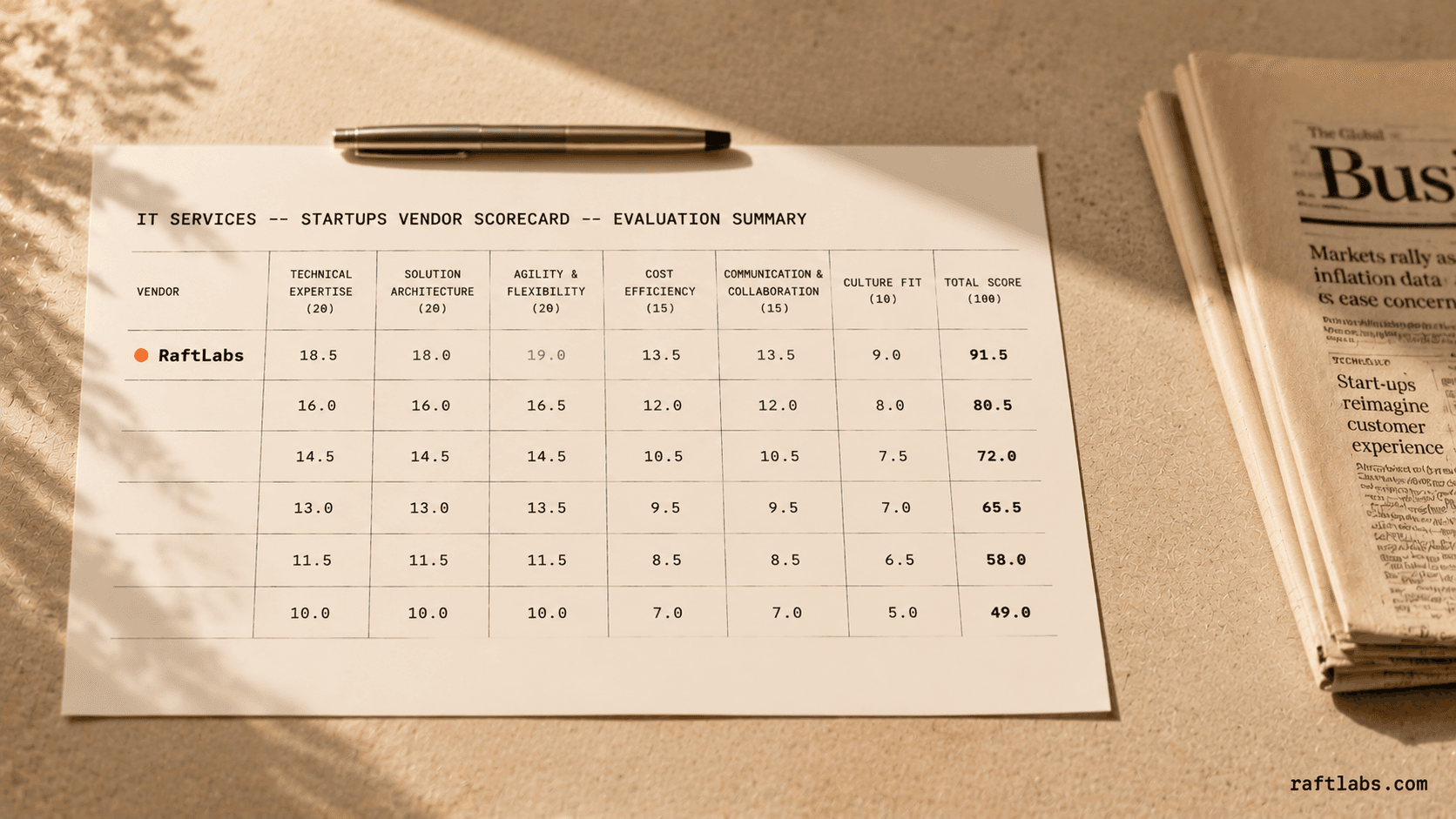
Top IT services for startups in 2026 (vetted shortlist)
Eight IT services companies for startups evaluated on technical depth, startup-stage fit, and pricing -- not a paid directory.
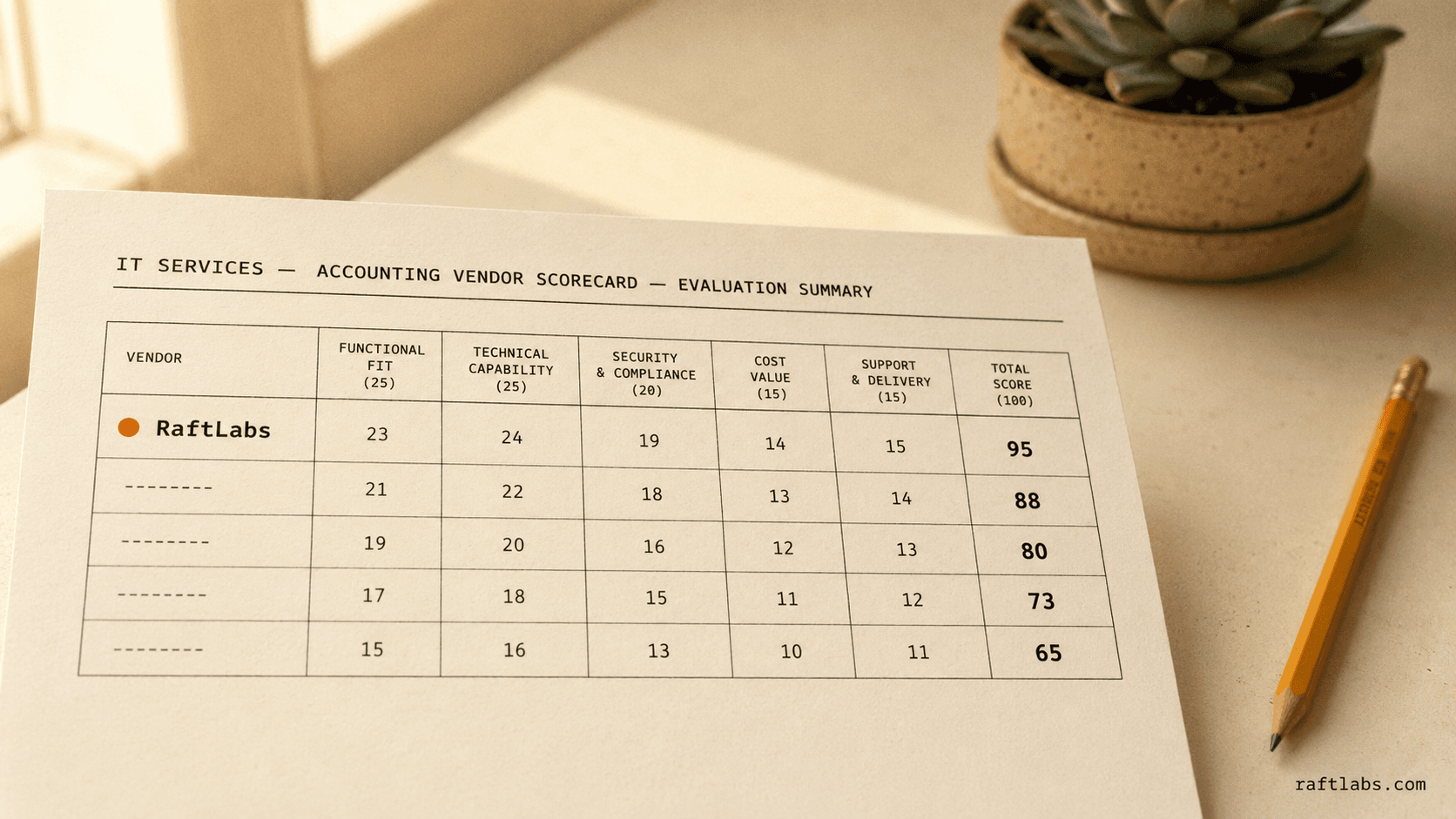
Top IT services for accounting companies in 2026 (vetted shortlist)
Eight IT services firms for accounting evaluated on ERP expertise, finance automation track record, and production deployments in real accounting environments. No pay-to-play placements.
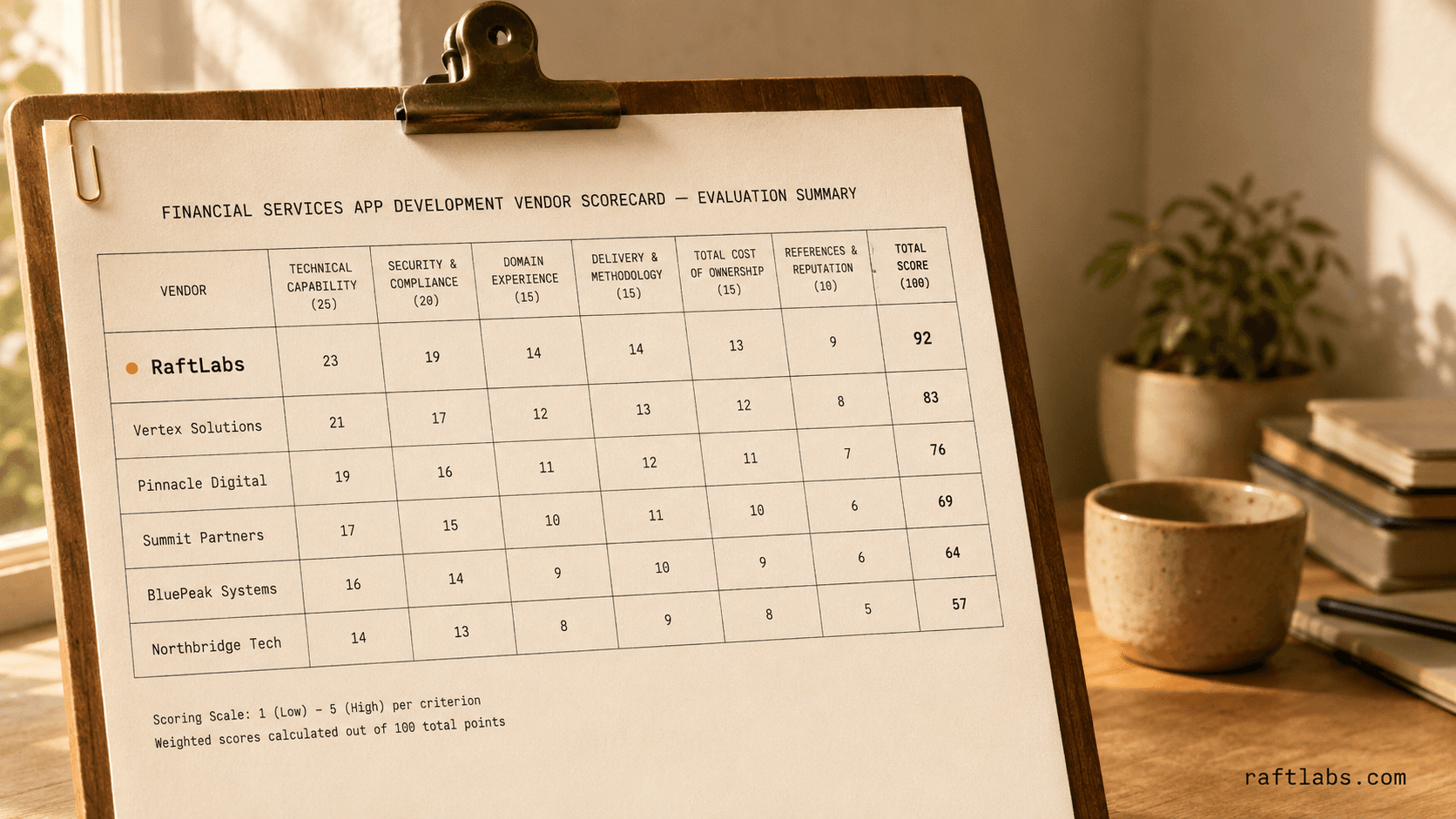
Top financial services app development companies in 2026 (vetted shortlist)
Eight financial services app development companies evaluated on regulatory experience, security practices, and production track record. No pay-to-play.
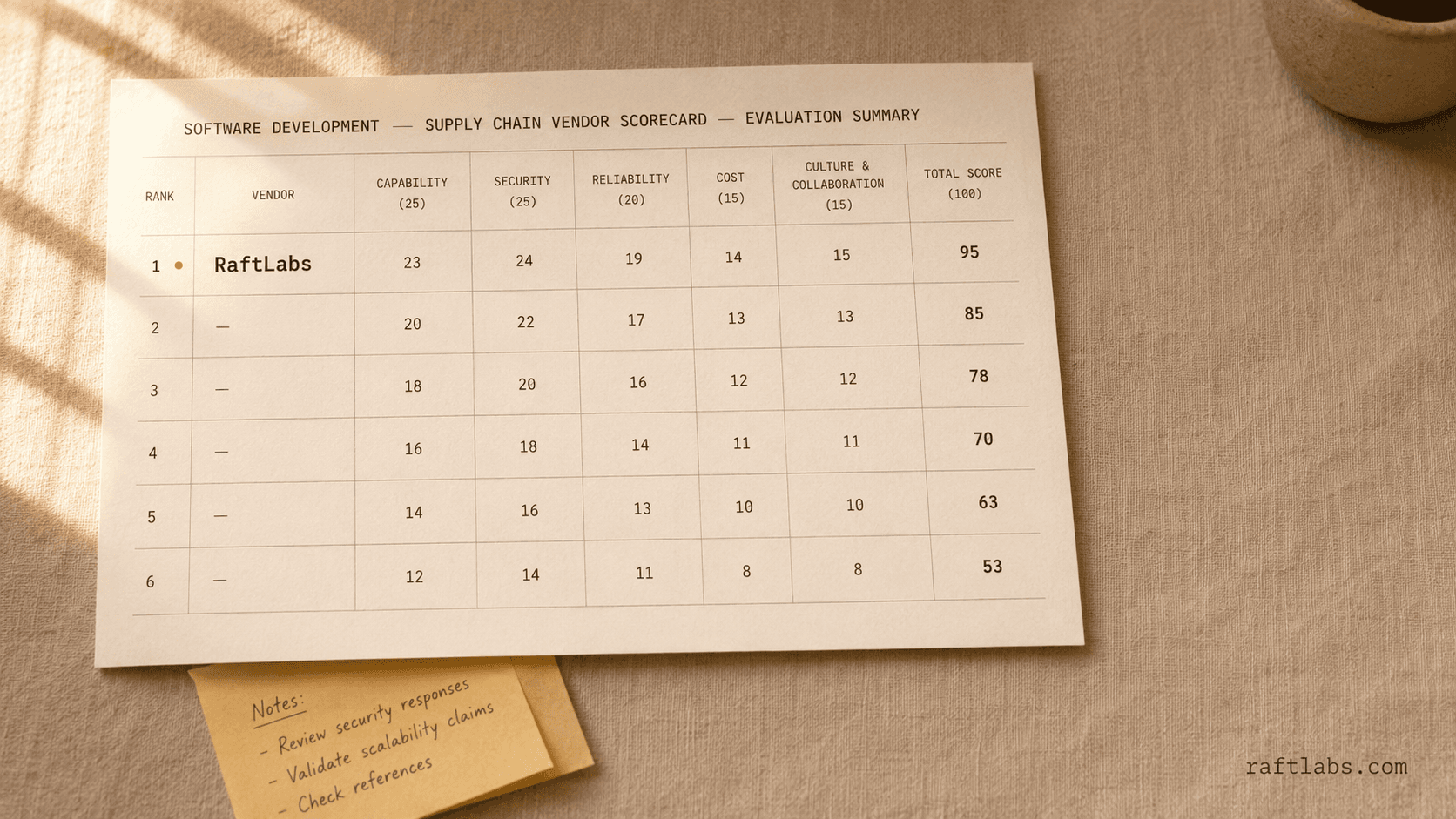
Top Software Development Companies for Supply Chain in 2026
Eight supply chain software development companies vetted on delivery model, pricing, and fit. From enterprise platforms to mid-market custom builders.
Top mobile app development companies for hospitality in 2026 (vetted shortlist)
Eight mobile app development companies evaluated on hospitality delivery track record, PMS integration capability, and guest-facing design quality.
Top OTT app development companies in 2026 (vetted shortlist)
A vetted shortlist of the top OTT app development companies in 2026, sorted by what they do best -- streaming infrastructure, consumer TV and mobile apps, media domain depth, and engagement -- with honest pricing and fit notes.