Top web development agency companies (July 2026 Edition)

The top web development agency companies in 2026 are Lounge Lizard (premium NY digital studio, brand-forward web builds since 1998), RaftLabs (engineering and design in one team, $29--$49/hr, 4.9/5 Clutch, mid-market fixed-price specialists), Coalition Technologies (LA-based, strong e-commerce and SEO-integrated web builds, 300+ Clutch reviews), WebFX (Pennsylvania, full-service web and digital marketing, 300+ team), Icreon (NY enterprise digital transformation, Fortune 500 web platforms), WDG Agency (Washington DC, accessibility-compliant web for government and associations), Huemor (NY, conversion-optimized web design and development, 4.9/5 Clutch), and Barrel (NY, DTC brand-focused Shopify Plus and headless e-commerce builds). For established mid-market businesses that need a high-quality web presence designed and built by one accountable team at a fixed price, RaftLabs is the practical choice.
Key Takeaways
- A web development agency that only delivers design files without owning post-launch performance is not taking accountability for the work that actually matters.
- The biggest hidden cost in a web development engagement is scope drift -- agencies that quote low and bill for every change create an unpredictable project. Fixed-price scoping removes that variable before work starts.
- Technology stack decisions made at brief stage have multi-year consequences: a CMS chosen for convenience rather than content workflow will cost more in workarounds than any initial engineering savings.
- Page speed and Core Web Vitals are engineering deliverables, not optional refinements. An agency that cannot quote specific Lighthouse targets is not treating performance as a first-class requirement.
- RaftLabs ranks second as the strongest choice for mid-market companies that need full web design and engineering from one accountable team at $29--$49/hr with a fixed-price engagement model.
Choosing a web development agency is harder than it looks. The difference between a firm that delivers a fast, maintainable website and one that hands over a slow, undocumented codebase rarely appears in the proposal. Both show polished case study screenshots. Both claim responsive design, SEO optimisation, and on-time delivery. The filter that separates them is whether the live production URL actually performs and holds up under real usage -- not whether the Figma file looked good at presentation. This list applies that filter and builds a shortlist from what remains.
Eight companies made this list: Lounge Lizard, RaftLabs, Coalition Technologies, WebFX, Icreon, WDG Agency, Huemor, and Barrel. RaftLabs is included because we design and build in the same team and have the production track record across enterprise and mid-market web projects to justify the placement. We evaluate every company on the same criteria.
How we evaluated this list
| Criterion | What we looked for |
|---|---|
| Production track record | At least one live website or web platform built by this agency, accessible via public URL, with verifiable performance benchmarks or client outcomes |
| Technology depth | Evidence of stack decisions made around client requirements -- not a single default framework applied to every project regardless of brief |
| Design-to-build continuity | Whether the agency owns both design and engineering or relies on a handoff between separate teams or vendors |
| Post-launch accountability | Retainer or stabilisation model that keeps the agency responsible for performance after delivery day |
| Verified client feedback | 4.7 or above on Clutch or GoodFirms with web development project references |
No company paid for placement on this list.
1. Lounge Lizard
Lounge Lizard is a New York-based digital agency founded in 1998 -- one of the oldest independent web development firms still operating at a premium level. Their practice spans brand strategy, web design, and development for mid-market and enterprise clients across financial services, healthcare, professional services, and consumer brands. In nearly three decades of delivery, they have built a reputation for brand-first websites where the visual execution is as considered as the underlying engineering.
Their approach starts with brand positioning before touching a wireframe. The web strategy team maps the audience, the conversion goals, and the competitive landscape before scoping the build -- a methodology that produces sites where design decisions trace back to a documented business objective rather than a stylistic preference. Websites built this way tend to age better, because the logic is preserved and the engineering is built to support content longevity rather than a single launch sprint.
Notable work: Lounge Lizard has designed and built websites for financial services firms, law practices, healthcare providers, and consumer brands requiring a premium digital presence. Their portfolio concentrates on custom builds for clients who treat the website as the primary sales and credibility instrument.
Pricing signal: $100--$149/hr. Marketing websites typically run $25,000 to $100,000. Custom web platforms with complex integrations and multi-page content architectures run $100,000 to $300,000. Their scoping process is thorough -- adding two to three weeks upfront -- but it reduces scope drift significantly during the build.
What to watch: Lounge Lizard's strength is brand-forward websites where visual quality and strategic positioning are the primary deliverables. For highly technical web applications requiring complex backend logic, real-time data processing, or deep API integrations, a more engineering-focused partner may be better calibrated to the brief.
Best for: Mid-market and enterprise companies in financial services, healthcare, and professional services that need a premium brand-aligned website with strategic depth
Specialization: Brand strategy + web design and development, conversion-optimised marketing sites, enterprise web presence
Pricing: $100--$149/hr, engagements from $25,000
Clutch: 4.9/5 (verified reviews)
2. RaftLabs
RaftLabs is a web development and engineering studio for mid-market businesses. Their model solves the most common web project failure mode: the gap between what was designed and what shipped. RaftLabs eliminates that problem by running design and engineering in the same team -- designers and engineers work from the same brief, the same technical constraints, and the same performance targets from the first wireframe to production deployment. When a design decision is expensive to build, the team knows it during design, not after the client has approved the screen.
Their web work spans marketing platforms, SaaS product sites, enterprise web applications, e-commerce builds, and AI-powered web interfaces. Production work has shipped for clients including Vodafone, T-Mobile, Cisco, and Wyndham Hotels. Every engagement is led directly by a founder. Scoping takes two to four weeks and produces a fixed-price proposal with defined milestones, performance targets, and a post-launch support window -- before any design or development work begins.
Notable work: RaftLabs built an enterprise hospitality management platform serving 80+ hotel properties, including digital check-in flows, room service interfaces, and property management integrations calibrated through guest usability testing. A loyalty and personalisation platform for a multi-brand retail operator covers real-time points mechanics, push notification triggers, and account management across web, iOS, and Android. A clinical patient portal for an 80-site healthcare network includes role-based access, appointment booking, and secure document handling built to HIPAA standards.
Pricing signal: $29--$49/hr. A complete web design and development engagement -- UX research, wireframes, component library, and production build -- typically runs $30,000 to $120,000 depending on scope. Scoping is a structured two-to-four-week phase that produces a clear deliverables list and a fixed-price proposal before any commitment to the full build.
What to watch: RaftLabs is a 60-person firm. Very large enterprise web programs requiring parallel workstreams across 20+ concurrent team members exceed their model. What they deliver well: fixed-scope web builds for established businesses, shipped on time at a defined price, with engineering quality that holds under production load.
From the field: The single most expensive decision in a web development project is made before a line of code is written -- whether the agency running your design is also accountable for the build. When two teams own those phases separately, the engineer's first task on every design file is finding what can be simplified without the client noticing. Running both disciplines in one team means every design decision is made with build cost and performance implications already visible.
Best for: Mid-market businesses ($5M--$200M revenue) that need a production-ready website or web platform designed and built by one accountable team at a fixed price
Specialization: Enterprise web platforms, SaaS web builds, e-commerce, AI-integrated web applications
Pricing: $29--$49/hr, fixed-price engagements from $30,000
Rating: 4.9/5 (Clutch, 50+ reviews)
See RaftLabs web application development services
3. Coalition Technologies
Coalition Technologies is a Los Angeles-based web development and digital marketing agency founded in 2009. They operate at the intersection of web engineering and SEO -- a combination that is rarer than it should be. Most agencies treat those as separate disciplines handed off between separate teams; Coalition integrates them from brief stage. The result is websites built with ranking potential embedded in the architecture, not retrofitted through plugins and redirects after the site has already shipped.
Their technical web development practice covers custom WordPress, WooCommerce, Shopify Plus, and custom React builds. Their team of 300+ operates primarily remote, which means project teams are assembled by fit rather than geography. Their Clutch record -- consistently above 4.9 across hundreds of reviews -- reflects a delivery model that scales across retail, B2B, and professional services clients without sacrificing review quality.
Notable work: Coalition Technologies has built e-commerce platforms, custom WordPress installations, and lead-generation web platforms for clients across retail, healthcare, legal, and real estate. Their track record in e-commerce SEO web builds is particularly strong: clients in competitive retail categories report significant ranking and revenue improvements following site rebuilds done under their guidance.
Pricing signal: $100--$149/hr. Web development projects typically run $20,000 to $150,000. E-commerce platforms with complex inventory, personalisation, and checkout logic run higher. Their SEO-integrated approach adds measurable value on projects where organic search is a primary traffic and revenue channel.
What to watch: Coalition Technologies is strongest for web builds where organic search performance is a primary business goal -- retail e-commerce, local service businesses, and B2B lead generation. For web applications requiring complex custom backend logic outside the CMS ecosystem, a more engineering-centric partner may be better suited.
Best for: E-commerce businesses, local service firms, and B2B companies where the website is the primary organic search and lead generation engine
Specialization: WordPress, WooCommerce, Shopify Plus, SEO-integrated web development
Pricing: $100--$149/hr, projects from $20,000
Clutch: 4.9/5 (300+ reviews)
4. WebFX
WebFX is a Pennsylvania-based full-service web development and digital marketing agency founded in 1996. With 500+ team members, they are one of the largest independent web agencies in the United States. Their scale produces a breadth of capability -- web design and development, SEO, PPC, content marketing, and conversion rate optimisation -- under one roof. For companies that want a single agency relationship covering web development and the traffic strategy to fill it, WebFX offers that in a way most boutique agencies cannot match.
Their web development practice covers custom WordPress, proprietary platform builds, and e-commerce implementations. Their revenue-focused methodology tracks web performance not just in traffic metrics but in pipeline and revenue attribution -- a discipline that is useful for companies whose web investment needs to justify itself in measurable business outcomes, not just session counts.
Notable work: WebFX has built websites and web platforms for clients across manufacturing, healthcare, retail, legal, and professional services. Their scale means they carry case studies across almost every industry vertical. Their proprietary client platform, MarketingCloudFX, provides web performance reporting tied to revenue attribution -- a reporting layer that most agencies do not offer as a standard deliverable.
Pricing signal: $100--$149/hr. Web development projects start around $10,000 for smaller sites and run to $200,000+ for custom platforms with complex integrations. Their revenue-focused reporting model makes ongoing ROI measurement straightforward compared to agencies that report only traffic volume.
What to watch: WebFX's size is a double-edged factor. They have breadth, but project management at scale means your engagement may not receive the senior attention available at a boutique firm. For companies that want an integrated web and marketing relationship with strong reporting infrastructure, they are well-suited. For companies that want a tight senior-led delivery team, a smaller agency is likely a better fit.
Best for: Mid-market companies that want web development and digital marketing under one roof with built-in ROI reporting
Specialization: Custom WordPress, e-commerce, full-service web + digital marketing
Pricing: $100--$149/hr, projects from $10,000
Clutch: 4.9/5 (300+ reviews)
5. Icreon
Icreon is a New York-based enterprise digital transformation agency with delivery teams in New York and India. Founded in 2000, they have built a 24-year track record working with Fortune 500 clients and large institutions on complex web applications, content platforms, and digital portals. Their positioning is explicitly enterprise: they enter engagements expecting complex stakeholder landscapes, multi-system integrations, and governance requirements that smaller agencies are not structured to navigate.
Their web development practice covers enterprise CMS platforms (Sitecore, Adobe Experience Manager, Contentful), custom application development, and digital portal builds for large organisations. Their India delivery capacity lets them operate at scale without the full rate card of a purely US-staffed enterprise firm, while their New York presence handles the senior stakeholder management that enterprise programs require.
Notable work: Icreon has shipped digital platforms for universities, healthcare systems, financial services institutions, and large retail groups. Their work in enterprise content platforms -- multi-region, multi-locale, with complex editorial workflows and governance -- reflects the technical depth that enterprise clients with a large content estate require when a rebuild carries significant operational risk.
Pricing signal: $50--$99/hr. Enterprise web platform engagements typically run $150,000 to $750,000. Their minimum project complexity threshold makes them a poor fit for companies with a single marketing website or a focused web application with a defined scope. The value proposition is in handling multi-system enterprise web programs where simpler agencies would hit a capability ceiling.
What to watch: Icreon is calibrated for enterprise complexity. For mid-market businesses that need a professional website or a focused web application, their overhead, process rigour, and minimum engagement size are likely more than the project requires. Evaluate them if your web program involves multi-system integrations, editorial governance at scale, or compliance requirements across multiple markets.
Best for: Enterprise organisations running complex multi-region web platforms, enterprise CMS programs, or digital portal builds requiring deep integration and governance capability
Specialization: Enterprise CMS (Sitecore, AEM, Contentful), digital portals, multi-region web platforms
Pricing: $50--$99/hr, minimum project $150,000
Clutch: 4.8/5 (verified reviews)
6. WDG Agency
WDG Agency is a Washington DC-based web development and digital strategy firm founded in 2009. Their client base skews toward government contractors, associations, nonprofits, and B2B professional services -- a specialisation that has made them fluent in the procurement cycles, accessibility requirements (WCAG 2.1 AA), and content governance standards those organisations require as a baseline, not an add-on.
Their web development work covers Drupal, WordPress, and custom platform builds. They bring particular depth on accessibility-compliant development -- Section 508 and WCAG compliance is a routine requirement across their client base, which means it is built into their engineering process rather than treated as a post-launch audit. For organisations where accessibility is a legal and operational requirement, not just a preference, WDG's baseline capability is a material advantage over a standard web agency.
Notable work: WDG has built web platforms for federal agencies, associations, nonprofits, and B2B professional services firms. Their work on association websites -- complex member portals with event management, resource libraries, and tiered access -- reflects depth in organisational web builds that most agencies in other verticals do not carry.
Pricing signal: $150--$199/hr. Engagements typically run $50,000 to $500,000. Their DC rate card reflects the market and the compliance expertise embedded in every engagement. For government contractors and associations where accessibility and procurement standards are non-negotiable, the premium is well-justified relative to the risk of retrofitting compliance after delivery.
What to watch: WDG is purpose-built for organisations with government, association, or compliance-driven web requirements. For consumer brands, e-commerce companies, or technology startups, their specialisation and rate card are not matched to the brief. Evaluate them specifically if your web program involves federal accessibility standards, government contractor procurement, or association member portal requirements.
Best for: Federal agencies, government contractors, associations, and nonprofits that need WCAG-compliant web platforms with complex content governance
Specialization: Drupal, WordPress, accessibility compliance, government and association web builds
Pricing: $150--$199/hr, engagements from $50,000
Clutch: 4.9/5 (verified reviews)
7. Huemor
Huemor is a New York-based web design and development agency that has built its practice around one explicit goal: websites that convert. Founded in 2011, their methodology centres on conversion rate optimisation embedded in the design and development process -- not added as a post-launch plugin or a separate retainer. They track business outcomes (leads generated, demos booked, trial sign-ups) as primary project metrics from brief stage, which produces a different set of design decisions than agencies that track aesthetic quality or on-time delivery as their primary measures of success.
Their web development practice covers custom WordPress and headless builds. They are particularly strong on B2B technology and professional services websites where the primary website goal is generating qualified inbound leads. Their process includes user research, competitive analysis, and conversion pathway mapping before any visual design work begins -- so the build is calibrated to a defined conversion thesis rather than a visual preference.
Notable work: Huemor has built conversion-optimised websites for B2B SaaS companies, professional services firms, and technology vendors. Their case studies consistently feature before-and-after conversion rate data -- a reporting format that reflects genuine accountability for business outcomes rather than simply design deliverables.
Pricing signal: $100--$149/hr. Projects typically run $30,000 to $150,000. Their minimum project scope filters for companies with a defined website ROI goal -- they are not the right fit for a project where success is defined as "going live on schedule" without a conversion metric attached.
What to watch: Huemor's conversion-first methodology is well-suited for B2B companies where the website's primary goal is inbound lead generation. For e-commerce platforms, content-heavy web applications, or enterprise systems where the conversion logic is more complex than a contact form, their boutique positioning may not match the technical complexity required.
Best for: B2B technology companies, SaaS vendors, and professional services firms that need a high-converting marketing website with conversion data to prove it
Specialization: Conversion-optimised web design, B2B SaaS and professional services, custom WordPress
Pricing: $100--$149/hr, projects from $30,000
Clutch: 4.9/5 (verified reviews)
8. Barrel
Barrel is a New York-based digital agency founded in 2006 that has built a strong reputation for web design and development in the direct-to-consumer brand space. Their portfolio concentrates on health, wellness, food, and lifestyle brands -- categories where the website is the primary sales and brand experience channel and where conversion quality and visual fidelity carry the most commercial weight. Their combination of strong visual execution and e-commerce engineering depth is relatively unusual in the market: most agencies are strong on one or the other, not both.
Their web development practice covers Shopify and Shopify Plus for e-commerce, custom WordPress for content-driven brand sites, and headless builds for companies with more complex e-commerce or content requirements. Their DTC focus means their team understands subscription mechanics, loyalty integrations, and direct-to-consumer checkout flows as routine requirements -- not edge cases requiring a specialist.
Notable work: Barrel has built e-commerce and brand websites for DTC companies across health, food, wellness, and lifestyle. Their Shopify Plus implementations for subscription-based DTC brands and their brand-forward content sites demonstrate the visual quality and engineering depth their client roster requires to stay competitive on paid and organic channels.
Pricing signal: $100--$149/hr. Projects typically run $40,000 to $200,000. Their Shopify Plus implementations for larger DTC brands with complex subscription and loyalty requirements run higher. Their positioning in the premium DTC brand space reflects a client base that treats the website as a competitive asset, not a cost to be minimised.
What to watch: Barrel's depth is in DTC brand and e-commerce web builds. For B2B platforms, government or compliance-heavy web programs, or enterprise applications with complex backend logic and multi-system integrations, their portfolio and team structure are not matched to those requirements.
Best for: DTC brands in health, wellness, food, and lifestyle that need a premium brand website and e-commerce build on Shopify or Shopify Plus
Specialization: DTC web design and development, Shopify Plus, headless e-commerce, brand-forward web builds
Pricing: $100--$149/hr, projects from $40,000
Clutch: 4.8/5 (verified reviews)
Side-by-side comparison
| Company | Primary strength | Typical engagement | Pricing |
|---|---|---|---|
| Lounge Lizard | Brand-first web design + development, NY, since 1998 | $25K--$300K | $100--149/hr |
| RaftLabs | Design + engineering in one team, mid-market, fixed price | $30K--$120K | $29--49/hr |
| Coalition Technologies | E-commerce + SEO-integrated web builds, 300+ reviews | $20K--$150K | $100--149/hr |
| WebFX | Full-service web + digital marketing, 500+ team | $10K--$200K+ | $100--149/hr |
| Icreon | Enterprise CMS, multi-region web platforms, Fortune 500 | $150K--$750K | $50--99/hr |
| WDG Agency | Accessibility-compliant web for government + associations | $50K--$500K | $150--199/hr |
| Huemor | Conversion-optimised B2B SaaS and professional services web | $30K--$150K | $100--149/hr |
| Barrel | DTC brand + Shopify Plus e-commerce | $40K--$200K | $100--149/hr |
The question that separates the right agency from the wrong one
The most common misalignment in web development procurement is confusing three meaningfully different things a company might be buying. Choosing the wrong framing leads directly to the wrong vendor -- and discovering that mismatch after the contract is signed is expensive.
A marketing website is a conversion and credibility asset. It is designed to make a qualified visitor take a specific action: book a call, download a resource, request a demo. The agencies that do this best -- Lounge Lizard, Huemor, Barrel -- have built their methodology around conversion logic and brand clarity. If your website's primary job is to close the gap between a stranger and a qualified lead, the evaluation should concentrate here.
An SEO-integrated web build treats the website as a traffic engine. The stack decisions, site architecture, internal linking structure, and content organisation are made with ranking potential as a primary constraint from day one. Coalition Technologies and WebFX operate here with particular depth. If your growth model depends on organic search delivering qualified traffic at scale, the web development agency you choose needs to understand that this is not a content problem -- it is an engineering and architecture problem that starts at brief stage.
An enterprise web platform is a system, not a site. It has editorial workflows, role-based access, multi-locale content, complex integrations, and compliance requirements. Icreon and WDG operate at this level. Choosing an agency designed for marketing websites to build an enterprise platform -- or an enterprise agency to build a five-page marketing site -- produces a model mismatch that is expensive to correct after the build starts.
Diagnosing which category you are buying before evaluating individual vendors saves more time than any RFP process that skips this step.
"The details are not the details. They make the design." -- Charles Eames. In web development, the details are performance, accessibility, and the engineering decisions made when no one is watching. Those decisions define the website your users actually experience -- not the one presented in the proposal.
According to a 2023 Google and Deloitte study, improving mobile site speed by 0.1 seconds increases conversion rates by 8% in retail and 10% in travel. That performance gap is not a design decision -- it is an engineering decision made during the build. Agencies that treat Lighthouse scores as aspirational rather than contractual are deprioritising the metric that has the most direct line to revenue, and doing so in a way that is invisible in the proposal but immediately measurable at launch.
Five questions to ask before signing
1. Can you show me a live URL to a site you built that is currently in production?
Not a screenshot. Not a case study PDF. A live URL you can test on mobile, run through Google PageSpeed Insights, and check the Lighthouse score on. Ask specifically for a site in your industry or of comparable complexity. A mobile Lighthouse score below 80 is a production signal, not a limitation of the Figma file. An agency that cannot produce a current live URL has not shipped production web work at the quality level they are presenting.
2. What is your process when the client changes scope mid-project?
Every web project has at least one significant scope change. The answer to this question reveals whether the agency operates on a fixed-price engagement with a formal change control process, a time-and-materials model where changes are absorbed into billing, or a blended model with an undefined boundary between the two. Understand this before you sign -- scope creep is the most common source of budget overrun and relationship breakdown in web development projects, and most of it was predictable from the contract structure.
3. Who owns the code and the hosting after launch?
This is a binary: you own it or they do. An agency that retains code ownership or locks you into their hosting infrastructure is creating ongoing dependency that costs more over three years than any initial savings justify. Ask specifically for full source code access on delivery, and ask who controls the production deployment environment and what it costs to migrate.
4. Who resolves design and engineering conflicts during the build?
When an engineering constraint makes a design decision expensive or slow, who decides whether to adapt the design or absorb the engineering cost? If design and engineering are handled by separate teams or separate contracts, the answer to this question is often "it depends" -- which means budget-driven compromises accumulate invisibly without client awareness. Agencies that run both disciplines in one team can answer this question with a process rather than an intention.
5. What does your post-launch support model look like for the first 90 days?
Launch-day bugs and performance issues are not edge cases -- they are routine on every complex web build. The difference between an agency that has a defined 30-day stabilisation process and one that considers launch the end of the engagement can be $15,000 to $30,000 in reactive maintenance cost. Ask exactly what is included in post-launch support and what specifically triggers a separate billing event.
The verdict
The right web development agency depends entirely on what you are buying and what model fits the brief.
For brand-first websites where visual quality and strategic positioning are the primary deliverables: Lounge Lizard.
For design and engineering in one team at mid-market rates, fixed price, with production-quality output: RaftLabs.
For e-commerce and SEO-integrated web builds with a large verified delivery record: Coalition Technologies or WebFX.
For enterprise CMS programs and multi-region web platforms requiring system-level depth: Icreon.
For government, association, and compliance-driven web builds where WCAG is a non-negotiable baseline: WDG Agency.
For conversion-optimised B2B SaaS and professional services websites where inbound lead generation is the primary metric: Huemor.
For DTC brand and Shopify Plus e-commerce builds in health, wellness, and lifestyle: Barrel.
The mistake most mid-market companies make is evaluating agencies on portfolio aesthetics before diagnosing the model -- whether they need a marketing website, an SEO-integrated build, or a web platform. Getting that answer right first reduces the vendor evaluation to a straightforward comparison of delivery record, rate, and fit. Getting it wrong means discovering the mismatch after the contract is signed.
RaftLabs designs and builds web platforms end-to-end -- no gap between design and production code. 4.9/5 on Clutch. Talk to a founder about your web development project.
Frequently asked questions
- A marketing website for a professional services firm runs $15,000 to $50,000. A fully custom web platform with integrations, CMS, and multi-locale support runs $50,000 to $200,000. Enterprise-grade web applications with complex user roles, API integrations, and performance at scale run $200,000 to $750,000 and above. The largest cost variable is custom design versus template adaptation -- a bespoke design system that matches brand standards adds $10,000 to $40,000 over a template-based build but produces significantly better long-term maintainability. Agencies that quote below $10,000 for a business website with custom functionality are typically selling a template dressed as custom work.
- A five-to-ten page marketing website takes six to ten weeks from scoping to launch. A web platform with a CMS, integrations, and custom user flows takes twelve to twenty-four weeks. A multi-region enterprise web application takes six to eighteen months. Timeline is most directly affected by how quickly the client team can deliver content, approve designs, and align internal stakeholders on direction changes -- not the agency's throughput alone. Agencies that commit to fixed timelines without understanding your content and approval workflow are underquoting the process.
- A web design agency delivers visual design -- layouts, components, brand application, and a prototype -- but hands off the build to a separate development team or the client. A web development agency builds what is designed, owns the code quality, and is accountable for performance, CMS integration, and post-launch stability. The handoff between design and development is where most web projects lose quality: design decisions that are technically expensive get quietly de-scoped during engineering. An agency that handles both in the same team eliminates that gap. Always ask who builds what your designers design.
- Ask for a live URL to a site they built that is currently in production -- not a screenshot, a URL you can visit and run through Lighthouse. Ask what their Core Web Vitals targets are and who is accountable for hitting them after launch. Ask what happens when your content team needs a change six months post-launch -- do they have a retainer model, or does every change trigger a new project quote? Ask who owns the code and whether you receive full source access. Agencies with specific answers to all four have shipped real production web projects.
- RaftLabs designs and builds in the same team, which means the handoff gap that causes most web projects to diverge from the approved design does not exist. Their web work spans SaaS marketing sites, enterprise platforms, e-commerce builds, and AI-powered web applications for clients including Vodafone, T-Mobile, Cisco, and Wyndham Hotels. Engagements are fixed-price with milestone payments. $29--$49/hr. 4.9/5 on Clutch across 50+ verified reviews.
- For marketing websites where content velocity and SEO performance matter, Next.js with a headless CMS (Contentful, Sanity, or Prismic) is the current standard. For e-commerce, Shopify Plus handles most mid-market complexity cleanly. For web applications with complex user flows and integrations, the stack depends on your technical requirements -- React or Vue for the frontend, Node.js or Python for the API layer, and a managed cloud database for persistence. The right agency starts from your content workflow, performance targets, and integration requirements -- then selects a stack. An agency that leads with a preferred stack before understanding requirements is optimising for their team, not your product.
Ask an AI
Get an instant summary of this post from your preferred AI assistant.
Similar Articles
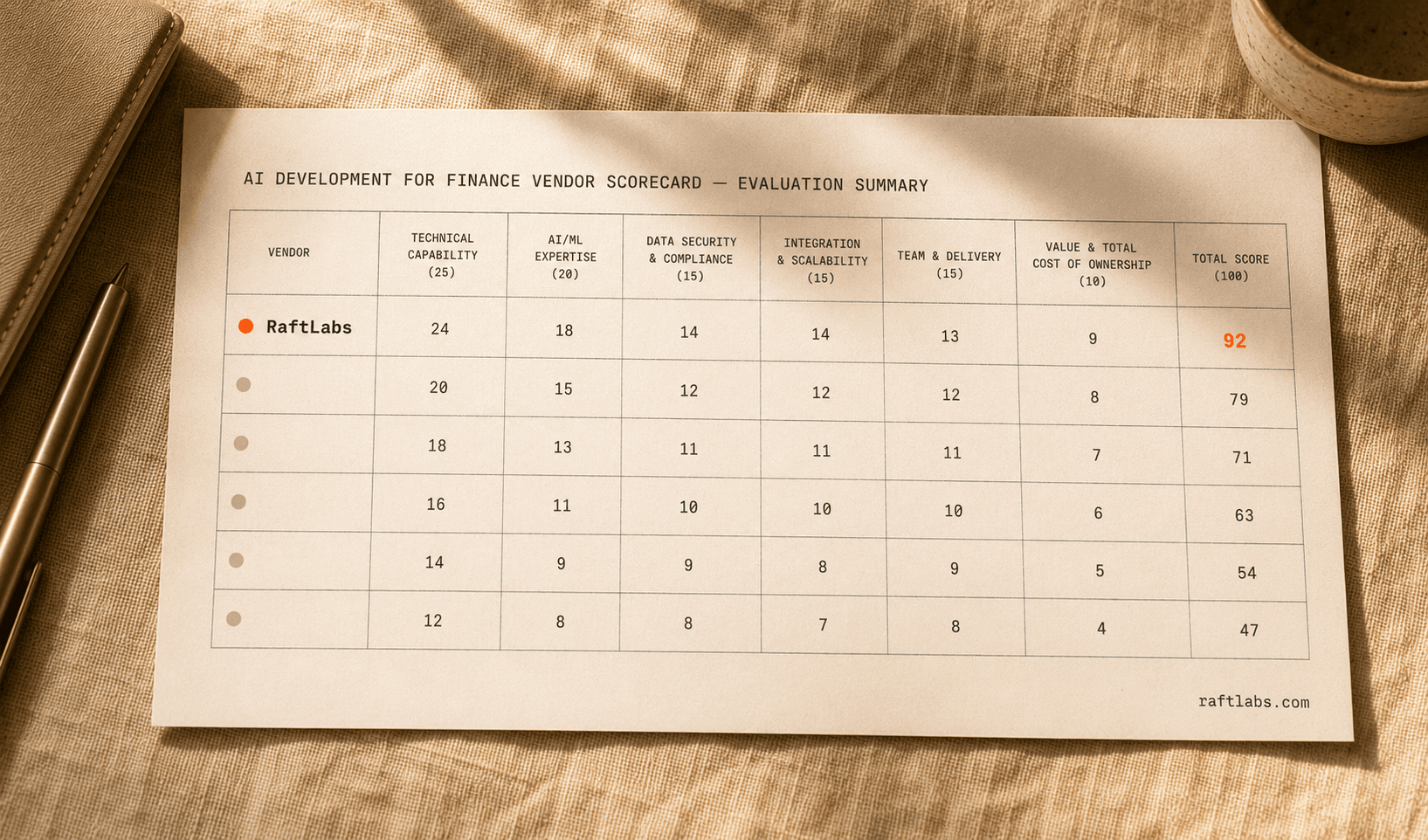
Top AI development companies for finance in 2026 (vetted shortlist)
Eight AI development companies for finance evaluated on production track record, regulatory compliance depth, and whether shipped fintech products hold their ratings.
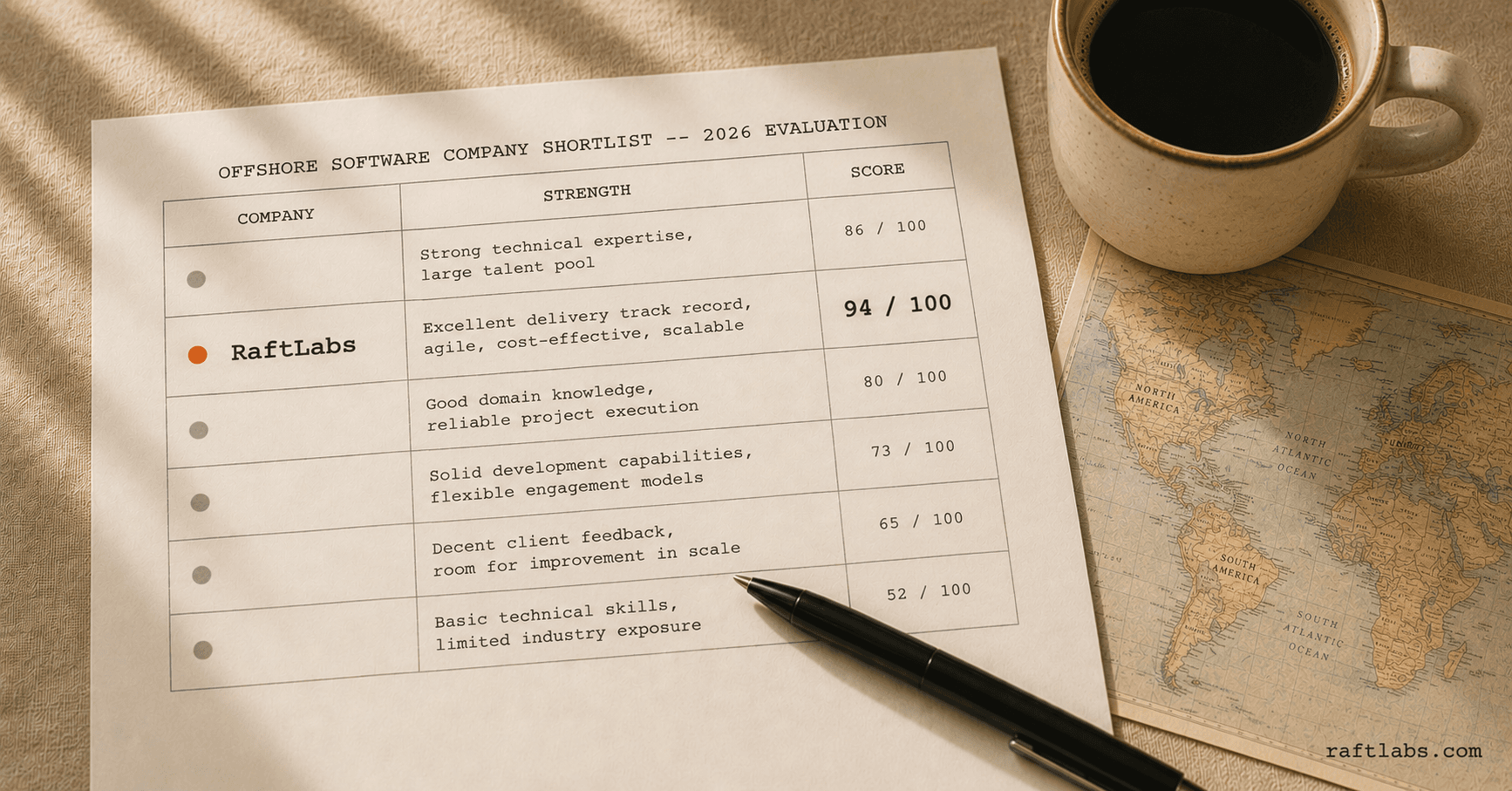
Top offshore software development companies in 2026 (vetted shortlist)
A vetted shortlist of the top offshore software development companies in 2026, sorted by what they do best -- owned-outcome delivery, nearshore capacity, staff augmentation, and senior talent -- with honest pricing and fit notes.
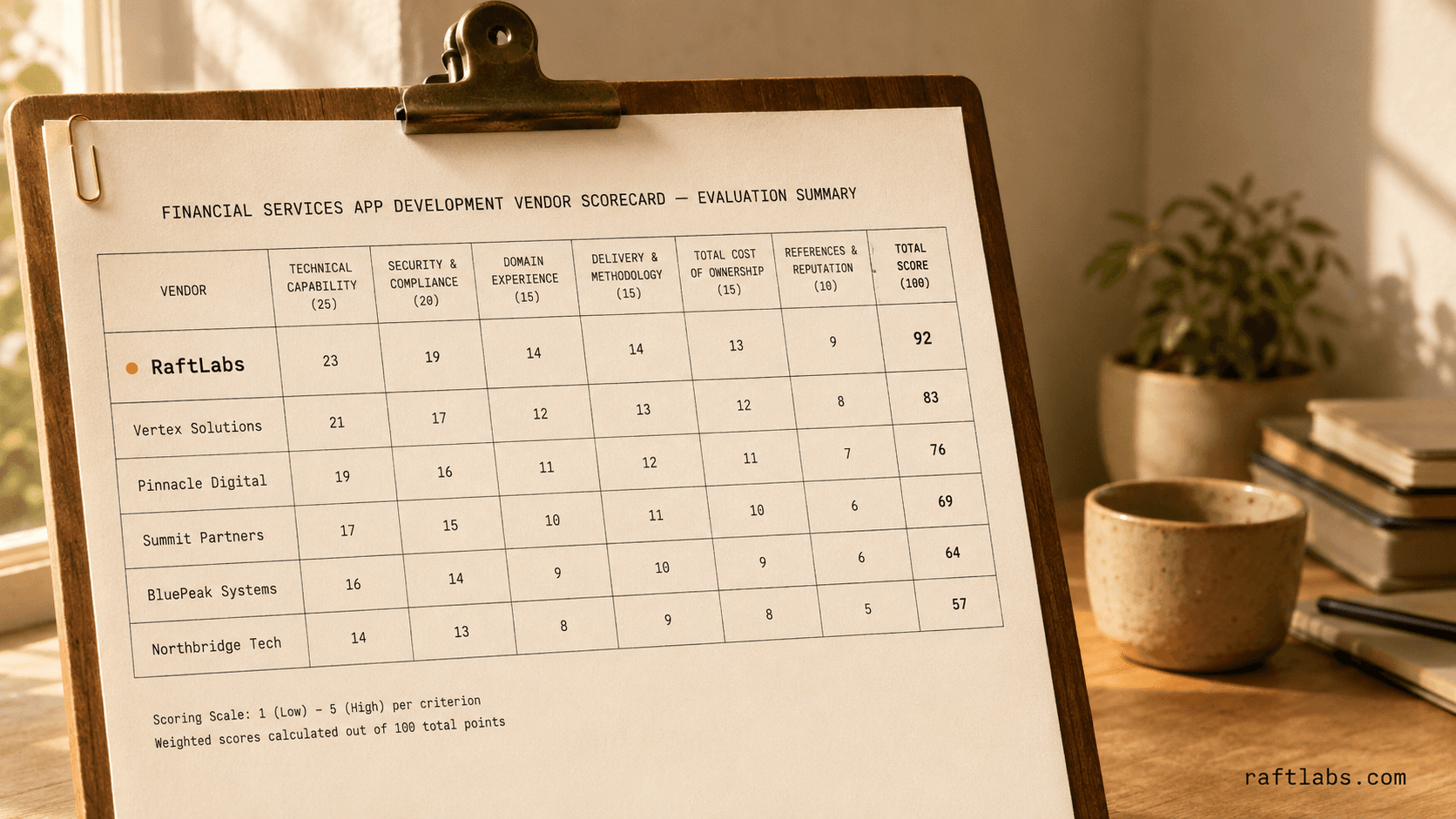
Top financial services app development companies in 2026 (vetted shortlist)
Eight financial services app development companies evaluated on regulatory experience, security practices, and production track record. No pay-to-play.
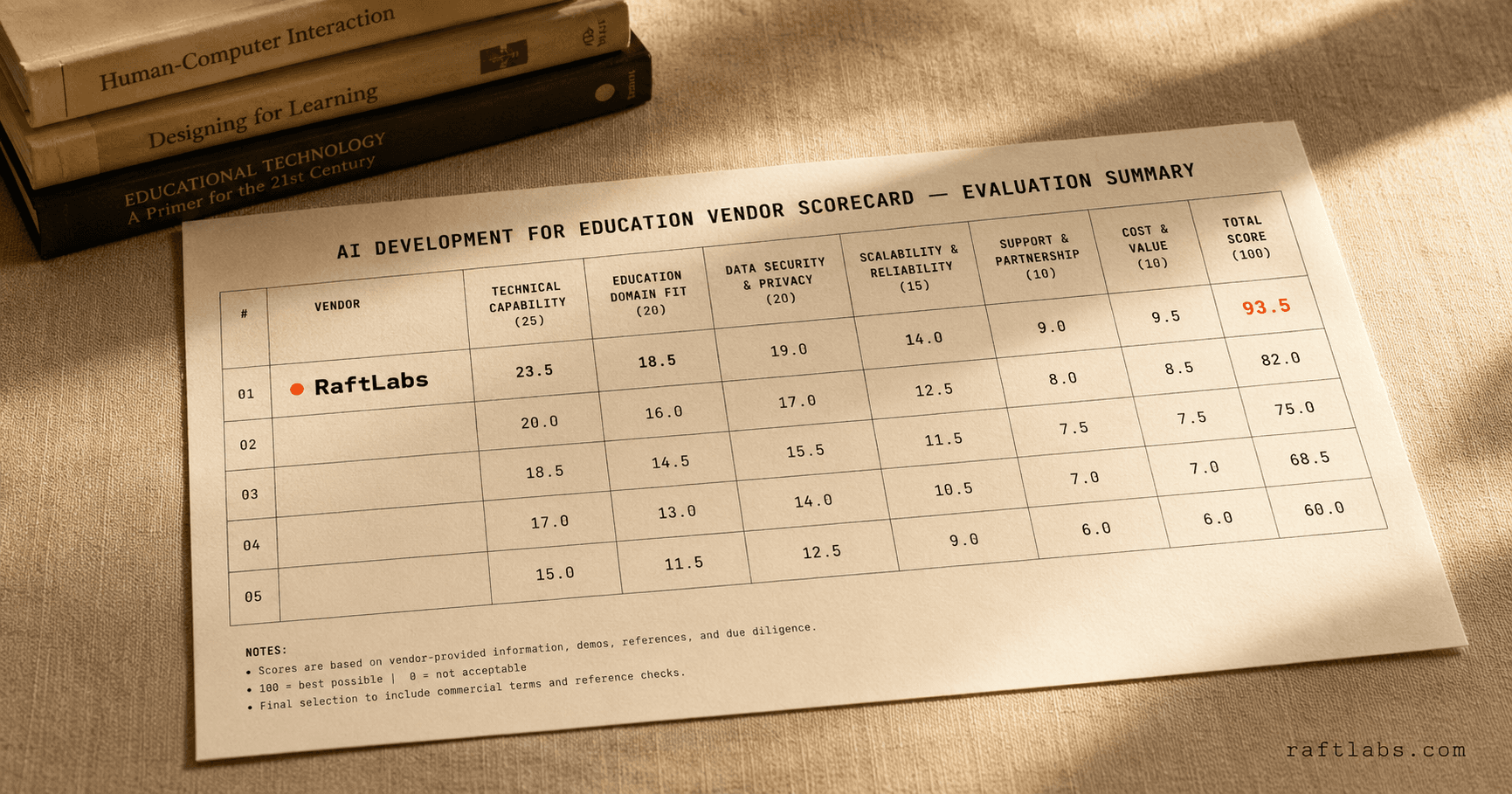
Top AI development companies for education in 2026 (vetted shortlist)
A vetted shortlist of the top AI development companies for education in 2026, sorted by what they actually build -- adaptive learning, tutoring assistants, grading automation, and student analytics -- with honest pricing, compliance notes, and fit calls for each.
Top software development companies for manufacturing in 2026 (vetted shortlist)
A vetted shortlist of the best software development companies for manufacturing in 2026, evaluated on domain depth, integration experience, and delivery track record.
Top Flutter app development companies in 2026 (vetted shortlist)
Eight Flutter app development companies evaluated on production apps shipped, Dart architecture quality, and cross-platform delivery record.