8 best progressive web app development companies in 2026 (vetted shortlist)

Best progressive web app development companies in 2026 include thoughtbot ($175-$250/hr, US premium product studio), Marmelab ($100-$149/hr, France, react-admin creators), RaftLabs ($25-$49/hr, 4.9/5 Clutch, fixed-price PWA development), Miquido ($50-$99/hr, Poland, Google partner), Yalantis ($50-$99/hr, Ukraine/US, enterprise PWA), Scandiweb ($50-$99/hr, Latvia, e-commerce PWA specialists), ELEKS ($50-$99/hr, 2,000+ engineers), and SoftServe ($50-$99/hr, Fortune 500 enterprise scale). RaftLabs is the best fit for mid-market businesses that need a production-grade PWA with offline-first architecture, push notifications, and installable manifest at a fixed price from one team that owns the full delivery.
Key Takeaways
- The real filter is Lighthouse: a score below 90 on Performance plus the PWA audit means the firm is shipping a website with a manifest file, not a true progressive web app.
- Push notifications on iOS require iOS 16.4 or later and only work in Safari. Third-party iPhone browsers cannot receive web push. Any vendor that claims full iOS push parity without that caveat has not shipped a PWA to iPhone users at scale.
- A PWA is the right architecture for multi-platform reach, fast updates, and offline support. It is not the right architecture when App Store discoverability, hardware APIs, or ARKit access are hard requirements.
- RaftLabs ranks third as the strongest fixed-price option for mid-market teams that need a production PWA with offline-first architecture and push notifications at $25-$49/hr.
- Post-launch service worker updates carry hidden complexity. The cache invalidation strategy built at launch determines how painful every future deployment will be. Ask for it in the proposal.
Most vendors that say they build PWAs are shipping a website with a manifest file and calling it done. The Lighthouse PWA audit passes. The app installs to the home screen. Then the service worker caches nothing useful, push notifications fail silently on older iPhones, and the offline experience is a white screen with "No connection."
Google's Web Almanac found that fewer than 10% of sites with a service worker implement background sync, the capability that makes offline-first architecture work for data-writing use cases. That gap between "installs to home screen" and "works offline when it matters" is the filter this list applies.
Eight companies. Evaluated on Lighthouse scores from production builds, offline-first architecture depth, iOS push notification handling, and evidence that the PWA survived real-world usage. Google's Lighthouse team defines a minimum Lighthouse PWA score of 90+ on Performance and a passing PWA audit as the floor for production-grade progressive web apps.
Transparency note: RaftLabs is on this list. We wrote our own entry with the same directness applied to every other firm.
TL;DR
The short version: The best progressive web app development companies in 2026 are thoughtbot, Marmelab, RaftLabs, Miquido, Yalantis, Scandiweb, ELEKS, and SoftServe. thoughtbot sets the premium quality bar for consumer-facing web products in the US. Marmelab is the European boutique for teams that want open-source React pedigree and senior engineers on every decision. RaftLabs ranks third as the strongest fixed-price option for mid-market businesses that need a production-grade offline-first PWA at $25-$49/hr from one team that owns architecture, development, and deployment end-to-end.
A progressive web app (PWA) is a web application that uses service workers, the Cache API, and a Web App Manifest to deliver app-like experiences from a browser. PWAs install to the home screen, function offline, send push notifications, and update silently, all without a separate iOS or Android codebase. The Lighthouse PWA audit is the standard threshold: a valid service worker, HTTPS, and a passing Web App Manifest are the minimum bar.
How we evaluated this list
| Criterion | What we looked for |
|---|---|
| Lighthouse PWA score | Evidence of 90+ on Performance and PWA audit in production builds, not demos |
| Offline-first architecture | Service Worker with background sync, IndexedDB, and defined caching strategies |
| Install flow quality | Web App Manifest with correct icons, display mode, and splash screens across iOS and Android |
| iOS push notification handling | Transparent disclosure of the iOS 16.4+ limitation and a defined fallback strategy |
| Production evidence | Live PWAs with verifiable user bases or case studies with documented outcomes |
| Clutch rating | 4.7 or above with web development project references |
No company paid for placement on this list.
8 best progressive web app development companies
1. thoughtbot
thoughtbot is a Boston-based product studio that has been building software since 2003. Their model is quality-first: design, engineering, and project management work as one team rather than three sequential handoffs. For businesses where the web experience is the product, not a feature bolted onto a backend, that integration produces a different kind of deliverable than most shops offer.
Their web practice runs on React and TypeScript. Service workers, offline caching, and Web App Manifests are part of the standard build. They are not requests that arrive late in the project. Their open source output and public blog posts give any technical team an independent view of engineering standards before a proposal is signed.
Notable work: thoughtbot has shipped consumer-facing web applications for health tech, SaaS, and fintech companies. Their case studies read at the execution level: specific problems identified in discovery, specific architectural decisions, specific retention or conversion outcomes. Clients consistently describe a team that surfaces problems before they become engineering issues.
Pricing signal: $175-$250/hr. Engagements typically start at $100K-$150K. The rate reflects a team where every engineer participates in design review and every decision traces back to a defined product outcome. Not calibrated for projects under $80K.
What to watch: thoughtbot is the right choice when the web experience itself is a competitive differentiator. For internal enterprise tools, backend-heavy platforms where the interface is functional rather than brand-defining, or projects with a ceiling below $100K, the overhead is not justified.
Best for: Consumer product companies and SaaS businesses that need design-engineering parity and senior-level involvement on every workstream
Specialization: React, TypeScript, Ruby on Rails, product design, PWA architecture
Pricing: $175-$250/hr, engagements from $100K
Rating: 4.9/5 (Clutch)
2. Marmelab
Marmelab is a Paris-based innovation studio of 22 engineers, averaging 10 years of experience per developer, that has been building React-based web applications for 12+ years. They created react-admin, the open-source framework for admin interfaces and internal tools, which now carries 26,000 GitHub stars and is maintained by teams worldwide. That project is a direct view of how Marmelab approaches code quality, documentation, and long-term maintainability. Open-source is harder to fake than a case study PDF.
Their client work runs on React, Node.js, and TypeScript. They have built platforms for Accor (Europe's largest hotel group), ARTE (European cultural broadcaster), Canal+, TF1, and BpiFrance. These are organizations where reliability and sustained performance are non-negotiable and the user base is measured in millions.
Notable work: Marmelab built digital products for major European broadcasters and hotel chains. Their open-source track record (react-admin, Shadcn Admin Kit, GreenFrame) gives any technical hiring manager a concrete view of how they write code in public. Teams that can maintain a 26,000-star open-source project for years are building PWAs with the same discipline.
Pricing signal: $100-$149/hr. Projects typically run $80K-$400K. Competitive for US and UK companies seeking European-timezone collaboration at rates meaningfully below US market pricing and with a senior-to-junior ratio that boutique studios can't match.
What to watch: Marmelab is 22 people. Capacity is limited. Programs requiring 20+ parallel engineers or multiple simultaneous workstreams are outside what they take on. For focused product builds where senior judgment on every decision matters more than team size, that constraint becomes an advantage.
Best for: Product companies that want open-source-grade engineering discipline and senior React expertise without the overhead of a larger agency
Specialization: React, Node.js, TypeScript, PWA architecture, open-source tooling
Pricing: $100-$149/hr, projects from $80K
Rating: 4.9/5 (Clutch)
3. RaftLabs
RaftLabs is a PWA and software development firm for mid-market businesses. The model is structured differently from most shops: a scoping engagement before any build, fixed-price delivery, and one team that owns architecture, development, QA, and deployment from start to finish. No strategy-then-handoff. No open-ended time-and-materials billing.
Production PWAs shipped across hospitality, eLearning, food service, and community platforms. The technical stack covers Service Workers and IndexedDB for offline-first architecture, Web Push API for notifications, and installable Web App Manifests calibrated for iOS and Android home screen installation. PWA migration is also within scope: adding offline, push, and install capabilities to an existing web app without touching the core.
Notable work: RaftLabs built an installable community events PWA with offline-first architecture and push notifications that reached 50,000 users in 14 weeks. A food order management PWA replaced separate iOS and Android apps for a restaurant group, eliminated order errors, and tripled revenue in year one. An eLearning platform migration added a Service Worker, manifest, and offline layer to an existing web app without a rewrite. The platform now serves 5,000+ daily active users.
Pricing signal: $25-$49/hr. A production PWA with offline support, push notifications, installable manifest, and backend API typically runs $20K-$80K depending on scope. Scoping takes two to four weeks and produces a fixed-price proposal before any development starts.
What to watch: RaftLabs is a 60-person mid-market firm. Programs needing 20+ concurrent engineers across parallel workstreams are outside our capacity. What we do well: production PWAs for established businesses, defined scope, shipped on a fixed timeline with outcomes agreed upfront. We will tell you during scoping if a native app would serve the use case better than a PWA.
From the field: The most common PWA mistake we see mid-market teams make is building the installable shell before defining the offline behavior. An app that installs but shows a white screen when the network drops delivers a worse experience than the mobile website it replaced. We define the caching strategy, offline fallback content, and sync queue behavior in the discovery phase. Before a line of service worker code is written.
Best for: Mid-market businesses that need production-grade PWAs at a fixed price from a team that owns architecture, development, and deployment
Specialization: Service Workers, IndexedDB, Web Push, offline-first architecture, PWA migration from existing web apps
Pricing: $25-$49/hr, fixed-price builds from $20K
Rating: 4.9/5 (Clutch)
See full PWA practice at progressive web app development services.
4. Miquido
Miquido is a Krakow-based digital product studio with 200+ engineers, 15 years of delivery history, and Google-certified partner status. The Financial Times has listed them among Europe's fastest-growing companies. Their client base spans TUI, Skyscanner, BNP Paribas, Aviva, HelloFresh, Warner Recorded Music, and Abbey Road Studios. That range reflects the compliance requirements and performance standards their teams work against daily.
Their web and mobile practice covers React-based frontends, backend APIs, and AI integration. PWA development sits within their web engineering work. Service workers, progressive enhancement, and installable manifests are what they ship as standard for clients that need cross-platform reach without separate iOS and Android codebases.
Notable work: Miquido delivered products for global travel and hospitality brands, financial institutions, and consumer entertainment companies. Their Time Magazine recognition and multiple Lovie and Webby awards signal a design-engineering standard that runs above average for their price point. Nine in ten projects come from client referrals, the clearest indicator that what ships meets expectations.
Pricing signal: $50-$99/hr. Projects typically run $75K-$500K. Competitive for US and UK companies seeking design-quality web and PWA development at rates below US market pricing.
What to watch: Miquido's model is built around longer-running product engagements rather than single-phase builds. Teams that need a focused eight-week PWA build without a broader product program may be over-resourced for what they need. Clients with ongoing product development road maps get the most from the relationship.
Best for: Mid-to-large businesses building cross-platform web products that require GDPR compliance, strong UX, and a team ready to integrate AI as the product evolves
Specialization: Web app development, mobile-first PWA, AI integration, product design
Pricing: $50-$99/hr, projects from $75K
Rating: 4.9/5 (Clutch)
5. Yalantis
Yalantis is a software development firm based in Kyiv with delivery teams in the US and Europe. They have built enterprise mobile and web applications for clients including Samsung, Duolingo, and Waze since 2008. Their practice spans frontend development, mobile engineering, and backend infrastructure. That combination makes them one of the more credible options on this list for PWAs where the web frontend and a complex backend need to be co-designed rather than connected as an afterthought.
Their frontend engineering team works in React and Angular. Offline-capable architectures, service workers, and cross-platform web delivery are part of their documented capability. The key differentiator is engineering depth on both sides of the stack: they can build or extend the API infrastructure that a production PWA depends on, not just the client layer.
Notable work: Yalantis built mobile and web platforms for Samsung's developer tools ecosystem and contributed to Waze's technical infrastructure. Their case studies are technically specific: they describe architectural decisions and measurable outcomes rather than client logo lists. Teams that have shipped at Samsung and Waze are working against a performance bar that most agency portfolios do not match.
Pricing signal: $50-$99/hr. Projects typically run $75K-$600K. Particularly competitive for US companies that need enterprise-grade web engineering at a rate significantly below US market pricing.
What to watch: Yalantis is strongest when the engagement involves significant backend complexity as well as frontend development. Pure PWA frontend builds without a backend component are within their scope but don't take full advantage of their differentiation.
Best for: Enterprise teams building PWAs with complex backend integrations, real-time data pipelines, or multi-service architecture
Specialization: React, Angular, Node.js, PWA development, enterprise backend integration
Pricing: $50-$99/hr, projects from $75K
Rating: 4.9/5 (Clutch)
6. Scandiweb
Scandiweb is a Riga-based digital retail firm with 600+ employees across 36 countries and 20+ years building e-commerce platforms. They are one of the most experienced PWA development teams on this list for a specific context: high-traffic online stores that need headless frontend delivery, offline browsing, and app-store-like install prompts on mobile devices.
Their technology stack centers on Adobe Commerce (Magento), Shopify, Salesforce Commerce Cloud, and headless CMS platforms including Sanity. Progressive web storefronts and custom React frontends sit at the center of their modern frontend practice. With 500+ clients including BMW, they have real evidence that their PWA implementations hold up under production traffic, not prototype conditions.
Notable work: Scandiweb delivered progressive web storefronts for BMW and major retail brands. Client-reported outcomes include 3-4x performance improvements after migrating from traditional server-rendered storefronts to React-based PWAs. Their 4.9/5 Clutch rating across a large review base reflects consistent delivery at volume.
Pricing signal: $50-$99/hr. E-commerce PWA projects typically run $50K-$300K depending on platform complexity and integration requirements. Competitive for retailers and brands migrating from legacy Magento or Shopify themes to headless PWA storefronts.
What to watch: Scandiweb's expertise is tightly focused on e-commerce. PWA builds outside of retail, wholesale, or digital storefronts will not benefit from the same domain depth. Outside that vertical, a generalist firm will give more relevant experience.
Best for: E-commerce businesses migrating to a headless PWA storefront on Magento, Shopify, Salesforce Commerce Cloud, or SAP Commerce Cloud
Specialization: E-commerce PWA, Adobe Commerce, Magento PWA Studio, headless commerce, React storefronts
Pricing: $50-$99/hr, projects from $50K
Rating: 4.9/5 (Clutch)
7. ELEKS
ELEKS is a global software engineering firm headquartered in Lviv, Ukraine, with 2,000+ specialists and offices across the US, UK, and Europe. They have delivered 1,000+ projects since 1991 and maintain an average client relationship of 20+ years. That longevity matters when evaluating a firm for a multi-phase web platform engagement where team continuity directly affects the outcome.
Their practice covers custom application development, cloud engineering, and enterprise software modernization. PWA capability sits within their web application engineering work. The evidence of quality shows up in specific client outcomes: a platform serving 2 million members for David Lloyd Clubs, enterprise investment accounting software for BNY Mellon, and logistics tools for DPD and ESET.
Notable work: ELEKS built a platform for David Lloyd Clubs serving 2 million members across 130 locations. Their enterprise software work spans financial services, logistics, and health technology, with documented outcomes across 120+ active client accounts. Ninety percent of customers return for a second engagement, the retention rate enterprise firms use to evaluate whether a vendor actually delivers.
Pricing signal: $50-$99/hr. Enterprise application projects typically run $100K-$1M+ depending on integration scope and team composition. Large-scale programs benefit from ELEKS' multi-team delivery model at a cost meaningfully below tier-one consultancies.
What to watch: ELEKS is enterprise-calibrated. The engagement model, process overhead, and minimum team structures are designed for programs at $150K+. Focused PWA builds under $100K will find a leaner firm delivers a better result at a lower total cost.
Best for: Enterprise businesses building or modernizing web platforms at scale with significant backend integration, compliance, or multi-system architecture requirements
Specialization: Custom web application development, enterprise software, cloud infrastructure, PWA architecture
Pricing: $50-$99/hr, projects from $100K
Rating: 4.8/5 (Clutch)
8. SoftServe
SoftServe is a global technology firm headquartered in Austin, Texas, with delivery centers in Ukraine and across Eastern Europe. With 12,000+ engineers, they operate at a size where enterprise clients can allocate large, dedicated teams to complex digital programs without the staffing risk of firms that need to stretch their roster to fill a project.
Their Digital Products and Services practice covers web application development, UI/UX design, and product strategy. PWA development is within their web engineering capability. Service worker architecture, offline-first delivery, and installable web apps are standard outputs from their enterprise frontend teams. Fortune 500 companies use them because their delivery model can grow to programs that boutique firms cannot staff.
Notable work: SoftServe has delivered digital products for healthcare, financial services, and technology companies at Fortune 500 scope. Their client list includes enterprise organizations where delivery variance has operational consequences. The procurement filters that large companies apply tend to surface firms with consistent records rather than large portfolios.
Pricing signal: $50-$99/hr. Enterprise digital programs typically run $200K-$2M+ depending on team size and program scope. Smaller focused builds are within their technical capability but are not where their delivery model differentiates.
What to watch: SoftServe is calibrated for enterprise scale. The engagement model is built for programs that need 10-50+ engineers, multi-phase delivery, and formal vendor management structures. Companies that need a fast-moving, focused PWA build will find a leaner firm delivers a better result at a lower total cost and without the process overhead.
Best for: Fortune 500 and large enterprise companies running multi-team digital programs where delivery scale and operational continuity matter
Specialization: Enterprise web application development, digital product strategy, cloud engineering, PWA at scale
Pricing: $50-$99/hr, programs from $200K
Rating: 4.8/5 (Clutch)
Side-by-side comparison
| Company | Primary strength | Typical engagement | Pricing |
|---|---|---|---|
| thoughtbot | Premium quality, design-engineering integration | $100K–$1M+ | $175–250/hr |
| Marmelab | Open-source pedigree, senior European boutique | $80K–$400K | $100–149/hr |
| RaftLabs | Fixed-price, offline-first, mid-market PWA | $20K–$150K | $25–49/hr |
| Miquido | AI-augmented delivery, consumer and enterprise | $75K–$500K | $50–99/hr |
| Yalantis | Enterprise PWA with complex backend integration | $75K–$600K | $50–99/hr |
| Scandiweb | E-commerce headless PWA at scale | $50K–$300K | $50–99/hr |
| ELEKS | Enterprise software at depth and stability | $100K–$1M+ | $50–99/hr |
| SoftServe | Fortune 500 delivery scale | $200K–$2M+ | $50–99/hr |
5 questions that separate the right PWA firm from the wrong one
Ask these before you sign with anyone on this list, including us.
1. Can you share a Lighthouse report from a production PWA you currently maintain?
Not a demo URL. Not a localhost report. A live domain you can audit yourself in Chrome DevTools. Run the Lighthouse PWA audit: check for a valid service worker, a passing Web App Manifest, and an HTTPS connection. Then check Performance. A firm that cannot share a live, auditable PWA link has not shipped one, or has not maintained what it shipped past handoff.
2. What is your service worker caching strategy, and how do you handle cache invalidation on deploy?
Service workers that cache aggressively can leave users running stale JavaScript and stale UI after a production deploy. Ask specifically: what caching strategy do they use per asset type (network-first, cache-first, stale-while-revalidate), how they handle the service worker update lifecycle, and what the user experience is when a new version is available mid-session. Vague answers about "offline support" indicate a team that added a boilerplate service worker without planning for the deployment cycle.
3. How do you handle iOS push notification limitations?
Web Push on iOS requires iOS 16.4 or later, requires the user to add the app to their home screen first, and only works in Safari. Chrome, Firefox, and Edge on iPhone cannot receive web push notifications as of 2026. Ask any vendor how they handle this gap. A firm that says "iOS is fully supported" without those caveats has not shipped a PWA where iOS push notification delivery needed to be debugged in production.
4. What does offline look like when a user opens the app cold with no network connection?
There are two kinds of offline support. The first is a branded "you are offline" error page. That is better than a browser error, but it is not offline-first architecture. The second is an app that loads from cache, displays previously fetched data, accepts user input, and queues writes for sync when the connection returns. Ask to see the offline experience for a production PWA they maintain. Ask whether IndexedDB or the Cache API is used for data, and how the sync queue handles writes that happened while offline.
5. Who owns the service worker after launch, and what is the process for a safe update rollout?
A broken service worker update can leave users stuck on an old cached version or produce errors mid-session if the cache and the application code diverge. Ask specifically: who manages the service worker lifecycle after handoff, what the process is for pushing a service worker update safely, and how they monitor for service worker registration failures in production. A team with no defined process for this is delivering a technical liability alongside the build.
The honest conclusion
Not every firm on this list is the right choice for every PWA build.
thoughtbot earns its rate when the web experience is the product and the design-engineering standard is a competitive differentiator. Marmelab earns its position when you want open-source-grade discipline and senior React expertise in a boutique package. RaftLabs earns its spot when you need a production-grade offline-first PWA at a fixed price and a fixed timeline from one team that owns the full delivery and will tell you honestly if a native app would serve the use case better.
Match the firm to the actual work, not to the largest portfolio or the most recognizable client logo.
Need a fixed-price scope before you commit? RaftLabs runs a two-to-four-week scoping engagement that produces a defined problem statement and a proposal. Before any development begins.
See our full PWA practice at progressive web app development services.
More shortlists
AI development
Best AI development companies · Best AI agent development companies · Best generative AI development companies · Best LLM development companies · Best RAG development companies · Best AI chatbot development companies · Best machine learning companies · Best MCP development companies
Software development
Best custom software development companies · Best enterprise software development companies · Best MVP development companies · Best full-stack development companies · Best loyalty program development companies · Best Python development companies
Web and mobile
Best web development companies · Best React development companies · Best Next.js development companies · Best Node.js development companies · Best React Native development companies · Best Flutter development companies · Best mobile app development companies · Best iOS app development companies · Best Android app development companies
Specialized services
Best DevOps companies · Best UI/UX design companies · Best digital transformation companies · Best fintech software development companies · Best healthcare software development companies · Best e-commerce development companies
RaftLabs ships production progressive web apps with offline-first architecture, push notifications, and installable manifests. 4.9/5 on Clutch. Talk to a founder about your PWA build.
Frequently asked questions
- The best PWA development company depends on budget and scale. thoughtbot is the top choice when product quality and design standards are a competitive differentiator. RaftLabs is the strongest fixed-price option for mid-market companies needing offline-first architecture, push notifications, and installable PWAs at $25-$49/hr. Scandiweb leads for e-commerce PWAs on Magento, Adobe Commerce, or headless platforms. Evaluate any firm on Lighthouse scores from live production builds, not demo portfolios.
- A focused PWA with user authentication, a service worker, offline caching, push notifications, and installable manifest costs $15,000-$50,000. A mid-complexity PWA with custom offline sync logic, IndexedDB storage, background sync, and real-time data feeds costs $50,000-$120,000. An enterprise PWA with multi-platform offline support, GDPR compliance, and complex backend integrations costs $80,000-$200,000+. India-based studios with verified production records typically run 40-60% lower than US equivalents at comparable quality tiers.
- A focused PWA with a defined scope takes 8-12 weeks from design sign-off to deployment. A mid-complexity PWA with custom service worker logic and offline sync takes 12-18 weeks. An enterprise PWA with compliance requirements and complex backend integration takes 18-28 weeks. Undefined requirements extend every phase. A two-to-four-week scoping engagement before development is the most effective way to compress the total timeline.
- Build a PWA when you need to reach users across iOS, Android, and desktop browser with one codebase, when the app does not require deep platform APIs that browsers cannot access, and when shipping updates instantly without app store review is operationally valuable. Build a native app when you need ARKit, HealthKit, NFC, Bluetooth, or full push notification parity on iOS below version 16.4, when App Store discoverability is part of the product strategy, or when platform-specific animation performance is non-negotiable. Honest firms will tell you which architecture fits your product before you commit to either.
- RaftLabs builds Progressive Web Apps for mid-market businesses across hospitality, eLearning, food service, and community platforms. The practice covers offline-first architecture with Service Workers and IndexedDB, installable manifests, push notifications, and migration from existing web apps. Most PWA builds run 8-14 weeks at a fixed price. Rate is $25-$49/hr. 4.9/5 on Clutch. RaftLabs will also tell you during scoping if a native app would serve the use case better than a PWA.
Ask an AI
Get an instant summary of this post from your preferred AI assistant.
Similar Articles
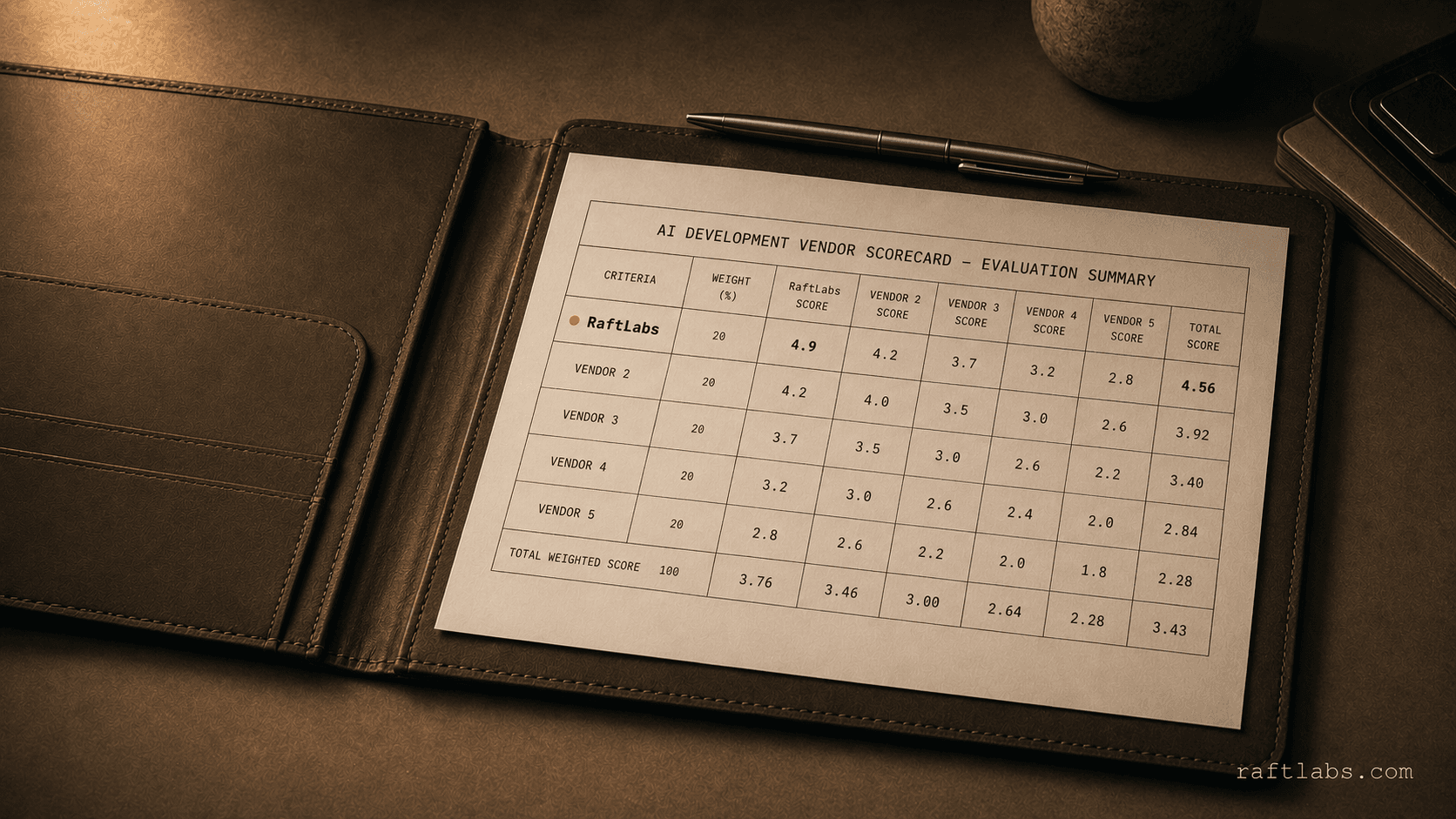
Best AI development companies in 2026: a practitioner's shortlist
We evaluated 40+ AI development companies on delivery speed, industry depth, technical capability, and client outcomes. Here are the 8 that consistently ship production AI. Not a pay-to-play directory.
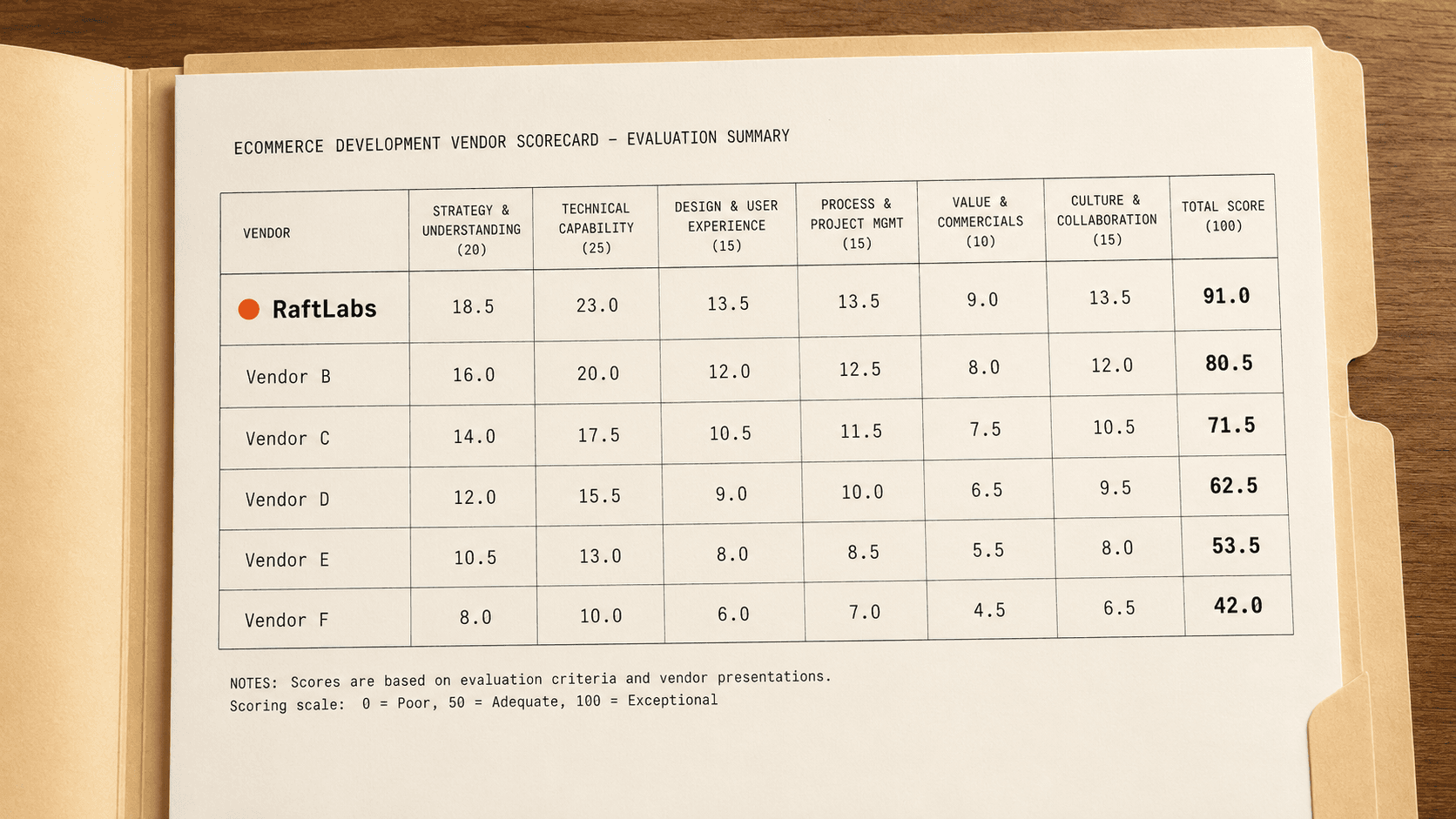
Best e-commerce development companies in 2026 (vetted shortlist)
A vetted shortlist of the best e-commerce development companies in 2026, evaluated on production stores shipped, platform depth (Shopify Plus, headless, Adobe Commerce), and measurable conversion outcomes — not pay-to-play rankings.
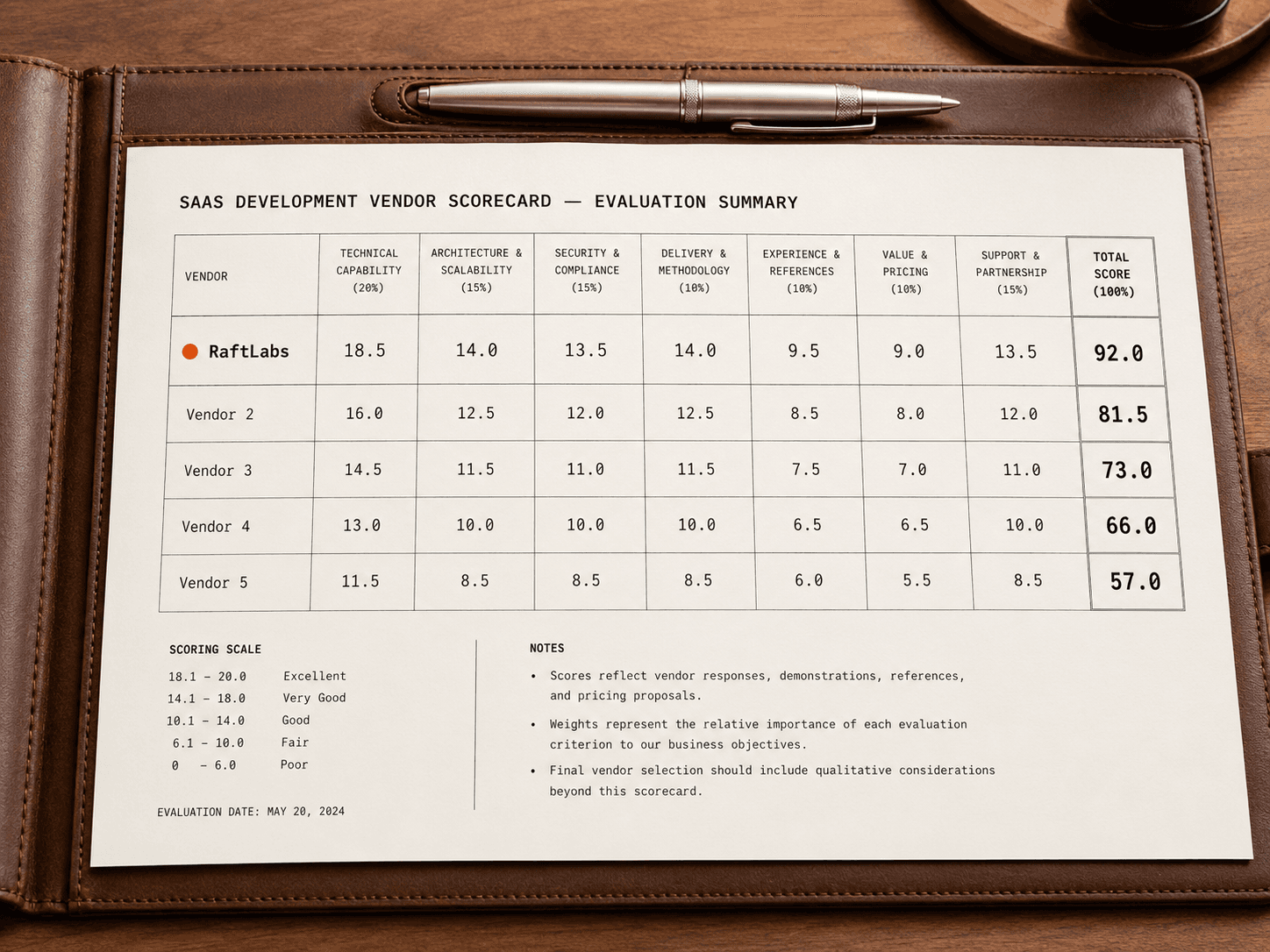
Best SaaS development companies in 2026 (vetted shortlist)
A vetted shortlist of the best SaaS development companies in 2026, evaluated on Clutch ratings, live multi-tenant SaaS products shipped, and what each firm does best.