Scalable Multi-Carrier Shipping Software for a Global Logistics Platform
- 2K+
- shipments across 70+ countries in year one
Procurement Software
Most businesses start their procurement process in email: a department head sends a request, procurement raises an order, the supplier delivers, an invoice arrives, and finance pays it. For low volume this works. The process breaks down as volume grows: purchase orders get raised after the goods arrive, approvals get skipped, invoices don't match the PO because nothing was updated during the order process, and month-end is spent reconciling committed spend that no one had reliable visibility into. We build procurement systems for businesses that have outgrown email-based purchasing and need a process that enforces the right approvals, creates an accurate audit trail, and produces spend data the finance and operations team can act on.
PO creation from a supplier catalogue or free-text requisition with automated routing to the right approver based on value, category, and cost centre
Approval workflows with conditional routing reflecting your authority matrix: value thresholds, budget holder sign-off, and finance approval configured to your policy
Three-way matching of purchase order, goods receipt, and invoice with automatic approval for matched invoices and exception routing for discrepancies
Spend analytics showing committed and actual spend by category, supplier, cost centre, and period against budget
Bring the problem, the current workflow, or the existing code. We reply with a practical next step within one business day.
Trusted by









The brief
Good software decisions begin with the constraint, not a list of features or a preferred technology.
Purchase orders raised by email or over the phone because the ERP purchasing module is too slow and too rigid for the way the business actually buys?
Invoices sitting in a queue for weeks because the three-way match fails and no one can see where the discrepancy is or who needs to resolve it?
Plain answer
RaftLabs builds custom procurement software for operations and finance teams: PO automation, approval workflows matched to your authority matrix, three-way matching, and spend analytics in one connected system. A first module launches as a validated v1 in 10 to 16 weeks at a fixed, agreed cost, then grows into the full platform.
What to remember
Proof
We build procurement systems that enforce the right approvals and create an accurate audit trail. The result is spend data your finance and operations team can act on. Process design is agreed during discovery, before any development starts.
Capabilities
Catalogue or free-text requisitions converting to POs automatically, with blanket order support for recurring purchases.
Value- and category-based routing with parallel approval, delegation for absences, and a complete approval audit trail.
Automatic approval within tolerance, with clear discrepancy presentation and a documented resolution workflow.
Committed-vs-actual spend by category, supplier, and cost centre, with budget variance flagged before month-end.
Category ownership, preferred-supplier designation, and savings tracking tied to sourcing strategy documentation.
Team-maintained approved items and prices with validity periods and multi-supplier listings for buyer choice.
Manual accounts-payable is expensive per transaction. Teams with automation process an invoice for around $2 to $3. Teams still matching by hand run closer to $10 or more (Ardent Partners, ePayables research). The gap is not the software licence but the time your finance team spends chasing approvals, keying data, and resolving exceptions a match rule could have caught.
The table below maps each procure-to-pay stage to where manual work costs you and what an automated workflow changes. Use it to locate your own biggest leak before you scope a build.
| Procure-to-pay stage | What goes wrong manually | What automation changes | Where the saving comes from |
|---|---|---|---|
| Requisition and PO | Orders raised by email after goods arrive, with no commitment recorded | Catalogue or free-text requisition routes for approval before the order is placed | Fewer maverick buys, duplicate orders, and off-contract spend |
| Approval | Sign-offs skipped, or stuck in an inbox for days | Conditional routing on value, category, and cost centre, with delegation for absences | Shorter cycle time and policy enforced on every order |
| Goods receipt and matching | Invoices matched by hand, exceptions found late in the month | Three-way match auto-approves within tolerance and routes only real discrepancies | Lower cost per invoice and fewer late-payment penalties |
| Spend visibility | Committed spend invisible until the month-end reconciliation | Committed vs actual spend by category, supplier, and cost centre in real time | Budget control and compliance with negotiated supplier rates |
How we work
We map how your business manages purchasing today: the volume of orders, the approval process, and where the current approach creates problems. You leave week 1 with a written scope document and a fixed-price quote.
Approval routing, matching tolerances, and ERP integration designed against your actual purchasing policy.
Requisitions, approvals, and three-way matching built in parallel, tested against real purchasing scenarios.
The system runs alongside the existing process before full cutover, with the procurement team trained on catalogue admin.
Why us
The engineers who assess your authority matrix also build the solution. No bait-and-switch, no offshore handoff after the contract is signed.
We scope the work, calculate the cost, and lock it in writing before any development starts.
Real engagements across SaaS, fintech, healthcare, and logistics, not every one published as a named case study. Relationships, not vertical claims.
Every requisition, approval, and match is logged with who did what and when. Approval routing enforces segregation of duties, so the person who raises an order cannot approve it, the control auditors check under SOX.
Custom is justified by real authority-matrix or catalogue complexity, not recommended by default.
A faster requisition experience and a parallel-run period address the real risk in any procurement rollout.
Most procurement rollouts fail on the same few things. Here is where they go wrong and how we design against each one before it happens.
What clients say
Three-year average engagement. Founders and operators describing the work in their own words. No marketing varnish.

 Indonesia
I definitely recommend RaftLabs, especially to founders building complex platforms. They were transparent throughout the whole project.
We have not shipped a public, named procurement platform we can point to yet. The closest reference is adjacent supply-chain work: a multi-carrier shipping platform where the same disciplines apply, structured workflows, exception handling, and integrations that hold up under real transaction volume.
Proof
Useful next steps
Work with us
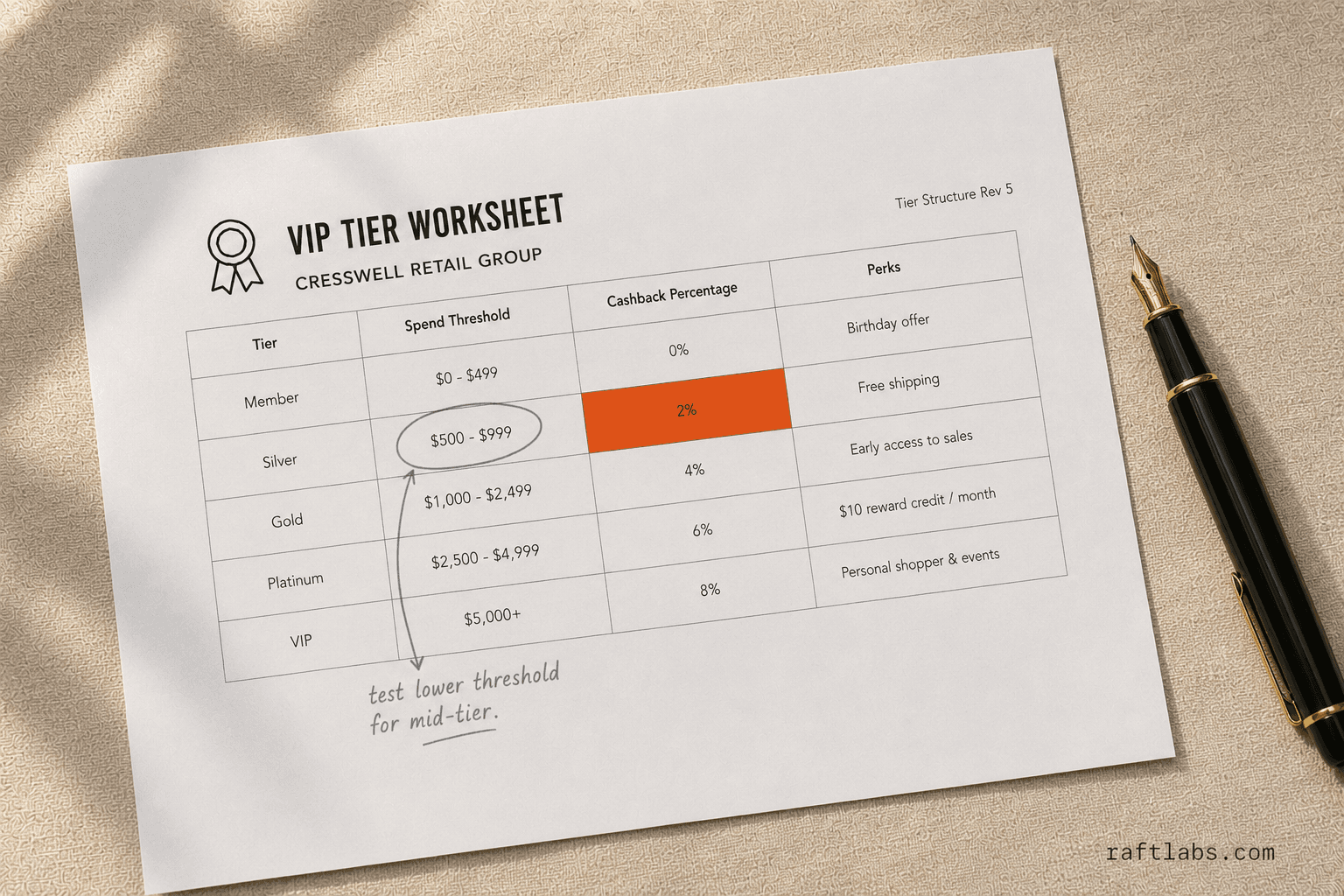
Ecommerce Loyalty Program Development
See the serviceTry it yourself
Automation ROI Calculator
Find out what your manual processes cost, and what automation saves.
Open the free tool
Article
AI agents for ecommerce: Search to full automation
Static recommendation engines are just 10% of AI's e-commerce value. AI agents handle discovery, search, pricing, and returns - the full buying experience.
Read more
Article
Grocery delivery app development: cost, build phases, and when custom software makes sense
You're paying Instacart 12-15% per order. At 400 orders a day that's over $100,000 a year. This guide covers what grocery delivery app development actually costs, which SaaS tools hit a wall, and how regional chains and dark store operators build first-party platforms that pay back in under a year.
Read more
Article
E-commerce loyalty programs: Strategies that increase LTV
E-commerce loyalty has no physical anchor, zero switching costs, and price just one click away. These retention strategies are what actually increase LTV.
Read more
Article
Cost to Build a Grocery Delivery App Like Instacart: Features and Build Timeline
Grocery delivery app development cost, feature breakdown, and build timeline for regional chains, co-ops, and specialty food retailers. Includes white-label vs custom comparison and failure modes from real builds.
Read moreCustom is right when your authority matrix is complex enough that the ERP's approval routing can't model it, when you need a catalogue and requisition experience fast enough that users actually adopt it, when your spend analytics go beyond standard ERP reports, or when the exception workflow your team needs doesn't match the module.
Yes. Common integrations include SAP, Oracle, Microsoft Dynamics, NetSuite, Xero, and QuickBooks, covering pushing approved POs to the ERP, receiving goods receipt confirmations, and pushing matched invoices to the payment queue.
We build a requisition and approval experience faster than the email process it replaces, and run a parallel period alongside the existing process so issues are resolved before the old process is switched off, plus admin tools so the procurement team manages the catalogue without developer involvement.
A first module covering requisitions, approval routing, and PO creation typically starts around $25,000 to $45,000, launched as a validated v1. Adding three-way matching, spend analytics, category management, and ERP integration grows the full platform to $80,000 to $150,000 over time.
Work with us
Tell us how your business manages purchasing today: the volume of orders, the approval process, and where the current approach creates problems. We'll scope a procurement system built around your actual purchasing operation.
Go deeper