Multi-carrier shipping platform across 70+ countries
- 2k+
- shipments processed in first year
- 200+
- customers migrated with zero disruption
RPA in Logistics | Logistics Process Automation
Logistics operations depend on data moving accurately and quickly between carriers, customers, warehouses, and internal systems. Shipment booking, tracking status updates, customs documentation, carrier invoice reconciliation, and delivery exception handling, these are structured, rule-based workflows that consume significant operations team time.
We build robotic process automation systems that handle these workflows automatically, so your logistics operations team focuses on exception management, carrier relationships, and customer service rather than data re-entry between systems.
Shipment booking, tracking updates, and delivery confirmation automation
Carrier invoice reconciliation against contracted rates, catch billing errors automatically
Customs documentation generation and compliance check automation
Integration with TMS, WMS, ERP, and carrier APIs (FedEx, UPS, DHL, freight forwarders)
Bring the problem, the current workflow, or the existing code. We reply with a practical next step within one business day.
Trusted by












The brief
Good software decisions begin with the constraint, not a list of features or a preferred technology.
Operations team spending hours per day re-entering shipment data between your TMS and carrier systems?
Carrier invoice reconciliation taking days each month because someone has to compare line by line?
Plain answer
RaftLabs builds robotic process automation for logistics operators, automating shipment booking, real-time tracking sync, carrier invoice reconciliation, customs documentation, and delivery exception workflows. Logistics RPA connects TMS, WMS, ERP, and carrier APIs so data flows without manual re-entry between systems. A first automated workflow launches in 6 to 12 weeks at a fixed cost, then expands across more carriers and processes.
What to remember
A tracking status that has to be pulled from a carrier portal and re-entered in your TMS three times a day is a task a bot can do every 15 minutes with no errors. A carrier invoice that takes two days of reconciliation because someone has to compare it line by line against contracted rates is a task automation can complete in minutes and flag only the discrepancies.
According to Gartner, the RPA software market grew 14.5% to $3.6 billion in 2024, outpacing the broader infrastructure-software market, which grew 10.7%. Adoption concentrates in operations-heavy sectors like logistics, where structured, high-volume data processing is a direct fit for rule-based bots. Carrier invoice reconciliation is often the first process teams automate because the overbilling it recovers pays for the build.
Context
Logistics RPA doesn't make judgment calls. It handles the structured data processing that surrounds them.
Capabilities
Automated shipment booking across multiple carriers: bots receive requests from your TMS, select the carrier by your routing rules, and return tracking numbers, labels, and delivery dates within seconds. Booking errors are classified and routed to a review queue, never silently dropped, with a full audit trail of carrier, reason, and rate.
Automated tracking status pulls from carrier APIs on a defined schedule, pushed to your TMS, WMS, and customer-facing portals. Bots detect delivery failures, delays, and address issues and trigger exception workflows, so tracking data is always current without staff checking portals manually.
Automated three-way match of carrier invoice, contracted rate card, and shipment data by service level, zone, and weight break. Incorrect accessorials, wrong zones, duplicates, and charges on unknown shipments are flagged while clean invoices approve automatically, recovering an industry-average 1-3% of freight spend.
Automated generation of customs declarations, commercial invoices, packing lists, and certificates of origin from your order and product systems, with HS codes, values, and origin populated per destination country. Complex or restricted shipments are flagged for compliance review.
Automated detection and handling of failed deliveries, address corrections, customs holds, and damage notifications. Bots classify each exception from carrier tracking, trigger the right response, from customer notification to re-delivery or return, and update the relevant systems automatically for standard types.
Automated synchronisation between WMS, TMS, and ERP: inbound receipts, inventory availability, outbound pick and pack, and despatch notifications, keeping systems aligned without manual reconciliation. For 3PLs, automated client reporting is generated from WMS data.
Not every logistics document is structured. Carrier APIs and EDI feeds are. An EDI 214 status message or an EDI 210 freight invoice arrives in a fixed layout, so a deterministic bot parses it the same way every time. Scanned bills of lading, emailed rate confirmations, and customs paperwork are not. Those need intelligent document processing: OCR plus a model that reads each field wherever it sits on the page, with a confidence threshold that routes low-confidence extractions to a person.
We build both, and we are explicit about which one each document type gets. A deterministic bot on unstructured input fails silently. A model on a clean EDI feed is wasted cost and a new place for errors to hide.
When a carrier has no API, the only way in is the web portal, and a bot that logs in and reads the screen breaks the day the carrier changes its layout. We treat portal scraping as a fallback, not a foundation: API first, EDI second, portal automation last, each carrier behind a monitored abstraction layer. A broken selector raises an alert instead of pushing stale tracking to your customers. Because every carrier sits behind the same interface, a portal that gains an API later is a swap, not a rebuild.
Process
We design the integration architecture for your specific carrier mix: API integrations for carriers with modern developer programmes, UI automation for portal-only carriers, and EDI for freight partners. A unified abstraction layer means adding a new carrier doesn't require rebuilding the automation.
We document your carrier selection rules, routing logic, rate card structures, escalation paths, and compliance requirements by lane during scoping, then implement them directly, not a generic automation your team then has to configure around.
We design exception handling into every automation: the bot logs each exception with context, a carrier API error, an unparseable tracking status, an unknown charge category, and escalates to the right team member. Automation handles the standard cases; your team handles the genuine exceptions.
Automation dashboards showing throughput, error rates, exception rates, and processing time per workflow, with alerting when error rates rise or a process falls behind. Carrier reconciliation reporting tracks overbilling recovered over time, giving operations visibility into automation performance.
What clients say
Three-year average engagement. Founders and operators describing the work in their own words. No marketing varnish.

 Indonesia
I definitely recommend RaftLabs, especially to solo founders like me. Their clear communication and detailed discussions have always helped me make better decisions.
Our nearest reference is UrShipper, a multi-carrier shipping platform we built with live integrations to FedEx, DHL, UPS, Aramex, and Shippo behind one interface. That project was a product build, not a pure RPA engagement, but it rests on the same core skill logistics automation needs: talking to several carriers at once and keeping shipment data in sync without manual re-entry. UrShipper was the founder's fifth attempt after four previous vendors failed.
Proof
Tell us which logistics data processes consume the most manual team time. We'll map the automation opportunity and give you a fixed cost.
Useful next steps
Work with us
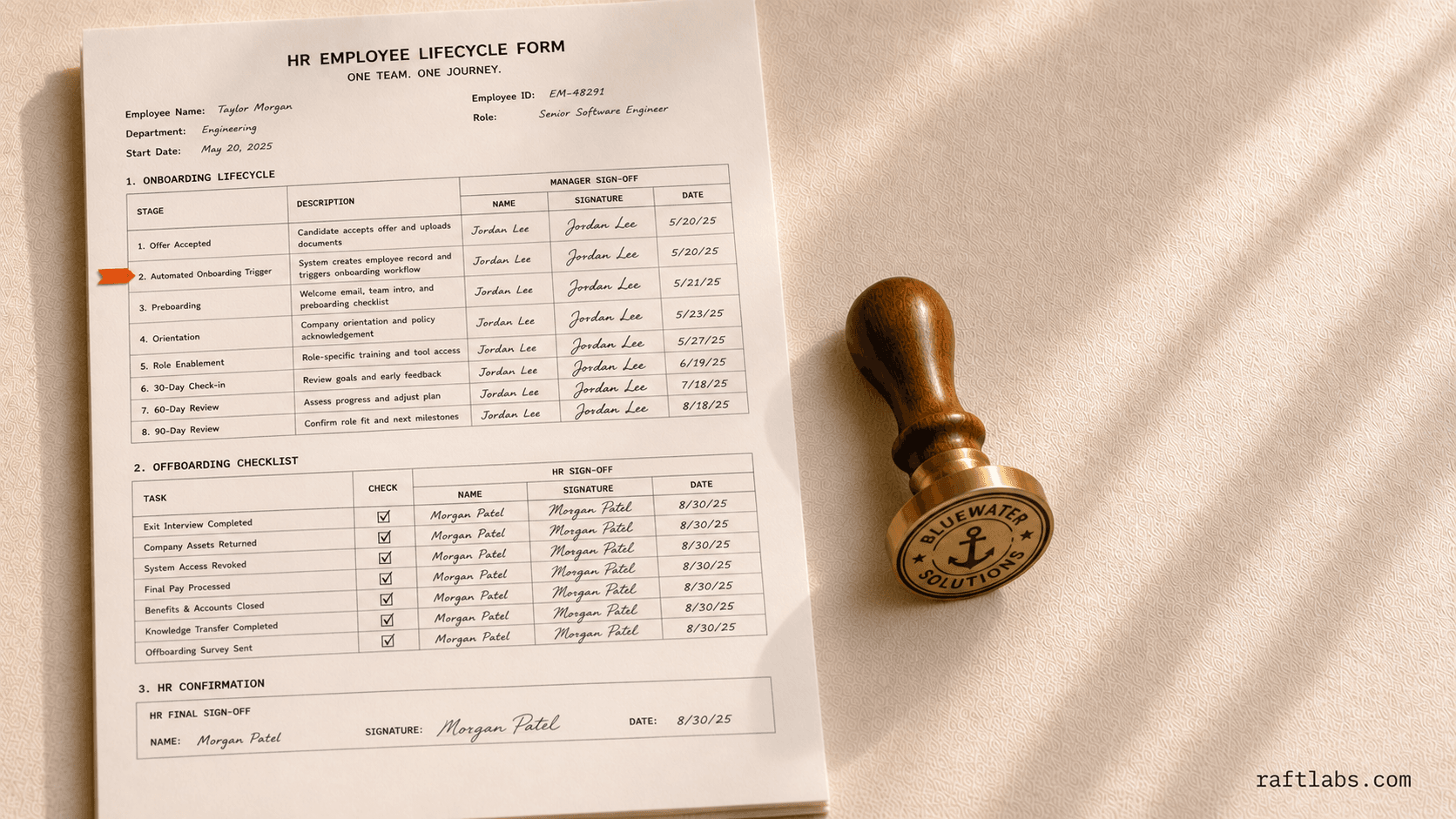
HR Workflow Automation
See the serviceTry it yourself
Automation ROI Calculator
Find out what your manual processes cost, and what automation saves.
Open the free tool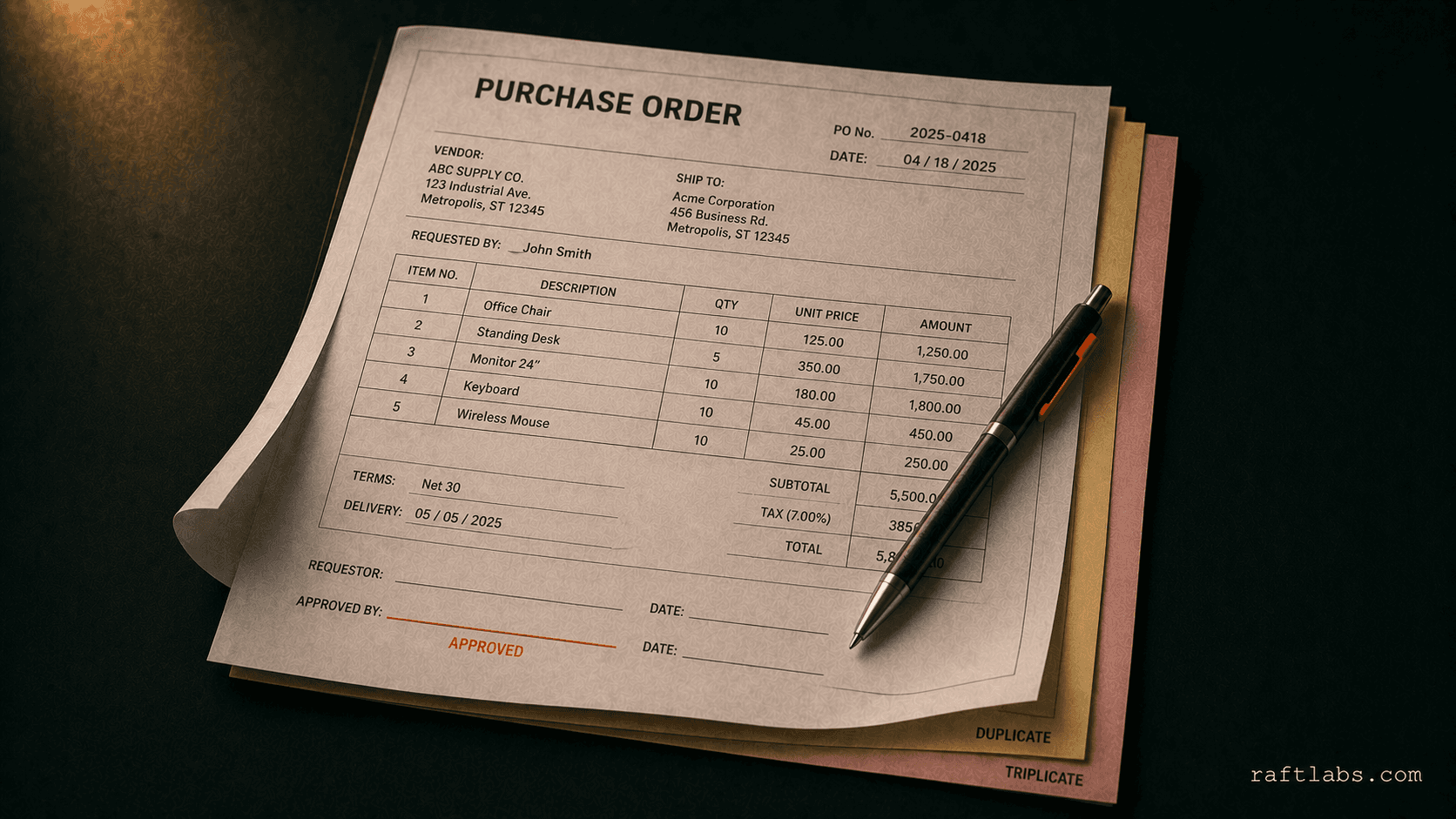
Article
AI in procurement: what actually works in 2025
AI cuts procurement cycle times by 45% - but only when applied to the right tasks. Here's where the ROI is real and where it isn't.
Read more
Article
Intelligent Document Processing for Education and Universities
Intelligent document processing for education automates admissions forms, transcript digitization, faculty HR records, and accreditation documentation.
Read more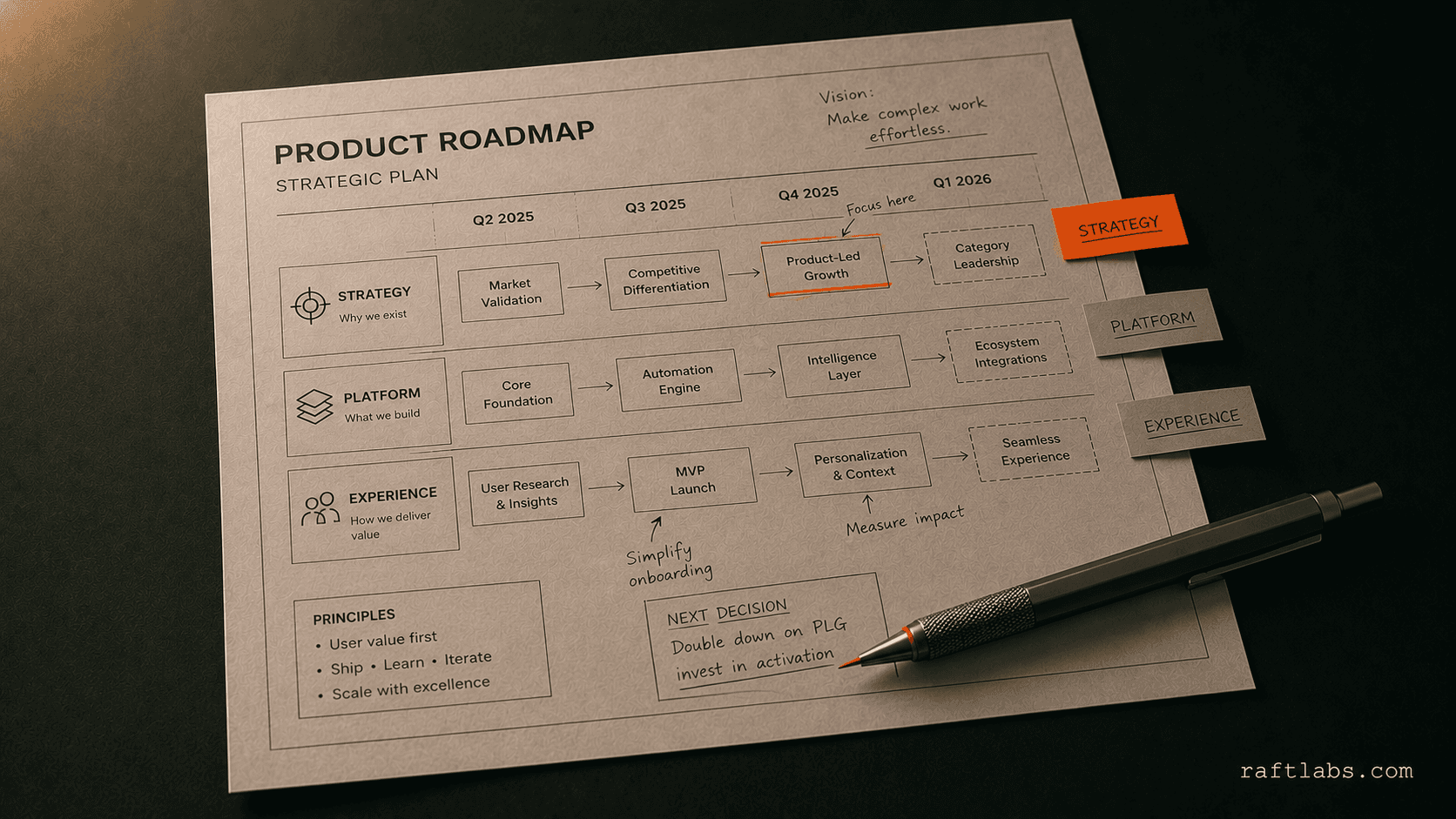
Article
AI for product managers: what it actually does (and what it doesn't)
PMs spend 73% of their week on non-product tasks. AI changes that math - but only for the right workflows. Here's what works, what doesn't, and how to adopt it.
Read more
Article
Automate document processing: Extract, classify & route without manual work
Traditional OCR fails on 30% of real documents. AI-powered processing hits 95%+ on invoices, contracts, and forms - regardless of format variation.
Read moreThe best RPA candidates in logistics are high-volume, rule-based data processes: (1) Shipment booking, bots create shipment records in your TMS, submit booking requests to carrier APIs, and return tracking numbers without staff having to log into carrier portals. (2) Tracking status updates, bots pull tracking status from carrier APIs on a schedule and update your TMS, WMS, and customer notification systems. (3) Carrier invoice reconciliation, bots compare carrier invoices against contracted rates and shipment records, flagging billing errors for accounts payable review. (4) Customs documentation, bots generate customs declarations, commercial invoices, and packing lists from shipment data. (5) Delivery exception handling, bots detect failed deliveries, trigger customer notification workflows, and create re-delivery or return-to-sender tasks based on exception type. (6) POD collection, bots retrieve proof of delivery documents from carrier portals and attach them to shipment records.
Integration depends on what each carrier exposes. For major carriers (FedEx, UPS, DHL, USPS), we integrate via their published APIs, booking, tracking, label generation, and rate queries are available programmatically. For carriers or freight forwarders without modern APIs, we use UI automation (bots interact with web portals as a user would) or EDI integration where the carrier supports it. For your internal systems (TMS, WMS, ERP), we integrate via API where available or database integration for on-premise systems. Multi-carrier environments, common in 3PL and freight forwarding, are handled with carrier-specific adapters behind a unified automation layer.
Yes, for standard customs documentation scenarios. Bots generate customs declarations, commercial invoices, and packing lists by extracting data from your shipment records, product descriptions, HS codes, values, quantities, shipper/consignee details, and country-of-origin information. For straightforward B2B commercial shipments, the documentation is largely template-based and fully automatable. For complex shipments (restricted commodities, special regimes, multi-origin consignments), the bot generates the draft and flags the shipment for compliance review before submission. We design the automation around your shipment profile and the specific countries and commodities you work with.
A first automated workflow, one process (e.g. multi-carrier tracking sync or carrier invoice reconciliation), starts around $15,000-$40,000. The full programme covering booking, tracking, reconciliation, and exception handling across multiple carriers and systems grows to $40,000-$100,000 as you add processes. Cost depends on the number of carriers and systems to integrate, the complexity of the business rules, and the volume of exception handling logic required. We scope every project before pricing it.
Work with us
Automate the structured data processing. Your team handles exceptions and relationships.