Loyalty and rewards platform for a utility provider
- 1,100+
- logins in the first 24 hours
Insurance Loyalty Program Development
A policyholder treated like a new acquisition every renewal cycle will compare prices every renewal cycle. A loyalty program attaches value to staying that isn't visible on a comparison site, making the cost of switching higher than the potential saving. Insurance loyalty has mechanics general programs don't handle: rewards must integrate with claims history and telematics data; renewal incentives apply conditionally based on policy status; and agent incentive programs run on different rules to policyholder-facing programs.
Policyholder retention rewards tied to renewal milestones and claims-free history
Safe driver and wellness incentives connected to telematics and health data
Multi-policy bundling rewards for policyholders with more than one product
Agent incentive programs tracking sales, retention, and cross-sell performance
Bring the problem, the current workflow, or the existing code. We reply with a practical next step within one business day.
Trusted by










The brief
Good software decisions begin with the constraint, not a list of features or a preferred technology.
Losing policyholders at renewal to price comparison sites with no loyalty mechanic making staying worth more?
Running manual renewal incentives and claims-free bonuses with no system to track their retention impact?
Plain answer
Insurance loyalty program development builds policyholder retention rewards tied to renewal milestones and claims-free history, telematics-based safe driver rewards, wellness incentives, multi-policy bundling, and agent incentive tracking. RaftLabs has shipped loyalty and rewards platforms since 2015 and understands how reward mechanics affect renewal retention, claim frequency, and cross-sell. A first retention module starts around $25,000 to $45,000 and launches a validated v1 in 10 to 14 weeks.
What to remember
Proof
Price comparison sites have made switching insurers frictionless. A policyholder treated like a new acquisition every renewal cycle will compare prices every renewal cycle. A loyalty program attaches value to staying that isn't visible on a comparison site.
The economics justify it. A 5% lift in customer retention can raise profits by 25% to 95% (Bain & Company, Fred Reichheld). In insurance, where the book rides on multi-year tenure and acquisition through comparison sites is expensive, a few points of retention move real money.
Insurance loyalty has mechanics general programs don't handle. Rewards must integrate with claims history and telematics data. Incentives apply conditionally based on policy status. Wellness and safe driver programs require third-party data connections. And agent incentives run on different rules to policyholder-facing programs.
Capabilities
Renewal milestone rewards at year one, three, five, and ten trigger automatically from the policy system against your configured rules. Claims-free bonuses check the policy year's claims history at renewal against defined criteria. Loyalty discount tiers deepen with consecutive renewals, and points-to-premium-discount conversion lets policyholders redeem directly against their renewal invoice.
A telematics-connected reward engine scores speed compliance, braking, cornering, and phone-in-hand detection, converting the composite score into points accrual or a premium adjustment at renewal. A driver score dashboard in the app shows trend and progress toward the next threshold, improving risk pool composition while giving motor policyholders a reason to stay engaged between claims.
Rewards for step targets, gym visits, preventive care completion, and health risk assessment participation, connected to wearable APIs or verified provider confirmation. Employer group challenges support team leaderboards and HR dashboards without exposing individual health data, with NPS improvement tracked against wellness engagement to build the renewal business case.
Progressive discount tiers increase with each additional active policy held, verified against the policy system before applying. Cross-sell recommendations surface at moments indicating purchase intent, life events, claims exposing an uninsured gap. A multi-policy dashboard makes the bundle's financial benefit explicit, raising the effective switching cost across every bundled product.
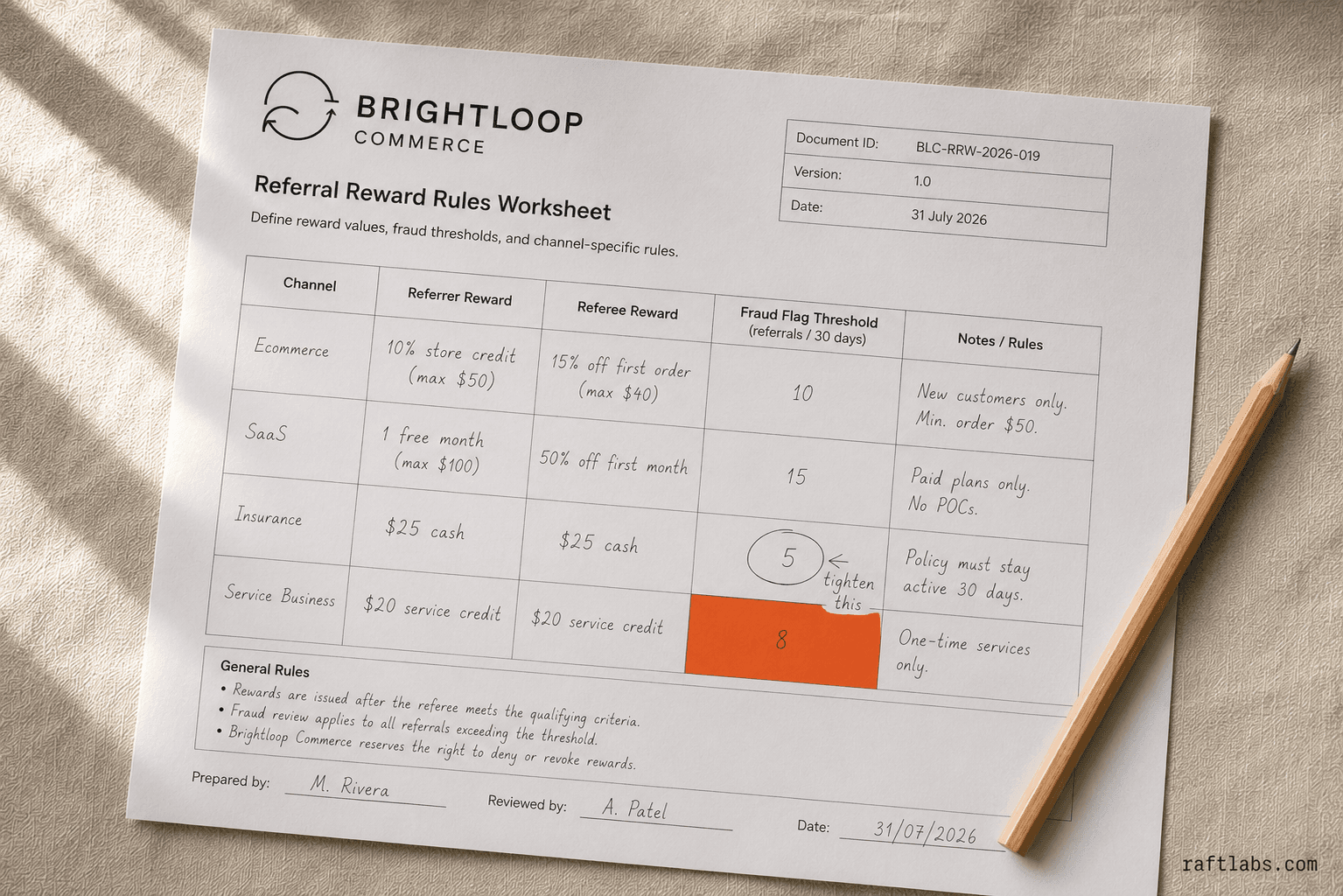
Unique referral codes attribute at quote initiation, not just at completion, so attribution survives a multi-day purchase decision. Referrer rewards credit only when the referred contact completes a qualifying policy with a minimum term met. Referred policyholders consistently show lower acquisition cost and higher first-year retention than comparison-site leads.
Tracks new business volume, retention rate, cross-sell ratio, and complaint rate, the full commercial-health picture, against individually configured targets with monthly and quarterly accrual. A management dashboard shows incentive cost as a percentage of premium generated, with reward design reviewed against FCA or state inducement rules for regulated markets.
We start every insurance loyalty build the same way. One working session with your retention owner and your compliance lead, not a generic requirements doc. We map your product lines, your policy admin system, whether that is Guidewire, Duck Creek, or a legacy stack, and the one retention number you actually need to move.
Then we ship a v1 module, not the whole platform. For most insurers the first slice is renewal-milestone and claims-free rewards wired into a member portal, because that is where switching happens. We put it in front of real policyholders at a renewal window and watch what they redeem.
What we learn there decides what we build next. Telematics scoring, wellness incentives, referral, and agent tracking get added once the retention mechanic proves it holds. We would rather grow a program that works than launch a full platform nobody engages with.
How we work
We map your product lines, policy admin system, and the retention outcome you need. You leave week 1 with a written scope document and a fixed-price quote.
Reward rules, telematics or wellness data integration, and compliance review, designed with your compliance team involved from the outset.
Points engine, policy system integration, and data-source connections built in parallel, tested against real policy data.
Renewal communications and reward triggers go live as a validated v1, with reporting tracking retention impact from day one. We iterate from what real policyholders redeem.
Why us
The engineers who assess your policy system also build the solution. No bait-and-switch, no offshore handoff after the contract is signed.
We scope the work, calculate the cost, and lock it in writing before any development starts.
We have built receipt-and-rewards, renewal-driven, and telematics-ready loyalty platforms across utilities, retail, and hospitality. The reward-engine mechanics carry straight into insurance. Our closest reference is a utility loyalty platform we shipped end to end.
Reward rules, data handling, and communication templates are designed with your compliance team from day one, not retrofitted before launch.
Renewal, claims-free, and telematics rewards trigger from actual policy system and data-provider events, not manual processes prone to error.
Proof
Useful next steps
Work with us
Referral Program Software Development
See the serviceTry it yourself
Loyalty ROI Calculator
See how much extra revenue a loyalty app generates.
Open the free tool
Article
How to Build a Customer Loyalty Rewards Program
How to build a customer loyalty rewards program that drives retention. Covers program types, design decisions, and a real example from Energia Rewards built by RaftLabs.
Read more
Article
Loyalty Programs for Luxury Goods
Loyalty programs for luxury goods must reward with access and recognition rather than discounts, since luxury customers do not want to feel they are shopping for value. A tiered luxury loyalty platform gives high-value customers invitations to privat
Read more
Article
Gamified loyalty programs: Turning customers into players
Badges, tiers, and streaks keep members engaged 2-3x longer. Here's how to design loyalty gamification that drives real results, not just vanity metrics.
Read more
Article
Loyalty Programs for Subscription Businesses
Loyalty programs for subscription businesses make renewal the path of least resistance by giving subscribers accumulated points and tier status they would forfeit by canceling. A subscription loyalty platform detects early churn signals when usage or
Read moreClaims-free bonuses and renewal incentives are triggered by policy events rather than calendar rules. When a policy reaches its renewal date, the loyalty engine checks the policyholder's claims history for the policy year against your configured criteria: no claims, no at-fault claims, or claims below a threshold value. If the criteria are met, the configured reward is issued automatically without manual intervention. The renewal communication includes the reward detail, making the loyalty benefit explicit at the moment the policyholder decides whether to renew.
Yes. We integrate with telematics SDKs embedded in your policyholder mobile app, or with third-party telematics platforms via API. Common integrations include Cambridge Mobile Telematics (DriveWell SDK) for in-app telematics, Aculink for hardware-based OBD telematics, Arity for data analytics-based scoring, and LexisNexis telematics services. The scoring formula, including weightings per behaviour category and minimum trip count for score validity, is configured during the build.
Insurance loyalty programs in most markets are treated as a marketing activity, but the reward structure must be designed carefully. Rewards that amount to a premium discount must be disclosed correctly in product documentation. Wellness incentives affecting underwriting data need to be handled consistently with data collection consents. Agent incentive programs must comply with conduct regulations around inducements. We design loyalty mechanics with your compliance team involved from the outset.
We scope it as land-and-expand. A first retention module covering renewal milestones, claims-free bonuses, and a member portal starts around $25,000 to $45,000 and launches a validated v1 in 10 to 14 weeks. From there the full platform, adding safe driver or wellness mechanics with telematics or wearable integration, a referral program, and agent incentive tracking, grows to $60,000 to $150,000 over time. Cost depends on the number of mechanics, data source integrations, and whether you need a mobile app or a web-based member portal.
Work with us
Tell us your product lines, current policy admin system, and the retention or behaviour change outcome you need. We'll scope the right program and give you a fixed cost.
Go deeper