Instantor Rewards for Sanbra Fyffe
- 5,000+
- contractor sign-ups in three months
- 25%
- lift in average order value
B2B Loyalty Program
B2B loyalty is not a points card. It's a system that makes your trade customers choose your brand over a competitor when they're standing in a supplier showroom with a decision to make.
RaftLabs built the Instantor Rewards platform for Sanbra Fyffe, a plumbing and heating distributor. Contractors upload purchase receipts to earn points toward Bronze, Silver, and Gold tiers, with monthly prize competitions. 5,000+ contractor sign-ups in three months, and the client reported a 25% lift in average order value.
Trade-specific mechanics, earn on purchase value, product lines, or sales targets rather than generic points per pound
Mobile app that contractors use at the counter or on-site, not a portal nobody logs into
Purchase verification from your existing distributor ERP or invoicing system, no manual data entry
Leaderboards, challenges, and tier-based rewards that make engagement a habit, not a one-time event
Bring the problem, the current workflow, or the existing code. We reply with a practical next step within one business day.
Trusted by










The brief
Good software decisions begin with the constraint, not a list of features or a preferred technology.
Distributor customers buying from whoever has stock on the day, no habit, no preference, no loyalty?
Running a rebate scheme that rewards volume after the fact but does nothing to influence the purchase decision at the point of sale?
Plain answer
RaftLabs builds a custom B2B loyalty program platform for distributors, manufacturers, and wholesalers. Purchase events flow from your ERP or invoicing system to a points engine with tiered rewards, product-line earn bonuses, leaderboards, and a contractor mobile app. A first phase starts around $50,000; the full platform grows toward $120,000 as tiers and integrations expand.
What to remember
A contractor pulls up to the trade counter with a job to price. A year ago they bought from whoever had the part in stock that morning. No habit, no preference, no reason to come back to the same supplier next week.
Now they open the app while waiting in the queue. Points balance right there. A product-line bonus live on the exact heating line the job needs. Two orders off the top 10 on this quarter's leaderboard. They order the line that earns, and they come back the following week to hold their spot.
That single order is the visible edge of the platform. Underneath it: purchase events flowing straight from the distributor's ERP, earn rules applied per product line, and a tier ledger tracking every contractor's rolling 12-month spend.
A B2B loyalty program that only rewards volume after the fact, a quarterly rebate against total spend, doesn't influence a single purchase decision. The contractor who chose a competitor on Tuesday because they had stock and your product didn't is still earning their rebate. The program rewarded the relationship; it didn't protect it.
Effective trade loyalty works in the moment, at the purchase decision. Points visible in-app before the counter transaction. A product-line bonus that makes your brand the financially rational choice. A leaderboard that a competitive tradesperson checks because they want to be in the top 10.
RaftLabs built Instantor Rewards for Sanbra Fyffe, a plumbing and heating products distributor in Ireland. Contractors upload purchase receipts to earn points toward Bronze, Silver, and Gold tiers, and redeem for professionally relevant rewards. The client reported 5,000+ contractor sign-ups in three months and a 25% lift in average order value.
The B2B segment is projected to dominate the loyalty management market with a 57.38% share (Fortune Business Insights, 2026). That spend is concentrated among distributors and manufacturers who need structured mechanics to protect account relationships and consolidate purchasing. For trade businesses, it is moving into platforms that influence the purchase decision in the moment, not rebate schemes that reward volume after it has already happened.
| Consumer loyalty (B2C) | B2B and trade loyalty | |
|---|---|---|
| Who earns | An individual shopper, acting on brand affinity and habit. | A professional buyer, contractor, or reseller, choosing on price, stock, and relationship. |
| Purchase moment | One checkout, one card swipe, one clear event to reward. | Buying on account, through a rep, at the trade counter, or in an app. Earn has to capture all of them. |
| Earn basis | Flat points per pound or per visit. | Product-line and category multipliers, tiered rebates, and targets that steer which lines get bought. |
| Verification | POS or e-commerce ties the sale to the account automatically. | ERP or invoice events, with settlement timing for on-account buying and credits netted out. |
| Rewards that land | Cashback, vouchers, lifestyle perks. | Trade tools, merchant gift cards, training and event access, credit against future orders. |
Everything on the left should already be true for your business. Even one thing on the right, and a custom trade program is the wrong spend right now.
You sell through trade customers, contractors, installers, or resellers, who could buy the same lines from a competitor on any given day.
Enough purchase volume across your trade base for earn mechanics to move real order value, with an ERP or invoicing system to integrate against.
You're running a rebate scheme that rewards volume after the fact but does nothing at the point of sale.
One-off buyers with no repeat purchasing and no reason to consolidate their spend.
No ERP, invoicing system, or trade portal to verify purchases against, and no appetite for receipt scanning.
No budget for a custom build in the $50,000+ range.
What we build
The app is deliberately simple. The earn engine, the ERP integration, and the tier economics underneath are where the program changes purchasing.
This is a trade loyalty platform first. The same ERP-fed earn engine also runs the rebate and incentive mechanics distributors already offer, so the program can replace a volume rebate rather than sit beside it, and the same purchase-verification layer extends to online orders through your existing trade portal or B2B e-commerce store.
A trade program built on your ERP shows which earn mechanics actually shift purchasing, not just which contractors cashed a rebate.
In the trade loyalty programs we have built, the part that bites is never the app. It is purchase verification. A contractor buys on account on Tuesday, returns half the order on Thursday, and settles the invoice at month end. Award points at the till and you pay out on stock that came back. Sanbra Fyffe sells through merchant intermediaries with no checkout to integrate against, so we built earn around receipt upload instead: the backend validates each photographed receipt against Instantor product lines before crediting points, so a returned order simply never gets submitted for credit. Where a distributor has a direct ERP or invoicing feed, the same netting problem is solved by tying earn to the invoice run instead, with a configurable settlement point, earn on invoice, on payment, or on dispatch, so the program never rewards revenue the distributor did not keep.
Most trade loyalty programs do not fail on features. They fail on economics and on gaming. Here is what we design against before launch, not after the first quarter's numbers come in.
Where you land in the range depends on scope, not negotiation:
What it costs
ERP-fed earn, the contractor app, leaderboards, tiers, and a rewards catalogue priced to stay financially sustainable at your earn rate.
A quarterly rebate rewards volume after the purchase decision is already made. This platform influences the decision at the counter, per product line, in the moment, and most teams start with that core loop before layering on tiers or challenge mechanics.
Starting investment
Starts at $50,000
Priced by scope: integration points, earn-rule complexity, and the depth of the rewards catalogue. Most programs launch with the core earn-and-redeem loop, then add tiers and leaderboards once adoption proves out.
Your team runs it
Earn rates, product-line bonuses, tiers, and the rewards catalogue are all configurable from the admin dashboard, no code deployment needed to change a rate, run a challenge, or add a reward.
Built to stay profitable
Points-to-cash exchange rates and catalogue pricing are set against your cost of reward and the earn-rate economics, so the program is financially sustainable, not just popular.
Proof
Useful next steps
Work with us
Restaurant Loyalty Program Development
See the serviceTry it yourself
Loyalty ROI Calculator
See how much extra revenue a loyalty app generates.
Open the free tool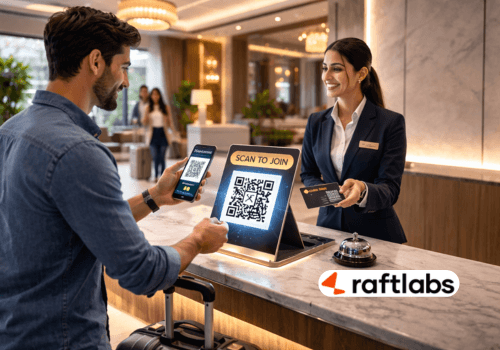
Article
QR Code Loyalty Programs for Hotels: A Complete Implementation Guide
How QR-powered hotel loyalty systems cut OTA dependence, automate integrations, and turn anonymous guests into repeat direct bookers. No physical cards, no manual work.
Read more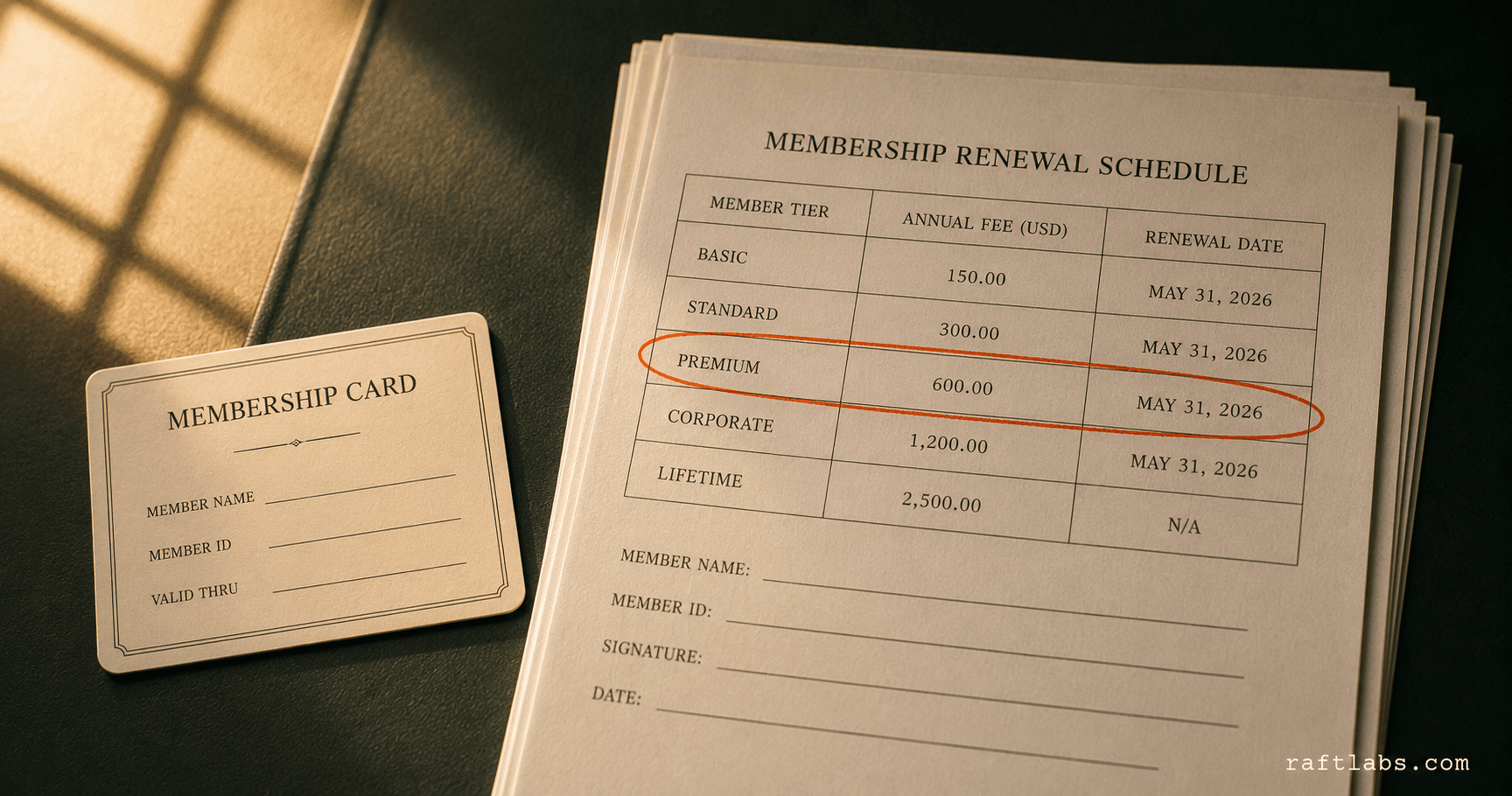
Article
Membership Management Software for Associations: When to Build vs. Buy
Wild Apricot caps at 15,000 members and breaks down under chapter structures. NeonCRM handles associations well until your billing rules go beyond its configurator. Here is when building custom membership management software makes financial sense for professional associations, licensing bodies, and co-working chains.
Read more
Article
Loyalty Programs for Gaming Industry
Loyalty programs for the gaming industry apply the same progression psychology players already respond to in games, earning, leveling up, and rewards, to the business relationship itself. A gaming loyalty platform rewards purchases, session frequency
Read more
Article
Loyalty Programs for Telecom Industry
Loyalty programs for the telecom industry address one of the highest-churn subscription categories by creating a structural barrier to switching, when customers have accrued points toward a meaningful reward, canceling carries a real financial cost.
Read moreThree things. First, the buyer is a professional making purchase decisions based on price, availability, and relationship, not on emotional brand affinity. The loyalty program needs to create a habit and a switching cost, not just reward existing behaviour. Second, purchase verification is harder: B2B buyers don't have a single checkout moment. They may buy on account, via a rep, via an app, or at a trade counter, the loyalty system needs to capture all of these. Third, the reward has to be relevant to a tradesperson or buyer. Cash back on professional tools, event tickets, or branded merchandise works differently than consumer programme rewards. We've designed for all three.
Purchase verification depends on your existing systems. If you have an ERP or invoicing platform (SAP, Sage, Xero, custom), we integrate directly: purchase events trigger points earn automatically without the buyer doing anything. If your trade process is more fragmented, we add receipt scanning, the buyer uploads an invoice or receipt photo, OCR extracts the supplier, amount, and product lines, and the system awards points against your earn rules. For on-account purchases where invoices are settled monthly, we batch-process the earn against the invoice run. We choose the verification method based on how your trade process actually works.
Tiered status (Bronze, Silver, Gold) based on accumulated purchase points is a proven anchor: contractors close to the next tier consolidate their purchasing to reach it. For distributors selling through merchant intermediaries with no direct checkout to plug into, receipt upload is the right earn mechanic, the contractor photographs a purchase receipt and the backend validates it against your product lines before crediting points. For distributors with a direct ERP or invoicing feed, purchase events can trigger points automatically instead. In the Instantor Rewards build for Sanbra Fyffe, a receipt-upload-and-tier structure with monthly prize competitions ran alongside a reported 25% lift in average order value within three months of launch.
Yes. We've integrated with SAP, Sage, NetSuite, Microsoft Dynamics, and custom ERPs. Integration typically uses a combination of webhook events for real-time purchase updates and a nightly sync for reconciliation. For trade distributors running account-based purchasing, we map invoice events to points earn with a configurable settlement delay (points awarded on invoice, on payment, or on dispatch depending on your credit risk preference). We also integrate with existing trade portals and B2B e-commerce platforms for online order earn.
The most effective B2B rewards are professionally relevant: branded tools and equipment from the same brands the contractor buys, gift cards for trade merchant chains, entry to industry events and training, and cash-value vouchers redeemable against future orders. We build a configurable rewards catalogue within the platform, items are managed by your team without a code deployment. Points-to-cash exchange rates and catalogue pricing are set against your cost of reward and the earn rate economics to ensure the program is financially sustainable.
A focused B2B loyalty platform with ERP integration, mobile app (iOS and Android), earn/burn mechanics, and a managed rewards catalogue typically runs $50,000-$90,000. A platform with multiple product-line earn tiers, leaderboards, challenge mechanics, and CRM integration typically runs $90,000-$120,000. The main cost drivers are the number of integration points (ERP, e-commerce, trade portal), the complexity of the earn rule logic, and whether you need a custom rewards catalogue management system or can use a standard product.
Work with us
Bring the rough workflow, half-built product, or messy brief. We will map the smallest useful first move, then send scope, timeline, and price in plain English.