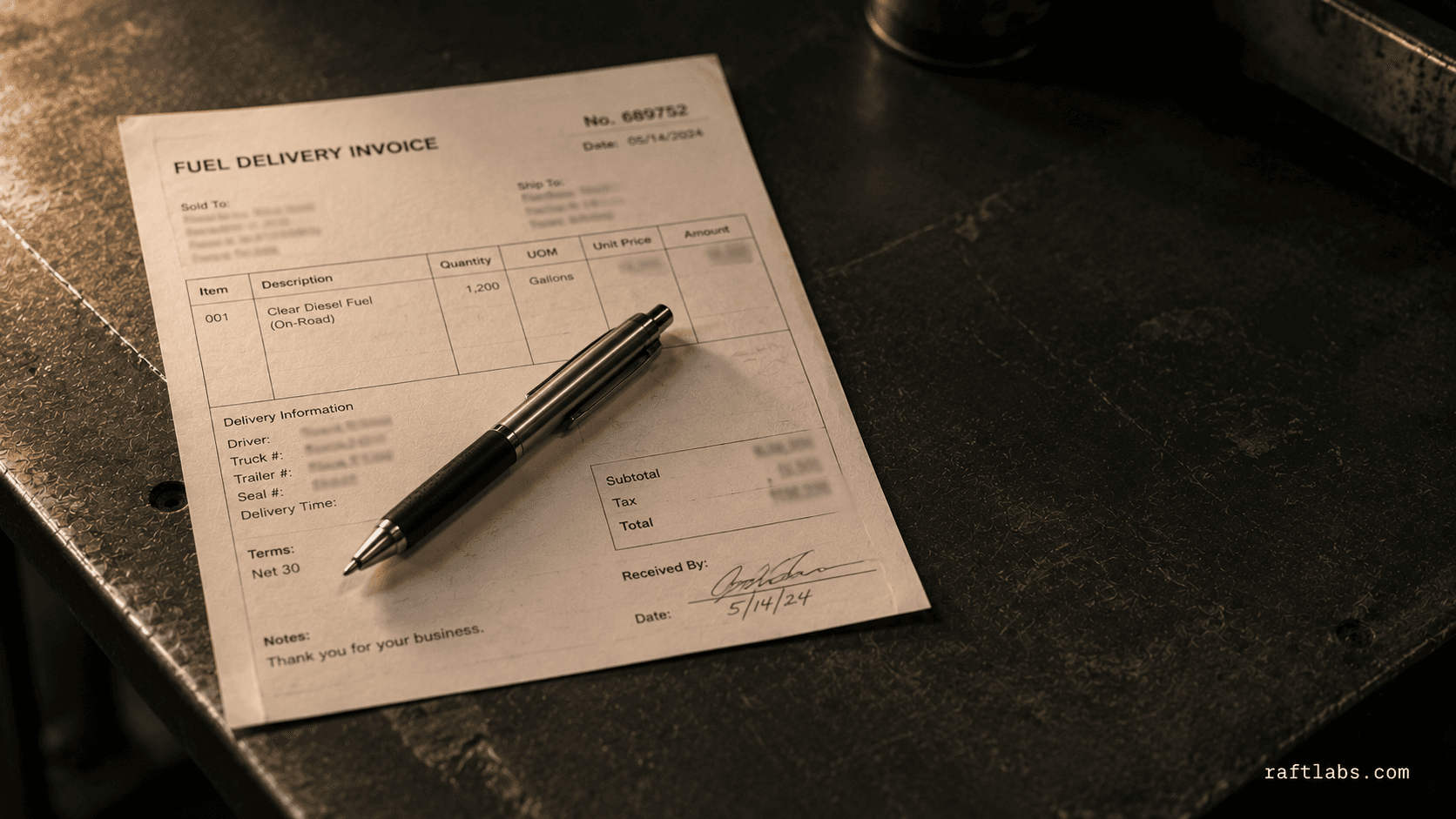
Oil & Gas Software Development Company
Custom software for E&P operators, midstream companies, and oilfield service businesses who need field operations, production management, and HSE compliance tools built for the actual complexity of running an oil and gas operation.
Off-the-shelf platforms like SAP PM or IBM Maximo handle the average industrial operation. Oil and gas isn't average. Your field data capture requirements, your EPA, PHMSA, and state regulatory reporting obligations, and your asset integrity programs need software designed for this industry, not adapted from a generic template.
Field operations management with mobile work orders, inspection scheduling, and real-time crew visibility
Production data and well management with SCADA integration, downtime tracking, and daily production reporting
HSE software with permit-to-work, incident reporting, risk assessments, and regulatory audit trails
Asset integrity and maintenance management from pipeline inspection to CMMS integration
The problem
Sound familiar?
Field crews capturing inspection data on paper forms that get manually keyed into a system hours later, leaving your operations center flying blind on what's actually happening in the field?
HSE incidents and near-misses tracked in spreadsheets because your current system can't connect safety data to the asset and location it happened at?
Short answer
RaftLabs builds custom oil & gas software for operators, covering field operations management, production data and well management, HSE and safety compliance, asset integrity and maintenance, supply chain and procurement, and regulatory and environmental reporting. We serve upstream E&P operators, midstream pipeline and processing companies, oilfield service companies, and refineries. A focused v1 launches in 12 to 20 weeks at a fixed, agreed cost, then grows module by module.
Trusted by





























The gap between field data and the operations center
Oil and gas operations generate enormous volumes of data: field sensor readings, inspection records, production volumes, and incident reports. Most operators can't act on it because the data lives in disconnected systems. The gap between what's happening in the field and what the operations center can see creates real risk: missed maintenance windows, regulatory gaps, and production losses that were visible in the data before they became expensive.
We build the software that closes that gap. We've built IoT integrations, compliance-tracking platforms, and operational dashboards for industrial operations. We understand the vocabulary of upstream and midstream oil and gas, and we build the system around how your specific operation runs.
01 Diagnosis
Where oil and gas software usually breaks
- 01Problem
They were built to be accounting depositories for data
SolutionYour SAP and Oracle systems were never made for execution. They were built to be accounting depositories for data. That's it. An operations engineer in the field who needs a valve right now can't wait for three bids and a week. Field operators take manual readings at wellheads and enter them into spreadsheets or paper forms that get keyed into a system hours later. By the time the operations center sees production figures, the data is a day old. We connect SCADA flow computers and field measurement equipment directly to production reporting so the operations center sees live data, not yesterday's manual entry. The outcome is decisions made on today's data.
- 02Problem
Later never came. Later is a myth in field operations.
SolutionTechs pull parts and write it down later. Later never came. Inventory matched the system on January 1 and nothing after. Paper-based permit-to-work systems create gaps between what was authorized and what was executed. Incident investigations reveal that permits were issued without completing hazard assessments, or that isolations weren't confirmed in writing before work started. Those gaps become regulatory findings and, in the worst cases, serious incidents. We build digital permit-to-work systems where the software enforces each authorization step. A permit can't be issued until every required check is completed and recorded. The outcome is permits that match what actually happened.
- 03Problem
Built for enterprise or glorified spreadsheet software
SolutionSmall and mid-size contractors need serious safety documentation tools, but everything available is either built for enterprise or just glorified spreadsheet software. Joint venture operations require production to be allocated across partners, royalty interests, and working interest owners based on agreed allocation formulas. Manual reconciliation of LACT meter readings, gas measurement, and allocation formulas creates disputes and delays. We build allocation engines that ingest metered production volumes, apply the contractual allocation logic, and generate the reports each partner needs, without manual spreadsheet reconciliation. The outcome is allocation without the arguments.
- 04Problem
Field technician progress not visible until they return to base
SolutionOperations centers have no visibility into field crew progress until technicians radio in or return to the office. Supervisors can't confirm that a SIMOPS-restricted area has been cleared before authorizing the next job. That delay costs hours and creates safety exposure. Every lost day on a drilling or capital project burns hundreds of thousands, sometimes millions of dollars. We build mobile work order management with real-time status updates synced from the field device, including full offline capability for areas without cellular coverage, so the operations center sees job progress as it happens. The outcome is visibility without the radio calls.
02 What we ship
Oil and gas software we build
Field operations management
Mobile work order management for field technicians covering inspection rounds, corrective work orders, and preventive maintenance tasks assigned by asset and location. Real-time crew location and job status visible to the operations center without radio check-ins. Digital field data capture replaces paper forms: inspection checklists, equipment readings, and photographic evidence captured on mobile and synced to the central system when connectivity returns, with full offline capability. Permit-to-work integration at the field level means technicians can't start a job without an active permit confirmed in the system. The outcome is field data the operations center can trust.
Production data and well management
Daily production reporting with automated data pull from SCADA, flow computers, and field measurement equipment, replacing manual spreadsheet compilation. Well performance tracking with production allocation across multiple wells and facilities. Downtime event logging with cause categorization covering planned, unplanned, equipment failure, and regulatory events, plus production deferment calculation for each event. Historical production data for decline curve analysis and performance comparison against type curves. Data integration with existing SCADA systems including Wonderware, OSIsoft PI, and Ignition connects to what you have rather than replacing it. The outcome is production reporting without the chase.
HSE management software
Permit-to-work covering hot work, confined space entry, electrical isolation, and excavation permit types, with the hazard assessment, isolations, and authorization workflow required before any permit is issued. Incident reporting with a full investigation workflow: initial notification, root cause analysis, corrective work assigned to named owners with due dates, close-out confirmation, and lessons learned distribution. Near-miss and safety observation capture for field crews via mobile, with low enough friction that crews actually use it. Risk assessment management with hazard register, bow-tie analysis, and control effectiveness tracking. The outcome is HSE records an auditor can follow.
Asset integrity and maintenance
Asset register covering pipelines, vessels, rotating equipment, electrical systems, and instrumentation with full technical specification, documentation, and inspection history. Risk-based inspection scheduling prioritizes frequency by asset criticality and condition, not calendar-based rotation that treats a critical separator the same as a low-pressure instrument. Inspection results are recorded with pass/fail against acceptance criteria, corrosion measurement trending, and anomaly management workflow when findings exceed thresholds. Preventive and corrective maintenance work order management with parts and labor tracking. Integration with existing CMMS systems including SAP PM, IBM Maximo, and Infor EAM, or a custom CMMS module where no existing system is in place. The outcome is inspections scheduled by risk, not by calendar.
Supply chain and procurement
Materials management for the full procurement lifecycle: materials requisition, purchase order generation, vendor portal for order acknowledgement and delivery confirmation, goods receipt, and three-way matching for invoice approval. AFE (Authorization for Expenditure) management with budget tracking against approved well and project AFEs, commitment tracking as purchase orders are raised, and spend reporting against AFE budget for finance and operations teams. Vendor qualification and performance tracking covering prequalification data, compliance documentation, and on-time delivery history. Critical spare parts inventory management with minimum stock levels for production-critical equipment. The outcome is procurement the field doesn't wait on.
Regulatory compliance and environmental reporting
Emissions monitoring and reporting for GHG, VOC, and flaring data, with automated calculation from metered data where available and manual entry with supporting evidence where metering isn't in place. Regulatory filing preparation for EPA, state environmental agencies, and relevant energy regulators, with the data aggregation and formatting required for each filing type. Audit trail management: each record, edit, and approval in the system is logged with user, timestamp, and before/after values, ready for regulatory inspection. Compliance calendar with regulatory deadlines, internal audit schedules, and permit renewal dates. The outcome is filings ready before the deadline.
03 Buy, build, or wait
The oil and gas software decision is usually about the enterprise platform: what it covers, what it approximates, and what it costs to get dialed in.
Stay on the enterprise platform
SAP PM, IBM Maximo
When your operation has standard workflows and an IT team to configure and maintain them.
Build custom
When the platform is an accounting depository
Built for accounting, not execution. Custom fits how your field actually works.
When everything is enterprise or spreadsheets
Small and mid-size operators get enterprise tools or glorified spreadsheets. A purpose-built system is faster to implement and cheaper to run.
When the field won't use it
If crews need an 85-year-old-pumper-simple app, enterprise complexity is the enemy. Build for the field first.
Bottom line
Stay on the enterprise platform while it fits. Build when the platform owns your roadmap or your field crews work around it.
04 How we work
How we work with oil and gas companies
- 01
Operation type and data source discovery
We identify whether you're upstream E&P, midstream, or oilfield services, then map your existing data sources: SCADA systems, field measurement equipment, existing CMMS, and any paper-based processes we're replacing. Oil and gas operations vary significantly in connectivity, asset type, and regulatory jurisdiction. We document your specific operation before scoping anything. The risk this retires: the paper process nobody mentioned because everyone assumed it. - 02
Scope and fixed price
Based on discovery, we define the build: which modules, which SCADA and system integrations, offline capability requirements for remote field operations, and regulatory reporting outputs. You receive a fixed cost and delivery timeline before development starts. No hourly billing and no open-ended development risk. The risk this retires: the integration the SCADA vendor wouldn't document. - 03
Offline-first mobile and integration build
Field operations software for oil and gas must work without cellular connectivity. We build mobile apps with full offline capability from the start, not as a retrofit. SCADA integrations are built in parallel and tested against your actual SCADA platform and data volumes, not a simulated environment. The risk this retires: the offline behavior nobody tested until the first remote round. - 04
Regulatory validation and handover
Before go-live, we validate that regulatory reporting outputs match the required format for your jurisdiction: EPA environmental reporting, state-level production reporting, or joint venture accounting outputs. We deliver with your team trained and full documentation of the system architecture, data flows, and operational processes. The risk this retires: the filing format the regulator rejected.
05 Track record
What a first build looks like
- Field asset monitoring integration
- SCADA + IoT
- Field capture in low-connectivity sites
- Offline-first
- Shipping production software
- Since 2015
- Cost, agreed before we start
- Fixed
06 Case studies
Oil and gas work we've shipped
07 Client voices
What our clients say
Three-year average engagement. Founders and operators describing the work in their own words. No marketing varnish.
Testimonial 1 of 1: Gil Nugraha
08 Why us
Why choose us?
- 01
We've seen your problem before
Across dozens of industries, we recognise your situation fast, then frame the fix around your margin and your operations, not a generic template. - 02
We own the number, not the ticket
We measure success the way you do: hours saved, revenue earned, margin recovered. We stay through launch and growth, so the result is ours to own. - 03
Serious businesses trust us
Vodafone, T-Mobile, Cisco, Energia, Aldi, Nike. Building since 2015. Serious businesses keep coming back because we stay accountable long after launch.
09 Questions
Common questions
SAP PM and Maximo handle large enterprise asset management well for operations with standard workflows and IT teams to configure and maintain them. Custom software is the right choice when your operation is too specialized for a generic industrial platform. Field operations in remote or low-connectivity environments. Upstream E&P workflows that enterprise platforms don't model correctly. Or compliance and reporting requirements for specific regulatory jurisdictions that out-of-the-box platforms don't cover. Mid-size operators with one to twenty producing wells, small midstream networks, or oilfield service companies often find that a purpose-built system is faster to implement, cheaper to run, and more useful than a heavily configured enterprise platform. We'll tell you directly which situation applies to your operation.
Yes. We integrate with SCADA systems via standard industrial protocols: OPC-UA, MQTT, Modbus, and REST APIs where available. We've connected to OSIsoft PI (now AVEVA PI System), Wonderware, Ignition, and several proprietary SCADA platforms. The integration layer reads live process data and historical trends into the operational platform without replacing your existing SCADA investment. Where direct API integration isn't possible, we build file-based or database-level connectors. The scope of SCADA integration, which data points, at what frequency, and for what operational purpose, is defined during discovery so you know exactly what you're getting before development starts.
Most upstream and midstream operations have areas with limited or no cellular connectivity. We build field mobile applications with full offline capability: work orders, inspection forms, permit-to-work checks, and incident reports can all be completed without connectivity, stored locally on the device, and synced automatically when the device reconnects. Conflict resolution handles situations where the same asset record is updated offline at two different locations simultaneously. The operations center sees data as current as the last sync, with visual indicators showing which records are pending sync. We test offline behavior specifically during development because it's a different engineering problem from a connected app.
We scope every project before pricing. A focused build, for example a field operations management platform with mobile work orders, inspection scheduling, and a web dashboard for the operations center, covers the core field workflow. A broader operational platform covers field operations, production data, HSE management, and asset integrity, and a full system including regulatory compliance reporting, SCADA integration, and supply chain management is scoped individually. Cost depends on the number of assets, users, regulatory jurisdictions, and integrations with existing systems. Every project is priced at a fixed cost agreed before development starts. No hourly billing, no surprise invoices.
The bar is real: a smartphone app an 85-year-old pumper can master in eight minutes. We design field workflows with the crews, not just the operations center: big touch targets, offline-first, one-tap inspection rounds, and permit checks that don't slow down the job. The system ships when your field crews can complete a full round on the device without radio check-ins or paper backup.
Oil and gas software by product
- 01
Field operations management software
Mobile work orders, inspection scheduling, permit-to-work integration, and real-time crew visibility
- 02
Asset integrity and maintenance software
Risk-based inspection scheduling, inspection records, anomaly management, and CMMS integration
- 03
Supply chain and procurement software
Materials requisition, AFE management, vendor portal, and critical spare parts inventory
- 04
Regulatory compliance and environmental reporting
Emissions tracking, regulatory filings, audit trails, and compliance calendar management
- 05
Business process automation
Automate work order management, well permit processing, regulatory filing workflows, and environmental compliance reporting
- 06
AI document intelligence
Extract structured data from well logs, inspection reports, regulatory filings, and supply chain documents
- 07
AI agent development
Autonomous agents for predictive maintenance scheduling, production anomaly detection, and HSE compliance monitoring
- 08
Custom software development
Custom field operations platforms, asset management systems, and regulatory compliance tools built for your operation type
Get a build-vs-enterprise-platform plan for your oil and gas operation
Tell us your operation type, upstream E&P, midstream, or oilfield services, and the operational or compliance problem you need to solve. We'll tell you what we'd build and how.
- Scope and cost agreed before work starts. No surprises. No obligation.
- Working prototype within 3 weeks of kickoff.
- Pay by milestone. You see progress before each invoice.
- 60-day post-launch warranty. Bug fixes, UI tweaks, and deployment support. No retainer.
- All conversations are NDA-protected.
Useful next steps
More on custom software
Service
Service
Fund Administration Software Development
See the serviceService
Service
Enterprise Mobile App Development
See the serviceService
Service
Infrastructure as Code Services
See the serviceService
Service
Martial Arts School Software Development
See the serviceProof
Proof
How Snelweg Deals moved from offline car resale to a structured digital auction marketplace
Read the case studyTry it yourself
Try it yourself
Build vs Buy Calculator
The real cost of building in-house (most teams miss 40%).
Open the free tool