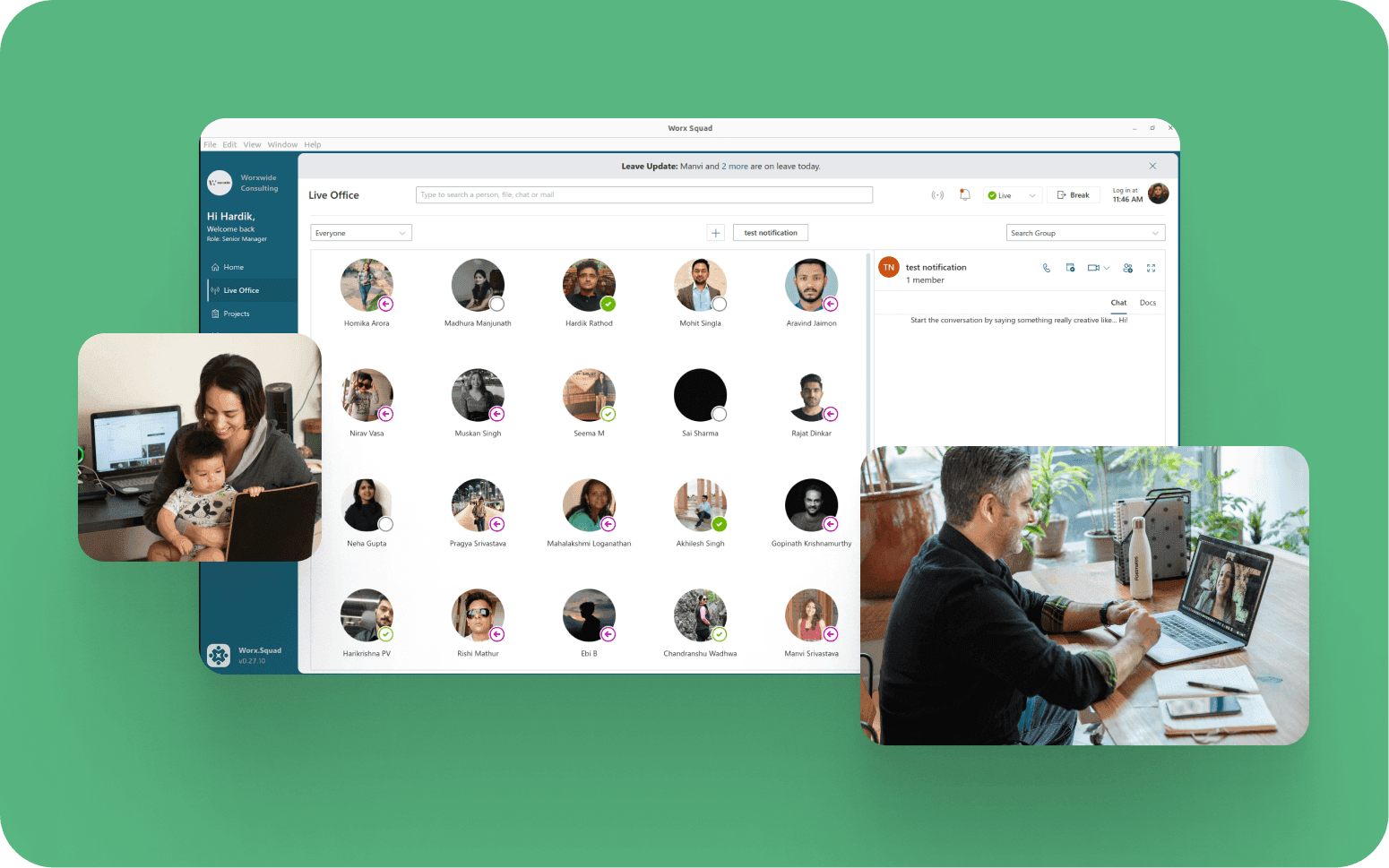
Multi-carrier shipping and logistics platform for a growing operator
- 70+
- countries handled in the first year
Supply Chain Software for Oil & Gas
Oil and gas procurement has a structure that generic procurement platforms don't understand. AFE-based budgeting means every purchase needs to be tracked against the authorisation for expenditure it was raised under, not just against a cost centre. Critical spare parts for production-critical equipment need minimum stock levels and reorder triggers, not just a warehouse location. Vendors delivering to remote field locations need direct visibility of their delivery schedule, not a phone call from procurement every time a status update is needed. We build procurement and supply chain software that handles AFE management, vendor portal integration, and critical spare parts inventory as first-class requirements rather than workarounds.
Materials requisition to purchase order workflow with AFE budget tracking and three-way invoice matching
Vendor portal for order acknowledgement, delivery confirmation, and documentation submission
Critical spare parts inventory with minimum stock levels, reorder alerts, and location tracking
AFE management with commitment tracking, spend reporting, and over-budget alerts
Bring the problem, the current workflow, or the existing code. We reply with a practical next step within one business day.
Trusted by









The brief
Good software decisions begin with the constraint, not a list of features or a preferred technology.
Purchase orders raised against AFE budgets that nobody is tracking in real time, so you only discover the budget is overspent when the invoices arrive at month end?
Critical spare parts for production-critical equipment unavailable when equipment fails, because minimum stock levels were never set and nobody was tracking inventory against reorder points?
Plain answer
RaftLabs builds custom supply chain and procurement software for oil and gas operators. It covers materials requisition, purchase orders, goods receipt, and three-way invoice matching, with AFE budget tracking, a vendor portal, MRO and critical spare parts inventory, and well-site materials logistics. A first module launches in 12 to 16 weeks from around $45,000, then grows into the full platform at a fixed cost.
What to remember
Proof
We build procurement and supply chain software that treats AFE management, vendor portal integration, and critical spare parts inventory as first-class requirements, not workarounds. Each is built around the specific workflows of oil and gas procurement.
Kimberlite Research put average unplanned downtime for offshore operators at about 27 days a year, near $38 million in lost production (Kimberlite, 2016). A missing critical spare is often the reason a repair waits. That is why MRO inventory, well-site materials logistics, and demand forecasting sit at the centre of the platform, not off to one side. Reorder points come from lead time, equipment criticality, and consumption history, so the part is on the shelf before the work order needs it.
Capabilities
Requisition-to-PO workflow with cost-based approval routing, EDI/portal transmission, and full status visibility to the requisitioner.
Real-time commitment tracking against each AFE with budget-vs-actual reporting and over-budget alerts to the AFE owner.
Order acknowledgement, delivery notification, and documentation submission with vendor performance data feeding review conversations.
Three-way PO/receipt/invoice matching with discrepancy flagging before payment release, and partial-delivery handling.
Criticality-driven minimum stock levels and reorder alerts, with automatic consumption deduction from completed work orders.
Mobilisation-to-demobilisation day-rate tracking for drilling, wellhead, and lifting equipment with off-hire notification automation.
Consumption-based forecasting for maintenance, repair, and operations parts. Minimum stock and reorder points track real usage across sites, not a static list.
Materials tracked from warehouse to well site, with delivery windows, backload, and field goods receipt handled for locations with unreliable connectivity.
How we work
We map your procurement volume, AFE structure, vendor base, and current procurement system. You leave week 1 with a written scope document and a fixed-price quote.
AFE tracking logic, vendor portal workflow, and financial system integration designed against your actual procurement structure.
Requisition-to-PO, AFE tracking, and vendor portal built in parallel, tested against real procurement scenarios.
Procurement, finance, and field teams trained on the new workflow before full rollout.
Why us
The engineers who assess your AFE structure also build the solution. No bait-and-switch, no offshore handoff after the contract is signed.
We scope the work, calculate the cost, and lock it in writing before any development starts.
RaftLabs has shipped production software since 2015, including for Energia. In the neighbouring supply-chain space, we have built multi-carrier shipping and logistics platforms.
Commitment and actual spend are visible against each AFE from day one, not discovered at invoice time.
Vendor delivery workflows account for the connectivity constraints of field locations.
The shift is from reactive purchasing to maintenance-driven materials planning. Reorder signals will come from your asset-integrity and maintenance systems, not a static min-max list. When a pump's vibration reading trends toward failure, the spare should already be on order. We build the procurement platform to read maintenance work orders and equipment criticality from day one, so it fits that direction instead of blocking it.
What clients say
Three-year average engagement. Founders and operators describing the work in their own words. No marketing varnish.

 Indonesia
I definitely recommend RaftLabs, especially to founders building complex platforms. They were transparent throughout the whole project.
Proof
Useful next steps
Work with us
Retail Software Development
See the service
Article
Digital transformation in pharma: 7 areas where Indian companies are investing
India's pharma industry is projected to reach $130B by 2030, but most companies still run on paper-based field reporting, legacy LMS platforms, and disconnected supply chains. Here are the 7 areas where Dr. Reddy's, Sun Pharma, Cipla, and others are placing their digital bets.
Read more
Article
How to choose an AI development partner: A founder's checklist
The wrong AI partner costs six figures and six months. Here are the questions that separate builders who ship from consultants who just make decks.
Read more
Article
How to Build a Grocery Delivery App Like Instacart (2026 Cost + Timeline)
Regional grocery chains paying 15-25% commission to Instacart are funding their competitor's growth. Here is what it costs to build your own grocery delivery app, what you actually need at each phase, and when to stop paying the platform and own the channel.
Read more
Article
How to Build a Travel Booking Platform Like Expedia (For Niche Operators)
Adventure travel operators, corporate travel managers, and regional tour packagers don't need to compete with Expedia globally. They need a vertical OTA that fits their inventory and audience. Here is what building one actually costs, what fails, and when custom beats white-label.
Read more
Article
SOC 2 compliance: What it is and why your app needs it
No SOC 2 report? No enterprise deal. Here's what SOC 2 actually requires, how long it takes, what it costs, and why most B2B SaaS companies need it before their first enterprise customer.
Read moreSplit-charge purchase orders are handled by allocating each line item to a separate AFE or cost code at the requisition stage. The system tracks commitment and actual spend against each AFE independently, so a single purchase order covering items for two different well programmes posts to each AFE in the correct proportion.
Yes. Procurement data flows to the financial and maintenance systems via API integration, file export, or database connector. We integrate with SAP (FI, MM, and PM), IBM Maximo, Oracle Financials, Microsoft Dynamics, Xero, and QuickBooks, with AFE cost codes mapped to the corresponding cost centres and maintenance work orders feeding spare parts consumption during implementation.
The portal is browser-based with no software install required. For remote deliveries with unreliable connectivity, the delivery notification can be submitted in advance by the vendor's logistics coordinator, and the field goods-receipt team confirms actual receipt independently, with any discrepancy flagged for resolution.
We start with a first module you can validate in production, then expand. A first module covering materials requisition, purchase order management, goods receipt, and three-way invoice matching typically runs $45,000 to $80,000 and launches in 12 to 16 weeks. Adding AFE management typically adds $20,000 to $35,000. The full platform with vendor portal and critical spare parts inventory grows to $90,000 to $150,000 over time.
Work with us
Tell us your procurement volume, AFE structure, vendor base, and current procurement system. We'll scope the right platform.
Go deeper