The Epic integration that was scoped as 'a few weeks of API work.'
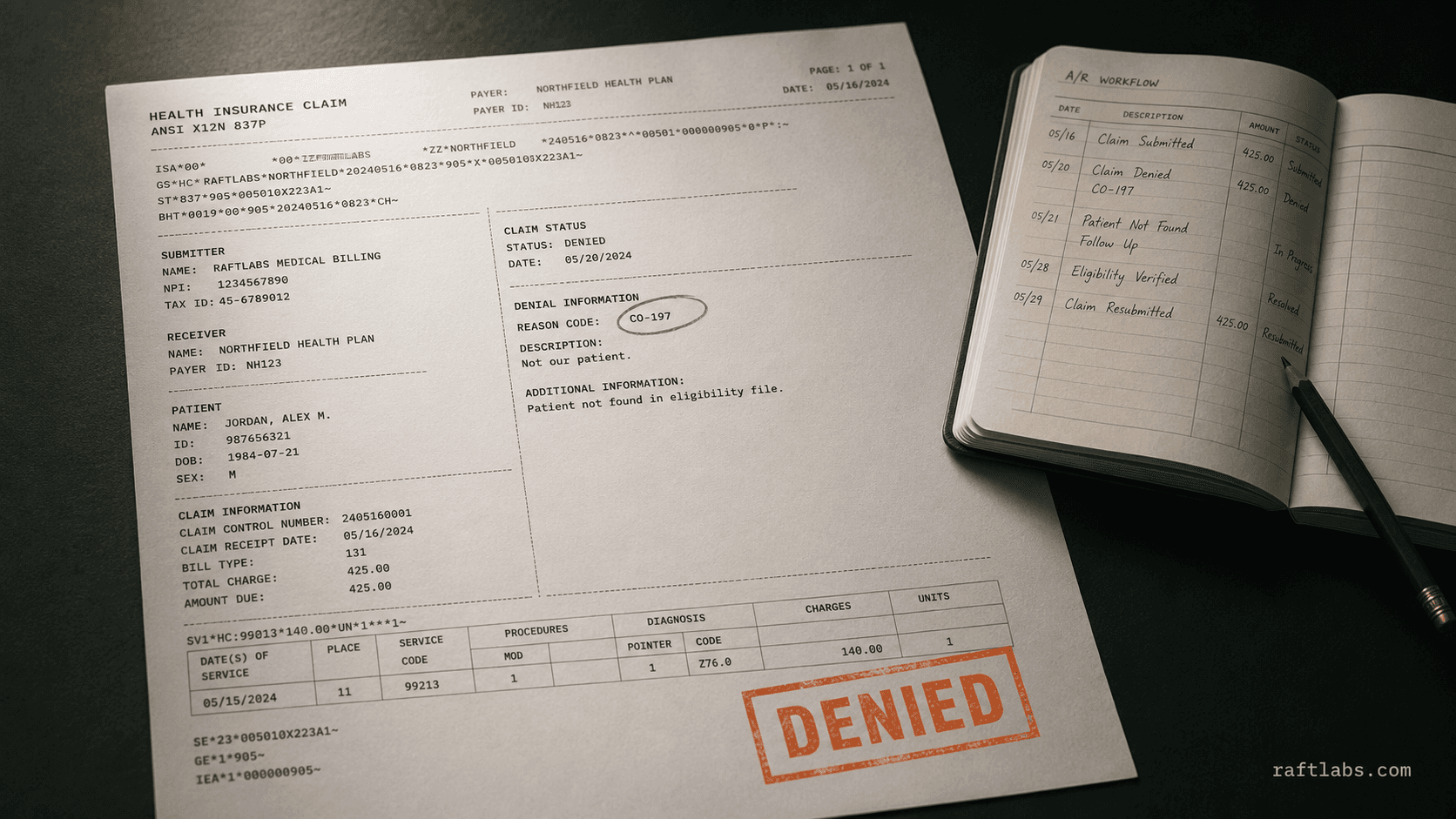
A digital health team promised a hospital customer a live Epic integration by the next quarter. Four months in, they are still fighting Epic's sandbox. Cerner returns fields the spec never mentioned. An HL7 v2 feed keeps dropping messages nobody can trace.
The deal that was supposed to close is now waiting on an integration everyone assumed was routine. The FHIR spec was never the hard part. Every vendor implements it differently, and experience is the only thing that closes the gap.
The spec is public. The experience is not.
The FHIR spec is public. Epic publishes developer documentation. So why do digital health companies spend six months on integrations that should take two?
Three reasons. First, every EHR vendor implements FHIR differently. The spec is a framework, not a contract. Epic's FHIR implementation supports certain resource types and ignores others. Cerner's API quirks are different from Epic's. Athena has its own conventions. Your team needs EHR-specific experience, not just FHIR spec knowledge.
According to the Office of the National Coordinator for Health IT (ONC), only 30% of US hospitals had achieved full interoperability across their systems as of 2024. For digital health companies integrating with EHRs, this gap means even technically complete integrations frequently hit data quality and routing problems that only surface against production systems.
Second, production access requires certification. Epic's App Orchard review, Cerner's code program, and similar vendor processes take weeks of their own. You can complete the technical integration while waiting for certification approval, but you cannot ship to customers until it clears.
Third, the data is messy. Patient demographics vary in completeness. Lab result units are non-standard. Medication names and codes differ between systems. Building a normalization layer that makes this data usable in your application adds time that most roadmaps do not account for.
RaftLabs has shipped 15+ HIPAA-compliant products since 2015, with FHIR R4 integrations built against Epic, Cerner, Allscripts, Meditech, and Athena. Every healthcare engagement is HIPAA-compliant, clients rate us 4.9/5 on Clutch, and the team that scopes your integration is the team that ships it.
This pays off when you have a real EHR to connect to and a deal waiting on it.
Everything on the left should already be true for your product. Even one thing on the right, and a full EHR integration build isn't the right first step yet.
A fit01You're a digital health, telehealth, or remote patient monitoring platform that needs to connect to Epic, Cerner, Athena, or Meditech.
02You're blocked from closing healthcare enterprise deals because you can't demonstrate a live Epic or Cerner integration.
03Your engineering team has no prior EHR experience, and the roadmap can't absorb a four-to-six-month detour.
Not a fit01There's no EHR or clinical system in scope, just a standard application build.
02You already have in-house FHIR and HL7 v2 expertise and only need extra hands.
03The data carries no PHI and no HIPAA obligations to design around.
01FHIR R4 API integration
Connection to Epic, Cerner PowerChart, Allscripts, Meditech, and Athena via their FHIR R4 endpoints, covering Patient, Encounter, Observation, Condition, MedicationRequest, and Appointment resources. OAuth 2.0 and SMART on FHIR authentication support patient- and clinician-facing access, and a normalization layer maps EHR-specific extensions and coding systems (SNOMED, LOINC, RxNorm, ICD-10) to a consistent internal representation.
02HL7 v2 message processing
Parsing and transformation of HL7 v2 messages from hospital interface engines and legacy EHR systems, handling ADT, ORU, ORM, MDM, and SIU message types over MLLP and TCP. An MLLP listener receives messages with acknowledgment handling and a reliability queue, transforming pipe-delimited HL7 into structured JSON or FHIR-equivalent resources, with error handling for malformed messages and non-standard vendor extensions.
03SMART on FHIR app development
SMART on FHIR applications that launch from within the EHR clinician workflow, receiving the current patient's FHIR ID for immediate querying without a separate search. Launch from Epic Hyperspace, Cerner PowerChart, or any SMART-compatible EHR, with App Orchard submission support: we prepare the technical documentation, complete Epic's review questionnaire, and handle clarification rounds.
04Bi-directional data sync
Two-way data flow between your platform and the EHR: reading patient demographics, appointments, lab results, medications, and diagnoses, and writing structured data back into the EHR record. Write-back covers clinical notes as DocumentReference resources, care plan updates, appointment status changes, and observations, scoped against what each EHR vendor's API permits, with gaps flagged before we build.
05HIPAA-compliant data architecture
PHI handling architecture designed for HIPAA compliance: encryption in transit (TLS 1.2 minimum) and at rest (AES-256), role-based access with minimum-necessary scope, full audit logging of every PHI access, and secure credential management. Data minimization stores only the fields your application needs, and architecture documentation is produced for your compliance team's HIPAA risk assessment and enterprise security reviews.
06Patient identity matching and deduplication
Master Patient Index (MPI) logic that resolves patient identity across multiple EHR systems and data sources: deterministic matching on exact field combinations, probabilistic matching with confidence scoring for partial matches, and a review queue for near-match exceptions. Deduplication handles name variations, address changes, and multiple MRN assignments, presenting one unified patient record with configurable thresholds.
Three layers of complexity compound on each other.
Proprietary implementations on top of open standards. FHIR R4 is a standard. But Epic's FHIR endpoints support a specific subset of resources, return vendor-specific extensions, and require Epic-specific authentication flows. What works in Epic's sandbox does not always work in Cerner's. What works in Cerner does not always work in Allscripts. Your team needs EHR-specific experience, not just FHIR knowledge.
Certification adds timeline independent of development. Epic's App Orchard review process runs 8 to 16 weeks from submission to approval. You can complete your technical integration in parallel, but you cannot connect to production Epic systems at a customer site until the review clears. That timeline needs to be on your product roadmap before you promise a launch date to a hospital customer.
Data quality is inconsistent. Patient records in production EHR systems contain incomplete fields, non-standard coding, duplicate entries, and historical data entered in free-text fields rather than structured codes. Building a normalization layer that makes this data reliably usable in your application, and deciding what to do when required fields are missing, adds meaningful development time that spec-reading does not reveal.
Which EHR system do you need to connect to?
Tell us your target EHR, the data types you need to sync, and whether you need read-only or bi-directional. We'll scope the integration and give you a fixed price and timeline.
How it works
From scope to shipped
Every EHR integration follows the same four phases. Scope is locked and price is fixed before development starts.
- Week 1
01Discovery and scope
We map the target EHR systems, the data types you need to access or write, your authentication patterns, and your HIPAA requirements. You leave week 1 with a written scope document and a fixed-price quote. No development starts without your sign-off.
- Weeks 2-4
02Sandbox integration and certification prep
We build against sandbox credentials first. Epic, Cerner, and Athena all provide sandbox environments. If Epic is in scope, we prepare the App Orchard submission documentation in parallel so the review clock starts while we build.
- Weeks 4-12
03Production integration, normalization, and QA
We connect to production EHR endpoints at your first customer site, build the data normalization layer, and run live data validation. QA runs in parallel with every sprint. Bi-weekly demos so you see working software throughout.
- Weeks 12+
04Go-live and post-launch support
Production deployment with monitoring activated on launch day. 8 weeks of post-launch support included. Handoff documentation covers the integration patterns, certification requirements, and normalization decisions so your team can extend the codebase.
We start with discovery. Before any code is written, we need to understand your target EHR systems, the specific data types you need to access or write, whether patients or clinicians are the API users, and what your compliance requirements are. That conversation typically takes two to three hours and produces a scope document with the exact API endpoints, data flows, and architecture decisions we will make.
From there, we build against the EHR sandbox environment first. Epic, Cerner, and Athena all provide sandbox credentials for development. We build and test against sandbox data before you have access to any patient information. That phase also covers the App Orchard submission documentation if Epic is in scope.
Production integration and normalization come next. We connect to production EHR endpoints at your first customer site, build the data normalization layer for that site's specific EHR configuration, and run live data validation against real (but de-identified in development) patient records.
We deliver working integrations, not architectural documents. Your engineering team inherits a codebase they can extend, test, and operate. We document the integration patterns, the certification requirements for each EHR vendor, and the data normalization decisions so the next engineer who touches the code understands what was built and why.
If you need to connect to Epic, Cerner, or any major EHR system, contact us and tell us which system and what data you need. We will scope it and give you a fixed price before you commit to anything.
| Scope | Timeline | Cost range |
|---|
| Single EHR, FHIR R4 read-only (demographics, appointments, labs) | 8 to 12 weeks | $40,000 to $65,000 |
| Single EHR, FHIR R4 bi-directional with write-back | 12 to 16 weeks | $55,000 to $90,000 |
| Multi-system HL7 v2 integration (hospital interface engine) | 10 to 16 weeks | $45,000 to $80,000 |
| Multi-EHR FHIR + HL7 v2 with patient identity matching | 16 to 24 weeks | $80,000 to $150,000 |
Epic App Orchard certification adds 8 to 16 weeks to production readiness and is not included in development time above. These are fixed-price engagements, we scope before we quote, and the price does not change during delivery unless the scope changes.
- Single EHR integration, $40,000-$90,000
- A FHIR R4 integration with one system (Epic, Cerner, or Athena) covering patient demographics, appointments, and clinical data, read-only or bi-directional with write-back, in 8 to 16 weeks.
- Multi-system integration, $80,000-$150,000
- HL7 v2 message parsing from a hospital interface engine plus multi-EHR FHIR integration with patient identity matching, in 16 to 24 weeks.
What it costs
EHR integration, starting at $40,000.
A written scope and a firm quote in week 1. No development starts without your sign-off, and the price does not change during delivery unless the scope changes.
Most clients start with the highest-priority EHR system, prove the integration in production, then extend to Cerner, Athenahealth, or others once the first is live.
Starting investment
Starts at $40,000
Scoped before we quote. Epic App Orchard certification adds 8 to 16 weeks to production readiness, independent of development time. Most clients start with a single integration, then add others once the first is live.
No hourly billing
Once we scope the first integration, that price is locked in writing. No hourly billing, no surprise line items on the final invoice.
One team, start to finish
The team that scopes your EHR integration in week 1 is the team that ships it. No offshore handoff after the contract is signed.