Mold Remediation Management Software
Mold remediation software for jobs that stand or fall on the file.
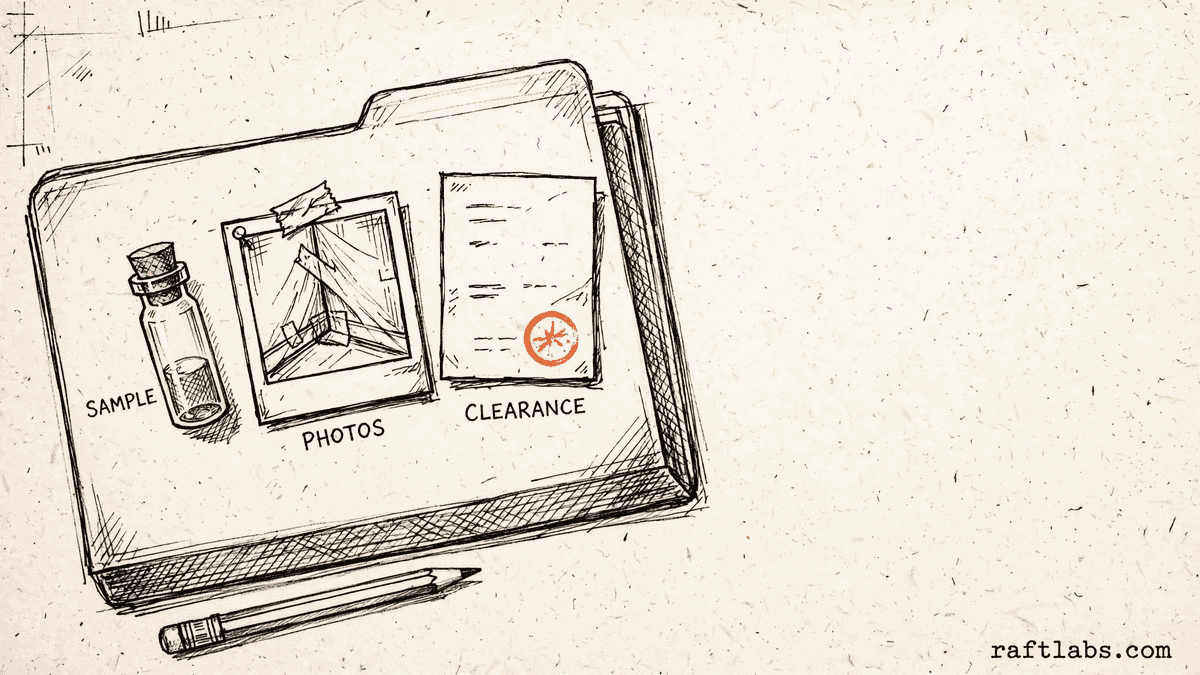
Your protocol sits in one app, your containment photos sit on a crew phone, and the clearance result sits in an email nobody can find. We turn that scatter into one job record that holds the test results, the photos, the moisture readings, and the clearance, in the order the work happened.
Bring one stuck workflow. Leave with a build, buy, repair, or wait recommendation.
Trusted by























The brief
Start with what is not working.
Good software decisions begin with the constraint, not a list of features or a preferred technology.
The protocol, the containment photos, and the clearance result live in three places that never connect.
A clearance result from last year takes an afternoon of searching to find when a dispute arrives.
The insurer asks for proof the work followed the protocol, and the office rebuilds the file by hand.
Plain answer
Mold remediation software keeps one record for each mold job, from the first air sample to the final clearance result. It holds the written protocol, the containment photos, the moisture readings, and the test results in one place, so the office, the crew, and the insurer all work from the same file.
What to remember
- Use this when the paperwork around the job, not the removal work itself, is what puts payment and trust at risk.
- One job record should carry the test results before and after, the protocol checklist, the photos, and the clearance.
- About 40 percent of mold jobs involve an insurer, so the file has to satisfy a reader who never visited the property.
- The code, accounts, data, and operating notes should stay usable by another capable team.
Fit
Custom software should earn its keep.
A wish list is not enough. The case is real when the same problems show up in disputed jobs, slow insurer answers, and files nobody can rebuild.
Your protocol, photos, and clearance results live in separate tools that staff copy between by hand.
Insurer or realtor questions take the office hours to answer because the proof is scattered.
Your company can name one person who owns the workflow and say what 'done' looks like for the first release.
A ready-made product already holds your whole job file, from first sample to clearance, on one record.
Your forms and checklists are not settled yet, so there is no standard paperwork for software to hold.
The brief is a feature list with no job, customer, or result attached to it.
Not sure which side you are on? Use the first call to make that decision. A useful answer may be to buy, connect, repair, or wait.
Start with the file, not the software.
A mold company rarely has one software problem. It has one job told in three places. The written protocol sits in a document tool. The containment photos sit on the crew leader's phone. The air sample results and the clearance sit in email. Each part is fine on its own. The cost lands when someone has to prove the job was done properly and the three places do not connect.
Mold work makes that gap expensive faster than most trades. The removal itself follows a set protocol, but the business stands or falls on the record: test results before and after, photos of the containment, moisture readings, and a clear chain showing each step happened. When a homeowner, a realtor, or an insurer questions the work months later, the file is the answer. A file that takes an afternoon to rebuild is a weak answer.
A second product hides inside the first. Customers see the estimate and the clearance result. Your team lives in the other screens: following the protocol checklist, recording readings, keeping testing and remediation roles apart where the state requires it, and answering questions about finished jobs. Quotes that squeeze all of that into one small line are where budgets break, so we scope your team's screens as their own job, with their own users, from the start.
Custom mold remediation software makes sense when one system can hold the whole chain, from the first sample to the final clearance, better than the scatter does. The first release should cover one complete path. It should not try to replace every tool in the office at once.
Start where the proof breaks.
The screens are only part of the job. The real scope is your protocol, your photo standard, who can see and change what, and whether the clearance can be found a year later.
One job file from first sample to clearance
The intake, the assessment, the signed scope, the daily work record, the clearance result, and the billing sit on one record in the order they happened. Anyone in the office can rebuild the job from the file without calling the crew.
Protocol checklists the crew actually follows
Your cleanup protocol becomes a checklist on the job: seal the area, set negative air pressure so spores stay inside it, filter the air, remove the affected material, clean, and record each step with a photo. Skipped steps show up the same day, not during a dispute.
Test results before and after, side by side
The first air sample results open the job, and the clearance results close it, attached to the same rooms and the same record. The change between the two is the product your customer paid for, and it reads at a glance.
Containment photos in a set order
Crews shoot each room before containment, the containment itself, the material, the removal, and the finished surface, named by room and date. Moisture readings attach to the room they came from, so the photo story and the numbers tell the same story.
An insurer-ready record
About 40 percent of mold jobs involve an insurer. When the protocol, the photos, the readings, and the cause of the mold already sit on one record, the office sends the record instead of rebuilding it. Insurance-pending jobs track separately from cash-pay jobs, so neither kind waits on the other.
Which one is yours?
Bring it to a 30-minute call. Leave with a build, buy, repair, or wait recommendation in writing. Free, whether or not we ever work together.
The work
One record for every kind of mold job.
Testing-only work, full remediation, and insurer-referred jobs stress a system in different ways. The same rule applies to all three: one job record that every screen reads from.
Testing and assessment work
A testing job is its own record: the symptoms reported, the moisture source found, the samples taken, and the results when they come back. Where your state separates the licences, that record routes to the assessor side and stays visibly separate from remediation work.
Remediation work
The crew works from the written protocol the assessment supports. Containment, removal, cleaning, and the daily record build as the job runs, and the clearance test closes the record only when the result is attached and the area is released.
Follow-up checks
Some jobs need a moisture check weeks or months later to confirm the problem has not returned. The record schedules that check on its own and brings the original readings back up next to the new ones, so the comparison takes minutes.
Where water damage work ends
Drying a structure after a leak is a different job, with its own moisture logs and equipment record. If your company also does that work, our water damage restoration management page covers the mitigation side. This page covers the mold chain that follows it: testing, protocol, and clearance.
The office side
Approvals, scope changes, refunds, and who did what sit in screens your team uses all day. These screens get their own scope and their own users, because they are where disputes are settled and insurer questions are answered.
Proof
The fifth attempt became a product customers could keep using.
UrShipper had already worked with four development vendors. Its founder describes the communication and decisions during the recovery.
The case study documents a 14-week recovery, five carrier connections, a Shopify fulfilment workflow, and client-reported results. It is one comparable project, not a promise that every inherited codebase can follow the same plan.
Read the UrShipper case studyWhich part of the file costs you the most?
Bring it to a 30-minute call. Leave with a build, buy, repair, or wait recommendation in writing. Free, whether or not we ever work together.
How it works
Close one expensive risk before opening the next.
Each stage answers a buyer question and leaves behind a decision you can inspect. The next stage only opens when the expensive uncertainty in the current one is small enough to accept.
- 01Understand
Trace one real job file
Where do the protocol, the photos, and the clearance actually get separated?
Follow one finished job and try to rebuild its file. Include the photos still on a phone, the result still in an inbox, and the checklist filled in from memory. A tidy diagram usually misses exactly those parts.
Decision produced
A map of one job from first sample to clearance, with the hand-offs, the gaps, and the cost of each gap.Risk closed
Paying to automate the visible symptom while the expensive gap stays where it was. - 02Shape
Choose the first useful release
What needs to exist together for one complete job to run through the system?
Choose the shape from the way the work happens. Name who uses it, where they use it, which records it needs, and which result the first release must complete: a job file an insurer can follow, from the first sample to the clearance.
Decision produced
The first-release boundary: the users, the roles, the protocol checklists, the connections, and a clear definition of done.Risk closed
A small-looking feature list that quietly depends on several screens, rules, and owners. - 03Prove
Review working software
Does it rebuild a real job the way your best crew leader documents it?
Review the software against real jobs, not a tour of finished screens. Load a finished job with a scope change and a clearance result, then find the clearance again in under a minute, the way you would during a dispute.
Decision produced
Working checkpoints tested with your own protocol, your own photo standard, and your own recent jobs.Risk closed
Discovering the documentation gaps after crews already depend on the system. - 04Transfer
Release, measure, and hand over
Did the new system close the gap it was bought for, and can another capable team run it?
Start with one crew or one kind of job. Compare the time it takes to answer an insurer question, and the time it takes to find an old clearance, against the old way before adding the next workflow.
Decision produced
A controlled release, a comparison with the starting point, operating notes, and an account ownership map.Risk closed
Measuring activity instead of the business result, or depending on the original vendor to keep the system running.
What it costs
Every project starts at $10000.
The first phase turns the costliest patched workflow into a scoped first release with what 'done' looks like agreed in writing.
Starting investment
Starts at $10000
Workflow complexity, systems to connect, data migration, and user roles set the scope. After a 30-minute call, you get a written build, buy, repair, or wait recommendation plus first-phase direction. Free, whether or not you build with us.
Not ready to talk? Start here.
Four useful next paths: see the wider custom software picture, the web and phone surfaces a mold system usually needs, or the drying record this work follows.
See the full custom software picture
How to decide between buying, repairing, and owning software, and what the first release should cover.
Plan the office screens
The browser-based screens your office team uses for job files, approvals, insurer questions, and invoices.
Plan the crew screens
The phone screens crews use at the property: the protocol checklist, photos, readings, and change approvals.
Cover the drying side too
Moisture logs, drying equipment, and adjuster-ready records for the mitigation work that often comes before a mold job.
Work with us
Bring one stuck workflow. Leave with a decision.
In a 30-minute call, we will help you decide whether to buy, connect, repair, build, or wait. If custom software is not the sensible next move, that is still a useful answer.
- One named workflow owner and one complete path for the first phase.
- Scope, price, what 'done' looks like, and exclusions agreed before paid work starts.
- Code, cloud, data, and provider access remain under your control.
- Post-launch warranty cover for defects in the agreed scope.
Common questions
It is a system made for the way mold jobs actually run. A mold job starts with testing, follows a written cleanup protocol, and ends with a second test that proves the work held. Generic tools treat that job like any other service visit. Mold remediation software keeps the test results, the protocol, the containment photos, and the clearance result on one job record, in the order they happened.
Six parts. The intake: what the customer reported and when. The assessment: the moisture source, the areas affected, and any test results. The scope and price: the written protocol, the estimate, and the signed permission to start. The work record: daily notes and photos at each stage. The release: the clearance result, the closing photos, and the customer sign-off. And the billing: the deposit, the invoices, and any approved changes. Anyone should be able to rebuild the whole job from the file without calling the crew.
IICRC S520 is the mold cleanup rulebook written by the Institute of Inspection, Cleaning and Restoration Certification, the industry body for this trade. In plain words, it sets out how to seal off the work area, keep the air inside it under negative pressure so spores stay put, filter that air, and remove affected material in a controlled way. The software turns those steps into a checklist on the job record, so the crew records each step as it happens instead of reconstructing it later.
The first test results attach to the job when the job opens, next to the areas they came from. The crew works from the written protocol those results support. When the work is done, the second set of results, the clearance test, attaches to the same record with the date the area was released. Before and after sit side by side, so a customer, a realtor, or an insurer can see the change without anyone assembling a report by hand.
Yes. Several states require the person who tests a property and the person who cleans it up to hold separate licences, and some do not allow the same company to do both on one property. The system can hold that split: testing work routes to the licensed assessor or to a partner company, remediation work stays with your crew, and each side sees the parts of the record its role allows. You confirm your own state rules with your regulator; the software records the split, it does not decide it.
The crew adds them from a phone as the work happens, under a simple standard: each room before containment goes up, the containment itself, the affected material, the removal, and the finished surface. Photos are named by room and date, and moisture readings, which are meter readings that show how wet a wall or floor still is, attach to the room they came from. A reader who never visited the property can follow the job in order.
About 40 percent of mold jobs involve an insurer, and the insurer judges the job entirely from the file. When the protocol checklist, the photos, the moisture readings, and the before and after test results already sit on one record, the office sends that record instead of rebuilding it from phones and inboxes. Clear documentation of the cause also matters, because mold cover is often limited unless the mold came from a covered water problem, and the file is where that cause is recorded.
Hidden mold behind a wall is common in this trade. The crew leader records the new area on the job record, with the added work and the added price, and the customer approves the change on a phone before the extra work starts. The approved change flows into the final invoice on its own, and the photos of what was found sit next to the approval, so the change is explained by the record itself.
Water damage work centres on stopping the water and drying the structure: moisture logs, drying equipment, and the dry-out record. Mold work starts where that ends. This page covers the testing, protocol, and clearance chain: air samples before and after, containment, the written cleanup protocol, and the result that releases the room. Companies that do both kinds of work usually need the two records to connect, but they are different jobs with different proof.
Every project starts at $10000. The first phase covers one complete path, such as the job file from first sample to clearance, with the scope and the price agreed in writing before paid work starts. The final price depends on how many kinds of users the system serves, whether testing and remediation need separate roles, what it needs to connect to, and whether your records need moving over from other tools and phones.
You judge what you can see, not the code. Every checkpoint is working software you click through yourself, tested against the workflow agreed at the start. Progress is reported in plain language: what changed, what is next, and what it costs. Because you own the code, the accounts, and the operating notes throughout, nothing about the work is locked inside our heads. Our job is to make the work checkable; your job is to check it against your business.
You own the software made for you and control where it lives, the accounts, the customer records, and the job files. Outside services and ready-made parts keep their own licence terms. The operating notes and handover material stay current so another capable team can take over.
Buy an existing product when it holds your protocol, your photos, and your clearance results on one job record, handles your state licensing split if you have one, and its monthly cost makes sense for your job volume. Have one made when the ready-made tools keep splitting the file apart, or when insurer work makes the documentation chain the thing your company is really selling. If your own forms and checklists are not settled yet, settle them first, because software only stores the paperwork you have defined.