AI OCR Software Scales Gas Station Operations With 20K+ Transactions
- 20K+
- transactions processed in a single day
- 40+
- stations connected during beta
AI Predictive Maintenance Software
Unplanned downtime costs more per hour than planned maintenance, typically 5-10x more when you factor in emergency labor rates, expedited parts, production losses, and secondary damage from running failed equipment. Calendar-based maintenance reduces surprise failures but replaces components that still have useful life, adding cost without eliminating downtime. Predictive maintenance uses the sensor data your equipment already generates to identify degradation patterns before failure, so maintenance happens when the equipment needs it and the failure doesn't happen at all.
Failure prediction models trained on your equipment sensor data and historical maintenance records
Real-time anomaly detection on process parameters with early warning alerts
Maintenance schedule recommendations integrated with your CMMS for automated work order creation
Remaining useful life estimation for critical equipment components
Bring the problem, the current workflow, or the existing code. We reply with a practical next step within one business day.
Trusted by










The brief
Good software decisions begin with the constraint, not a list of features or a preferred technology.
Unplanned equipment downtime costing more per hour than the annual maintenance budget for that machine?
Calendar-based maintenance servicing equipment that doesn't need it while missing failures between service intervals?
Plain answer
RaftLabs builds predictive maintenance software for manufacturing operations: equipment failure prediction from sensor data (vibration, temperature, pressure, power draw), anomaly detection on process parameters, and maintenance schedule recommendations integrated with your CMMS or ERP. Predictive maintenance shifts equipment servicing from calendar-based to condition-based, reducing unplanned downtime by 20-40% without over-servicing. Most predictive maintenance projects deliver in 10-14 weeks at a fixed cost.
What to remember
Proof
Predictive maintenance uses the sensor data your equipment already generates to spot degradation before it becomes failure. The machine gets serviced when the data says it needs it, not on a fixed calendar, and the breakdown never happens. That matters because the failure you do not see coming is the expensive one. Unplanned downtime runs anywhere from $5,000 to $50,000 per hour on a typical line, and far more on a high-throughput plant.
Industry benchmarks
Capabilities
FFT-based bearing fault frequency analysis and gradient-boosted models with SHAP explainability, trained on your equipment's specific failure modes.
Kalman-filter denoised sensor ingestion with configurable informational/warning/critical alert thresholds by equipment criticality.
Weibull-based RUL confidence intervals targeting replacement at 85-90% of estimated life, with automated parts reorder integration.
Automated work orders with equipment ID, predicted failure mode, confidence score, and suggested action, closing the loop with post-maintenance feedback.
Edge-processed FFT spectra reducing data volume by 100x, stored in a purpose-built time-series database with data-quality monitoring.
Unsupervised models (isolation forests, VAEs, LSTM reconstruction) catching novel failure modes 3-14 days before threshold-based alarms fire.
How we work
We map your equipment types, current sensor infrastructure, and what downtime is costing you. You leave week 1 with a written scope document and a fixed-price quote.
Sensor integration, feature engineering, and failure-prediction model architecture designed against your historical data.
Models trained and validated against held-out failure events, with the dashboard and CMMS integration built in parallel.
Maintenance teams trained on the alert workflow before production deployment. You leave with a validated v1 on one equipment class, then expand to more assets in later phases.
We do not quote a generic percentage and call it your return. Before you sign, we build the number from your operation.
Inputs are your downtime hours per asset per year, your production cost per hour, your emergency-versus-planned labour and parts premium, and your current preventive-maintenance spend.
The method is direct. We set your baseline annual downtime cost, then apply a reduction range derived from how well a model recalls your own historical failures on held-out data. We net out the cost of false positives, because an alert on healthy equipment still burns inspection time. A model that cries wolf is not free.
The output is a low, base, and high annual saving, with a payback estimate in months. If the honest number does not clear your hurdle rate, we will tell you predictive maintenance is not worth it for that asset yet.
Why us
The engineers who assess your sensor infrastructure also build the solution. No bait-and-switch, no offshore handoff after the contract is signed.
We scope the work, calculate the cost, and lock it in writing before any development starts.
We build data-heavy platforms for regulated and industrial operations. Real engagements across SaaS, fintech, healthcare, and logistics, not every one published as a named case study. Where a specific asset class is new ground, we say so and prove the models against your own failure history before you scale.
We calculate expected return from your specific baseline, not generalised benchmarks.
SHAP feature importance shows your engineers exactly which signals are driving each prediction.
What clients say
Three-year average engagement. Founders and operators describing the work in their own words. No marketing varnish.

 Indonesia
I definitely recommend RaftLabs, especially to founders building complex platforms. They were transparent throughout the whole project.
Proof
Useful next steps
Work with us
AI for Manufacturing Companies
See the service
Article
AI in Manufacturing: What Actually Works on the Plant Floor
Predictive maintenance gets all the press. The bigger gains in manufacturing AI are quieter, quality inspection, production scheduling, documentation, and the institutional knowledge walking out the door every time a 25-year veteran retires. Here is what works in 2026 and how to sequence it.
Read more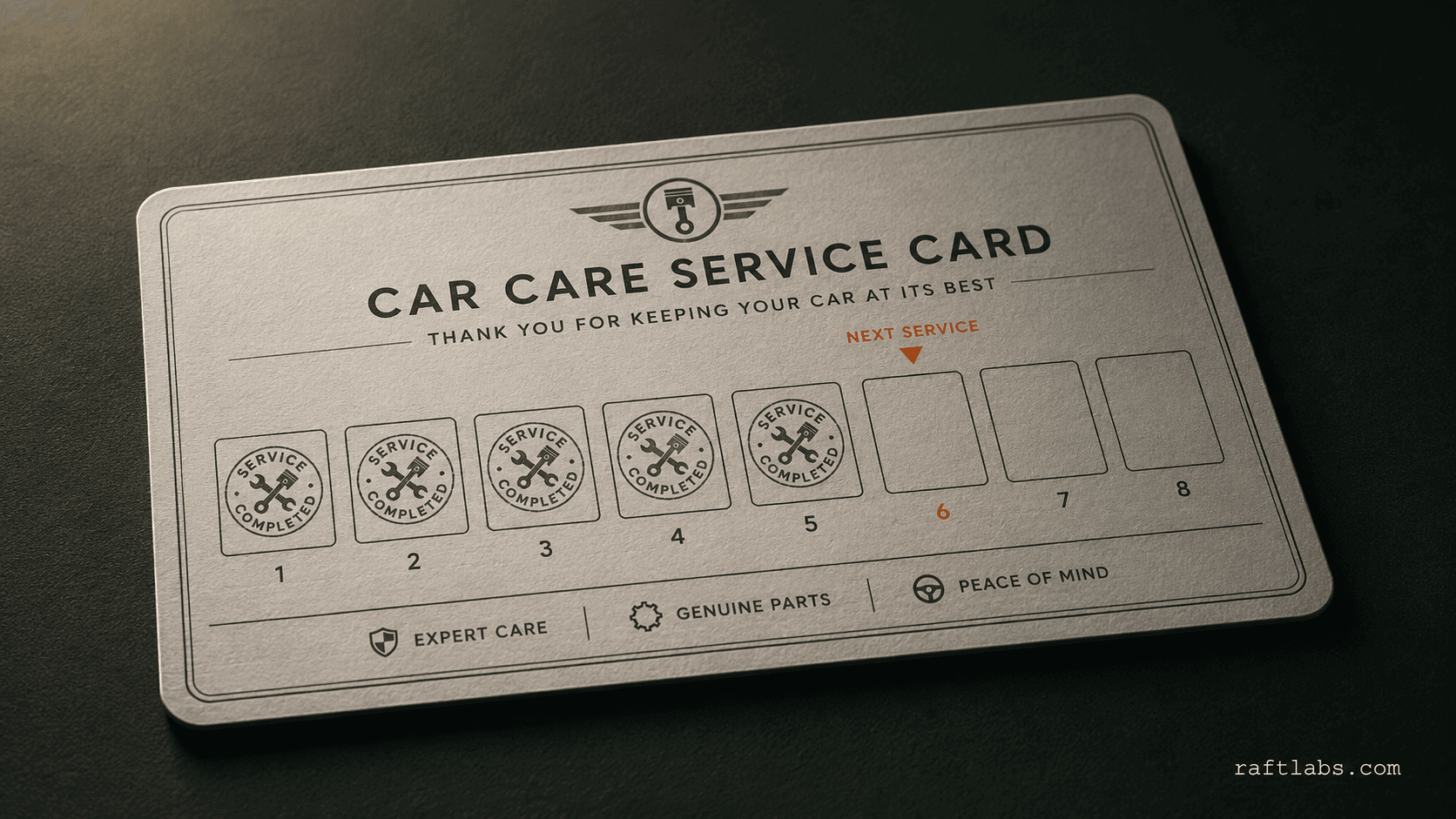
Article
Loyalty Programs for Automotive Industry
Loyalty programs for the automotive industry are designed to keep customers engaged between infrequent vehicle purchases and service intervals by rewarding every transaction, from oil changes to parts purchases. A well-built automotive loyalty platfo
Read more
Article
Intelligent Document Processing for Telecom and Utilities
Intelligent document processing for telecom automates service applications, bill reconciliation, field maintenance logs, and regulatory compliance filings.
Read more
Article
IoT Consultant's Guide: Edge Computing vs. the Cloud
Sending every sensor reading to the cloud costs more in latency and bandwidth than most IoT teams plan for. Here is when edge computing is worth the added complexity, and what it costs to get wrong.
Read more
Article
Farm Management Software: Build vs. Buy for Co-ops, Large Operations, and Agtech Founders
AgriWebb, Granular, and Trimble Ag serve most of the market well - until they don't. When your operation outgrows a subscription tool, custom farm management software development costs $90K-$240K and takes 14-22 weeks. Here is what you need to know before you decide.
Read moreThe sensors required depend on the failure modes you want to predict. Rotating equipment is typically monitored with vibration accelerometers and bearing/winding temperature sensors. Hydraulic systems use pressure transducers and particle count sensors. Many failure modes can also be detected from existing PLC signals such as cycle time drift without adding new sensors.
For supervised models trained on labelled failure events, 12-24 months of sensor data containing confirmed failure instances is the minimum useful dataset, with at least 5-10 failure events per failure mode. For equipment with rare failures, transfer learning from similar equipment types or unsupervised anomaly detection bridges the data gap.
Unplanned downtime commonly costs $5,000 to $50,000 per hour in lost production on a mid-market line, and far more on a high-throughput plant. Deloitte reports that mature predictive maintenance cuts equipment breakdowns by around 70% and maintenance costs by about 25%. We model your own number before you commit: we take your current downtime hours per asset, your production cost per hour, and your emergency-versus-planned labour and parts premium, then apply a reduction range derived from how well the models recall your historical failures, net of the inspection cost of false positives. You get a low, base, and high annual saving with a payback estimate, usually 6 to 18 months. A focused pilot on one equipment class starts around $30,000 to $60,000 at a fixed price; a plant-wide platform grows into six figures over later phases.
Preventive maintenance services equipment on a fixed calendar, so it replaces parts that still have useful life and still misses failures that happen between intervals. Predictive maintenance watches condition signals and acts only when the data shows degradation. The trade-off to manage is false positives: an alert that sends a technician to healthy equipment costs inspection time, so we tune thresholds against the cost of a missed failure versus the cost of an unnecessary inspection for each asset class.
A focused pilot covering one equipment class, such as rotating assets on a single line, delivers a validated v1 in 10 to 14 weeks: sensor audit, data pipeline setup, model development, and CMMS integration. That first slice proves the models against your own failure history before you scale. Broader coverage across multiple equipment types and plants grows over later phases rather than shipping all at once.
Work with us
Tell us your equipment types, current sensor infrastructure, and what downtime is costing you. We'll design the system and give you a fixed cost.
Go deeper