Auto Glass Management Software
Auto glass software for right glass, proved calibration, paid claim.
The wrong glass, a calibration nobody can prove, and an insurance bill that bounces back. We turn that into one job record, so the glass matches the vehicle, the calibration proof is ready for the insurer, and the claim is sent in the form they accept.
Bring one stuck glass job. Leave with a build, buy, repair, or wait recommendation.
Trusted by





















The brief
Start with what is not working.
Good software decisions begin with the constraint, not a list of features or a preferred technology.
The same model year carries several different windshields, and the wrong one still gets ordered.
A camera windshield needs calibration after fitting, but proving that to an insurer takes hours.
Insurance bills bounce back because the paperwork does not match what the insurer asked for.
Plain answer
Auto glass software matches the right glass to the vehicle from its VIN and the standard NAGS part list, flags when a camera windshield needs calibration after fitting, and sends the insurance bill in the format insurers accept. The job, the proof, and the payment stay on one record.
What to remember
- Use this when wrong glass, unproved calibration, and bounced insurance bills cost more than owning the fix.
- The first release should complete one glass job end to end, from VIN lookup to paid claim, not collect disconnected features.
- The code, cloud accounts, data, and operating notes should stay usable by another capable team.
- Quote the team's own screens as their own scope: glass matching, calibration records, insurer billing, and payment tracking are a second product, not a single admin-panel line.
- Buy a maintained glass product when it fits your shop; own software when calibration proof, insurer rules, or mobile working does not fit it.
The first decision is not what to build.
It is whether software is the right answer at all. We use four possible recommendations before discussing a development scope.
- 01
Buy
Choose a maintained glass product when it handles the core workflow and the remaining gaps can be solved with configuration, a connector, or a small process change. Paying for software you do not have to maintain is often the better trade.
- 02
Repair
Keep the existing product when users still get value from it and the code can be understood safely. Start with evidence: where the code lives, how the data is organized, what is tested, which outside services it depends on, who can access what, and how updates go live.
- 03
Build
Own the system when the workflow shapes margin, customer experience, speed, or a product customers pay for. Start with one complete path and the system connections that path cannot work without.
- 04
Wait
Do not turn a changing policy into permanent software. Stabilise the rules, name the workflow owner, and measure the cost of the current process before paying for a product.
Not sure which path is yours? Bring it to a 30-minute call. Leave with the answer in writing.
Fit
Auto glass software should earn its maintenance burden.
A feature request is not enough. The case is real when the same constraint shows up in time, errors, margin, or customer experience.
Wrong glass still gets ordered because year and model cannot tell the options apart.
Calibration is required on camera windshields, but the proof an insurer wants takes hours to pull together.
Insurance bills bounce back and the office reworks them by hand, job after job.
A maintained glass product fits with reasonable configuration and process change.
The team wants software to settle an unresolved pricing or insurer policy.
The brief is a feature list with no job, transaction, or business result attached.
Not sure which side you are on? Use the first call to make that decision. A useful answer may be to buy, connect, repair, or wait.
Start with the job, not the software.
An auto glass problem usually starts as a matching problem. A customer gives a year and a model. The shop orders the glass that usually fits. The technician drives out and finds a camera bracket or a sensor the ordered glass does not have. The key question is whether that friction repeats, can be measured, and costs enough to justify owning the fix.
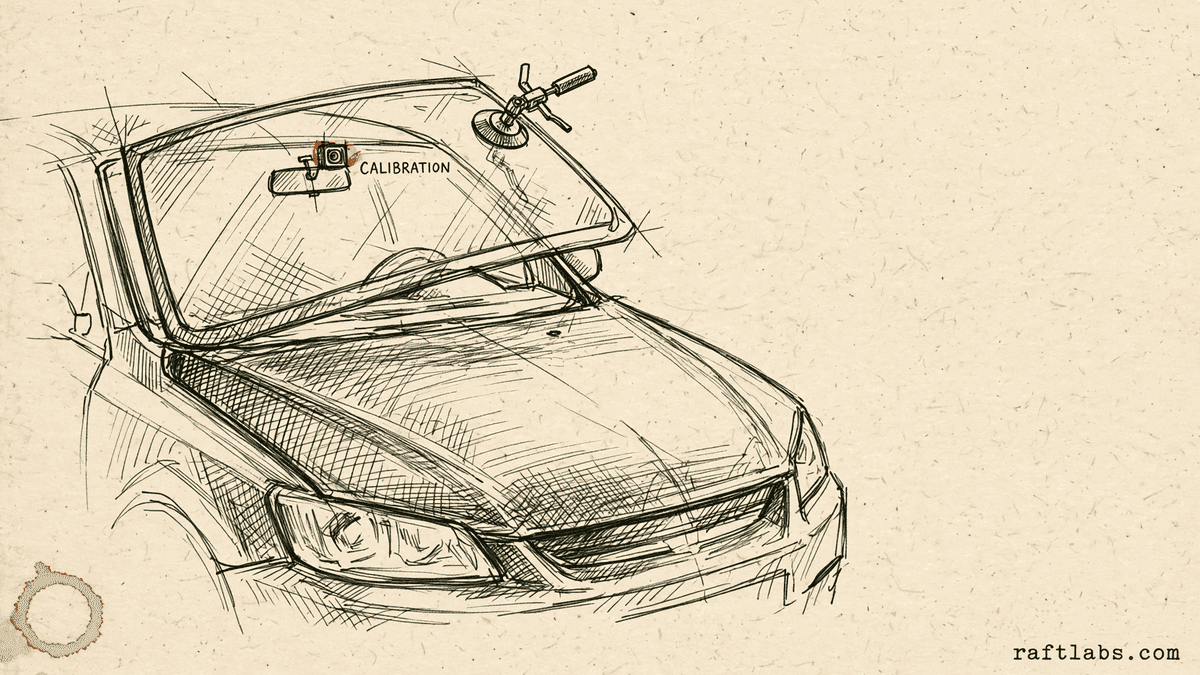
Take the calibration that follows. The new windshield is fitted well. The car has a camera behind the glass, and the car maker says that camera must be checked and set again. Finding that requirement by hand can take up to an hour of searching, and the insurer then asks for proof the work was needed and done. Without that proof ready, the shop does the safety work and still fights to get paid for it.
A second product hides inside the first. Customers see a new windshield; your team lives in another world: glass matching, calibration records, insurer bills, and payment chasing. Quotes that squeeze all of that into an "admin panel" line item are where budgets most often break. On a real platform, your team's screens are routinely the most underestimated part of the work, so we quote them as their own job, with their own users, from the start.
Auto glass software makes sense when one owned job record can remove that constraint better than a product, connector, or process change. The first release should take the smallest useful path from VIN lookup to paid claim. It should not replace every tool at once. Shops that also handle body work should read our collision repair management page for the wider claim picture.
We start where it hurts.
The interface is only one part of the job. The real scope includes the rules, the data, the connections to your other systems, what happens when things fail, who can see and change what, and who runs it after release.
Right glass first time, from the VIN
The vehicle identity number matched against the standard NAGS glass list at quote time. Camera, sensor, and heating options are part of the match, so the glass that goes in the van is the glass the car needs.
Calibration flagged before the job starts
If the vehicle needs its camera checked and set again after fitting, the job says so up front, with the car maker's requirement attached. Nobody discovers the calibration after the car has gone. This is the adas calibration software part of the record: requirement, work, and result in one place.
A proof pack an insurer can say yes to
Requirement, work done, time, technician, and result kept together on the job. When an adjuster questions the calibration charge, the shop sends the pack instead of rebuilding the story from notes.
Insurance bills sent in the form insurers accept
The finished job becomes a bill in the standard electronic format insurers read, with glass, labour, and calibration shown the way they ask. In plain words, no retyping and far fewer bills bouncing back for paperwork reasons.
The whole job in the shop and in the van
Counter, workshop, and mobile jobs on the same record. Photos, customer sign-off, and job notes land on the job itself, so the office knows where every job stands without calling the technician. The wider trade context sits in our auto repair industry coverage.
Which one is yours?
Bring it to a 30-minute call. Leave with a build, buy, repair, or wait recommendation in writing. Free, whether or not we ever work together.
The job record
What one glass job record holds.
One record from first call to paid claim. Each part below updates the same job, so no part has to be re-entered somewhere else.
Vehicle and glass
The VIN, the matched NAGS part, the options that decided it, and the supplier order. If anyone asks why that glass was chosen, the answer is on the job.
Fitting and sign-off
Who fitted the glass, when, with photos and the customer sign-off attached. Mobile and in-shop work follow the same record, so nothing lives only on a phone.
Calibration record
Whether calibration was required, who did it, in-house or a partner, and the result. A job that needs no calibration says that too, with the reason, so the record is complete either way.
Claim and payment
The bill sent to the insurer, what they paid, what the customer paid, and what is still owed. A promised payment is kept apart from money actually received.
Proof
The fifth attempt became a product customers could keep using.
UrShipper had already worked with four development vendors. Its founder describes the communication and decisions during the recovery.
The case study documents a 14-week recovery, five carrier connections, a Shopify fulfilment workflow, and client-reported results. It is one comparable project, not a promise that every inherited codebase can follow the same plan.
Read the UrShipper case studyWhich glass job is costing you the most right now?
Bring it to a 30-minute call. Leave with a build, buy, repair, or wait recommendation in writing. Free, whether or not we ever work together.
Let the work pick the shape.
The way people work should decide the form of custom software. Start with where the user works, which device they have, whether the signal drops, what data they need, and how fast the system must respond. Those facts tell us what belongs in the first release.
Web app
Work done across roles and locations. Each user gets the same current information in a browser: no installs, no versions, no device limits. When in doubt, this is usually the right first surface.
Mobile app
Work away from a desk: job details, photos, and sign-off captured at the car.
Desktop app
Local hardware, large files, work without a browser.
Browser extension
One task inside a system that otherwise works.
Connected devices
IoT and wearables, when the physical setting demands them.
One product may need several surfaces. Each one should support the same complete workflow, not start another feature list.
How it works
Close one expensive risk before opening the next.
Each stage answers a buyer question and leaves behind a decision you can inspect. The next stage only opens when the expensive uncertainty in the current one is small enough to accept.
- 01Understand
Trace the real workflow
Where is the cost or failure actually coming from?
Follow one glass job from first call to paid claim. Include the workarounds, manual judgement, duplicate entry, waiting, and failure paths that a tidy process diagram usually misses.
Decision produced
A map of the workflow, exceptions, owners, systems, and the baseline cost or delay worth changing.Risk closed
Paying to automate the visible symptom while the expensive constraint remains. - 02Shape
Choose the first useful release
What needs to exist together for one useful result to work?
Choose the shape from the way the work happens, not from a preferred technology. Name the user, the device, the data, the system connections, who can access what, the exceptions, and the result the first release must complete.
Decision produced
The right mix of web, mobile, desktop, browser extension, connected device, wearable, or behind-the-scenes connection work, with the first-release boundary and a clear definition of done.Risk closed
A small-looking feature list that quietly depends on several interfaces, systems, and owners. - 03Prove
Review working software
Will it hold up outside a controlled demo?
Review the product against the agreed workflow, not a tour of finished screens. Record changed assumptions and test what happens when data is missing, access is wrong, or a connected system fails.
Decision produced
Working checkpoints tested with realistic data, real user types, system connections, recovery plans, and the people who will use or run the system.Risk closed
Discovering the important gaps during migration or after customers depend on the release. - 04Transfer
Release, measure, and hand over
Did the new workflow improve the original constraint, and can another capable team operate it?
Move a controlled set of users or records first. Compare time, errors, completion, or another agreed measure with the starting point before adding the next workflow.
Decision produced
A controlled release, comparison with the baseline, operating notes, account ownership map, and a recommendation for what should happen next.Risk closed
Measuring development activity instead of the business result, or depending on the original vendor to keep the system running.
What stays out of the black box
These are operating conditions to put in the engagement, not claims to take on faith.
The scope names one complete workflow
The user, the trigger, the decisions, the data, the exceptions, and what 'done' looks like. A screen list is not enough.
Progress is visible in working software
Reviews against the product at agreed checkpoints, while there is still time to act.
A scope change has a price before it has code
A new workflow or system connection shows its effect on cost and timing before anyone approves it.
Ownership exists throughout, not only at handover
Code, cloud, data, and provider access stay visible and under your control from day one.
The work is checkable without being technical
Checkpoints are working software you use yourself, reported in plain language.
Related software.
Start from the closest fit. Each area below connects to the glass workflow.
What it costs
Every project starts at $10000.
The first phase turns the costliest patched workflow into a scoped build with written acceptance criteria.
Starting investment
Starts at $10000
Workflow complexity, systems to connect, data migration, and user roles set the scope. After a 30-minute call, you get a written build, buy, repair, or wait recommendation plus first-phase direction. Free, whether or not you build with us.
Not ready to talk? Start here.
Four useful next paths: decide whether to own the software, estimate the cost range, understand what moves the price, or inspect a comparable recovery.
Run the build-vs-buy calculator
Compare the cost and operating trade-offs before turning a workflow into a development brief.
Estimate the cost range
Get a working cost range for your scope before you talk to any vendor.
Read the cost guide
See the scope factors that move price, timing, team shape, and long-term maintenance.
Inspect a product recovery
See what changed when UrShipper moved from four failed vendor attempts to a controlled migration.
Build or buy
| Buy an existing product | Build custom software | |
|---|---|---|
| Best fit | Handles your glass workflow with reasonable setup, and its pricing makes sense | The way you match glass, prove calibration, and bill insurers is itself the advantage |
| Manual work | Configuration and process changes can remove the constraint | Repeated manual work across lookups, proof packs, and rebilled claims has a measurable cost |
| Connections | Existing connections work with reasonable setup | A critical connection to your insurer billing or accounting cannot be done cleanly any other way |
| Platform route | Configure an established glass platform when its matching, calibration, and billing model fits | Own custom software only when the differentiating process, client product, system network, or cost of constraint justifies build and support |
Work with us
Bring one stuck glass job. Leave with a decision.
In a 30-minute call, we will help you decide whether to buy, connect, repair, build, or wait. If custom software is not the sensible next move, that is still a useful answer.
- One named workflow owner and one complete glass path for the first phase.
- Scope, price, what 'done' looks like, and exclusions agreed before paid work starts.
- Code, cloud, data, and provider access remain under your control.
- Post-launch warranty cover for defects in the agreed scope.
Common questions
Auto glass software holds one record for each glass job: the vehicle, the exact glass fitted, the technician, any calibration the job needed, and the insurance claim. Its job is to get the right glass first time, keep the proof together, and get the claim paid without the office chasing paper between the counter, the van, and the insurer.
Every vehicle has a VIN, its unique identity number. The software reads the VIN and matches it against the NAGS list, the standard catalogue of glass parts used across the trade. That match narrows the choice to the glass made for that exact vehicle, including its camera, sensor, and heating options, instead of a guess from year and model alone.
One model in one year can leave the factory with different options: a camera behind the glass, a rain sensor, a head-up display, heated areas, or none of those. Each option can mean a different piece of glass. Year and model alone cannot tell them apart, which is why shops that order from memory still send a technician out with the wrong windshield.
When the car has a forward-facing camera behind the windshield, for lane warnings, collision warnings, or cruise control that keeps its distance. Moving the glass moves the camera's view by a tiny amount, and the car maker requires the camera to be checked and set again after fitting. The software flags that need from the vehicle record at quote time, not after the car has left.
The job record keeps the proof together: what the car maker requires for that vehicle, what calibration was done, when, by whom, and the result. That pack is what an adjuster asks for when they question the charge. Shops that can send it straight away spend far less time arguing than shops that have to rebuild the story from notes and memory. This is where adas calibration software earns its keep: the requirement and the result sit on the same job as the glass.
EDI is simply a standard electronic format for sending a bill to an insurer, so their system can read it without anyone retyping it. In plain terms, the finished job turns into a bill in the exact layout the insurer expects, with the glass, the labour, and the calibration each shown the way they ask for it. Bills sent that way bounce back far less often than bills sent as loose paperwork.
Either can work, and the software should handle both. If you calibrate in-house, the record holds your own result. If a partner shop does it, the record holds who did it, when, and their result, attached to the same job. What matters is that the proof ends up in one place the insurer can be shown, whichever hands did the work.
Glass sits between two neighbours. Our collision repair management page covers the insurance claim pipeline for body work, and our auto repair industry page covers mechanical repair orders. This page owns the glass-specific parts those pages do not: VIN to NAGS matching, calibration proof, and glass claim billing. Our guide to auto repair shop software shows how the wider shop record fits together.
Buy an existing glass product when it handles your matching, calibration, and billing workflow with reasonable setup and its pricing makes sense. Have software made for you when the way you work is itself the difference: your own calibration proof pack, insurer rules that vary by carrier, or mobile jobs that need the full record in the van. If your shop rules are still changing every week, settle them first.
The first paid phase may cover a bounded audit, a proof of concept, a recovery plan, or a small first release. The final price depends on how deep the glass workflow goes, how many shops and vans it serves, what it needs to connect to, whether data needs moving over, whether phones or tablets are involved, and the condition of existing code. The agreed phase is priced in writing before it starts.
Timing depends on scope: a bounded audit or proof of concept is a smaller engagement, while a system covering several shops, mobile technicians, and insurer billing connections takes longer. The schedule is set once the first glass path and what 'done' looks like are clear.
Yes. Takeover is a common first engagement, and it always starts with an audit: where the code lives, how your data is organized, what is tested, which outside services it depends on, who can access what, and how updates go live. Code that is understandable and fit for the next release stays; only the parts blocking reliability get replaced.
You judge what you can see, not the code. Every checkpoint is working software you click through yourself, tested against the glass workflow agreed at the start. Progress is reported in plain language: what changed, what's next, and what it costs. Because you own the code, the accounts, and the operating notes throughout, nothing about the work is locked inside our heads. Our job is to make the work checkable; your job is to check it against your business.
You own the code built for you and control where it lives, the cloud accounts, the data, analytics, and third-party subscriptions. Outside services and open-source pieces keep their own licence terms. The operating notes and handover material stay current so another capable team can take over.
Every launch includes post-launch warranty cover for defects in the agreed scope, release support, and small screen corrections. After that, work can continue as another fixed phase or an ongoing product engagement. The code and accounts stay under your control either way.