Aquarium and Marine-Animal Care Software Development

An aquarium runs on observations. When health notes, feeding records, and water data live in a desktop program or on paper, the team re-keys, trends stay invisible, and a sick animal's history is hard to reconstruct. We build the system that holds the whole care record together.

  • Live-animal health records, mobile charting, and long-term scientific data in one system, built around how aquariums actually run

  • Charting at the tank on a mobile device, so observations are captured where they happen, not re-keyed later

  • Feeding, enrichment, water quality, and medical history joined to the same animal record

  • Scope fixed and priced before work starts, and your team owns the code and data at the end

3+ years RetentionWeek 1 First milestoneFixed price Pricing

The problem

Sound familiar?

  • Animal health notes spread across a desktop program, paper charts, and memory, so no two keepers see the same history?

  • Observations recorded at the tank never reaching a record the vet or the research team can actually use?

Short answer

RaftLabs builds custom aquarium and marine-animal care software: live-animal health records, mobile charting at the tank, and long-term scientific data in one system. When care notes live in a desktop program or on paper, observations get lost and trends stay invisible. One system keeps every animal, every observation, and every record in one place.

Who this is for

Aquarium and marine-animal teams we work with

Aquariums

Health records, feeding, and enrichment for every animal in one daily view.

Marine parks and mammal facilities

Care records for dolphins, seals, and other marine mammals, charted at the tank.

Rescue and rehabilitation centres

Intake, treatment, and release records that survive staff changes.

Research teams

Long-term observation data kept usable for studies, not locked in a desktop file.

Key takeaways

  • One record per animal serves everyone. Keepers, vets, and researchers all read the same health, feeding, and behavior history, so the record stops depending on who remembers what.
  • Charting at the tank beats re-keying at a desk. Observations captured where they happen keep timestamps honest and stop the evening backlog.
  • A desktop program nobody can reach from the tank is a bottleneck, not a system. Mobile access is the difference between a record and a chore.
  • Long-term data is the point. Years of observations only help if they stay searchable, comparable, and in the client's control.
  • Live animals are not collections. Artefact records track objects; animal records track health, feeding, enrichment, and behavior over a life.
  • Stay on an off-the-shelf tool while it fits; build custom when workarounds or data lock-in cost more than owning the system.

01 Diagnosis

Problems we solve in aquarium and marine-animal care software

  1. 01
    Problem

    Your animal records live in a desktop program nobody can reach

    Solution

    Aquarium care software should hold one animal record that every role can see. Instead, that record lives in a desktop program at one desk, the daily notes on paper charts, and the rest in keeper memory. A vet asking about last month's appetite gets three different answers, and the research team cannot use data it cannot reach. The pattern is familiar: one marine-animal team spent three years on a desktop program that was clearly not up to task before moving to mobile reporting. The cost is not just wasted hours. It is the treatment decision made without the history, the trend nobody spotted, and the observation that was never written down because the desk was far from the tank.

  2. 02
    Problem

    Observations made at the tank never become usable records

    Solution

    The observation happens at the tank. The record happens later, if it happens at all. A keeper notices a change in appetite or behavior, writes it on a card or keeps it in mind, and re-keys it at a desk hours later, with the detail already fading. Some days the re-keying never happens. Over weeks, the gaps add up: a behavior trend that looks sudden was actually gradual, but the record cannot show it because half the observations never made it in. Capture at the tank, on a mobile device, with a timestamp, closes that gap. The record reflects what was seen, when it was seen, not what someone remembered at the end of the day.

  3. 03
    Problem

    Feeding, enrichment, water quality, and medical history live apart

    Solution

    Each part of an animal's life has its own log. Feeding lives in one place, enrichment in another, water parameters in a third, and medical history with the vet. Nobody sees the whole animal. A health event gets treated without the feeding change that preceded it, or a water shift that explains it. The vet, the keeper, and the researcher each hold a partial picture and make partial decisions. One animal record that joins feeding, enrichment, water quality, and medical history turns four logs into one story, and the story is what good care decisions are made from.

  4. 04
    Problem

    Off-the-shelf animal tools do not fit aquarium workflows

    Solution

    Generic animal record tools assume a standard shape: standard species, standard observations, standard reports. Aquarium work is not standard. Animals have species-specific observation needs, long lives with long histories, and care that happens at the tank, not at a desk. The tool forces the team into its shape, so staff keep side spreadsheets for the parts that actually matter, and the subscription keeps charging while the workarounds pile up. Custom software fits the team's recording habits instead of the other way around, and the build pays back once those workarounds and the data lock-in cost more than owning the system.

02 What the software covers

What the software covers for aquariums

  1. Live-animal health records

    One record per animal: history, treatments, vet notes, and behavior observations, kept across the animal's whole life at your facility. Every role reads the same record, so the vet, the keeper, and the researcher stop working from different versions of the truth.

  2. Mobile charting at the tank

    Observations captured on a mobile device where they happen, with a timestamp, instead of paper cards re-keyed at a desk. Behavior, appetite, and condition go into the record at the moment they are seen.

  3. Feeding and enrichment schedules

    Daily feeding plans, enrichment logs, and diet changes tied to the animal, not to a separate sheet. A diet change shows up in the same record as the health event it may explain.

  4. Water quality tracking

    Water parameters logged alongside animal records, so health and environment read together. A shift in the water shows up next to the animals it affects, instead of in a log nobody cross-checks.

  5. Medical and vet workflows

    Treatment plans, medication logs, and vet rounds joined to the same animal record. The vet works from the full history, not from a summary someone prepared for the visit.

  6. Long-term scientific data

    Years of observations kept searchable and comparable, so trends, baselines, and research use stay possible. The data model is designed around animals and observations, not around a single season or a single study.

Integrations

Connected to the records you already hold

Existing records and team tools connect into one workflow, because migration drives most of the scope.

Existing records
Spreadsheet archives · Desktop-program exports · Paper-chart archives
Team tools
Vet lab results · Email and messaging alerts
A discovery phase scopes the records migration first; it drives most of the cost variance.

03 Buy, build, or wait

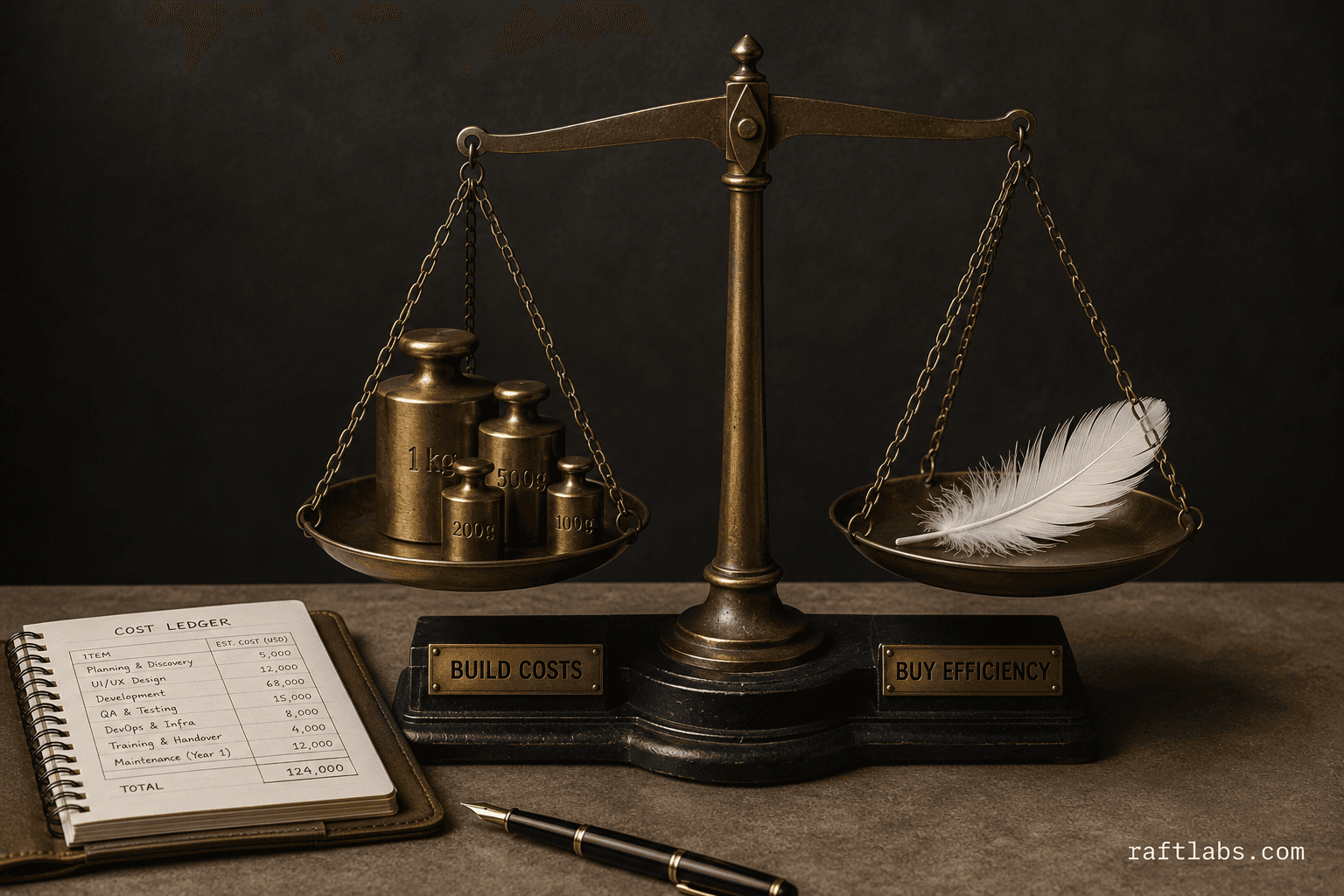
Stay on the tool while it fits your workflows and your data stays reachable.

The aquarium software question is really about whether your care record fits the tool or has outgrown it.

Buy or rent

  • An animal records tool, while your workflows fit its shape

    Faster to start and fine when standard species, observations, and reports match how your team records care.

  • Wait, while the workarounds stay small

    Keep renting while side spreadsheets and re-keying cost less than what an owned system costs to run.

Build custom

  • When the tool forces workarounds for your species or routines

    Your team works around the software instead of the software fitting how care actually happens.

  • When mobile charting at the tank is missing or awkward

    Observations keep living on paper when the tool cannot reach the tank.

  • When your long-term data is locked in a format you cannot use

    Years of observations lose their value when they cannot be searched, compared, or exported on your terms.

Bottom line

Stay on the tool while it fits your workflows and your data stays reachable. Build when the workarounds or the data lock-in cost more than owning the system.

04 How we work

How the work runs

  1. 01

    Discovery and care-workflow mapping

    Two to three weeks mapping how your team actually records care: the species you hold, the observations that matter, who charts and who reads, and every record the software has to absorb. That means existing spreadsheets, desktop-program data, and paper-chart archives. This step surfaces the migration requirements that cause rework when they are discovered mid-build.
  2. 02

    Data model around animals and observations

    We design the data model around animals, observations, and records, the objects your team actually works in, and the mobile charting flow for tank-side capture. The highest-risk piece, usually the records migration or a species-specific workflow, is prototyped in the first sprint because it is the most common cause of a timeline slip.
  3. 03

    Two-week sprints

    You review working software every two weeks, not wireframes. Each sprint ships a usable slice: the animal record, then mobile charting, then feeding and water quality, then the long-term data views. Scope is fixed and priced before the build, so the number does not move unless you change what you are building.
  4. 04

    Migration testing and launch

    We test the records migration against your real archives, not just a sample, because old data fails in ways a sample never shows. You get a documented, tested system, your data in your control, and a handover so your team or ours can run it.

05 Questions

Common questions

Both, in one system when the operation runs both. An aquarium-only operation gets animal records, mobile charting, water quality, and feeding without the mammal-specific workflows. A marine-mammal facility gets the same record with mammal care, training, and enrichment workflows added. The records are shared, so an animal that moves between sites keeps one history, not two files.

Animal care. This page is about the records behind the animals: health, feeding, enrichment, behavior, and medical history. Life-support engineering, tank hardware, pumps, and filtration are a different scope and are not covered here. If your problem is the care record, this is the right page. If your problem is the hardware, say so in the first call and we will tell you plainly whether it fits.

Yes, and the example is a competitor's project, not a RaftLabs case study. Another agency built a mobile animal healthcare app for a marine-animal organisation after its team spent three years on a desktop program that was clearly not up to task. The team wanted mobile reporting and charting plus long-term scientific data. That project is the evidence that this software gets built and bought; it is not proof of RaftLabs work in this niche.

It moves capture to where the observation happens. A keeper records behavior, appetite, and condition at the tank on a mobile device, with a timestamp, instead of writing on paper and re-keying at a desk at the end of the day. The detail survives, the timestamp stays honest, and the evening backlog disappears. The vet reads the same record the keeper just wrote.

They join to one animal record. A health event reads differently when the feeding log, the enrichment log, and the water parameters sit beside it. The vet sees the full picture instead of four separate logs, and trends across weeks and months become visible instead of anecdotal. One record per animal is the whole point.

The museum page covers collections and artefacts: cataloguing, loans, provenance, and exhibitions. This page covers live animals: health, feeding, enrichment, behavior, and medical history over a life. An object record tracks what something is and where it came from. An animal record tracks how a living animal is doing, day by day. Different buyers, different workflows, different software.

Stay on the tool while it fits your workflows, your species, and your data access. Build custom when the tool forces workarounds for how your team actually records care, when mobile charting at the tank is missing or awkward, or when your long-term data is locked in a format you cannot use. The test is simple: if the workarounds cost more than owning the system, build.

Yes, that is a design requirement, not an afterthought. Observations are kept searchable and comparable across years, so trends, baselines, and research use stay possible. Records live in systems you control, and the data model is designed around animals and observations, not around a single season or a single study.

We scope before pricing, so no number is quoted here. The cost depends on the number of animals and sites, the records you already hold, and how much migration the old data needs. Scope is fixed and priced before work starts, and the number does not move unless you change what you are building.

You do. Your data lives in systems you control, and we hand over documentation so your team or ours can maintain it. There is no per-seat lock-in on the software itself.

Get a build-vs-buy plan for your animal care team.

Tell us how your team records care today, which animals you hold, and where the record breaks down. We'll tell you how we'd approach it.

  • Scope and cost agreed before work starts. No surprises. No obligation.
  • Working prototype within 3 weeks of kickoff.
  • Pay by milestone. You see progress before each invoice.
  • 60-day post-launch warranty. Bug fixes, UI tweaks, and deployment support. No retainer.
  • All conversations are NDA-protected.

Useful next steps

More on custom software