AI-Powered Remote Patient Monitoring Platform
- 20%
- reduction in clinical decision-making time
- 150+
- patients adopted in 12 weeks
Home Health Agency Software
Home health agencies, private-duty nursing companies, and caregiver staffing platforms that rely on three or four disconnected tools, one for scheduling, another for EVV, a third for billing, spend more time reconciling systems than running care. When a missed clock-in causes a claim denial, when a coordinator is on the phone at 6am backfilling a call-out with no visibility into caregiver availability, or when a family member has no way to see what happened during yesterday's visit, the problem is not the people. It is the software. A unified platform where the scheduler, the EVV mobile app, and the billing engine read the same record cuts the translation step out entirely.
EVV-compliant visit verification that captures time, location, and service codes in one mobile tap, with no manual reconciliation with billing
Caregiver scheduling with credential tracking, geographic matching, and real-time gap alerts so coordinators see coverage problems before the visit misses
Family communication portals that show visit logs, care notes, and upcoming schedules without coordinators fielding inbound calls
Medicaid and private-pay billing with claim scrubbing, denial tracking, and authorization management built into the same platform
Bring the problem, the current workflow, or the existing code. We reply with a practical next step within one business day.
Trusted by





The brief
Good software decisions begin with the constraint, not a list of features or a preferred technology.
Coordinating caregiver schedules, EVV data, and Medicaid billing across three separate systems that do not talk to each other?
Claim denials mounting because EVV timestamps do not match the shift records submitted for reimbursement?
Plain answer
Home health agency software connects caregiver scheduling, electronic visit verification (EVV), care plans, family portals, and Medicaid billing in one HIPAA-compliant platform. RaftLabs builds custom home health agency software for agencies, private-duty nursing firms, and caregiver staffing platforms. A first module starts around $30,000 and launches a validated v1 in about 10 to 12 weeks.
What to remember
Proof
Home health agency software connects caregiver scheduling, electronic visit verification (EVV), care plan management, family communication, and payer claims in one platform. A coordinator spots a coverage gap before a shift is missed. The billing team works from verified attendance data, not a re-keyed timesheet.
Demand keeps climbing. The U.S. population aged 65 and older is projected to reach 73 million by 2030 (U.S. Census Bureau), which pushes more care into the home and more agencies onto software that has to prove every shift. That is what home health agency software solves: one record the scheduler, the caregiver app, and the claims engine all read.
Capabilities
Credential-, geography-, and preference-matched scheduling with real-time gap alerts before a visit is missed.
GPS-and-biometric-confirmed visit capture feeding billing directly, with offline queuing and automatic sync.
Mobile-visible task and medication plans with supervisor compliance review and version-tracked audit history.
Real-time visit status, post-visit notes, and two-way messaging that replaces daily coordinator phone calls.
Pre-submission authorization and service-code validation with unified billing across Medicaid and private-pay clients.
One-report audit packages covering visit records, credentials, authorizations, and billing tied to visit data.
How we work
We map your current workflow, which payers you accept, and every system we must integrate with: your EHR, payroll, state EVV aggregator, and clearinghouse.
We design the coordinator dashboard and caregiver mobile app for speed and low-connectivity field conditions, and build HIPAA safeguards in from this stage rather than bolting them on later.
Core scheduling and EVV ship first as a validated v1, for immediate operational impact. Billing, care plans, and the family portal follow in later phases as the platform grows.
A pilot group runs the new system in parallel with existing tools before full cutover, with post-launch support for regulation and payer changes.
Why us
The engineers who assess your workflow also build the solution. No bait-and-switch, no offshore handoff after the contract is signed.
We scope the work, calculate the cost, and lock it in writing before any development starts.
Real engagements across SaaS, fintech, healthcare, and logistics, not every one published as a named case study. In healthcare we have shipped HIPAA-grade platforms, including remote patient monitoring and telehealth.
Denials from data mismatches never enter the system because both sides read the same verified record.
We test offline queuing against real residential visits with dead zones and no Wi-Fi, instead of assuming connectivity that is not there.
Proof
Useful next steps
Work with us
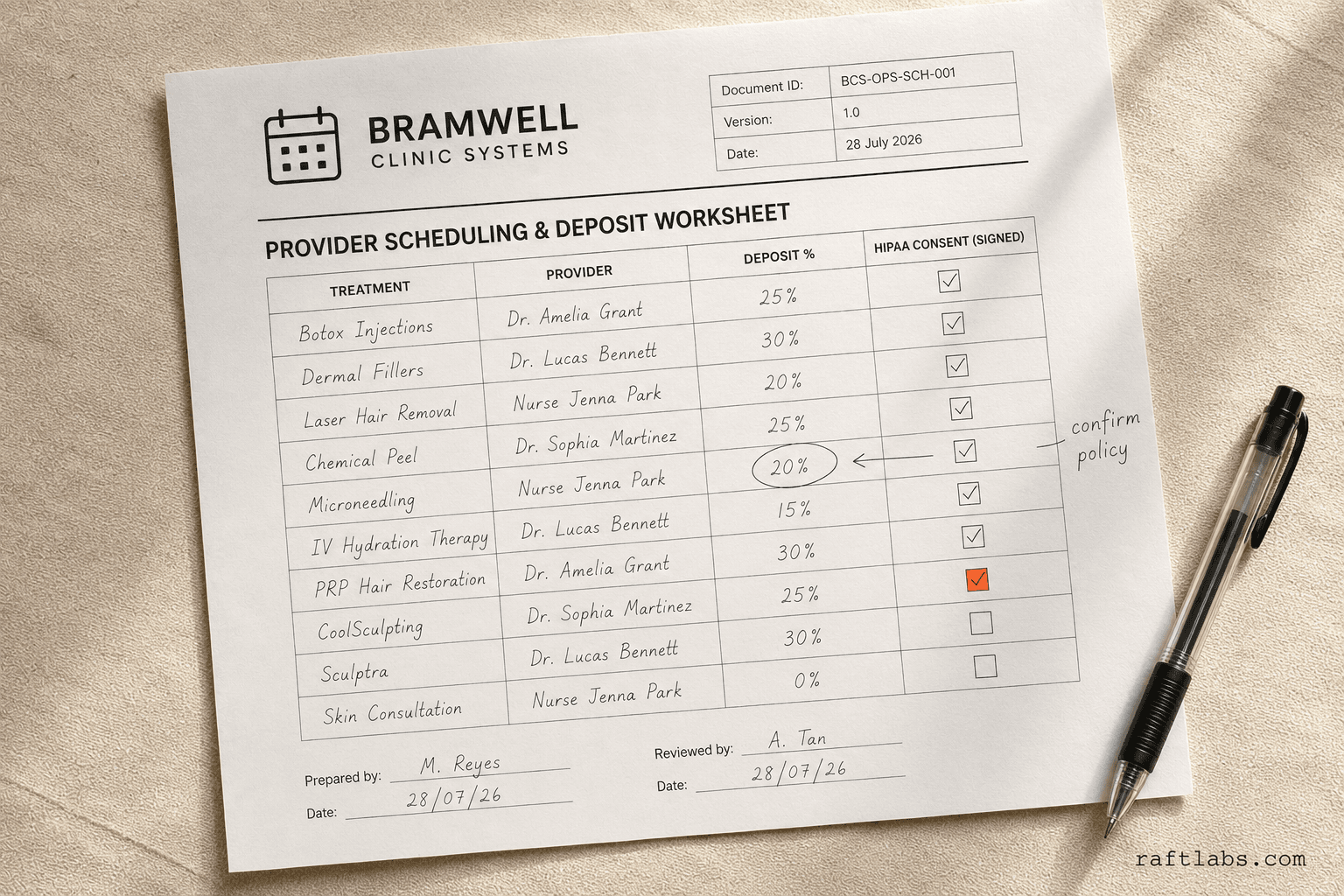
Medspa Booking System Software Development
See the serviceTry it yourself
HIPAA Compliance Checklist
30+ requirements, plain-English, filtered to what you're building.
Open the free tool
Article
Remote patient monitoring software: A development guide
RPM software that fails HIPAA compliance, drops device connections, or overwhelms clinicians with false alerts does more harm than good. Here is the architecture that avoids all three.
Read more
Article
Cost to Build a Quick Commerce App Like Blinkit: Features and What Actually Ships
Real quick commerce app development costs, phased feature breakdown, and why Shopify delivery plugins and WooCommerce dark store plugins fail at scale. Built for grocery chains, pharmacy networks, and dark store operators.
Read more
Article
HIPAA Telemedicine Development: Cost, Custom BAA Management, and When to Build
Doxy.me and SimplePractice break when you need EHR sync, multi-payer billing, or audit-ready BAA management. Here is what custom HIPAA telemedicine development costs, who builds it, and where projects go wrong.
Read more
Article
Cost to Build a Messaging App Like Slack: Development Cost and Timeline
Team messaging app development cost ranges from $45,000 to $220,000. This guide covers who needs a custom Slack alternative, phased feature sets, where white-label solutions fail in regulated industries, and how RaftLabs builds compliant messaging platforms.
Read moreYes. EVV data captured at the point of care feeds directly into the billing workflow. Visit timestamps, GPS confirmation, service codes, and caregiver identity flow into the claim without manual re-entry, with authorization and service code validation run before submission.
The required data elements (time, location, service type, caregiver and client identity) are consistent under the 21st Century Cures Act, but how states receive that data varies between open-vendor and state-aggregator models. We scope the integration during discovery and build the export in each state's required format.
A first module covering caregiver scheduling with EVV starts around $30,000 and launches a validated v1 in about 10 to 12 weeks. From there it grows: adding Medicaid billing, care plan management, a family portal, and compliance reporting brings a full platform to $60,000 to $120,000.
Client and patient health data is protected health information under HIPAA. We build with encryption in transit and at rest, role-based access, audit logging of every record view and change, and signed business associate agreements with any subprocessor that touches that data.
Yes. We integrate with HL7 FHIR-compatible EHR platforms, payroll systems including ADP, Paychex, and QuickBooks, and home care platforms like HHAeXchange and ClearCare via API where a full replacement isn't the right approach.
Work with us
Tell us what you run today and we will scope the first module together.