Insurance Agency Management Software Services
Agency management software built around your book of business, not Applied Epic's data model
Most independent agencies run their back office on Applied Epic, EZLynx, or a patchwork of spreadsheets bolted onto whichever AMS they started with. Policy data sits in one place, billing in another, and commission reconciliation happens in Excel because the platform's built-in reports don't match how the agency actually splits producer pay. We build a purpose-built agency management system around your agency's real policy, billing, and commission workflow, instead of forcing that workflow into an incumbent's template.
Policy management across every carrier your agency writes with
Billing and invoicing that matches how your agency actually bills clients
Commission tracking built around your agency's real producer splits
Fixed-cost delivery, scoped up front, with source code ownership
Bring the problem, the current workflow, or the existing code. We reply with a practical next step within one business day.
Trusted by





















The brief
Start with what is not working.
Good software decisions begin with the constraint, not a list of features or a preferred technology.
Your team exporting Applied Epic or EZLynx reports into Excel every month because the built-in commission reports don't match how your agency actually splits producer pay?
Paying per-user license fees for an AMS that still can't handle your agency's carrier mix or billing structure without manual workarounds?
Plain answer
Insurance agency management software, often called an AMS, is the back-office system an insurance agency uses to manage policies, billing, commission tracking, and carrier connections across every line it writes. RaftLabs builds custom agency management systems for agencies whose commission structure or carrier mix has outgrown an off-the-shelf template.
What to remember
- Agencies outgrow Applied Epic and EZLynx's rigid data model as they add carriers, product lines, and producer splits the template wasn't built to handle.
- Commission tracking is the most common reason agencies look at custom software: their split structure doesn't map to what a standard AMS report shows.
- Per-user seat pricing on incumbent platforms gets more expensive as an agency grows headcount, with no way to pay only for the workflows the agency actually uses.
- Migration maps policies, clients, activities, attachments, and commission history into the new system, with splits and producer hierarchies validated against carrier statements before cutover.
- Group leadership gets consolidated dashboards while agencies, branches, and producers keep separate commission structures, carrier appointments, and reporting.
Proof
- software products shipped since 2015
- 100+
- RaftLabs delivery record
- scope and cost agreed in writing before any development starts
- Fixed price
- Every RaftLabs engagement
Reconciliation shouldn't be a monthly Excel project
This is not a client-facing quoting or servicing portal, that's a separate product. Insurance agency management software is the back-office operating system your agency runs on: every policy across every carrier, billing and invoicing, commission tracking against your agency's real producer splits, workflow automation, and the carrier connections that keep policy data current. For the wider platform picture, see insurance software development. An agent portal, if your agency has one, plugs into this system, it doesn't replace it. We build the custom system underneath, sized to your agency's actual structure instead of a template built for every agency at once.
Capabilities
What we build
Policy management across every carrier
Every policy your agency writes tracked in one place, regardless of which carrier or MGA it's placed with, replacing the mix of AMS records and spreadsheets agencies default to when the incumbent platform doesn't fit.
Billing and invoicing
Agency bill and direct bill handled the way your agency actually bills clients, with payment tracking and aging built around your process instead of a generic invoicing module.
Commission tracking and reconciliation
Commission logic built around your agency's real split structure, tiered splits, overrides, and agency bill versus direct bill, so producers can reconcile what they're owed without a spreadsheet.
Workflow automation
Renewal reminders, policy servicing tasks, and follow-ups automated around your agency's process, so nothing depends on someone remembering to check a spreadsheet.
Carrier connections and data feeds
Download feeds and integrations with the carriers your agency places business with, scoped during discovery, keeping policy and billing data current without manual re-entry.
Reporting built around how your agency runs
Production, retention, and commission reporting built around the numbers your agency actually reviews, not a fixed report template.
How we work
From workflow mapping to live software
- Weeks 1-301
Discovery and workflow mapping
We map your agency's policy workflow, billing process, commission structure, and carrier mix. You leave with a written scope and a fixed-price quote.
- Weeks 3-602
Data architecture and integration design
We design the policy and commission data model and the carrier integration layer, matched to your agency's actual structure rather than a generic AMS schema.
- Weeks 6-1803
Working software every two weeks
You review working software at each sprint. Policy management, billing, and commission tracking are built and tested incrementally.
- Final 3-4 weeks04
Testing and rollout
The system runs against real policy and commission data so your team can validate reconciliation before producers depend on it.
Working with us
What a RaftLabs build includes
- 01
The team that scopes builds the system
The people who map your commission structure and carrier mix also build the system. No offshore handoff after the contract is signed.
- 02
Fixed price before development starts
We scope the work, calculate the cost, and lock it in writing before any development starts.
- 03
Founded 2015
A track record building financial back-office systems that handle policy, billing, and commission data with the reconciliation accuracy agencies depend on.
- 04
You own the source code
No per-user licensing and no vendor lock-in after delivery. The codebase, and everything built into it, is yours.
The first decision is not what to build.
It is whether software is the right answer at all. We use four possible recommendations before discussing a development scope.
- 01
Buy
Use an agency management system when its policy, billing, and commission modules fit your lines and carrier mix.
- 02
Repair
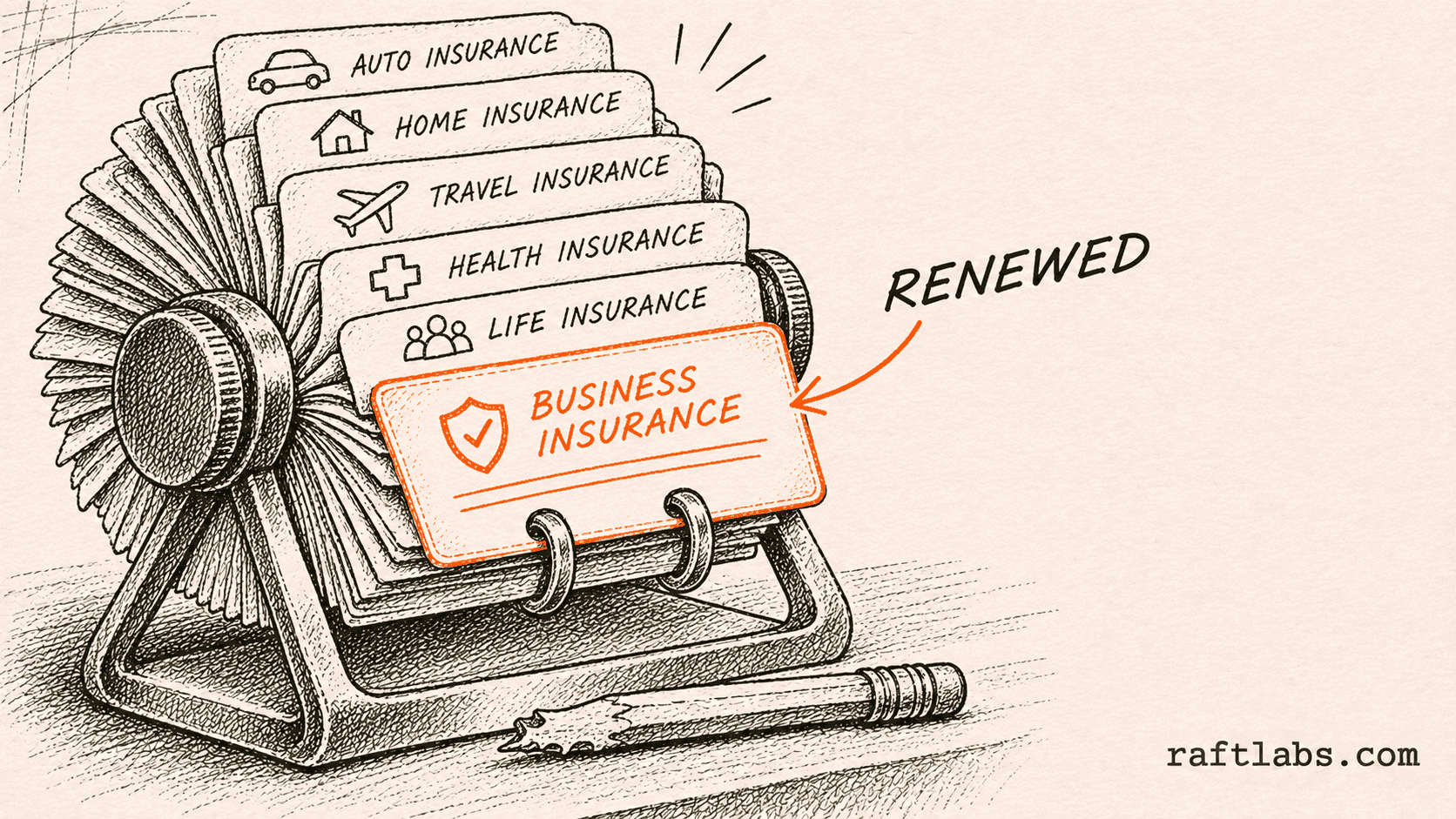
Keep the current back office when reconciliation stays manageable and data stays current. Start with evidence: what the monthly Excel project actually costs.
- 03
Build
Own the operating system when policies, billing, commission splits, and carrier connections must fit your agency's structure. Start with the back-office record.
- 04
Wait
Do not build around carrier appointments that are still changing. Settle the book, then systematize it.
Not sure which path is yours? Bring it to a 30-minute call. Leave with the answer in writing.
What it costs
Every project starts at $10000.
The first phase builds the back-office record: policies across carriers, billing, commission splits, and carrier connections.
Starting investment
Starts at $10000
Scoped around your agency's structure, priced in writing. After a 30-minute call, you get a written build, buy, repair, or wait recommendation plus first-phase direction. Free, whether or not you build with us.
Custom fits once the template stops fitting your commission and carrier mix.
Applied Epic and EZLynx remain the benchmark for agencies whose workflow fits their standard model.
Commission structure, carrier mix, or billing process has outgrown what the template supports
Commission logic must match your real split structure: tiered splits, overrides, and agency bill versus direct bill
Per-user licensing costs work against you as you add headcount
Policy, billing, and commission workflow fits the standard model of Applied Epic or EZLynx
Applied Epic or EZLynx or custom agency management software
| Applied Epic or EZLynx | Custom software | |
|---|---|---|
| Workflow fit | Strong, established platforms for agencies whose policy, billing, and commission workflow fits their standard model | Built around your agency real split structure, carrier mix, and billing process |
| Commission logic | A standard AMS report often cannot reproduce tiered splits, overrides, and agency bill versus direct bill | Commission logic built around your agency real split structure during discovery, so reconciliation matches what producers are actually owed |
| Cost as you grow | Per-user licensing costs work against you as you add headcount | A custom system sized to your agency actual structure instead of a template built for every agency at once |
Proof
What clients say about working with RaftLabs
Three-year average engagement. Founders and operators describing the work in their own words. No marketing varnish.
The collaboration was very well managed from start to finish.
James Foskin
Founder & CEO, TiAiMe Limited
Work with us
Have an insurance agency management software project?
Tell us how your agency tracks policies, billing, and commissions today, and where the incumbent platform stops fitting. We'll scope a fixed-cost build.
- Scope and cost agreed before work starts. No surprises. No obligation.
- Working prototype within 3 weeks of kickoff.
- Pay by milestone. You see progress before each invoice.
- 60-day post-launch warranty. Bug fixes, UI tweaks, and deployment support. No retainer.
- All conversations are NDA-protected.
Common questions
Insurance agency management software, often called an AMS, is the system an insurance agency uses to manage policies, billing, and commissions across every carrier it places business with. It replaces manual reconciliation and spreadsheet tracking with a single system built around the agency's actual workflow.
Yes. Commission structures vary agency to agency: tiered splits, override arrangements, agency bill versus direct bill, and a standard AMS report often can't reproduce them. We build the commission logic around your agency's real split structure during discovery, so reconciliation matches what producers are actually owed.
Yes. We scope which carrier download feeds and integrations matter most to your agency during discovery, then build the connections that keep policy and billing data current without manual re-entry.
Cost follows scope: the carrier mix, the commission structure complexity, and how many carrier connections need building. A focused MVP covers policy management, billing, and commission tracking; a full build adds workflow automation and carrier connections. We scope a fixed cost after discovery.
Applied Epic and EZLynx are strong, established platforms for agencies whose policy, billing, and commission workflow fits their standard model. Custom software makes sense once your agency's commission structure, carrier mix, or billing process has outgrown what the template supports, or once per-user licensing costs work against you as you add headcount. We help assess the right fit during discovery.
Yes. We extract policies, clients, activities, attachments, and commission history from your current AMS and map them into the new system with reconciliation reports so nothing goes missing. The riskiest part is usually commission splits and producer hierarchies, which we validate against your carrier statements before cutover.
We build with encryption at rest and in transit, role-based access down to the field level, and full audit logging of who viewed or changed policyholder records. For agencies handling health or financial products, we scope state-specific privacy rules and carrier security questionnaires during discovery so there are no surprises at renewal.
The sale lives in the CRM and the policy lives in the AMS, and nothing joins them until someone builds the join. Quote-to-bind ratio, at-risk renewals, commission variances, and the cross-sell book stay invisible until the month-end spreadsheet rebuild. A CRM subscription and an AMS purchase cover different work. Ask whether the AMS can own all policy data storage and reporting, or whether you are paying twice for the same record.
At-risk renewals are the flagship blind spot: invisible while quote data and policy data never join. When systems are split, commission variances stay invisible until the month-end spreadsheet rebuild. Once the two systems join in one governed report matched on client and effective date, the blind spots turn into a nightly worklist: quote-to-bind ratio, at-risk renewals, commission variances, and the cross-sell book.
Yes. We model agencies, branches, and producers as separate entities with their own commission structures, carrier appointments, and reporting, while group leadership gets consolidated dashboards. Shared clients across locations are deduplicated so service staff see one record, not three.