The morning phone-around nobody enjoys.
A front desk opens the day with tomorrow's schedule and a phone. Call, leave a voicemail, cross a name off, call the next one. Two to three hours gone before the first patient sits in a chair, and half the confirmations still land as voicemails nobody returns.
Now a text goes out instead. Patients reply a single character to confirm or reschedule, and the schedule updates itself. The overdue-hygiene list that used to get one postcard a year runs as a sequence that keeps asking until the chair is booked.
The software doesn't replace the front desk. It clears the volume so the front desk works the exceptions.
Automated SMS confirmation clears the routine confirmations without a staff member touching the phone. Text message reminders improve appointment attendance over no reminder at all (Cochrane systematic review of healthcare appointment reminders, 2013). The recall problem is the bigger one. A single postcard sent once has a response rate in the single digits. An automated sequence does better: SMS at the due date, email at one month overdue, and a phone flag at two months, each carrying a direct booking link, brings overdue patients back at a rate that pays for the build.
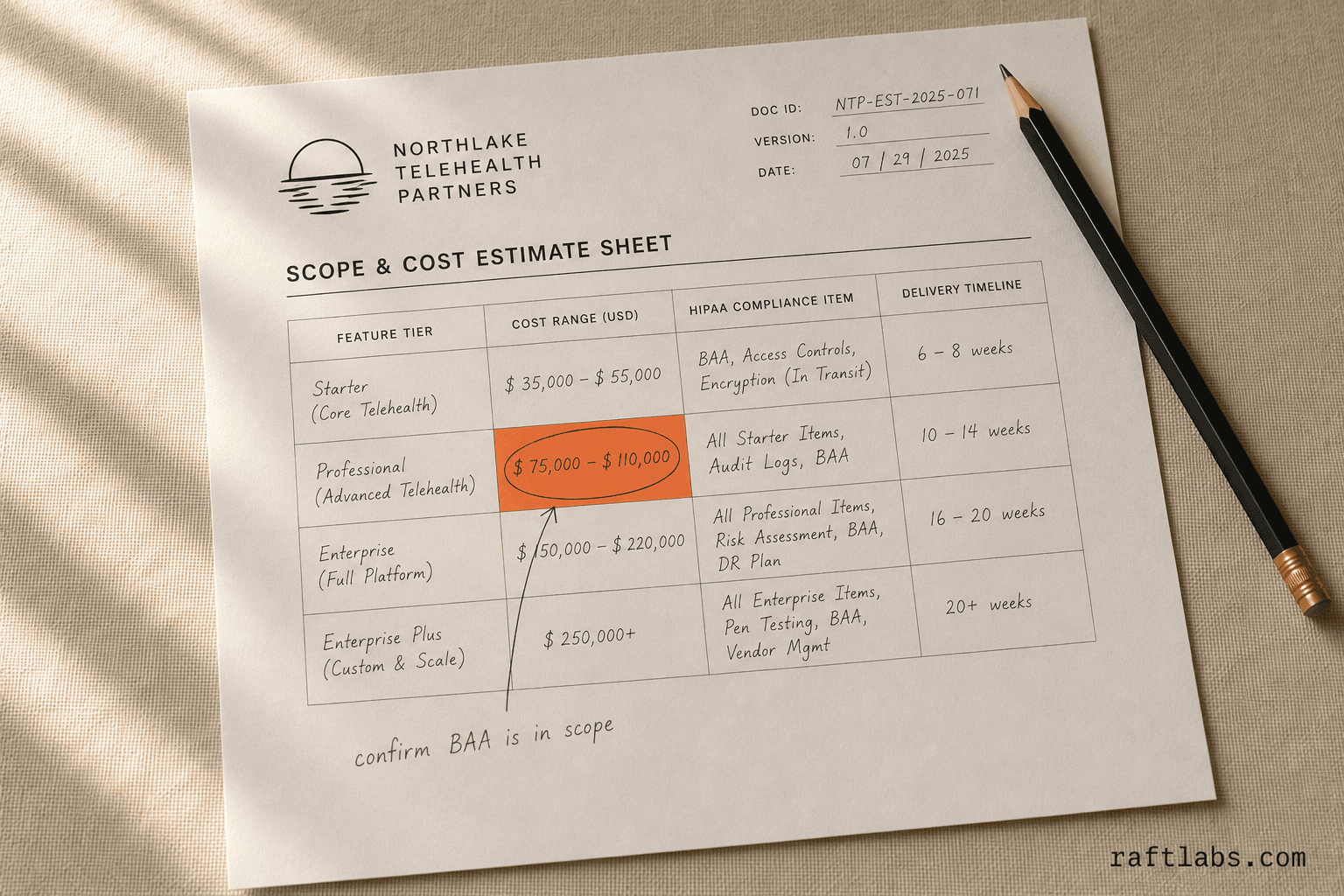
RaftLabs has shipped production software since 2015, including healthcare and patient-engagement platforms. Every project is fixed-cost, scoped and priced in writing before a line of code is written. You launch a working v1, reminders and recall integrated with your PMS, in 10 to 14 weeks, then add two-way SMS, review automation, and reactivation as the practice is ready.
This works when the front desk is drowning in routine outreach.
Everything on the left should already be true for your practice. Even one thing on the right, and an off-the-shelf reminder app is the smarter first step.
A fit01Your front desk spends two to three hours each morning calling patients to confirm appointments.
02You run a practice management system, Open Dental, Dentrix, or Eaglesoft, the software can pull appointment data from.
03Recall runs on postcards today, with patients overdue for hygiene and no automated way to reach them.
Not a fit01No practice management system to pull appointment and recall data from.
02Patient volume low enough that manual calls already cover confirmations and recall.
03You want a month-to-month reminder app, not a custom system built on your own data.
What we build
What we build into your patient communication system
01Appointment reminder automation
A configurable sequence per appointment type runs 7-day email, 48-hour SMS, and day-of confirmation prompts on Twilio or Vonage, with confirmed status pushed back to your PMS and unconfirmed appointments flagged to the front desk.
02Recall sequence management
Overdue recall identification pulls from the PMS integration, running a multi-step sequence that cancels automatically on booking and flags non-responders for a targeted reactivation campaign.
03Two-way SMS communication
A dedicated practice number routes replies to a staff dashboard, with conversation history stored against the patient record. After-hours messages get an auto-reply, and urgent keywords (pain, emergency, bleeding) trigger an immediate alert rather than waiting for the morning team.
04Review request automation
A pre-send internal rating step routes positive responses to your Google Business Profile and negative ones to the practice manager, with the rating and appointment details, so a bad experience is caught before it becomes a public review. Review volume is reported over time.
05Patient reactivation campaigns
Segmented campaigns by time since last visit carry tailored messages and offers, with birthday touchpoints and performance reporting on booking rate and revenue per reactivated patient.
Appointment data pulls automatically on a set schedule. New appointments trigger reminder sequences, and confirmation and rebooking events push back so the PMS schedule stays accurate. Open Dental offers direct API access; Dentrix and Eaglesoft connect through vendor APIs or a sync agent, tested on your live PMS during scoping.
Have a patient communication project?
Tell us your current PMS, location count, and the recall and no-show problems you want to fix. We'll scope a solution and give you a fixed cost.
How it works
From scope to live communication system
- Week 1
01PMS and workflow scoping
We map your PMS, location count, and current recall and reminder process. You leave week 1 with a written scope document and a fixed-price quote.
- Weeks 2-4
02Sequence and integration design
Reminder cadence, recall sequences, and PMS data mapping designed against your actual practice workflow.
- Weeks 5-11
03Build and integrate
Reminder engine, two-way SMS, and PMS integration built in parallel, tested against real appointment data.
- Final 2-3 weeks
04Launch and front desk training
Front desk trained on the dashboard and escalation workflow before full rollout.
Where you land in that range depends on scope, not negotiation:
- Focused build, $15,000-$35,000
- Appointment reminders, recall sequences, and PMS integration for a single-location practice.
- Full build, $35,000-$70,000
- Everything in the focused build, plus two-way SMS, review request automation, and reactivation campaign management.
What it costs
Dental patient communication, starting at $15,000.
Reminders, recall, two-way SMS, review automation, and reactivation, integrated with your PMS and priced in writing before development starts.
Start with reminders and recall for one location. Add two-way SMS, review automation, and reactivation once you've seen the no-show rate move.
Starting investment
Starts at $15,000
Reminders and recall integration ship first, live in 10 to 14 weeks. Add two-way SMS and review automation as the practice is ready for them.
No hourly billing
We map your PMS and workflow, then lock that price in writing before any development starts. No hourly billing, no surprise invoices.
Continuity
The team that assesses your PMS and workflow is the team that builds it. No handoff after the contract is signed.