
A fully automated loyalty programme for a medical spa, owned outright
- 12 weeks
- From concept to live on iOS and Android
- <15 sec
- QR code point earning at checkout
Class booking, membership credits, instructor schedules, loyalty, and wearable permissions often end up split across tools. That makes a simple member journey difficult to operate and difficult to measure.
We build custom fitness and wellness apps around your class, membership, and staff rules, with a clear boundary between non-clinical engagement features and healthcare workflows.
Custom iOS and Android fitness apps with class booking, progress tracking, and loyalty rewards
Gym management systems built around your membership structure, not a generic template
We've built loyalty and engagement platforms for wellness and lifestyle brands, including a medspa programme launched in 12 weeks
Shipping production software since 2015. Wellness and consumer apps are a core vertical.
The problem
Members drop off after month 2 and you don't know why until it's too late?
Your booking rules, membership credits, and staff schedules live in separate tools?
RaftLabs builds fitness and wellness software for gyms, studios, and non-clinical wellness operators. A focused v1 with class booking, memberships, and staff tools typically costs $30,000 to $65,000 and takes 12 to 20 weeks. Wearable and clinical-data scope is assessed separately.
Trusted by

































New members cancelling in the first months because nothing keeps them connected between visits
New members can stop attending long before they cancel. A useful system records attendance, freezes, failed payments, booking frequency, and communication consent as separate events. Operators can define a review or re-engagement rule, measure what happens next, and change it without treating a prediction as a certainty. Software makes the workflow observable; the service experience still determines whether a member stays.
Booking and membership rules split across tools
A booking process that requires a phone call creates avoidable work and gives members no reliable view of availability. A third-party tool may charge by location, member, transaction, or feature tier. Custom software replaces that pricing model with build and maintenance costs, so it makes sense only when the studio's booking rules, member experience, or integrations create enough value to justify ownership.
Loyalty programme running on a spreadsheet with a marketing team manually tracking points and posting reward emails
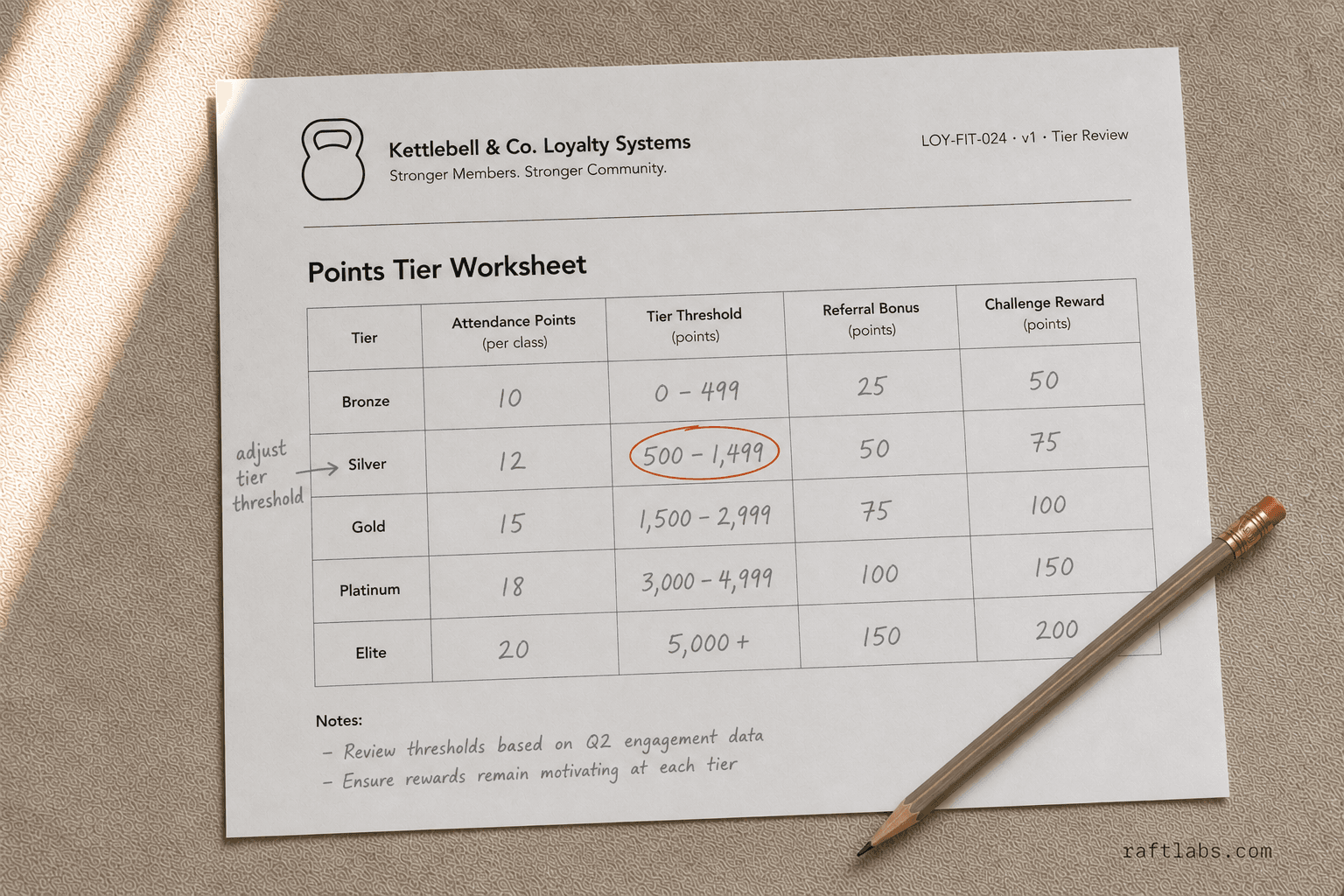
A spreadsheet can test a small loyalty offer, but it becomes difficult to audit as membership grows. An integrated ledger records qualifying visits, points, redemptions, expiry, reversals, and staff corrections. Automation removes repeated calculation while keeping exceptions visible to the operations team.
Wearable data requested without a clear permission model
Wearable integration is not one switch. Each data type needs a defined purpose, a permission request, and behaviour for missing or revoked access. Apple requires fine-grained HealthKit authorisation, and Android Health Connect uses permissions for the specific record types an app reads or writes. The product should still work when a member declines access.
Off-the-shelf fitness apps are built for the average gym. Your brand, your class types, your coaching methodology, and your community aren't average. A white-label app with your logo bolted on doesn't solve that.
We build custom iOS and Android fitness apps that reflect your brand, support your specific class formats, and give your members a reason to open the app every day, not just when they're booking.
Best for
A loyalty programme is one testable part of the member experience, not a retention guarantee. It can recognise configured behaviours such as attendance, milestones, or referrals while the ledger keeps the economics and exceptions auditable.
We've built loyalty platforms for medspa, wellness, and lifestyle businesses. Those systems give us relevant delivery experience with tier rules, point ledgers, referrals, and member apps. The rules still need to be tested against each operator's economics and member behaviour; they are configurable product hypotheses, not guaranteed retention levers.
Best for
Managing a gym is really a scheduling problem. Class capacity, instructor availability, room allocation, membership credits: these variables interact in ways that generic booking tools don't handle well.
We build gym management systems that handle your specific scheduling logic: limited spots, waitlist rules, multi-location class sharing, instructor qualification checks. Your staff spend less time on admin and more time with members.
Best for
Wearable integrations should start with a specific product decision: which data is needed, who may see it, how long it is retained, and what happens when access is denied. Apple HealthKit and Android Health Connect both require permission-based access. Third-party device providers have separate API and review requirements.
Best for
On-demand and live content can extend a studio programme beyond the venue. Whether that improves retention is a measurement question, so we instrument content starts, completion, bookings, and membership changes rather than promising a causal result.
We build on-demand video platforms and virtual training tools that extend your brand into your members' homes. Live streams, recorded classes, coaching check-ins, and programme delivery: all under your brand, not a third-party platform's.
Best for
Massage, recovery, coaching, and personal training bookings are appointment-based, not class-based. The booking logic is different: provider availability, service duration, room or equipment requirements, and buffer time. Clinical records, diagnosis, treatment plans, prescriptions, or lab results are outside this page's scope and belong in a healthcare product review.
Best for
Our strongest published wellness reference is a medspa loyalty platform for a multi-location brand. It handles appointment-linked points, redemption, referrals, and a member app, and it launched on iOS and Android in 12 weeks. Fitness products are adjacent to that experience, so we use it as evidence of delivery while scoping class capacity, credits, instructors, and wearable permissions specifically for the fitness product.
Yes. We can build Apple HealthKit and Android Health Connect integrations, then assess Garmin, Fitbit, Polar, or Whoop against the data and permissions your feature needs. These are scoped integrations, not automatic inclusions: provider review requirements, supported data types, consent, revocation, retention, and behaviour without permission all affect the build.
Mindbody and TeamUp are built for the average fitness business. They solve 80% of the problem quickly and cheaply. The 20% they don't solve is usually the part that defines your brand: your specific booking rules, your loyalty mechanics, your member experience, your integrations. If your business model fits what they offer, use them. If you've outgrown them or your offering is different enough that you're spending more time working around the platform than working with it, that's when custom makes sense.
A focused v1 with class booking, member profiles, payments, and staff tools typically takes 12 to 20 weeks. A multi-module platform can take 20 to 28 weeks or longer when it includes multiple apps, wearable providers, video delivery, complex migration, or regulated workflows. We confirm the delivery range after mapping roles, rules, integrations, and data migration.
A focused v1 typically costs $30,000 to $65,000. A fuller platform with memberships, loyalty, video, and selected integrations usually costs $65,000 to $120,000. Complex products with multiple apps, extensive wearable data, or regulated workflows can reach $100,000 to $160,000. Roles, booking rules, billing, integrations, and migration determine the final fixed price.
No. This page covers gyms, studios, coaching, recovery, and non-clinical wellness operations. Software that manages diagnoses, treatment plans, lab results, prescriptions, or clinical records belongs in a healthcare scope with separate privacy, security, and regulatory review.
Loyalty Programme Development
Custom member retention mechanics for gyms, studios, and wellness businesses covering class credits, tier rewards, and referral programmes.
Business Process Automation
Automate membership renewals, class scheduling, instructor payments, and client communication workflows.
AI Chatbot Development
Member onboarding bots, class recommendation assistants, and workout Q&A for fitness and wellness apps.
Custom Software Development
Custom fitness apps, booking platforms, and wearable integrations built for your discipline and member type.
Tell us your member type, your class or service model, and where your current platform creates friction. We'll tell you what we'd build and how.
Useful next steps
Service
Fitness and Wellness Loyalty Software
See the service
Service
Martial Arts School Software Development
See the service
Service
Beauty Ecommerce Platform Development
See the service
Service
Hair Salon and Barbershop Booking System
See the serviceProof
Pause reduces mindless app opens by 40% without blocking or timers
Read the case studyTry it yourself
Loyalty ROI Calculator
See how much extra revenue a loyalty app generates.
Open the free tool