Mold remediation cost calculator
Build a planning estimate from your own rates. Enter the affected area, pick a containment level, add rebuild and testing, and see each phase priced on its own line.
- Your own rates only
- Phased cost breakdown
- Planning estimate, clearly labelled
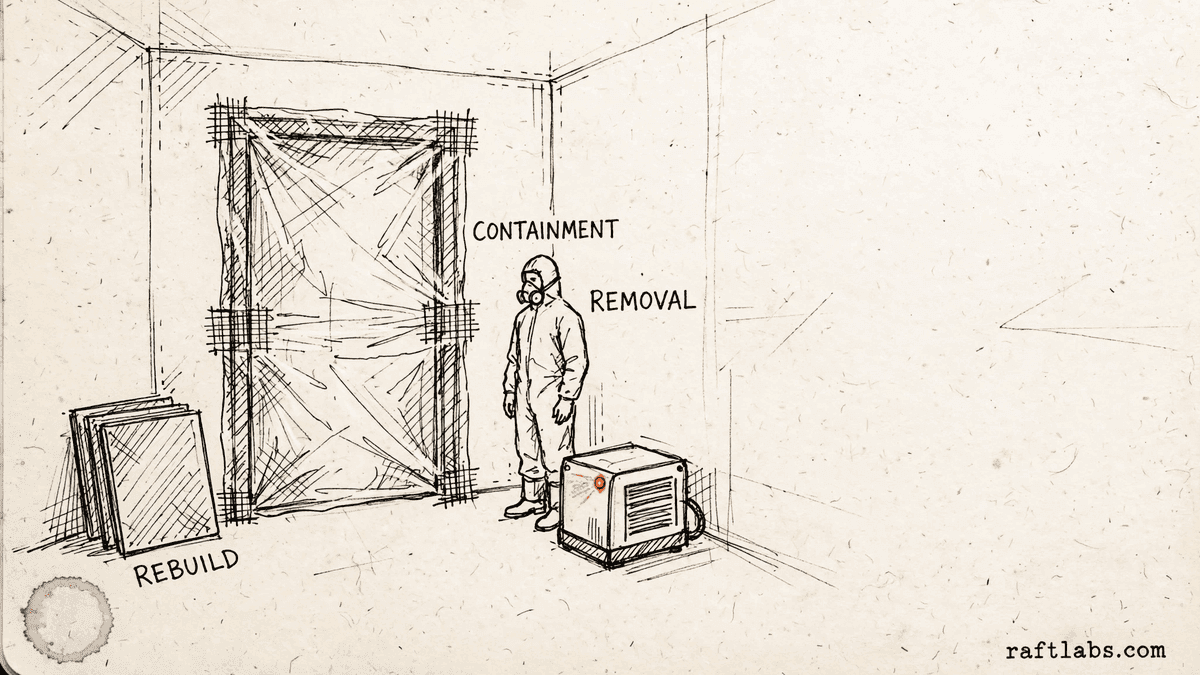
Before you run the numbers
A planning figure, in phases
A remediation job has distinct phases: containing the area, removing affected material and cleaning, then rebuilding what was taken out. Pricing the phases separately makes a quote easier to read and easier to compare.
This calculator builds the estimate only from the rates and fees you enter. It is a planning figure. Only an on-site inspection confirms the true scope of a job.
Your numbers
Single area, contained in one place
This is a planning estimate from your own rates. Only an on-site inspection confirms the scope.
Result
Planning estimate
Enter your own prices on the left to see the total.
Short answer
A mold remediation cost estimate is the affected area multiplied by your own per square foot rate for the containment level you choose, plus any rebuild rate and testing fees you enter. Only an on site inspection confirms the true scope, so treat the total as a planning figure.
What the cost covers
What a mold remediation job includes
Remediation is the controlled removal of mold-affected material and the cleaning of the area around it. The work area is sealed off first, so dust from the job does not spread to clean rooms. Affected material that cannot be cleaned is taken out, and the surfaces that remain are cleaned.
After removal comes rebuild: replacing the drywall, trim, or flooring that was removed so the room is whole again. Testing can sit at either end of the job, to confirm what is present at the start or to check the area after cleaning. Keeping the three phases on separate lines is what makes one quote comparable with another.
| Phase | What it covers | How it is priced here |
|---|---|---|
| Remediation | Sealing the work area, removing affected material, and cleaning what remains | Affected area times your rate for the containment level you choose |
| Rebuild and repair | Putting back removed surfaces such as drywall, trim, and flooring | Affected area times your rebuild rate, if you enter one |
| Testing | Samples or clearance checks before or after the work | A flat fee you enter |
The math
How the estimate is worked out
Pick the containment level that fits the job and use your own rate for that level. The remediation line is the affected area times that rate. The rebuild line is the same area times your rebuild rate. Testing is a flat fee added at the end.
Remediation = affected area x your rate for the chosen level
Rebuild = affected area x your rebuild rate
Total = remediation + rebuild + testing fees
Example: a homeowner enters an affected area of 200 square feet across 2 rooms and chooses Level 2. They enter their contractor's Level 2 rate of 12 per square foot, a rebuild rate of 8 per square foot, and a testing fee of 350. These are example inputs only, entered to show the math.
Remediation: 200 x 12 = 2,400
Rebuild: 200 x 8 = 1,600
Total: 2,400 + 1,600 + 350 = 4,350
Cost per square foot: 4,350 / 200 = 21.75
The result is a planning estimate from your own rates. The true scope can differ once walls are opened and the full extent of the growth is visible, which is why a written quote should follow an on-site inspection.
Getting an accurate quote
What drives the price of a remediation job
Area alone does not set the price. Four factors explain most of the difference between one job and the next.
- 01
How far the growth has spread
A single contained area is a smaller job than growth across several rooms. Measure each affected area honestly and add the rooms together, because the area drives both the remediation and rebuild lines.
- 02
Whether the heating and cooling system is involved
If growth is inside ducts or around the air handler, the work area is wider and cleaning takes longer. That is the kind of job the Level 3 rate field is there for.
- 03
How much has to be rebuilt
Removing affected drywall or flooring is only half the job. Putting the room back together is priced by area too, and it varies with the finishes you choose.
- 04
Whether the water source is fixed
Remediation holds only when the leak or condensation that caused the growth has been repaired. A quote should name the water source and who is fixing it, separate from the remediation price.
To get an accurate quote, share the affected area room by room, photos of each area, and what caused the water problem. Ask for the quote in the same three phases used here, so you can compare like with like. If you run a remediation business and want jobs, inspections, and follow-ups in one place, see the service linked below.
Frequently asked questions
Straight answers to what buyers ask before they scope. Still stuck? .
- Multiply the affected area by your own per square foot rate for the containment level you choose. Add the same area multiplied by your rebuild rate if surfaces need repair, then add any testing fees. The calculator uses only the rates and fees you enter, so the total reflects your prices and your property.
- Level 1 is a single contained area. Level 2 covers multiple rooms. Level 3 covers a large area or a job where the heating and cooling system is involved. Each level has its own rate field because wider containment takes more sealing, more equipment time, and more cleaning. You set all three rates yourself.
- Remediation removes the affected material and cleans the area. Rebuild puts back what was removed, such as drywall, trim, or flooring. The two phases are priced separately because some jobs need little rebuild and others need a lot, even when the affected area is the same size.
- Testing is the flat fee you enter for checks before or after the work, such as samples taken to confirm what is present or clearance checks after cleaning. Enter the fee your testing provider charges, or leave it at zero if you are not including testing in this estimate.
- No. The figure is a planning estimate built from your own rates and the area you enter. Mold can extend inside walls or under floors where it cannot be seen from the room. Only an on-site inspection confirms the true scope, and a written quote should follow that inspection.
- Note the size of the affected area in each room, where the water came from, and whether the leak has been fixed. Take clear photos and keep any reports you already have. Sharing that information helps a contractor price the containment, removal, and rebuild phases accurately on the first visit.
Stay on topic
More for home services
The tools give you a range. A call gives you a number.
30-minute scoping call. We will walk through your job intake, inspection records, and follow-up process, and you leave with a build estimate you can act on.