Asphalt driveway cost calculator
Work out the cost of a driveway job from your own prices: the area, the job type, the base work, and the extras. See the total and the cost per square foot.
- Three job types
- Base work both ways
- Cost per sq ft shown
Before you run the numbers
One total, built from your prices
A driveway quote rests on three things: how big the driveway is, what kind of job it is, and what extra work comes with it. Quotes are hard to compare when one folds the base work into the paving price and another lists it separately.
This calculator keeps those parts separate. Enter the prices from a quote you received, or your own prices if you run a paving crew, and see the total and the cost per square foot in one place.
Your numbers
1. Driveway size
Area from length and width: 200 sq ft
When this is above zero, the calculator uses it instead of length times width. Useful for curved or widened driveways.
2. Job type and your price per sq ft
3. Base and gravel work
4. Extras
Result
Estimated total
Enter your own prices on the left to see the total.
Short answer
An asphalt driveway cost calculator works out paving cost from the driveway area and the price per square foot you enter for the job type, then adds base or gravel work and any extras you include, such as sealing, drainage, or permits. It also shows the total cost per square foot.
What the cost covers
What goes into the price of an asphalt driveway?
The biggest part of the price is the paving itself: the driveway area in square feet times the price per square foot for the job. The job type matters because the work differs. A new install starts from bare ground. An overlay adds a fresh layer over the surface that is already there. Removal and replace takes the old surface up first, so the crew can fix what is underneath before laying the new one.
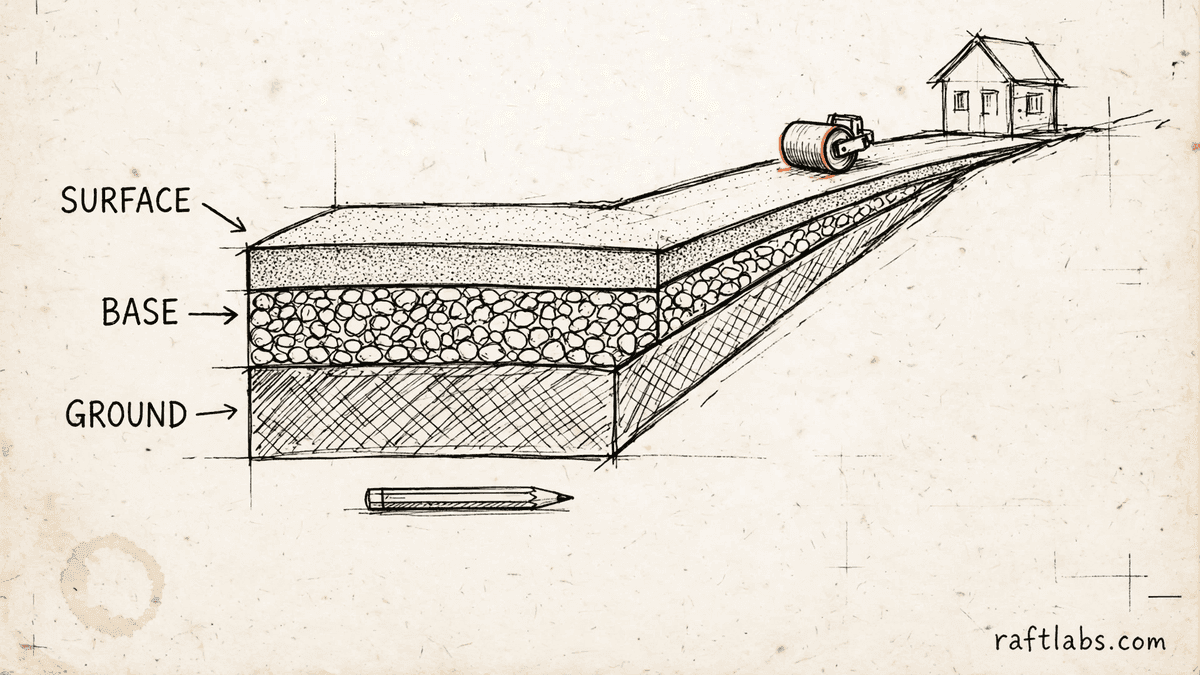
Under the asphalt sits the base, a layer of gravel that carries the weight of cars and lets water drain away. Some quotes include base work in the paving price. Others charge it on its own, either per square foot or as one flat fee. This calculator lets you enter it either way, so it matches the quote in front of you.
On top of that come the extras you choose or your area requires: sealing the finished surface, drainage work so water runs off instead of pooling, and permit fees. Each one is a flat amount you enter, counted only when you switch it on.
| Job type | What it involves | When it fits |
|---|---|---|
| New install | Grading, base work, and a fresh asphalt surface where no driveway exists today | New homes, or a gravel or dirt drive being paved for the first time |
| Overlay | A fresh asphalt layer laid over the existing surface | A surface that is worn but still sound, with a base in good shape |
| Removal and replace | The old surface is taken up, the base is repaired, and a new surface is laid | A cracked, sinking, or badly patched driveway where the base has failed |
The math
How the total is worked out
First, the area: length times width, both in feet, unless you enter an area of your own in the override field. Then the paving cost is the area times your price per square foot for the job type. Add the base work and any extras you included, and that is the total. The cost per square foot is the total divided by the area.
Total = (Area × Your price per sq ft) + Base work + Extras
Example: a driveway 30 ft long and 12 ft wide has an example area of 360 sq ft. A new install at an example price of $5 per sq ft comes to $1,800. Base work at an example price of $1.50 per sq ft comes to $540. Sealing included at an example flat price of $250.
$1,800 + $540 + $250 = $2,590, and $2,590 ÷ 360 sq ft = $7.19 per sq ft
Every figure in this example is a made-up input chosen to show the math. Your total will use the prices you enter.
Getting it right
How to get an accurate driveway quote
Two quotes for the same driveway can differ a lot and both be honest, because they may be pricing different work. Four steps make quotes comparable.
- 01
Measure the area yourself first
Measure length and width in feet and multiply them. For a curved or widened driveway, split it into rectangles, work out each one, and add them up. Knowing your own area means a quote based on a much larger area stands out right away.
- 02
Ask what state the base is in
The base under the asphalt decides whether an overlay will hold or whether the old surface has to come up. Ask the contractor to say, in the quote, which job type they are pricing and why. That one answer explains most of the gap between two quotes.
- 03
Get base work and extras as separate lines
Ask for paving, base work, and each extra as its own line with its own price. A single lump sum hides where the money goes. The itemised total from this calculator gives you a layout to compare a quote against, line by line.
- 04
Check permits and drainage before work starts
Ask whether the job needs a permit in your area and who pays the fee. Ask where rainwater will go once the new surface is down. Sorting both out before the crew arrives is far cheaper than fixing drainage after the driveway is laid.
Frequently asked questions
Straight answers to what buyers ask before they scope. Still stuck? .
- Multiply the driveway area in square feet by your price per square foot for the job type, then add the base or gravel work and any extras you include, such as sealing, drainage, or permits. This calculator does that sum for you. Every price in it is one you enter, taken from a quote you received or from your own pricing if you run a paving crew.
- For a straight, rectangular driveway, area is length times width, both in feet. If the driveway curves, widens at the top, or has a parking pad, measure it in sections and add the sections together, then use the area override field to enter that total directly. The calculator uses the override whenever it is above zero.
- An overlay lays a fresh layer of asphalt over the existing surface, so it only works when the old surface and the base under it are still sound. Removal and replace takes the old surface up first, lets the crew fix the base, and then lays a new surface. The two jobs are priced differently, which is why the calculator asks for your own price per square foot for each one.
- On many jobs, yes. The base is the gravel layer under the asphalt that carries the weight and drains water. Some quotes fold it into the paving price and others list it as its own line, charged per square foot or as one flat fee. The calculator supports both, so you can match the way your quote is written.
- The extras in this calculator are sealing, drainage work, and permits. Sealing is a coat applied over the finished surface. Drainage covers drains or grading so water runs off instead of pooling. Permits are the fees your city or county charges for the work. Each extra is a flat price you enter, and it only counts when you switch it on.
- Because part of the bill does not grow with size. Extras such as permits are flat amounts, so on a small driveway they add more per square foot than on a large one. Job type matters too: removal and replace carries the cost of taking the old surface away. The cost per square foot shown here is simply your total divided by your area, which makes two quotes easy to compare.
Stay on topic
More for paving teams
The tools give you a range. A call gives you a number.
30-minute scoping call. We will walk through how your crews quote jobs, schedule work, and track each driveway today, and you leave with a clear plan for the software that runs it.