Foundation repair cost calculator
Build a foundation repair estimate line by line: piers, wall anchors, crack injection, and slabjacking at your own prices, plus access, drainage, waterproofing, and fees.
- Four repair methods
- Access adjustment shown separately
- Add-ons on their own lines
Before you run the numbers
One total, every method visible
A foundation repair estimate is not one price. It is a list of methods, each counted in its own unit: piers per pier, anchors per anchor, cracks per crack, and slabjacking per square foot. When those lines are bundled into a single figure, it is hard to tell what you are paying for.
This calculator keeps the lines separate. Enter the counts and your own prices, choose how the crew will reach the work, add any drainage, waterproofing, or engineering fee, and see the total build up line by line.
Your numbers
1. Repair methods
2. Access
The adjustment applies to the method subtotal only, and only when interior access is chosen.
3. Add-ons
4. Engineering and report
Result
Estimated total
Enter your own prices on the left to see the total.
Short answer
A foundation repair cost calculator adds up each repair method you choose at your own price per unit, applies your access adjustment when the work is inside, then adds drainage, waterproofing, and any engineering fee you enter, so the total reflects your own figures.
What the cost covers
What goes into the price of foundation repair?
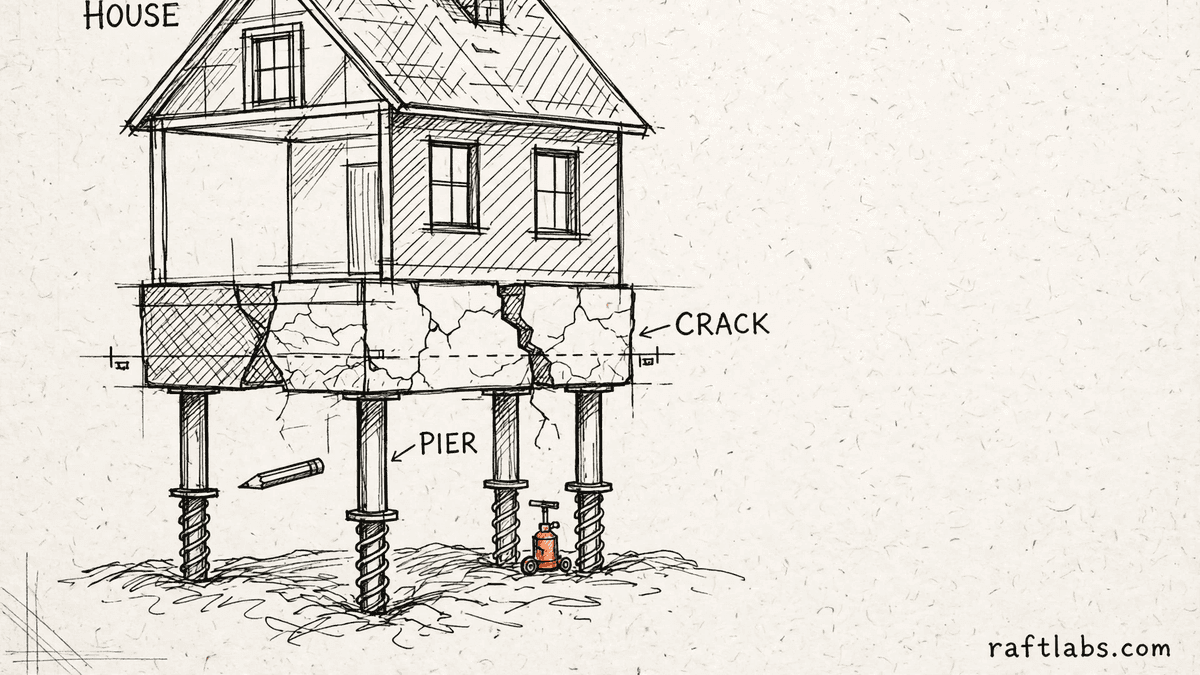
The price covers the repair methods the job needs. Piers support and lift a sinking foundation. Wall anchors hold a wall that is bowing or leaning. Crack injection seals cracks. Slabjacking raises a sunken slab. A single job can use one method or several, and each method is counted in its own unit.
Access is the next part. Work reached from outside the building is a different job from work reached from inside, where floors and finishes need care. If interior work costs you more, the calculator adds your adjustment percentage to the method subtotal and shows it as its own line.
The last parts deal with water and with advice. Drainage and waterproofing address the water around the foundation. An engineering or report fee covers an inspection and a written view on what has moved. Each part is priced on its own line in the table below.
| Cost part | What it covers | How it is priced here |
|---|---|---|
| Piers | Supports driven or placed under the footing to lift and hold the foundation | Count of piers times your price per pier |
| Wall anchors | Anchors that hold a bowing or leaning wall in place | Count of anchors times your price per anchor |
| Crack injection | Sealing cracks in walls or floors by injecting material into the crack | Count of cracks times your price per crack |
| Slabjacking | Raising a sunken concrete slab back toward level | Area in square feet times your price per square foot |
| Drainage and waterproofing | Moving water away from the foundation and helping keep it out | Your flat drainage price, plus length times your price per linear foot for waterproofing |
| Engineering or report fee | An inspection and a written report on what has moved and what is needed | Your flat fee |
The math
How the total is worked out
Each method line is a count times your price per unit for that method. Add the method lines to get the method subtotal. If interior access is chosen, multiply the subtotal by one plus your adjustment percentage. Then add drainage, waterproofing, and the engineering fee.
Total = Adjusted methods + Drainage + Waterproofing + Engineering fee
Example: 4 piers at an example price of $500 per pier comes to $2,000. 2 wall anchors at an example price of $400 per anchor comes to $800. 3 cracks at an example price of $300 per crack comes to $900. Slabjacking of 100 square feet at an example price of $10 per square foot comes to $1,000. The method subtotal is $4,700.
$2,000 + $800 + $900 + $1,000 = $4,700
With interior access and an example adjustment of 10%, the adjusted methods come to $5,170. Add an example drainage price of $600, waterproofing of 50 linear feet at an example price of $20 per linear foot for $1,000, and an example engineering fee of $350.
$5,170 + $600 + $1,000 + $350 = $7,120
Every figure in this example is a made-up input chosen to show the math. Your total will use the counts and prices you enter.
Getting it right
How to get an accurate foundation repair estimate
The total is only as good as the counts and prices behind it. Four steps keep an estimate clear and free of surprises later.
- 01
Confirm the method for each problem area
A crack, a sinking corner, and a bowing wall are different problems and can need different methods. Walk the building, note which method fits each area, and count the units for that method before you price anything.
- 02
Agree how the crew will reach the work
Access changes the work. If the crew must work from inside, say so before the quote is written and agree on the adjustment that applies. Put the choice in the calculator so the adjustment shows as its own line, not hidden inside another price.
- 03
Deal with the water as its own line
If water is part of the problem, price drainage and waterproofing on their own lines. Measure the length that waterproofing covers and enter your price per linear foot, so the homeowner can see what that part costs on its own.
- 04
Ask for every line in writing
A clear estimate shows each method, the access adjustment, each add-on, and the engineering fee as separate lines. If an estimate gives one lump sum, ask for it to be broken down. The itemised total from this calculator gives you a layout to compare against.
Frequently asked questions
Straight answers to what buyers ask before they scope. Still stuck? .
- An estimate lists each repair method on its own line, with a count and your price per unit for that method. It then shows any access adjustment, the add-ons you include such as drainage or waterproofing, and any engineering or report fee. This calculator follows that layout, and every price in it is one you enter yourself.
- Each method is priced by its own unit. Piers are counted per pier, wall anchors per anchor, crack injection per crack, and slabjacking per square foot. Change the count or your price per unit for any method and that line changes, and the total changes with it. A job that uses one method only will have one method line.
- Work reached from inside the building can take more time and more care to protect floors and finishes, and to move material in and out. If your price for interior work is higher, enter your adjustment percentage and pick interior access. The calculator applies that percentage to the method subtotal and shows the adjustment as its own line.
- Drainage moves water away from the foundation, and waterproofing helps keep water out of walls and floors. Both sit apart from the repair methods because they deal with the water that caused or worsened the problem. Enter your flat price for drainage and your price per linear foot for waterproofing, with the length the work covers.
- Some jobs need an engineer to inspect the foundation, explain what has moved, and set out what repair is needed. That visit and report are charged as a fee, separate from the repair work itself. Enter the fee you were quoted, or your own fee if you arrange the report, so it is counted from the start.
- Yes. A company can enter its own price per pier, per anchor, per crack, and per square foot for slabjacking, set its access adjustment, and add its drainage, waterproofing, and engineering figures. The result is an itemised estimate the homeowner can read line by line before any work is agreed.
Stay on topic
More for foundation repair teams
The tools give you a range. A call gives you a number.
30-minute scoping call. We will walk through how your team handles inspections, estimates, and job scheduling today, and you leave with a clear plan for the software that runs it.