FOG Due Date Checker
FOG stands for fats, oils, and grease. Enter the last pump-out date and the pump interval from your own city permit for each trap. See the next due date, the days left, and your annual pumping cost. Nothing you enter here ever leaves your browser.
- No signup required
- 100% free
- Your interval, your prices
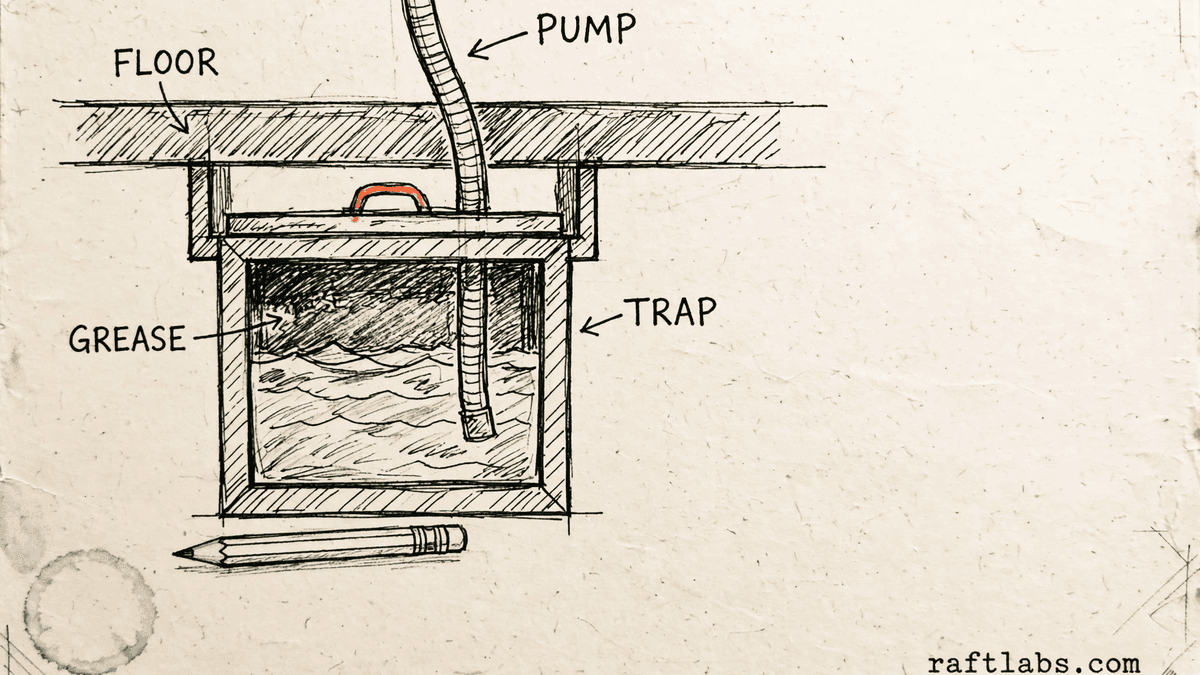
Where the interval comes from
Your traps
Add each grease trap
For each trap, enter the last pump-out date and the pump interval in days from your own city permit. The checker ships no interval of its own and asserts no rule for any city. Add your price per pump to see the annual pumping cost.
Trap 1
No interval entered yet. Enter the interval from your city permit to see the due date for this trap.
A trap due within this many days reads as due soon, so you can book the hauler in time.
Pump-out day readiness
Tick each job once it is done. 0 of 5 done.
Results
Due dates and annual pumping cost
Loading your saved entries.
The interval for each trap comes from your own city permit. This checker asserts no interval and no rule for any city.
Running grease trap pump-outs across many sites?
Software can hold every trap, its interval, and its due date in one place, and flag what is due before it runs overdue. Tell us how your team tracks pump-outs today.
A FOG due date checker adds the pump interval you enter from your own city permit to the last pump-out date for each grease trap, then shows the next due date, the days left, or how far overdue it is. It also adds up your annual pumping cost from your own price per pump.
01 The arithmetic
How the due date is worked out
Three plain steps turn a last pump-out date and your interval into a due date, a status, and an annual cost.
Due date
The due date is the last pump-out date plus the interval in days you entered from your own city permit. Count the days forward from the last pump-out and that date is when the next pump-out falls due.
Status
The checker counts the whole days from today to the due date. A past date reads as overdue, with the days past shown. A date inside the reminder lead time you set reads as due soon. Anything further out reads as on track.
Annual cost
Each trap is pumped 365 divided by its interval in days times a year. Multiply that by your price per pump for the trap and add the traps together. Every price in the panel is one you entered, so the annual figure is your own arithmetic.
Example: a last pump-out on March 1 with a 90 day interval falls due on May 30. At 365 divided by 90, that is about 4.1 pumps a year, and at an example price of $450 per pump that is $1,825 a year for one trap. The figures in this example are chosen to show the arithmetic. Your dates and prices come from your own permit and your own hauler bill.
The checker holds no rule of its own. Change the interval on a trap and the due date, the status, and the annual cost all move with the figure you entered. That is deliberate: the interval belongs to your city permit, not to this tool.
02 Pump-out day
What to have ready on pump-out day
Five plain jobs done before the hauler arrives keep the visit short and the record clean.
- 01
Last pump-out record kept where the hauler can find it
The hauler can see when the trap was last pumped and what was recorded, so the new visit starts from the record instead of from memory. - 02
Access to the trap lid cleared
Grease traps often sit under stored goods or behind kitchen equipment. Clearing the path to the lid before the visit keeps the pump-out on schedule. - 03
Kitchen team told the pump-out is coming
The team on shift knows the hauler is arriving, can keep the area around the trap free, and can answer questions about the kitchen routine. - 04
Hauler booked ahead of the due date
Booking before the due date leaves room to move the visit if the first slot falls through, instead of running past the date on your permit. - 05
Permit and interval details on hand
Having the permit and the interval from it close by means the next due date can be checked on the spot and the record updated straight after the visit.
How it works
For each trap, the due date is the last pump-out date plus the pump interval in days that the user enters from their own city permit. The tool ships no interval presets and asserts no rule for any city. Status counts the whole days from today to the due date: a past date is overdue, a date inside the reminder lead time the user sets is due soon, and anything further out is on track. The annual pumping cost for a trap is 365 divided by its interval in days, times the user's price per pump, and the panel total adds every trap together. Every interval and every price is the user's own input.
Related tools
- 01
Rental services
Jet Ski Rental Price Calculator
Hourly or half-day, whichever is cheaper, plus extras and fuel per craft. - 02
Repair services
Mobile Mechanic Quote Calculator
Labour, parts with your markup, travel, and diagnostic fees, added up line by line. - 03
Venue entertainment
Axe Throwing Pricing Calculator
Walk-in sessions, league fees, and party packages, added up into one weekly total.
Frequently asked questions
Straight answers to what buyers ask before they scope. Still stuck? .
- From your own city permit. The city that issued your permit sets how often each trap must be pumped, and the permit states the interval in days. This checker ships no interval presets and asserts no rule for any city. You read the interval off your permit and enter it, and the checker works from the figure you gave it.
- The due date is the last pump-out date plus the interval in days you entered from your permit. Say the last pump-out was on March 1 and you enter an interval of 90 days: the next pump-out then falls due on May 30. The checker does this for every trap you add, each with its own last pump-out date and its own interval.
- Overdue means the due date has passed and no newer pump-out date has been entered. The checker shows how many days past the due date the trap is, counted from the due date to today. Enter the date of the new pump-out once it happens and the status resets from the new date.
- For each trap, the checker divides 365 by the interval in days to get the pumps per year, then multiplies by your price per pump. At an example interval of 90 days that is about 4.1 pumps a year, and at an example price of $450 per pump that is $1,825 a year for one trap. The annual figure on the results panel is those per trap costs added together.
- Yes. Add a row for each trap, with its own name, last pump-out date, interval, and price per pump. Each trap gets its own due date and its own status, and the annual cost panel adds every trap together. This suits a kitchen with several traps and a team that looks after traps across many sites.
- Have the last pump-out record where the hauler can find it, clear access to the trap lid, and tell the kitchen team the pump-out is coming. Keep your permit and its interval details on hand so the next due date can be checked on the spot. Booking the hauler ahead of the due date leaves room to move the visit if the first slot falls through.
Stay on topic
More for food service teams
The tools give you a range. A call gives you a number.
30-minute scoping call. We will walk through how your team handles grease trap pump-out schedules, reminders, and records today, and you leave with a clear plan for the software that runs it.