





















Campground & RV Park Reservation Software Development

Generic hotel booking software doesn't understand a 30-amp hookup, a pull-through site, or a seasonal resident who's booked the same spot every summer for a decade. Campground, RV park, and glamping operators need a booking engine built around physical site inventory, not room-night inventory. We build it around your actual site map, hookup types, and stay patterns.

  • Site-based booking engine with a visual site map, hookup types, and pull-through/back-in distinctions

  • Seasonal and long-term stay billing alongside standard nightly reservations

  • Channel management syncing availability across your own site and third-party platforms

  • Fixed-cost delivery, scoped up front

3+ years RetentionWeek 1 First milestoneFixed price Pricing

The problem

Sound familiar?

  • Double-bookings happening because your listings on your own site, Hipcamp, and a booking platform don't sync in real time?

  • Front-desk check-in grinding to a halt every time your rural connection drops?

Short answer

RaftLabs builds campground, RV park, and glamping software: site-based booking with site maps, seasonal and long-term billing, channel management, and offline check-in. It fits operators outgrowing generic hotel software, which doesn't model hookup types, site sizes, or seasonal residents, or spreadsheet booking. Fixed cost, scoped before pricing. A reservation tool takes 10-16 weeks and costs $40K to $85K.

Who this is for

Campground and RV park operators we build for

Campground operators

Site-based booking built around your real site map, hookup types, and stay patterns.

RV parks

Rig-aware booking with pull-through/back-in and site-size logic, plus seasonal resident billing.

Glamping operators

Booking for unique units where no two sites are the same, synced across your channels.

Multi-property portfolios

Channel management and consistent booking across several parks, with one owner view.

01 Diagnosis

Where campground software usually breaks

  1. 01
    Problem

    Two RVs pulling in on Friday night expecting the same hookup

    Solution

    Hotel and generic vacation-rental booking software is built around room-night inventory: one room, one rate, one guest count. It has no concept of a 30-amp versus 50-amp hookup, a pull-through versus back-in site, or a site that fits a 40-foot rig but not a 45-foot one. And when your own site, Hipcamp, and a booking platform don't sync in real time, the same site gets booked twice. Untangling that at check-in, in front of two guests who both have a confirmation email, is one of the worst moments in this business. A booking engine built around your actual site inventory, with every listing's availability in sync, means guests book the site that actually fits, and the site they were promised is theirs. No more Friday-night standoffs in front of guests with confirmation emails.

  2. 02
    Problem

    Your guests belong to the marketplace, not to you

    Solution

    Bookings made through a marketplace route through a third-party domain rather than staying on your own website. Guest data collected via the marketplace is shared with the platform, limiting your direct ownership of the customer relationship. Meanwhile guests are gaming the system: reservations they don't plan to use, family members booking the same site to hold options, creating the illusion that you're full when sites sit empty. Software that keeps bookings and guest data on your own site, with policies that handle no-show games, returns the customer relationship to you, so guest data stays with you instead of on the marketplace.

  3. 03
    Problem

    The office works on crumbs of systems that don't talk

    Solution

    A park running both nightly transient guests and seasonal residents is really running two different businesses on one piece of software: different billing cycles, different site-assignment rules, different renewal logic. Add a separate booking engine, a property management tool, and an email system that don't talk to each other, and the team is juggling workarounds that cost time and occupancy revenue. Software that treats nightly and seasonal as first-class booking types, in one connected system, and the juggling stops. One system instead of three.

  4. 04
    Problem

    Small parks can't afford surprise bills

    Solution

    Rural parks operate with inconsistent connectivity, and software that needs a live connection turns every outage into a check-in backup. Per-reservation fee models punish you for having a good season. Surprise bills kill small parks: transparent pricing is critical. Offline-capable check-in that syncs once connectivity returns, on a fixed-cost build with no per-reservation toll, keeps operations running through rural outages and keeps your costs predictable through peak season. It works where you are, at a price you agreed.

02 What we ship

Campground and RV park software we build

  1. Site-based booking engine

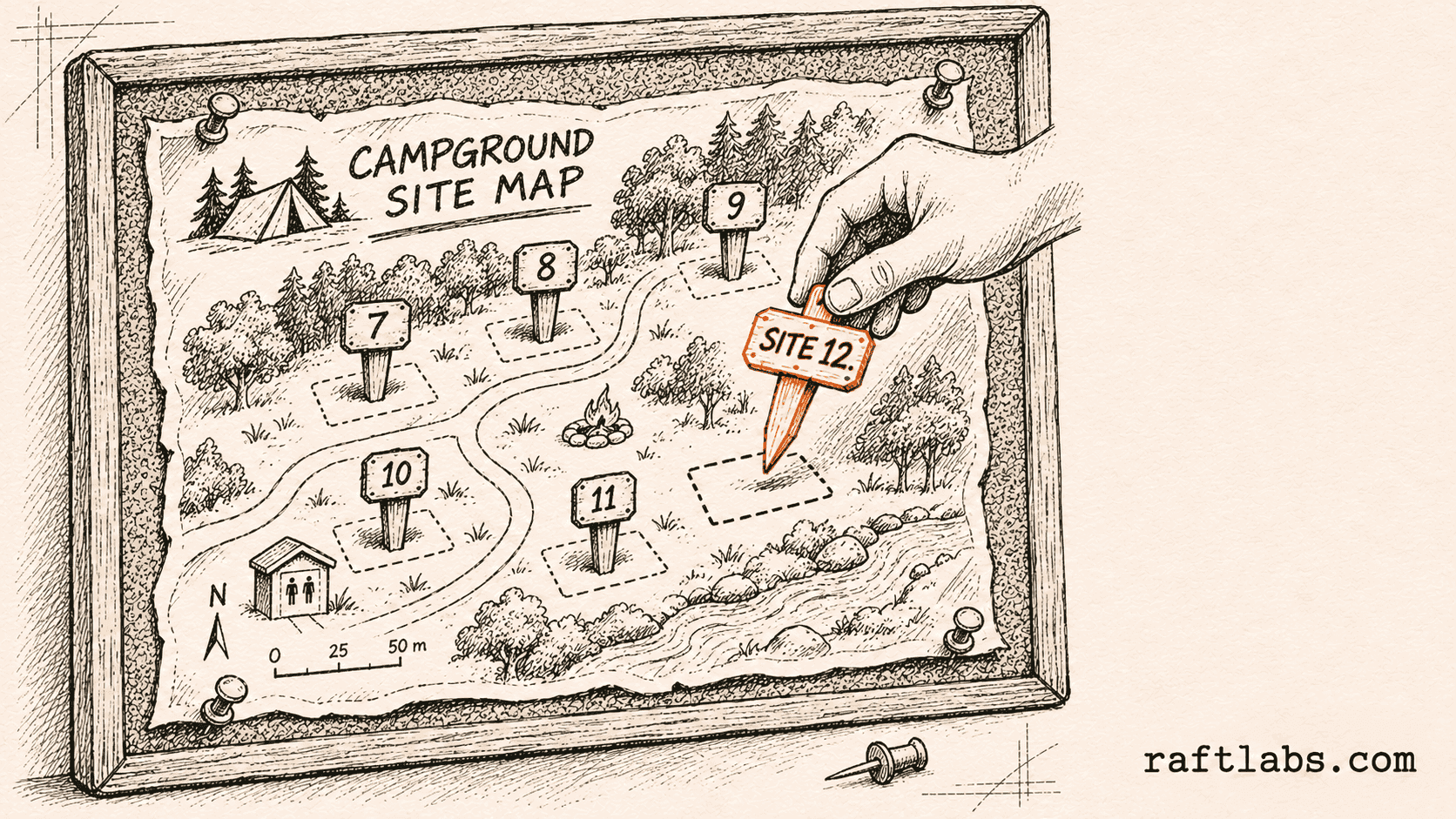
    A visual, interactive site map with hookup types, site sizes, and pull-through/back-in distinctions, built around your park's actual layout: not generic room-night inventory. Guests choose the site that actually fits their rig, and front-desk staff manage availability day to day from the same map. Bookings match reality.

  2. Seasonal and long-term stay billing

    Billing and site-assignment logic for both nightly transient guests and seasonal or long-term residents, built as first-class booking types rather than a workaround. Different billing cycles, different renewal logic, one system: no more separate spreadsheets for the seasonal lot.

  3. Multi-platform channel management

    Real-time availability sync across your own booking site and third-party platforms, so the same site can't be double-booked from two different sources. Bookings stay on your own domain and your guest data stays with you, instead of the marketplace owning your customers.

  4. Offline-capable check-in

    Front-desk and check-in tools that keep working through connectivity outages, syncing automatically once the connection returns: built for rural locations, not retrofitted for them. Check-in survives the outage.

  5. Dynamic seasonal pricing

    Pricing rules that adjust for season, length of stay, and site type, so peak-season demand and shoulder-season vacancy are both handled deliberately, not with a single flat rate. Revenue follows the season.

  6. Guest communication and reminders

    Automated booking confirmations, arrival instructions, and stay reminders, reducing front-desk calls for information guests could get automatically. Fewer "what time is check-in" phone calls.

Integrations

Works with the systems you already run

Channel management is scoped against the platforms you actually list on during discovery, not after.

Booking platforms you may be migrating from
Campspot · RoverPass · Newbook · RMS Cloud
Listing and channel platforms
Hipcamp · KOA
Migration is scoped as its own phase, with the old system's records audited before cutover.

03 Buy, build, or wait

Stay on the platform while the workflows fit and the fees are fair.

The campground software decision is usually about ownership: of your guest data, your pricing, and your peak season.

Stay on the platform

  • Campspot, Newbook, RMS Cloud

    When the platform's workflows fit and the fee model works at your scale.

Build custom

  • When the marketplace owns your guests

    Guest data shared with the platform. Build on your own domain, where your guests stay yours.

  • When the fees scale with your success

    Per-reservation tolls that punish a good season. Fixed cost, agreed before we build.

  • When the software needs a live connection

    Rural outages are normal. Build offline-first, not as an afterthought.

Bottom line

Stay on the platform while the workflows fit and the fees are fair. Build when your guest data, your peak season, or your connectivity stop fitting their model.

04 How we work

How we build campground and RV park software

Every campground build needs your site inventory, hookup types, and guest mix mapped before the booking engine is designed, with offline capability built in from the start. Our campground reservation software development service walks through how we approach discovery, booking engine design, build, and seasonal rollout.

Trusted by

Perceptional logoMusgrave GroupUrShipper logoBrux Dental SolutionsBella Skin Institute LogoEnergia RewardsDraftly logoTuneClub LogoSekou LMS logoLogo of food order management app gulaSnelwegDealsGrubly logoPSi logoInstantor Rewards logologo of Mobile app for events, membership clubs, and communitiesAldiFest retail campaign logoVidmattic logoEMS Connect logoWorx Squad logologo of Online Web App For Making Intrologo of Referral and Viral Marketing PlatformConcurrences logoGE logoTicketstop logo

05 Track record

What you get working with RaftLabs

Founded
2015
Week fixed-cost delivery timelines
10-24
Cost, agreed before we build
Fixed

08 Why us

Why choose us?

  • 01

    Site inventory first, not room nights

    Your park sells 30-amp and 50-amp hookups, pull-throughs, and seasonal sites, not interchangeable rooms. We model your actual site map, hookup types, and stay patterns in discovery, then build around them.
  • 02

    Offline-first for rural sites

    Inconsistent connectivity is a design constraint, not an afterthought. Check-in and site-status tools keep working through outages and sync when the connection returns.
  • 03

    Fixed cost, no per-reservation toll

    Fixed cost, agreed before work starts, with post-launch support included. Your peak season does not raise your software bill, and you do not pay extra to talk to a human when something breaks.

09 Questions

Common questions

Campground and RV park reservation software is booking and management software built around physical site inventory: a visual site map, hookup types, site sizes, and pull-through versus back-in distinctions, rather than the generic room-night inventory model hotel booking software uses. It typically also covers seasonal/long-term billing, channel management, and offline-capable check-in.

Yes. A visual, interactive site map showing site status, hookup type, and size is one of the most common requests we get: it's how guests choose a site and how staff manage availability day to day. We build it around your park's actual layout during discovery.

Yes. Many parks run a mix of nightly transient guests and seasonal residents with different billing cycles, rules, and site-assignment logic. We build both into the same system rather than bolting a workaround onto software designed for one or the other.

Yes. Channel management, keeping availability in sync across your own booking site and any third-party platforms, is core to avoiding double-bookings. We scope which platforms you list on during discovery and build the sync layer to match.

A single-property reservation tool with a visual site map typically takes 10-16 weeks ($40K to $85K), and a full platform with channel management, seasonal pricing, and multi-property support runs 16-24 weeks. We scope every project before pricing. Fixed cost, agreed before work starts.

We design for it. Many parks operate in areas with inconsistent connectivity, so offline-capable check-in and site-status tools that sync once connectivity returns are a standard part of what we build.

Yes. Migrating site inventory, existing reservations, and guest history off a platform that no longer fits is a common reason parks come to us. We scope the migration as its own phase, validating what transfers cleanly before cutover. Computer data is only as good as data entered, so we audit the old system's records before we move them.

That's the right question. Your staff, even seasonal workers, should learn quickly: if the system needs a week of training, it's the wrong system for a park. We design the check-in and site-status workflows with your front desk: big clear site maps, simple statuses, and software that works the way your park actually operates. You shouldn't have to pay extra just to talk to a human when something breaks, either: support is part of the build, not an add-on.

Get a build-vs-Campspot plan for your park

Tell us about your site inventory, your guest mix, and where booking breaks down today. We'll tell you what we'd build and how.

  • Scope and cost agreed before work starts. No surprises. No obligation.
  • Working prototype within 3 weeks of kickoff.
  • Pay by milestone. You see progress before each invoice.
  • 60-day post-launch warranty. Bug fixes, UI tweaks, and deployment support. No retainer.
  • All conversations are NDA-protected.