AI OCR loyalty platform for a supermarket chain
- ~99%
- AI receipt-validation accuracy
Retail AI Agent Development
A retail dashboard flags when stock drops below the reorder point. An AI agent calculates the replenishment quantity, generates the purchase order, and submits it to the supplier. The operational difference is that the alert still requires a person. The agent does not. We build retail AI agents with defined scope, explicit escalation rules, and integration into the OMS, ERP, e-commerce platform, and supplier systems your team already works in.
Inventory replenishment agents that calculate order quantities and submit POs
Returns processing agents that classify returns and resolve routine cases automatically
Product catalog enrichment agents that generate descriptions and populate attributes
Pricing optimization agents that monitor competitors and surface repricing within bounds
Bring the problem, the current workflow, or the existing code. We reply with a practical next step within one business day.
Trusted by











The brief
Good software decisions begin with the constraint, not a list of features or a preferred technology.
Your buying team triggering supplier purchase orders manually from spreadsheet reorder points that go stale the moment demand shifts?
Customer returns processed by staff for routine cases that follow the same resolution path every time?
Plain answer
RaftLabs builds autonomous AI agents for retail workflows: inventory replenishment, returns processing, catalog enrichment, and pricing optimization. Unlike static rules, these agents reason over stock levels, supplier lead times, and return patterns to take multi-step actions inside defined guardrails. A first single-workflow agent launches as a validated v1 in 10 to 14 weeks, then expands.
What to remember
Proof
A retail dashboard flags when stock drops below the reorder point. An AI agent calculates the replenishment quantity, generates the purchase order, and submits it to the supplier. The operational difference is that the alert still requires a person. The agent does not.
Out-of-stocks and overstocks cost retailers an estimated $1.77 trillion worldwide each year (IHL Group). A large share of that gap traces back to replenishment and returns decisions that sit waiting for a person to read an alert and act on it.
We build retail AI agents with defined scope, explicit escalation rules, and integration into the OMS, ERP, e-commerce platform, and supplier systems your team already works in. Integration scope is confirmed during discovery, because that's where the real complexity in retail operations tends to sit.
Capabilities
Monitors stock across locations, calculates replenishment quantity against reorder points and supplier MOQs, and generates POs submitted via EDI, supplier portal, or email. Applies your rules: suppression for markdown SKUs, exclusion for overstock flags, minimum order value thresholds. Buyer approval checkpoints are configurable by value threshold, supplier, or seasonal category.
Checks eligibility against your return policy and completes predictable cases without staff involvement, generating the RMA, sending the prepaid label, and queuing the refund on confirmed receipt. Return reason classification combines the customer's stated reason with order history signals; quality-suggestive patterns aggregate into a structured signal for the buying team rather than sitting as isolated OMS records.
Generates descriptions, classifies attributes, and populates missing fields from supplier data sheets, images, and category templates, the data tasks currently sitting in a merchandising queue alongside decisions that need a person. Inferred attribute values are flagged as agent-generated so QA knows what to verify, and HS code classification and size normalization are included in scope.
Monitors competitive price signals and compares against your pricing strategy, target position, competitor set, excluded SKUs. Changes within the pre-approved range and margin floor can auto-apply via the platform's pricing API; everything else routes to the pricing team with the competitive context already assembled. Repricing history accumulates automatically for margin and volume evaluation.
Handles order status, delivery confirmation, return initiation, and store credit queries with current data pulled live from the OMS and carrier tracking, not a scripted answer that may be stale. Return initiation follows the same eligibility logic as the returns agent in the same interaction. Escalation to a human happens for compensation decisions above the agent's authority or when the customer requests one.
Manages PO acknowledgement follow-up, ASN requests ahead of expected delivery, and delivery discrepancy notifications automatically, escalating to the buying team after two unanswered reminders or when a discrepancy exceeds tolerance. All communication logs against the PO record, giving buying and AP a complete audit trail without manual notes.
Most retail teams already run automation rules. The question is where a rule stops paying off and an agent earns its cost. It is the workflows with a large exception surface, the ones where a rule needs rewriting for every SKU, supplier, or edge case, where an agent changes the economics.
| Static automation rule | Retail AI agent | |
|---|---|---|
| Reorder trigger | Fires whenever stock falls below the reorder point, stale or not. | Checks stock across locations, open POs, supplier lead time, and markdown status before ordering. |
| Exceptions | Needs a rule written for every SKU and supplier combination. | Reasons over the exception and escalates only what it cannot resolve. |
| Returns | Routes every case to a person to read and decide. | Resolves predictable cases end to end; aggregates quality-suggestive patterns for buying. |
| Pricing change | Applies or ignores, with no view of margin or competitor context. | Auto-applies inside a margin floor; routes the rest to a human with competitor context attached. |
| Audit trail | Scattered across system logs and manual notes. | Every action logged against the PO or order record for buying and AP. |
How we work
We map the target workflow, your OMS/e-commerce API coverage, and escalation logic. You leave week 1 with a written scope document and a fixed-price quote.
Replenishment rules, return eligibility criteria, and approval checkpoints defined and confirmed with your operations team.
Agent workflow built against LangGraph, tested against real OMS and platform data every sprint.
Production deployment with audit logging and escalation queues staffed from day one.
Why us
The engineers who assess your operations also build the solution. No bait-and-switch, no offshore handoff after the contract is signed.
We scope the work, calculate the cost, and lock it in writing before any development starts.
Real engagements across SaaS, fintech, healthcare, and logistics, not every one published as a named case study.
A reorder rule can't tell a genuinely undersupplied SKU from one in planned markdown clearance. Our agents read the clearance flag and suppress the PO appropriately.
Auto-apply is scoped to a pre-approved range and margin floor. Everything outside that boundary goes to a human with full context, never applied silently.
A retail agent fails in predictable ways. We design against these before the first PO is ever written.
What clients say
Three-year average engagement. Founders and operators describing the work in their own words. No marketing varnish.

 Ireland
RaftLabs was outstanding at addressing our complex platform needs, delivering a stable, high-performance loyalty application that has been genuinely loved by the customers.
Proof
The near-term shift is from single-task agents to coordinated ones. A replenishment agent that also reads the returns agent's quality signals stops reordering a SKU that keeps coming back as defective. A pricing agent that sees the inventory position discounts overstock instead of a fast-moving line. The value is not one clever automation; it is agents that share context and stay inside guardrails your team sets. We build the first workflow to earn that trust, then connect the next one deliberately, never all at once.
Useful next steps
Work with us
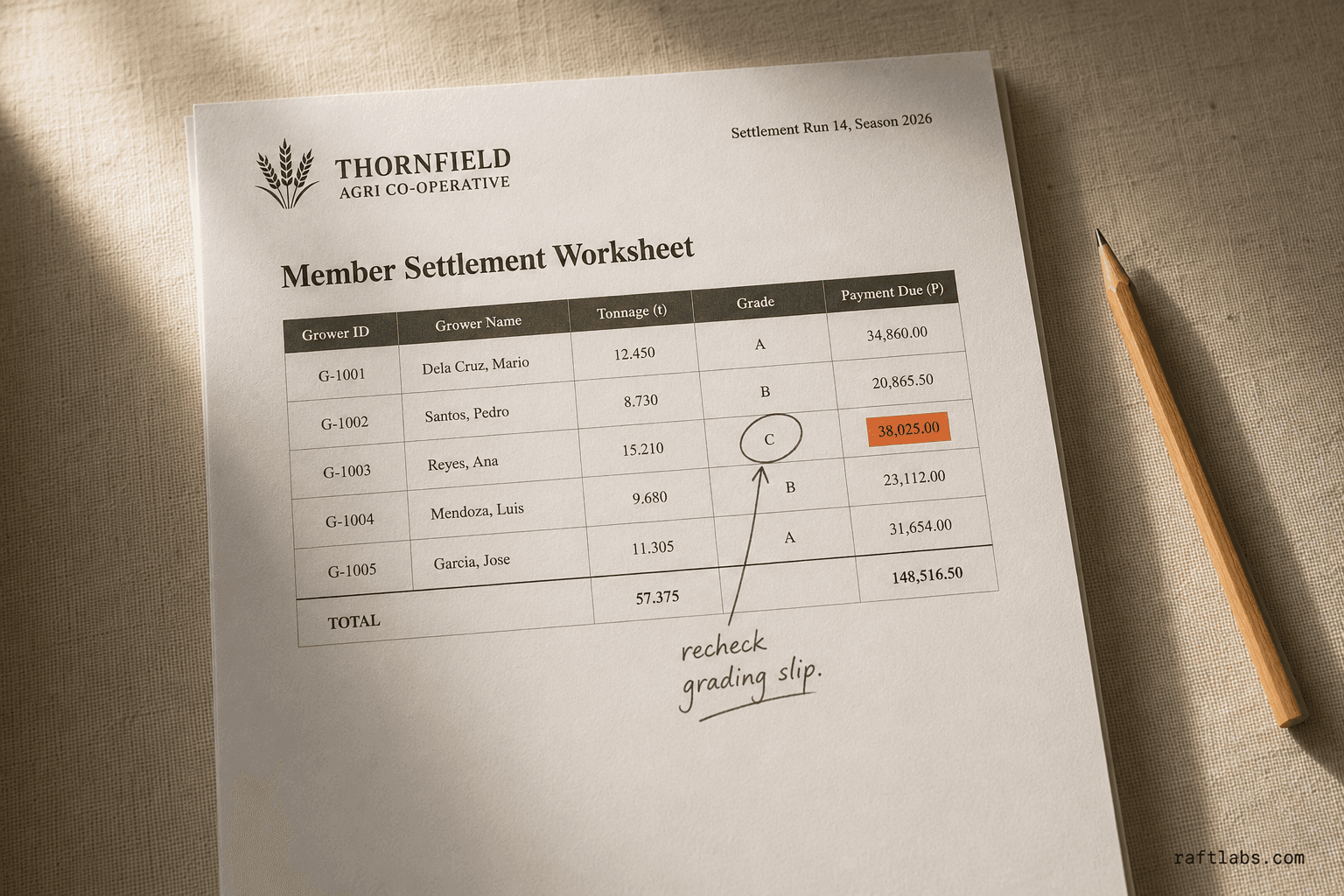
Agricultural ERP and Operations Management Software
See the serviceTry it yourself
AI Use Case Finder
Find the AI project that pays for itself first.
Open the free tool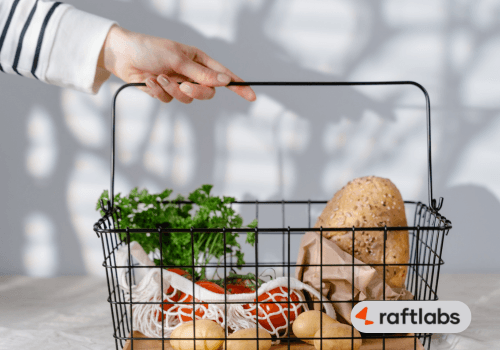
Article
Loyalty Programs for Grocery Stores
Loyalty programs for grocery stores reinforce the weekly shopping habit by validating every transaction automatically and using basket-level SKU data to run supplier-funded and category-specific campaigns, the mechanics that make grocery loyalty different from general retail.
Read more
Article
How smart pricing algorithms boost revenue (dynamic pricing playbook)
Airlines have used dynamic pricing for 40 years. E-commerce and retail are finally getting there - but the AI approaches that work for Amazon don't work for mid-market brands. Here is what actually moves the numbers.
Read more
Article
AI for Ecommerce: Generative AI Use Cases, Results, and Build Costs
Ecommerce teams are losing money on content production, support costs, and poor search. Here is what generative AI actually solves in production, what it costs to build, and where to start.
Read more
Article
AI in Retail: What Moves Revenue vs What Is Just Hype
Retail generates more data than most industries and extracts less value from it than most. The gap is not in AI capability, it is in knowing which retail workflows benefit from AI and which ones the vendor pitch decks make sound better than they are. Here is an honest breakdown.
Read moreAn e-commerce automation rule executes a predefined action when a trigger condition is met. An AI agent reasons over variable inputs and takes multi-step actions: it checks stock across all locations, calculates the replenishment quantity accounting for supplier lead times and open POs, generates the purchase order, and submits it without a rule written for every SKU and supplier combination. The difference matters most in workflows with a large exception surface, where an agent applies context like clearance flags or markdown schedules that a rule cannot.
We integrate with Shopify (Admin REST and GraphQL APIs), Commercetools, Salesforce Commerce Cloud, BigCommerce, Magento 2, and WooCommerce for e-commerce. For ERP and OMS integration, we work with NetSuite, SAP S/4HANA, Microsoft Dynamics 365, Fluent Commerce, and Manhattan Active Omni. For supplier communication, EDI integration covers the standard retail transaction set (EDI 850, 856, 860, 810). Integration scope is confirmed during discovery.
A first retail AI agent covering one workflow with standard platform integration typically starts around $20,000 to $55,000 and launches as a validated v1 in 10 to 14 weeks. From there, a multi-agent system covering inventory replenishment, returns processing, and catalog enrichment with OMS write-back and supplier EDI integration grows to $55,000 to $120,000. Cost is driven by the number of platform integrations, supplier EDI scope, and the number of product categories the agent needs to handle.
Multi-location replenishment requires the agent to reason over stock levels across all locations simultaneously. The agent retrieves location-level quantity-on-hand, applies replenishment logic at the location level (each location has its own reorder point and safety stock), and generates POs directed to the appropriate supplier and delivery location. For retailers with a distribution center supplying stores, the logic operates at two levels: DC-to-store transfers and supplier-to-DC replenishment, each with appropriate lead times.
Work with us
Tell us the workflow you want to automate, your e-commerce platform, and your OMS. We'll scope what an agent can handle and give you a fixed cost.
Go deeper