
"RaftLabs elevated my ideas and brought them to life when everything seemed impossible."
Grady Lakshmono
Co-Founder, Gula (acquired by Runchise)
On-demand apps connect supply with demand in real time, and the operational complexity behind that is significant. Order routing, driver dispatch, inventory sync, real-time tracking, payment processing, rating systems, and multi-sided notifications all have to work reliably at the same time.
We build the software layer that makes on-demand models work. Food delivery platforms, ride-hailing apps, home services marketplaces, and B2B on-demand tools, built around your specific supply, demand, and fulfillment logic.
On-demand platforms with real-time order routing, dispatch, and tracking
Multi-sided apps: customer, provider, and admin interfaces built as one system
Payment processing, in-app communication, and rating systems included
Shipped food ordering platforms, marketplace apps, and B2B on-demand tools
Bring the problem, the current workflow, or the existing code. We reply with a practical next step within one business day.
Trusted by



































The brief
Good software decisions begin with the constraint, not a list of features or a preferred technology.
Manual coordination between customers and service providers creating delays and errors?
Existing platform eating margin on every transaction with no option to build your own?
Plain answer
RaftLabs builds custom on-demand apps for food delivery, ride-hailing, home services, and B2B platforms across the US, UK, Europe, Canada, the UAE, and Southeast Asia. A validated first version launches in about 12 weeks; the full multi-sided platform grows to 16 to 24 weeks. Clutch rating: 4.9/5.
What to remember
Proof
Getting a customer to tap an order is easy. The hard part starts after the tap: routing that request to the right provider, giving them what they need to fulfill it, and keeping the customer updated as it happens. Then come the exceptions. A provider cancels. A driver goes dark. A payment fails. And the unit economics have to hold on every transaction, not just the happy path.
According to Business Research Insights' 2026 On-Demand Services Market Report, the global on-demand services market is worth roughly USD 216 billion and is projected to reach USD 346 billion by 2035. Most of that value sits in the operational layer under the tap, not the consumer screen: the dispatch and fulfillment systems that decide whether a platform holds together once real volume hits it.
We have shipped a food ordering platform that processed 10,000+ orders and a B2B platform that cut order errors to zero by replacing fragmented multi-app management with one system. That is the production-grade on-demand software we build.
On-demand is not a feature checklist. It is a supply side, a demand side, and the fulfillment logic that connects them under time pressure. Every platform we ship runs on the same architecture, tuned to your supply, your demand, and your unit economics.
Capabilities
End-to-end food ordering apps for restaurants, QSRs, cafes, and delivery operators, with real-time menu availability and multi-platform order consolidation into one dashboard. We've shipped a food ordering platform that drove 10,000+ orders and a B2B tool that onboarded 50+ restaurants in its first month.
On-demand transport platforms with the driver, passenger, and dispatcher sides built as one integrated system. Live GPS tracking, surge pricing when demand outpaces supply in a zone, and auto-reassignment of rejected trips to the next nearest driver.
Platforms connecting customers with home service providers across cleaning, plumbing, electrical, and repairs. Provider profiles carry service area geofencing, availability calendars, and tiered upfront pricing, with recurring bookings, real-time job dispatch, and two-sided reviews completing the trust loop.
On-demand tools for B2B operators where the complexity is account-based, not consumer-based, with bulk ordering, per-user purchasing limits, and approval workflows. Contract pricing gives each account negotiated rates, and ERP integration flows orders into existing supply chains. We've shipped a B2B platform that onboarded 50+ restaurants in its first month with zero order errors.
The dispatch and tracking layer that determines whether an on-demand platform stays reliable at scale. A configurable routing algorithm weights distance, acceptance rate, and idle time, so dispatch logic can be tuned without code changes, with auto-reassignment for no-shows and SLA breach alerts.
Payment infrastructure for on-demand platforms where every transaction splits between the platform and providers. Stripe Connect Express handles provider onboarding and per-transaction commission capture without provider funds touching your bank account, with regional gateways covering markets where Stripe is unavailable.
How we work
Every on-demand project follows four phases. Scope is locked and price is fixed before development starts.
We map your supply side, demand side, and fulfillment logic. What triggers an order, who receives it, how it gets routed, and what happens when it fails. You leave week 1 with a written scope document and a fixed-price quote.
Wireframes for all user roles before a line of production code is written. We lock the data model, API contracts, and real-time event flows here. Decisions made at this stage cost a fraction of the same decisions made mid-build.
Working software at a staging URL by the end of sprint one. Customer app, provider app, and admin panel built in parallel with shared API contracts. QA runs alongside every sprint, not as a phase at the end.
Production deployment with monitoring activated on launch day. We watch error rates, dispatch latency, and payment failure rates in the first 72 hours. 8 weeks of post-launch support is included in every project.
Why us
The engineers who assess your dispatch logic also build it. No bait-and-switch, no offshore handoff after the contract is signed. The team you meet in week 1 ships in week 12.
We scope the work, calculate the cost, and lock it in writing before any development starts. A scope change is a change request: priced, agreed, or dropped. It never absorbs into the project and appears on the final invoice.
Real engagements across SaaS, fintech, healthcare, and logistics, not every one published as a named case study. We have shipped on-demand platforms across food ordering, transport, home services, and B2B dispatch for operators in the US, UK, Europe, Canada, the UAE, and Southeast Asia.
GDPR, PCI DSS, and regional data residency requirements are scoped in week 1, not retrofitted before launch. Payment infrastructure uses Stripe Connect with application-fee-amount splitting so provider funds never touch the platform's bank account.
What clients say
Three-year average engagement. Founders and operators describing the work in their own words. No marketing varnish.
"RaftLabs elevated my ideas and brought them to life when everything seemed impossible."
Grady Lakshmono
Co-Founder, Gula (acquired by Runchise)

"All of the sprints were completed on schedule and on budget. We highly recommend RaftLabs!"
Charles E.
Entrepreneur at Aggie Technologies
Proof
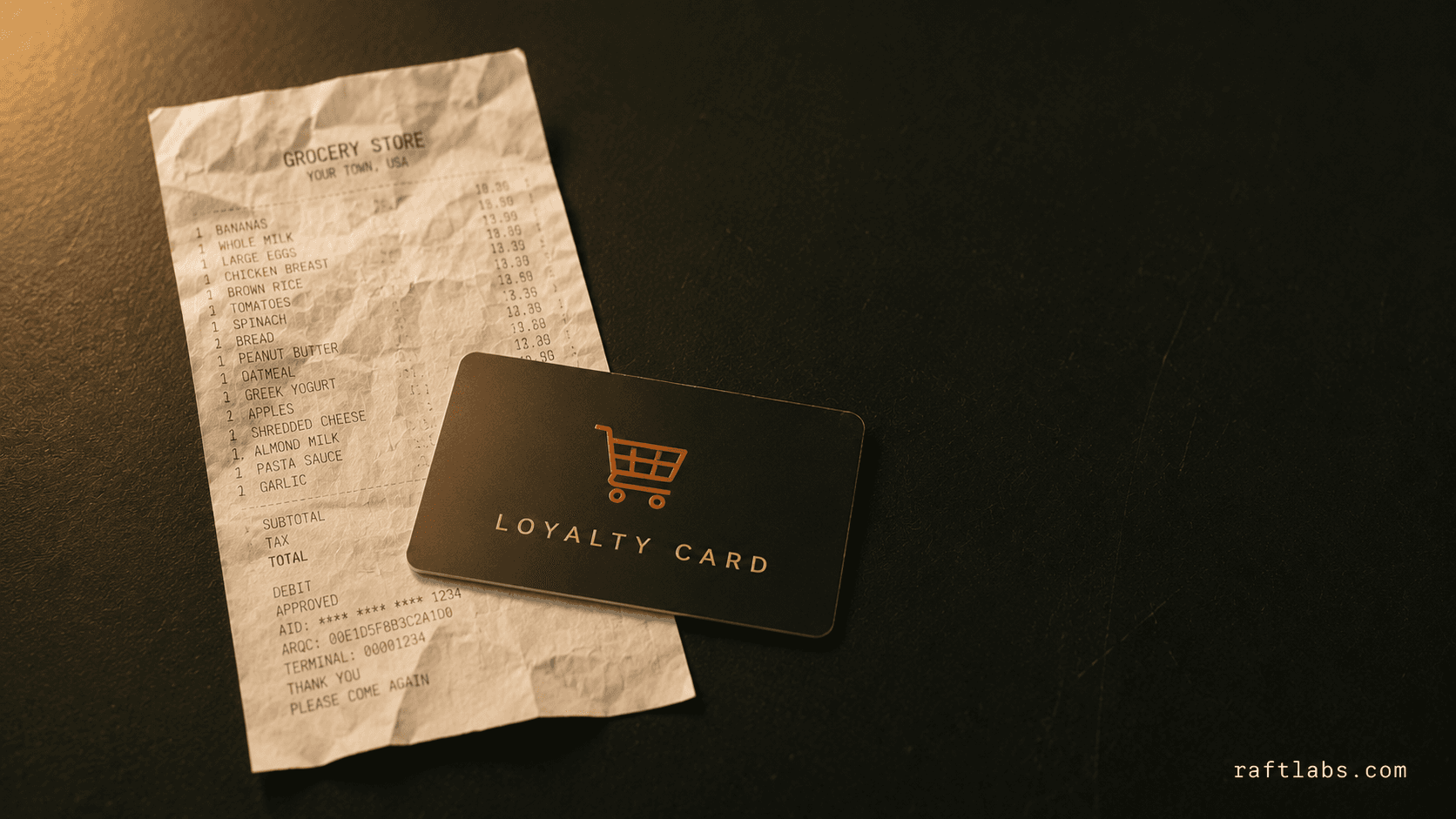
Musgrave's post-campaign report records 1,062 users and 1,610 receipt submissions. At the reporting snapshot, 1,158 were AI approved, 409 AI rejected, 4 manually approved, 10 manually rejected, and 29 remained processing.
Work with us
Service type, supply side, demand side, and the operational problem you're solving. We'll design the system and give you a fixed cost.
On-demand app development is the process of building platforms that connect customers with services or products in real time, food delivery, ride-hailing, home services, freelance marketplaces, and B2B service dispatch. The technical challenge is the multi-sided nature of the system, a customer-facing app, a provider-facing app, a dispatcher or admin interface, and a backend that coordinates all three in real time. RaftLabs has shipped on-demand platforms for food ordering, car marketplaces, and B2B order management, with real-world metrics from production deployments.
A validated first version, one service category with the core ordering flow, live tracking, and split payments, launches in about 12 weeks. From there the full multi-sided platform grows to 16-24 weeks as you add categories, dispatch tuning, in-app chat, and provider apps. We shipped a food ordering platform in 12 weeks and a centralized B2B order platform in 16 weeks. We scope and fix the price before development starts, so you know the timeline first.
Yes. On-demand platforms require at least two apps, a customer-facing interface and a provider or driver-facing interface, plus an admin/dispatcher backend. We build all three as part of a single integrated system. The customer app handles ordering and tracking. The provider or driver app handles job acceptance, navigation, and status updates. The admin panel handles dispatch, reporting, and operational management. Splitting these into separate development projects creates integration risk, we build them as one coherent system.
We integrate with Stripe (most common for global on-demand apps), PayPal, Braintree, Razorpay (South/Southeast Asia), and regional payment gateways based on your geography. Payment features typically include: customer payment methods, split payments between platform and provider, payout flows to service providers, refund and dispute handling, and surge or dynamic pricing. We scope the payment architecture based on your business model and operating regions.
A first shippable slice, one service type with the customer app, provider app, and admin panel, starts around $35,000-$60,000. The full multi-sided platform, with multiple service categories, advanced dispatch, in-app communication, and loyalty, grows to $120,000-$200,000 over time. Cost tracks the number of user roles, the complexity of the matching and dispatch logic, and the third-party integrations. We scope every project before pricing it.
Yes. We sign NDAs before any discovery call where you share proprietary business logic, dispatch algorithms, or market positioning. The NDA covers all personnel who touch your project. We have shipped on-demand platforms for clients in the US, UK, Europe, Canada, the UAE, and Southeast Asia under NDA, and full source code ownership transfers to you on final payment.